Kirjojen hintavertailu. Mukana 11 627 220 kirjaa ja 12 kauppaa.

Kirjahaku

Etsi kirjoja tekijän nimen, kirjan nimen tai ISBN:n perusteella.

1000 tulosta hakusanalla Cornelia Absmanner

Firm Interests

Firm Interests

Cornelia Woll

Cornell University Press
2008
sidottu
Firms are central to trade policy-making. Some analysts even suggest that they dictate policy on the basis of their material interests. Cornelia Woll counters these assumptions, arguing that firms do not always know what they want. To be sure, firms lobby hard to attain a desired policy once they have defined their goals. Yet material factors are insufficient to account for these preferences. The ways in which firms are embedded in political settings are much more decisive. Woll demonstrates her case by analyzing the surprising evolution of support from large firms for liberalization in telecommunications and international air transport in the United States and Europe. Within less than a decade, former monopolies with important home markets abandoned their earlier calls for subsidies and protectionism and joined competitive multinationals in the demand for global markets. By comparing the complex evolution of firm preferences across sectors and countries, Woll shows that firms may influence policy outcomes, but policies and politics in turn influence business demands. This is particularly true in the European Union, where the constraints of multilevel decision-making encourage firms to pay lip service to liberalization if they want to maintain good working relations with supranational officials. In the United States, firms adjust their sectoral demands to fit the government's agenda. In both contexts, the interaction between government and firm representatives affects not only the strategy but also the content of business lobbying on global trade.
The Power of Inaction

The Power of Inaction

Cornelia Woll

Cornell University Press
2014
sidottu
Bank bailouts in the aftermath of the collapse of Lehman Brothers and the onset of the Great Recession brought into sharp relief the power that the global financial sector holds over national politics, and provoked widespread public outrage. In The Power of Inaction, Cornelia Woll details the varying relationships between financial institutions and national governments by comparing national bank rescue schemes in the United States and Europe. Woll starts with a broad overview of bank bailouts in more than twenty countries. Using extensive interviews conducted with bankers, lawmakers, and other key players, she then examines three pairs of countries where similar outcomes might be expected: the United States and United Kingdom, France and Germany, Ireland and Denmark. She finds, however, substantial variation within these pairs. In some cases the financial sector is intimately involved in the design of bailout packages; elsewhere it chooses to remain at arm's length. Such differences are often ascribed to one of two conditions: either the state is strong and can impose terms, or the state is weak and corrupted by industry lobbying. Woll presents a third option, where the inaction of the financial sector critically shapes the design of bailout packages in favor of the industry. She demonstrates that financial institutions were most powerful in those settings where they could avoid a joint response and force national policymakers to deal with banks on a piecemeal basis. The power to remain collectively inactive, she argues, has had important consequences for bailout arrangements and ultimately affected how the public and private sectors have shared the cost burden of these massive policy decisions.
Letters of a Civil War Nurse

Letters of a Civil War Nurse

Cornelia Hancock

Bison Books
1998
pokkari
She was called "The Florence Nightingale of America." From the fighting at Gettysburg to the capture of Richmond, this young Quaker nurse worked tirelessly to relieve the suffering of soldiers. She was one of the great heroines of the Union. Cornelia Hancock served in field and evacuating hospitals, in a contraband camp, and (defying authority) on the battlefield. Her letters to family members are witty, unsentimental, and full of indignation about the neglect of wounded soldiers and black refugees. Hancock was fiercely devoted to the welfare of the privates who had "nothing before them but hard marching, poor fare, and terrible fighting."
Files

Files

Cornelia Vismann

Stanford University Press
2008
sidottu
Quod non est in actis, non est in mundo. (What is not on file is not in the world.) Once files are reduced to the status of stylized icons on computer screens, the reign of paper files appears to be over. With the epoch of files coming to an end, we are free to examine its fundamental influence on Western institutions. From a media-theoretical point of view, subject, state, and law reveal themselves to be effects of specific record-keeping and filing practices. Files are not simply administrative tools; they mediate and process legal systems. The genealogy of the law described in Vismann's Files ranges from the work of the Roman magistrates to the concern over one's own file, as expressed in the context of the files kept by the East German State Security. The book concludes with a look at the computer architecture in which all the stacks, files, and registers that had already created order in medieval and early modern administrations make their reappearance.
Files

Files

Cornelia Vismann

Stanford University Press
2008
pokkari
Quod non est in actis, non est in mundo. (What is not on file is not in the world.) Once files are reduced to the status of stylized icons on computer screens, the reign of paper files appears to be over. With the epoch of files coming to an end, we are free to examine its fundamental influence on Western institutions. From a media-theoretical point of view, subject, state, and law reveal themselves to be effects of specific record-keeping and filing practices. Files are not simply administrative tools; they mediate and process legal systems. The genealogy of the law described in Vismann's Files ranges from the work of the Roman magistrates to the concern over one's own file, as expressed in the context of the files kept by the East German State Security. The book concludes with a look at the computer architecture in which all the stacks, files, and registers that had already created order in medieval and early modern administrations make their reappearance.
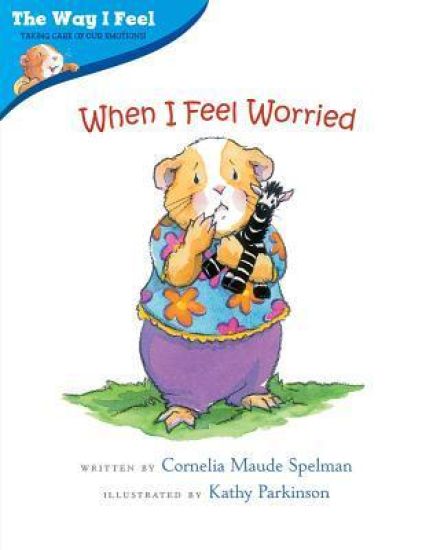
When I Feel Worried

When I Feel Worried

Cornelia Spelman

Albert Whitman Company
2014
nidottu
Everybody worries. Children worry too--in new or confusing situations or when someone is angry with them. This new addition to the acclaimed The Way I Feel Series uses reassuring words and illustrations to address a child's anxieties and shows ways to feel better. Cornelia Spelman and Kathy Parkinson team up once again to provide a comforting and empowering book that's helpful to all.
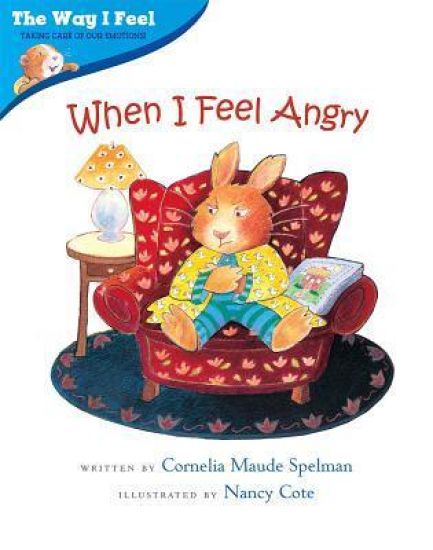
When I Feel Angry

When I Feel Angry

Cornelia Spelman

Albert Whitman Company
2004
nidottu
As an adorable bunny encounters things that make her angry, she learns to deal with anger in constructive ways that won't hurt others, in a charming story that helps children to realize that anger is a normal feeling and shows them how to cope with their anger. Reprint.
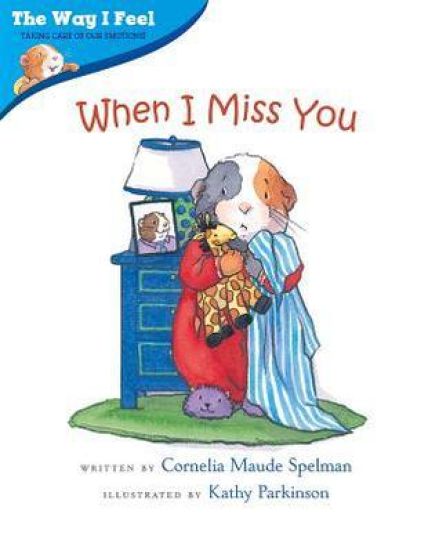
When I Miss You

When I Miss You

Cornelia Spelman

Albert Whitman Company
2006
nidottu
Young children often experience anxiety when they are separated from their mothers or fathers. This newest title in The Way I Feel series features a young guinea pig who expresses her distress when her mother and father go away. Full color.
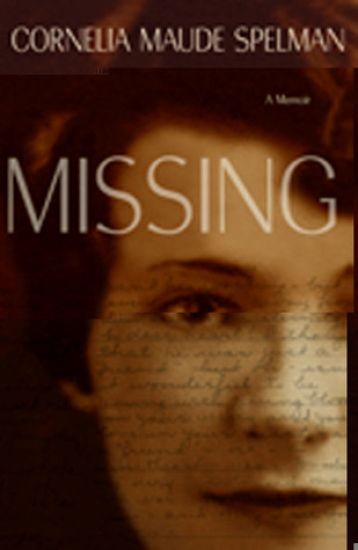
Missing

Missing

Cornelia Spelman

Northwestern University Press
2010
sidottu
Acclaimed children’s book author Cornelia Maude Spelman’s memoir of her family springs from a meeting and subsequent friendship with the late, legendary New Yorker editor William Maxwell. A profoundly loving yet honest elegy, Missing is, like the woman it memorialises, complex and beautiful.
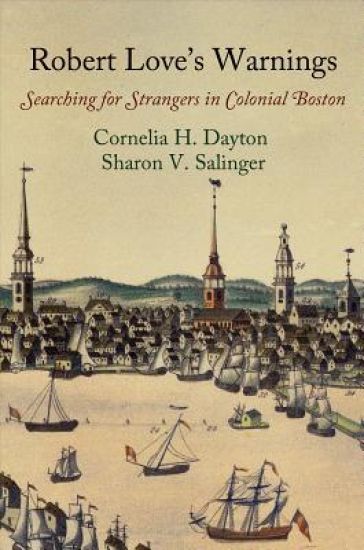
Robert Love's Warnings

Robert Love's Warnings

Cornelia H. Dayton; Sharon V. Salinger

University of Pennsylvania Press
2017
pokkari
In colonial America, the system of "warning out" was distinctive to New England, a way for a community to regulate those to whom it would extend welfare. Robert Love's Warnings animates this nearly forgotten aspect of colonial life, richly detailing the moral and legal basis of the practice and the religious and humanistic vision of those who enforced it. Historians Cornelia H. Dayton and Sharon V. Salinger follow one otherwise obscure town clerk, Robert Love, as he walked through Boston's streets to tell sojourners, "in His Majesty's Name," that they were warned to depart the town in fourteen days. This declaration meant not that newcomers literally had to leave, but that they could not claim legal settlement or rely on town poor relief. Warned youths and adults could reside, work, marry, or buy a house in the city. If they became needy, their relief was paid for by the province treasurer. Warning thus functioned as a registration system, encouraging the flow of labor and protecting town coffers. Between 1765 and 1774, Robert Love warned four thousand itinerants, including youthful migrant workers, demobilized British soldiers, recently exiled Acadians, and women following the redcoats who occupied Boston in 1768. Appointed warner at age sixty-eight owing to his unusual capacity for remembering faces, Love kept meticulous records of the sojourners he spoke to, including where they lodged and whether they were lame, ragged, drunk, impudent, homeless, or begging. Through these documents, Dayton and Salinger reconstruct the biographies of travelers, exploring why so many people were on the move throughout the British Atlantic and why they came to Boston. With a fresh interpretation of the role that warning played in Boston's civic structure and street life, Robert Love's Warnings reveals the complex legal, social, and political landscape of New England in the decade before the Revolution.
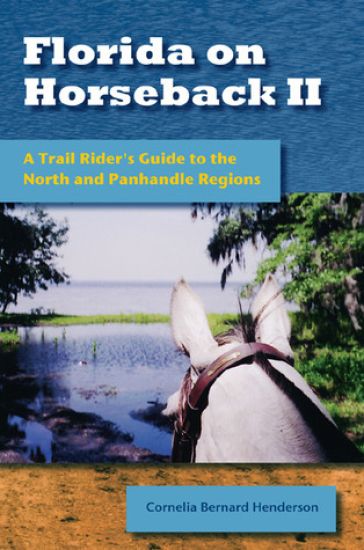
Florida on Horseback II

Florida on Horseback II

Cornelia Bernard Henderson

University Press of Florida
2007
nidottu
Written with both the experienced and the casual rider in mind, ""Florida on Horseback II"" offers more of what readers loved in ""Florida on Horseback"", both written by equestrian Cornelia Bernard Henderson. This volume covers all of the available trails, state parks, beaches, and horse rental venues from Ocala - the unofficial ""horse capital of the world"" - north to the state line, east to Jacksonville, and west to Pensacola. Adventures abound, including Big Shoals State Park, Devil's Hammock, Eglin Air Force Base Property, and Mickler's Beach. The guide is a handy companion for an experienced rider's weekend kit or an amateur's library. And for those without horses of their own, suggestions on nearby horse rental venues are included. Henderson provides an overview of the Florida ecology riders will encounter in their travels, as well as a profile of each destination. ""Florida on Horseback"" includes directions, maps, photographs, and thorough descriptions of facilities and trails. A quick reference rating system and information on sun exposure, difficulty level, and camping accommodations makes this a must-have guide for trail riders and horse campers. Whether you're a local exploring some of the state's wilderness or a tourist looking to gallop along a beach, ""Florida on Horseback"" will help you enjoy the millions of acres in the state open to riding.
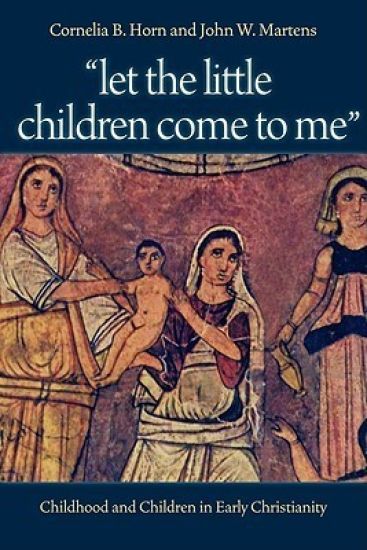
Let the Little Children Come to Me

Let the Little Children Come to Me

Cornelia B. Horn; John W. Martens

The Catholic University of America Press
2009
nidottu
Although Jesus called on his first followers to welcome children in his name and to become like children, the lives of the first Christian children have remained in the shadows. This book explores the hidden lives of children at the origins of Christianity. It draws on insights gained from comparisons of children's experiences in ancient Judaism and the Graeco-Roman world. The authors also engage a vast body of early Christian literature, extending from the New Testament to sermons, letters, theological treatises, poetry, pedagogical manuals, and historiography in Greek, Latin, Syriac, and other languages of the early Christian world. The guiding question of the book focuses on how Christianity changed the lives of children in the ancient world. Some of the other questions examined by the authors include: Did boys and girls both receive a formal education? Were Christian children slaves? How did they participate in manual labor? What kinds of games did children play? How did children become a part of the Christian church? This book breaks new ground in the study of early Christianity by examining the challenges to Christian childhood in the first centuries of the Church. The authors look at the violence perpetrated against children, and they consider the effects and opportunities arising from Christians' experiences of martyrdom and from the increased Christian interest in various forms of asceticism, including celibacy. The book brings into the open the lives of early Christian children and throws much needed light on what has been a largely neglected area of study in early Christianity.
Rural Communities

Rural Communities

Cornelia Butler Flora; Jan L. Flora; Stephen P. Gasteyer

Westview Press Inc
2015
nidottu
Communities in rural America are a complex mixture of peoples and cultures, ranging from miners who have been laid off in West Virginia, to Laotian immigrants relocating in Kansas to work at a beef processing plant, to entrepreneurs drawing up plans for a world-class ski resort in California's Sierra Nevada. Rural Communities: Legacy and Change uses its unique Community Capitals framework to examine how America's diverse rural communities use their various capitals (natural, cultural, human, social, political, financial, and built) to address the modern challenges that face them.Each chapter opens with a case study of a community facing a particular challenge, and is followed by a comprehensive discussion of sociological concepts to be applied to understanding the case. This narrative, topical approach makes the book accessible and engaging for undergraduate students, while its integrative approach provides them with a framework for understanding rural society based on the concepts and explanations of social science.This fifth edition is updated throughout with 2013 census data and features new and expanded coverage of health and health care, food systems and alternatives, the effects of neoliberalism and globalization on rural communities, as well as an expanded resource and activity section at the end of each chapter.