Cotton Cellulose: Its Chemistry And Technology is a comprehensive book written by Archibald John Hall that delves into the world of cotton cellulose. The book provides a detailed overview of the chemistry and technology behind cotton cellulose, including its structure, properties, and applications. It covers a range of topics, including the production of cotton cellulose, its chemical and physical properties, and its use in various industries such as textiles, paper, and pharmaceuticals. The book also explores the latest research and developments in the field of cotton cellulose, making it an invaluable resource for researchers, students, and professionals in the field of chemistry and textiles. With its clear and concise writing style, Cotton Cellulose: Its Chemistry And Technology is an essential reference for anyone interested in the fascinating world of cotton cellulose.This scarce antiquarian book is a facsimile reprint of the old original and may contain some imperfections such as library marks and notations. Because we believe this work is culturally important, we have made it available as part of our commitment for protecting, preserving, and promoting the world's literature in affordable, high quality, modern editions, that are true to their original work.
The Cotton Warp Sizing Handbook is a comprehensive guide to the process of warp sizing in the textile industry. Written by the Houghton Textile Research Staff, the book provides detailed information on the materials and techniques used in warp sizing, as well as practical advice for optimizing the process. Topics covered include the selection and preparation of cotton yarns, the chemistry of sizing agents, and the effects of various factors on sizing performance. The book also includes a glossary of terms and a bibliography for further reading. With its clear explanations and practical tips, the Cotton Warp Sizing Handbook is an essential reference for anyone involved in the production of cotton textiles.This scarce antiquarian book is a facsimile reprint of the old original and may contain some imperfections such as library marks and notations. Because we believe this work is culturally important, we have made it available as part of our commitment for protecting, preserving, and promoting the world's literature in affordable, high quality, modern editions, that are true to their original work.
This work has been selected by scholars as being culturally important, and is part of the knowledge base of civilization as we know it. This work was reproduced from the original artifact, and remains as true to the original work as possible. Therefore, you will see the original copyright references, library stamps (as most of these works have been housed in our most important libraries around the world), and other notations in the work.This work is in the public domain in the United States of America, and possibly other nations. Within the United States, you may freely copy and distribute this work, as no entity (individual or corporate) has a copyright on the body of the work.As a reproduction of a historical artifact, this work may contain missing or blurred pages, poor pictures, errant marks, etc. Scholars believe, and we concur, that this work is important enough to be preserved, reproduced, and made generally available to the public. We appreciate your support of the preservation process, and thank you for being an important part of keeping this knowledge alive and relevant.
This work has been selected by scholars as being culturally important, and is part of the knowledge base of civilization as we know it. This work was reproduced from the original artifact, and remains as true to the original work as possible. Therefore, you will see the original copyright references, library stamps (as most of these works have been housed in our most important libraries around the world), and other notations in the work.This work is in the public domain in the United States of America, and possibly other nations. Within the United States, you may freely copy and distribute this work, as no entity (individual or corporate) has a copyright on the body of the work.As a reproduction of a historical artifact, this work may contain missing or blurred pages, poor pictures, errant marks, etc. Scholars believe, and we concur, that this work is important enough to be preserved, reproduced, and made generally available to the public. We appreciate your support of the preservation process, and thank you for being an important part of keeping this knowledge alive and relevant.
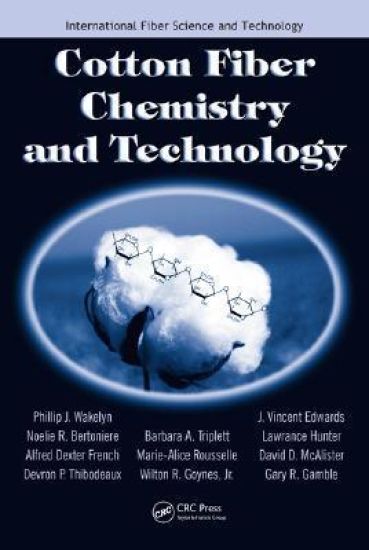
Phillip J. Wakelyn; Noelie R. Bertoniere; Alfred D. French; Devron P. Thibodeaux; Barbara A. Triplett; Marie-Alice Rousselle; Jr. Goynes; J. Vincent Edwards; Lawrance Hunter; David D. McAlister
Annual cotton production exceeds 25 million metric tons and accounts for more than 40 percent of the textile fiber consumed worldwide. A key textile fiber for over 5000 years, this complex carbohydrate is also one of the leading crops to benefit from genetic engineering. Cotton Fiber Chemistry and Technology offers a modern examination of cotton chemistry and physics, classification, production, and applications. The book incorporates new insight, technological developments, and other considerations. The book focuses on providing the most up-to-date information on cotton fiber chemistry and properties. Written by leading authorities in cotton chemistry and science, the book details fiber biosynthesis, structure, chemical composition and reactions, physical properties and includes information on biotech, organic, and colored cotton. The final chapters examine worldwide production, consumption, markets, and trends in the cotton industry. They also address environmental, workplace, and consumer risks from exposure to processing chemicals and emissions. Tracing the conversion of cotton fibers from raw materials into marketable products, Cotton Fiber Chemistry and Technology offers a complete overview of the science, technology, and economic factors that impact cotton production and applications today.