Kirjojen hintavertailu. Mukana 11 342 296 kirjaa ja 12 kauppaa.

Kirjahaku

Etsi kirjoja tekijän nimen, kirjan nimen tai ISBN:n perusteella.

1000 tulosta hakusanalla David Colquhoun

David Teniers the Younger

David Teniers the Younger

Jane P. Davidson

Routledge
2021
nidottu
This book presents a complete biography of David Teniers along with a detailed analysis of his style in various periods of his career. It discusses the artists who influenced Teniers and those he influenced, containing material about the painters with whom Teniers collaborated.
David Foster Wallace and the Body
David Foster Wallace and the Body is the first full-length study to focus on Wallace’s career-long fascination with the human body and the textual representation of the body. The book provides engaging, accessible close readings that highlight the importance of the overlooked, and yet central theme of all of this major American author’s works: having a body. Wallace repeatedly made clear that good fiction is about what it means to be a ‘human being’. A large part of what that means is having a body, and being conscious of the conflicts that arise, morally and physically, as a result; a fact with which, as Wallace forcefully and convincingly argues, we all desire ‘to be reconciled’. Given the ubiquity of the themes of embodiment in Wallace’s work, this study is an important addition to an expanding field. The book also opens up the themes addressed to interrogate aspects of contemporary literature, culture, and society more generally, placing Wallace’s works in the history of literary and philosophical engagements with the brute fact of embodiment.
David Bowie and Transmedia Stardom
Addressing the interart, intertextual, and intermedial dimensions of David Bowie’s sonic and visual legacy, this book considers more than five decades of a career invested with a star’s luminosity that shines well beyond the remit of pop music.The book approaches the idea of the star David Bowie as a medium in transit, undergoing constant movement and change. Within the context of celebrity studies, the concept of stardom provides an appropriate frame for an examination of Bowie’s transmedial activity, especially given his ongoing iconic signification within the celestial realm. While Bowie has traversed many mediums, he has also been described as a medium, which is consistent with the way he has described himself. With contributions from a wide range of disciplinary areas and countries, each chapter brings a fresh perspective on the concept of stardom and the conceptual significance of the terms ‘mediation’ and ‘navigation’ as they relate to Bowie and his career.Containing a multitude of different approaches to the stardom and mediation of David Bowie, this book will be of interest to those studying celebrity, audio and visual legacy, and the relationships between different forms of media. It was originally published as a special issue of Celebrity Studies.
David Martin and the Sociology of Religion
David Martin is a pioneer of a political sociology of religion that integrates a combined analysis of nationalism and political religions with the history of religion. He was one of the first critics of the so-called secularization thesis, and his historical orientation makes him one of the few outstanding scholars who have continued the work begun by Max Weber and Emile Durkheim. This collection provides the first scholarly overview of his hugely influential work and includes a chapter written by David Martin himself. Starting with an introduction that contextualises David Martin’s theories on the sociology of religion, both currently and historically, this volume aims to cover David Martin’s lifework in its entirety. An international panel of contributors sheds new light on his studies of particular geographical areas (Britain, Latin America, Scandinavia) and on certain systematic fields (secularization, violence, music, Pentecostalism, the relation between sociology and theology). David Martin’s concluding chapter addresses the critical points raised in response to his theories. This book addresses one of the key figures in the development of the sociology of religion, and as such it will be of great interest to all scholars of the sociology of religion.
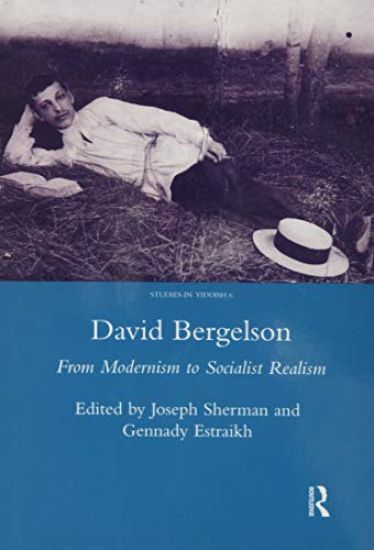
David Bergelson

David Bergelson

Joseph Sherman

Routledge
2020
nidottu
This book seeks to challenge conventionally accepted views of David Bergelson's achievement by examining his entire oeuvre. It offers a full-length biography, the first comprehensive bibliography of Bergelson's work, and translations of two of his most influential programmatic essays.
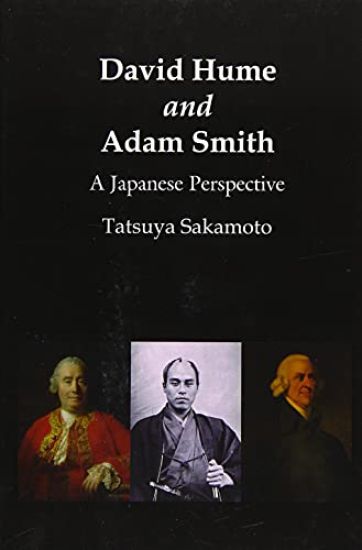
David Hume and Adam Smith

David Hume and Adam Smith

Tatsuya Sakamoto

Routledge
2021
sidottu
This book brings together a significant body of work by Tatsuya Sakamoto, a leading Japanesescholar of the history of social and economic thought, showcasing his major contributions to the study of David Hume, Adam Smith, and the Scottish Enlightenment. One of Sakamoto's persistent interests is in both philosophy and economics, which is of much importance for Hume scholars. Many "Humeans" has been interested in Hume's economic thought, although the latter has often been discussed separately from his philosophy. Sakamoto has attempted to grasp Hume’s social philosophy under the concept of "Hume's philosophical economics" or his "system of manners". Sakamoto has also contributed to Hume's biographical research, such as the dating of Hume's manuscript and the discovery of an additional proof of his anonymous review of Smith's Theory of Moral Sentiments. Sakamoto's extensive knowledge and interest covers Adam Smith as well as Francis Hutcheson, with special focus on the genesis of economics and the development of moral theory in the Scottish Enlightenment. Also, Sakamoto has exhibited his lifelong interest in the intersection between the West and the East in modern intellectual history and the final section of the book explores how Smith's ideas have influenced Japanese intellectuals since the early Meiji period.This book will be of great interest to scholars and students of the history of economic thought, Hume studies, and intellectual history more broadly.
David Bowie Outlaw

David Bowie Outlaw

Alex Sharpe

Routledge
2021
sidottu
This book explores the relevance of David Bowie’s life and music for contemporary legal and cultural theory. Focusing on the artist and artworks of David Bowie, this book brings to life, in essay form, particular theoretical ideas, creative methodologies and ethical debates that have contemporary relevance within the fields of law, social theory, ethics and art. What unites the essays presented here is that they all point to a beyond law: to the fact that law is not enough, or to be more precise, too much, too much to bear. For those who, like Bowie, see art, creativity and love as what ought to be the central organising principles of life, law will not do. In the face of its certainties, its rigidities, and its conceits, these essays, through Bowie, call forth the monster who laughs at the law, celebrate inauthenticity as a deeper truth, explore the ethical limits of art, cut up the laws of writing and embrace that which is most antithetical to law, love. This original engagement with the limits of law will appeal to those working in legal theory, ethics and law and popular culture, as well as in art and cultural studies.
David Bowie Outlaw

David Bowie Outlaw

Alex Sharpe

Routledge
2021
nidottu
This book explores the relevance of David Bowie’s life and music for contemporary legal and cultural theory. Focusing on the artist and artworks of David Bowie, this book brings to life, in essay form, particular theoretical ideas, creative methodologies and ethical debates that have contemporary relevance within the fields of law, social theory, ethics and art. What unites the essays presented here is that they all point to a beyond law: to the fact that law is not enough, or to be more precise, too much, too much to bear. For those who, like Bowie, see art, creativity and love as what ought to be the central organising principles of life, law will not do. In the face of its certainties, its rigidities, and its conceits, these essays, through Bowie, call forth the monster who laughs at the law, celebrate inauthenticity as a deeper truth, explore the ethical limits of art, cut up the laws of writing and embrace that which is most antithetical to law, love. This original engagement with the limits of law will appeal to those working in legal theory, ethics and law and popular culture, as well as in art and cultural studies.
David Ricardo. An Intellectual Biography
David Ricardo has been acclaimed – or vilified – for merits he would never have dreamt of, or sins for which he was entirely innocent. Entrenched mythology labels him as a utilitarian economist, an enemy of the working class, an impractical theorist, a scientist with ‘no philosophy at all’ and the author of a formalist methodological revolution. Exploring a middle ground between theory and biography, this book explores the formative intellectual encounters of a man who came to economic studies via other experiences, thus bridging the gap between the historical Ricardo and the economist’s Ricardo.The chapters undertake a thorough analysis of Ricardo’s writings in their context, asking who was speaking, what audience was being addressed, with what communicative intentions, using what kind of lexicon and communicative conventions, and starting with what shared knowledge. The work opens in presenting the different religious communities with which Ricardo was in touch. It goes on to describe his education in the leading science of the time – geology – before he turned to the study of political economy. Another chapter discusses five ‘philosophers’ – students of logic, ethics and politics – with whom he was in touch. From correspondence, manuscripts and publications, the closing chapters reconstruct, firstly, Ricardo's ideas on scientific method, the limits of the 'abstract science’ and its application, and, secondly, his ideas on ethics and politics and their impact on strategies for improving the condition of the working class. This book sheds new light on Ricardian economics, providing an invaluable service to readers of economic methodology, philosophy of economics, the history of economic thought, political thought and philosophy.
David Ricardo. An Intellectual Biography

David Ricardo. An Intellectual Biography

Sergio Cremaschi

TAYLOR FRANCIS LTD
2023
nidottu
David Ricardo has been acclaimed – or vilified – for merits he would never have dreamt of, or sins for which he was entirely innocent. Entrenched mythology labels him as a utilitarian economist, an enemy of the working class, an impractical theorist, a scientist with ‘no philosophy at all’ and the author of a formalist methodological revolution. Exploring a middle ground between theory and biography, this book explores the formative intellectual encounters of a man who came to economic studies via other experiences, thus bridging the gap between the historical Ricardo and the economist’s Ricardo.The chapters undertake a thorough analysis of Ricardo’s writings in their context, asking who was speaking, what audience was being addressed, with what communicative intentions, using what kind of lexicon and communicative conventions, and starting with what shared knowledge. The work opens in presenting the different religious communities with which Ricardo was in touch. It goes on to describe his education in the leading science of the time – geology – before he turned to the study of political economy. Another chapter discusses five ‘philosophers’ – students of logic, ethics and politics – with whom he was in touch. From correspondence, manuscripts and publications, the closing chapters reconstruct, firstly, Ricardo's ideas on scientific method, the limits of the 'abstract science’ and its application, and, secondly, his ideas on ethics and politics and their impact on strategies for improving the condition of the working class. This book sheds new light on Ricardian economics, providing an invaluable service to readers of economic methodology, philosophy of economics, the history of economic thought, political thought and philosophy.
David Smith: The Art and Life of a Transformational Sculptor

David Smith: The Art and Life of a Transformational Sculptor

Michael Brenson

Farrar, Straus and Giroux
2022
sidottu
"An essential account of America's greatest sculptor . . . A] magnum opus." --Marjorie Perloff, The Times Literary Supplement The landmark biography of the inscrutable and brilliant David Smith, the greatest American sculptor of the twentieth century. David Smith, a pioneer of Abstract Expressionism, did more than any other sculptor of his era to bring the plastic arts to the forefront of the American scene. Central to his project of reimagining sculptural experience was challenging the stability of any identity or position--Smith sought out the unbounded, unbalanced, and unexpected, creating works of art that seem to undergo radical shifts as the spectator moves from one point of view to another. So groundbreaking and prolific were his contributions to American art that by the time Smith was just forty years old, Clement Greenberg was already calling him "the greatest sculptor this country has produced." Michael Brenson's David Smith: The Art and Life of a Transformational Sculptor is the first biography of this epochal figure. It follows Smith from his upbringing in the Midwest, to his heady early years in Manhattan, to his decision to establish a permanent studio in Bolton Landing in upstate New York, where he would create many of his most significant works--among them the Cubis, Tanktotems, and Zigs. It explores his at times tempestuous personal life, marked by marriages, divorces, and fallings-out as well as by deep friendships with fellow artists like Helen Frankenthaler and Robert Motherwell. His wife Jean Freas described him as "salty and bombastic, jumbo and featherlight, thin-skinned and Mack Truck. And many more things." This enormous, contradictory vitality was true of his work as well. He was a bricoleur, a master welder, a painter, a photographer, and a writer, and he entranced critics and attracted admirers wherever he showed his work. With this book, Brenson has contextualized Smith for a new generation and confirmed his singular place in the history of American art.
David Boring

David Boring

Daniel Clowes

Pantheon Books
2002
nidottu
The "hilariously funny" graphic novel (Time) from the highly acclaimed author of Ghost World and Patience tells the story of David Boring, a nineteen-year-old security guard with a tortured inner life and an obsessive nature, who is about to meet the girl of his dreams.Things go awry: what seems too good to be true apparently is. And what seems truest in Boring's life is that, given the right set of circumstances (in this case, an orgiastic cascade of vengeance, humiliation and murder) the primal nature of humankind will come inexorably to the fore. "Boring finds love with a mysterious woman named Wanda, loses her and sort of finds her again. He also gets shot in the head (twice) and stranded on an island with his brutish family. Meanwhile, the world may or may not be ending soon." --Time
Memo from David O. Selznick

Memo from David O. Selznick

David O. Selznick

Modern Library Inc
2000
pokkari
"The most revealing, penetrating book on filmmaking I know of . . ."--King VidorDavid O. Selznick was a unique figure in the golden Hollywood studio era. He produced some of the greatest and most memorable American films ever made--notably, Rebecca, A Star Is Born, Anna Karenina, A Farewell to Arms, and, above all, Gone With the Wind. Selznick'sabsolute power and artistic control are evidenced in his impassioned, eloquent, witty, and sometimes rageful memos to directors, writers, stars and studio executives, writings that have become almost as famous as his films. Newsweek wrote,"I can't imagine how a book on the American movie business could be more illuminating, more riveting or more fun to read than this collection of David Selznick's memos.
David Plowden: Vanishing Point
This beautiful volume is both a tribute to and a celebration of the photographer who, more than anyone else, has given us a visual record of our mark on the land over the last half-century. David Plowden’s beautiful black-and-white images reveal his great respect for man’s ingenuity and honest work, documenting a disappearing landscape of industry, small towns, wonderful devices, and noble structures. David McCullough writes, “Plowden has produced some of the most powerful photographs we have of man-made America. He is propelled, driven, by a sense of time running out and the feeling that he must not just make a record, but confer a kind of immortality on certain aspects of American civilization before they vanish.” As Walker Evans gave us the first half of the twentieth century, David Plowden has given us the second. David Plowden: Vanishing Point represents the best of this magnificent body of work.
David Crockett

David Crockett

Michael Wallis

WW Norton Co
2011
sidottu
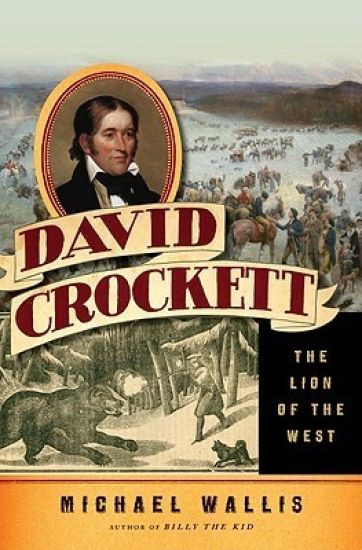
His name was David Crockett. He never signed his name any other way, but popular culture transformed his memory into "Davy Crockett," and Hollywood gave him a raccoon hat he hardly ever wore. Best-selling historian Michael Wallis casts a fresh look at the frontiersman, storyteller, and politician behind these legendary stories. Born into a humble Tennessee family in 1786, Crockett never "killed him a b'ar" when he was only three. But he did cut a huge swath across early-nineteenth-century America—as a bear hunter, a frontier explorer, a soldier serving under Andrew Jackson, an unlikely congressman, and, finally, a martyr in his now-controversial death at the Alamo. Wallis's David Crockett is more than a riveting story. It is a revelatory, authoritative biography that separates fact from fiction, providing us with an extraordinary evocation of a true American hero and the rough-and-tumble times in which he lived.
David Crockett

David Crockett

Michael Wallis

WW Norton Co
2012
nidottu
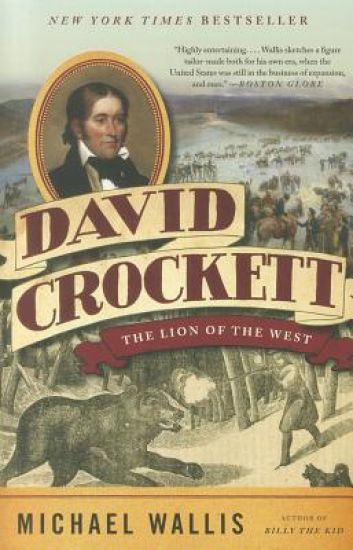
Popular culture transformed his memory into “Davy Crockett,” and Hollywood gave him a raccoon hat he hardly ever wore. In this surprising New York Times bestseller, historian Michael Wallis has cast a fresh look at the flesh-and-blood man behind one of the most celebrated figures in American history. More than a riveting story, Wallis’s David Crockett is a revelatory, authoritative biography that separates fact from fiction and provides us with an extraordinary evocation of not only a true American hero but also the rough-and-tumble times in which he lived.
David Copperfield

David Copperfield

Charles Dickens

WW Norton Co
1990
nidottu
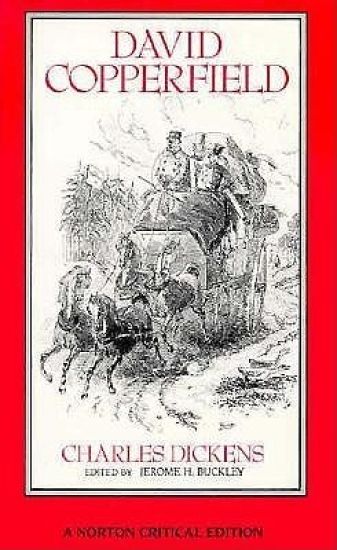
The editor has made necessary typographical corrections and carefully introduced and annotated the text for the student reader. Dickens’ number plans for David Copperfield, which reveal his practice both as a serial writer and as a craftsman, are also included. "Backgrounds" focuses on Dickens’ personal involvement with and response to the novel’s publication. Included are passages from his letters relating to David Copperfield, an autobiographical fragment, his preface to the 1869 edition of the novel, and a relevant excerpt from Little Dorrit. "Criticism" is comprised of twelve essays by distinguished Dickensians representing a wide range of judgment and analysis. John Forster, Matthew Arnold, E. K. Brown, Gwendolyn B. Needham, Monroe Engel, J. Hillis Miller, Mark Spilka, Harry Stone, Bert G. Hornback, Garrett Stewart, Robert L. Patten, and Alexander Walsh provide a variety of perspectives. A Chronology of Dickens’ Life and Works and a Selected Bibliography are also included.
David Hume
These volumes bring together for the first time some of the most important research on the philosophy of David Hume. Hume wrote on a large variety of philosophic topics, and many of these are addressed in these volumes. The volumes cover the following areas: Volume 1 - Epistemology, Reason; Volume 2 - Induction, Scepticism; Volume 3 - External World, Causality Naturalism, Mental Activity, Ontology, Personal Identity and the Self, Space and Time; Volume 4 - Ethics, Passions, Sympathy, Is/Ought; Volume 5 - Religion; Volume 6 - Politics, Economics, Justice and Miracles, as well as some miscellaneous topics. Papers have been selected for their clarity, their high quality, their originality and their lasting significance. An extensive selected bibliography is included in each volume: bibliographic material is listed according to the topics covered in the particular volume.
David Ricardo
This four-volume set in the Critical Responses series brings together for the first time 19th Century responses to, and appreciations of, the work of David Ricardo. The collection covers the period from 1817, the year of publication of Ricardo's major work, The Principles of Political Economy and Taxation, to 1848, and represents the first and probably the liveliest period of Ricardo-criticism. The publication of John Stuart Mill's own Principles in 1848 marks an end to this period with the first great 'rehabilitation' of Ricardo following decades of searching criticism.
David Hume's Political Economy
Hume’s Political Discourses (1752) won immediate acclaim and positioned him as an authoritative figure on the subject of political economy. This volume of thirteen new essays definitively establishes the central place of political economy in Hume’s intellectual endeavor, as well as the profound and far-reaching influence of his theories on Enlightenment discourse and practice. A major strength of this collection is that the contributors come from a diverse set of fields – philosophy, economics, political science, history and literature. This promotes a comprehensive reading of Hume’s political economy, taking into account his entire set of writings and correspondence, in a way that captures his polymathic genius. Hume’s analyses of trade and commerce not only delve into the institutions of money and markets, but also human agency, the role of reason and the passions, manners and social mores. Hume sought general principles but also concrete applications, whether he grappled with the problem of economic development (Scotland and Ireland), with the debates on luxury consumption (France), or with the mounting public debt (England).This book is a key resource for students and researchers in the areas of economic and political philosophy, history of economic and political theory, and the history of ideas.