Kirjojen hintavertailu. Mukana 11 717 486 kirjaa ja 12 kauppaa.

Kirjahaku

Etsi kirjoja tekijän nimen, kirjan nimen tai ISBN:n perusteella.

1000 tulosta hakusanalla David H. Ramirez

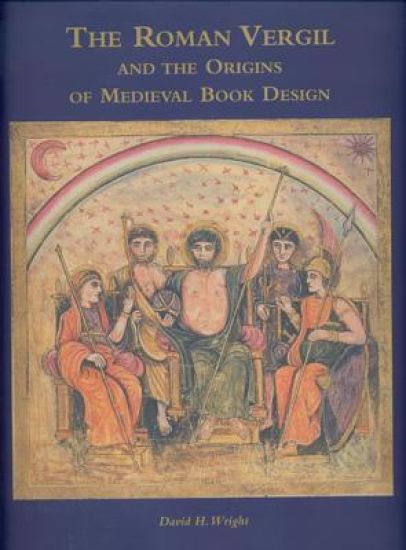
The Roman Vergil and the Origins of Medieval Book Design

The Roman Vergil and the Origins of Medieval Book Design

David H. Wright

University of Toronto Press
2002
sidottu
The Roman Vergil (or 'Codex Romanus', so named by Valeriano in 1521) is one of the most precious manuscripts in the Vatican Library. Produced in Rome before the end of the 5th century AD, it is a finely designed and beautifully illuminated copy of the works of Vergil. Its influence on the development of medieval manuscript art is important in many ways; for example, the first page of the text of the Aeneid is the earliest known decorated 'incipit' page. All twenty illuminated pages will be reproduced in sequence, with explanatory text. In the accompanying commentary, Professor Wright provides a wide-ranging discussion of the place of the manuscript in the history of art and of book design, illustrated with comparative material from other manuscripts, mosaics, and ivories, along with an analysis of the script and letter forms. Aimed at a general audience of lovers of manuscripts and classical art and culture, this is the fascinating story of a 1500 year-old manuscript, interpreted by its leading scholar.
Divine Transcendence and the Culture of Change

Divine Transcendence and the Culture of Change

David H. Hopper

William B Eerdmans Publishing Co
2010
nidottu
In this book David H. Hopper explores why the doctrine of transcendence of God has been lost to contemporary theology, in conversation with H. Richard Niebuhr, Martin Luther, Martin Bucer, John Calvin, and Francis Bacon. Hopper argues that the problem is, in a word, tolerance. He acknowledges the pragmatic worth of tolerance for getting on with necessary tasks, but expresses reservations about the sufficient, sustaining nature of tolerance for the faith community in an altered, global world. Divine Transcendence and the Culture of Change seeks to reclaim necessary dimensions of faith that have collapsed into the cultural vacuum created by thoughtless tolerance, and to restore God's transcendence to the center of all biblical religion.
Structural Knowledge

Structural Knowledge

David H. Jonassen; Katherine Beissner

Routledge Member of the Taylor and Francis Group
1993
sidottu
This book introduces the concept of a hypothetical type of knowledge construction -- referred to as structural knowledge -- that goes beyond traditional forms of information recall to provide the bases for knowledge application. Assuming that the validity of the concept is accepted, the volume functions as a handbook for supporting the assessment and use of structural knowledge in learning and instructional settings. It's descriptions are direct and short, and its structure is consistent. Almost all of the chapters describe a technique for representing and assessing structural knowledge acquisition, conveying knowledge structures through direct instruction, or providing learners with strategies that they may use to acquire structural knowledge. These chapters include the following sections in the same sequence: * description of the technique and its theoretical or conceptual rationale * examples and applications * procedures for development and use * effectiveness -- learner interactions and differences, and advantages and disadvantages * references to the literature. The chapters are structured to facilitate access to information as well as to illuminate comparisons and contrasts among the techniques.
Structural Knowledge

Structural Knowledge

David H. Jonassen; Katherine Beissner

Routledge Member of the Taylor and Francis Group
1993
nidottu
This book introduces the concept of a hypothetical type of knowledge construction -- referred to as structural knowledge -- that goes beyond traditional forms of information recall to provide the bases for knowledge application. Assuming that the validity of the concept is accepted, the volume functions as a handbook for supporting the assessment and use of structural knowledge in learning and instructional settings. It's descriptions are direct and short, and its structure is consistent. Almost all of the chapters describe a technique for representing and assessing structural knowledge acquisition, conveying knowledge structures through direct instruction, or providing learners with strategies that they may use to acquire structural knowledge. These chapters include the following sections in the same sequence: * description of the technique and its theoretical or conceptual rationale * examples and applications * procedures for development and use * effectiveness -- learner interactions and differences, and advantages and disadvantages * references to the literature. The chapters are structured to facilitate access to information as well as to illuminate comparisons and contrasts among the techniques.
Handbook of Individual Differences, Learning, and Instruction

Handbook of Individual Differences, Learning, and Instruction

David H. Jonassen; Barbara L. Grabowski

Routledge Member of the Taylor and Francis Group
1993
sidottu
Written for teachers, trainers, and instructional designers -- anyone who is responsible for designing or preparing instruction -- this book begins with one basic premise: individual differences mediate learning at all levels and in all situations. That is, some learners find it easier or more difficult to learn some skills or to learn from certain forms of instruction because they vary in terms of aptitude, cognitive styles, personality, or learning styles. This volume describes most of the major differences in a readable and accessible way and demonstrates how to design various forms of instruction and predict the ease with which learners will acquire different skills. Most books that discuss any learner differences focus on those that characterize special education populations, whereas this book focuses on normal learners. Designed as a handbook, this volume is structured to provide easy and consistent access to information and answers, and prescriptions and hypotheses. When definitive answers are not possible because there is no research documentation, the authors suggest theories designed to stimulate future research.
Handbook of Individual Differences, Learning, and Instruction

Handbook of Individual Differences, Learning, and Instruction

David H. Jonassen; Barbara L. Grabowski

Routledge Member of the Taylor and Francis Group
1993
nidottu
Written for teachers, trainers, and instructional designers -- anyone who is responsible for designing or preparing instruction -- this book begins with one basic premise: individual differences mediate learning at all levels and in all situations. That is, some learners find it easier or more difficult to learn some skills or to learn from certain forms of instruction because they vary in terms of aptitude, cognitive styles, personality, or learning styles. This volume describes most of the major differences in a readable and accessible way and demonstrates how to design various forms of instruction and predict the ease with which learners will acquire different skills. Most books that discuss any learner differences focus on those that characterize special education populations, whereas this book focuses on normal learners. Designed as a handbook, this volume is structured to provide easy and consistent access to information and answers, and prescriptions and hypotheses. When definitive answers are not possible because there is no research documentation, the authors suggest theories designed to stimulate future research.
The American Journalist in the 1990s

The American Journalist in the 1990s

David H. Weaver; G. Cleveland Wilhoit

Routledge Member of the Taylor and Francis Group
1996
sidottu
Who are U.S. journalists? What are their backgrounds and educational experiences? Why did they choose journalism as an occupation? What do they think about their work? What are their professional and ethical values? What kinds of work do they consider their best? Do men differ from women on these questions? Do ethnic and racial minorities differ from the majority? Do journalists working for different print and broadcast news media differ? This book uses findings from the most comprehensive and representative study ever done of the demographic and educational backgrounds, working conditions, and professional and ethical values of 1,410 U.S. print and broadcast journalists working in the 1990s to answer these questions, including separate analyses for women and minority news people. It also compares many of these findings with those from the major studies of the early 1970s and 1980s. As such, it should be the standard reference on U.S. journalists for years to come. In addition, this study goes beyond the previous two in adding more open-ended questions to explain and enrich quantitative findings, in the belief that the numbers by themselves are not enough to provide explanations for the patterns that emerge. This book includes more of the journalists' own words to fill this gap, as well as an analysis of samples of their self-selected best work.
The American Journalist in the 1990s

The American Journalist in the 1990s

David H. Weaver; G. Cleveland Wilhoit

Routledge Member of the Taylor and Francis Group
1996
nidottu
Who are U.S. journalists? What are their backgrounds and educational experiences? Why did they choose journalism as an occupation? What do they think about their work? What are their professional and ethical values? What kinds of work do they consider their best? Do men differ from women on these questions? Do ethnic and racial minorities differ from the majority? Do journalists working for different print and broadcast news media differ? This book uses findings from the most comprehensive and representative study ever done of the demographic and educational backgrounds, working conditions, and professional and ethical values of 1,410 U.S. print and broadcast journalists working in the 1990s to answer these questions, including separate analyses for women and minority news people. It also compares many of these findings with those from the major studies of the early 1970s and 1980s. As such, it should be the standard reference on U.S. journalists for years to come. In addition, this study goes beyond the previous two in adding more open-ended questions to explain and enrich quantitative findings, in the belief that the numbers by themselves are not enough to provide explanations for the patterns that emerge. This book includes more of the journalists' own words to fill this gap, as well as an analysis of samples of their self-selected best work.
Task Analysis Methods for Instructional Design

Task Analysis Methods for Instructional Design

David H. Jonassen; Martin Tessmer; Wallace H. Hannum

Routledge Member of the Taylor and Francis Group
1998
sidottu
Task Analysis Methods for Instructional Design is a handbook of task analysis and knowledge elicitation methods that can be used for designing direct instruction, performance support, and learner-centered learning environments. To design any kind of instruction, it is necessary to articulate a model of how learners should think and perform. This book provides descriptions and examples of five different kinds of task analysis methods: *job/behavioral analysis; *learning analysis; *cognitive task analysis; *activity-based analysis methods; and *subject matter analysis. Chapters follow a standard format making them useful for reference, instruction, or performance support.
Task Analysis Methods for Instructional Design

Task Analysis Methods for Instructional Design

David H. Jonassen; Martin Tessmer; Wallace H. Hannum

Routledge Member of the Taylor and Francis Group
1998
nidottu
Task Analysis Methods for Instructional Design is a handbook of task analysis and knowledge elicitation methods that can be used for designing direct instruction, performance support, and learner-centered learning environments. To design any kind of instruction, it is necessary to articulate a model of how learners should think and perform. This book provides descriptions and examples of five different kinds of task analysis methods: *job/behavioral analysis; *learning analysis; *cognitive task analysis; *activity-based analysis methods; and *subject matter analysis. Chapters follow a standard format making them useful for reference, instruction, or performance support.
The American Journalist in the 21st Century

The American Journalist in the 21st Century

David H. Weaver; Randal A. Beam; Bonnie J. Brownlee; Paul S. Voakes; G. Cleveland Wilhoit

Routledge Member of the Taylor and Francis Group
2006
sidottu
An authoritative and detailed illustration of the state of journalistic practice in the United States today, The American Journalist in the 21st Century sheds light on the demographic and educational backgrounds, working conditions, and professional and ethical values of print, broadcast, and Internet journalists at the beginning of the 21st century. Providing results from telephone surveys of nearly 1,500 U.S. journalists working in a variety of media outlets, this volume updates the findings published in the earlier report, The American Journalist in the 1990s, and reflects the continued evolution of journalistic practice and professionalism. The scope of material included here is extensive and inclusive, representing numerous facets of journalistic practice and professionalism, and featuring separate analyses for women, minority, and online journalists. Many findings are set in context and compared with previous major studies of U.S. journalists conducted in the 1970s, 80s, and 90s. Serving as a detailed snapshot of current journalistic practice, The American Journalist in the 21st Century offers an intriguing and enlightening profile of professional journalists today, and it will be of great interest and value to working journalists, journalism educators, media managers, journalism students, and others seeking insights into the current state of the journalism profession.
The American Journalist in the 21st Century

The American Journalist in the 21st Century

David H. Weaver; Randal A. Beam; Bonnie J. Brownlee; Paul S. Voakes; G. Cleveland Wilhoit

Routledge Member of the Taylor and Francis Group
2006
nidottu
An authoritative and detailed illustration of the state of journalistic practice in the United States today, The American Journalist in the 21st Century sheds light on the demographic and educational backgrounds, working conditions, and professional and ethical values of print, broadcast, and Internet journalists at the beginning of the 21st century. Providing results from telephone surveys of nearly 1,500 U.S. journalists working in a variety of media outlets, this volume updates the findings published in the earlier report, The American Journalist in the 1990s, and reflects the continued evolution of journalistic practice and professionalism. The scope of material included here is extensive and inclusive, representing numerous facets of journalistic practice and professionalism, and featuring separate analyses for women, minority, and online journalists. Many findings are set in context and compared with previous major studies of U.S. journalists conducted in the 1970s, 80s, and 90s. Serving as a detailed snapshot of current journalistic practice, The American Journalist in the 21st Century offers an intriguing and enlightening profile of professional journalists today, and it will be of great interest and value to working journalists, journalism educators, media managers, journalism students, and others seeking insights into the current state of the journalism profession.
Tempest Over Teapot Dome

Tempest Over Teapot Dome

David H. Stratton

University of Oklahoma Press
1998
sidottu
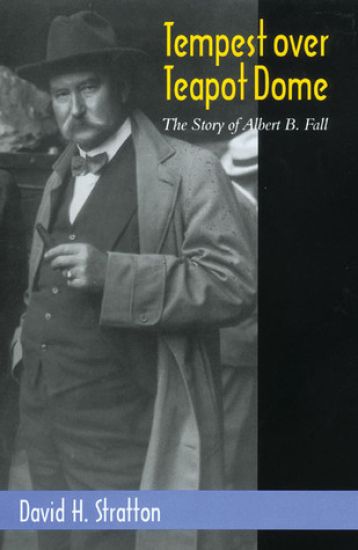
Albert B. Fall, interior secretary in the Harding administration, was the first American cabinet member sent to prison for a crime committed in office. In the Teapot Dome affair - the worst modern political scandal until Watergate - Fall leased two naval oil reserves, Wyoming's Teapot Dome and California's Elk Hills, to Harry F. Sinclair and Edward L. Doheny and received payments of $404,000 from the two millionaire oilmen. Historian David Stratton pulls no punches as he sheds new light on western and national politics, conservation, and economic development in the late nineteenth and early twentieth centuries.Tempest over Teapot Dome describes Fall's role in Harding's administration, his tribulations in court before going to prison in 1931, his freewheeling career in New Mexico politics, his lawyering for underdog ranchers in a bloody range war, his gut-fighting style as a U. S. senator who opposed Woodrow Wilson's foreign policy, and his strident activities as an expert on Latin American affairs, particularly U. S.-Mexican relations.Fall's belief in the unrestricted and immediate disposition of public lands was as typically western as his black, broad-brimmed Stetson hat and his love of fine horses.
The Arena of Satire

The Arena of Satire

David H. J. Larmour

University of Oklahoma Press
2016
sidottu
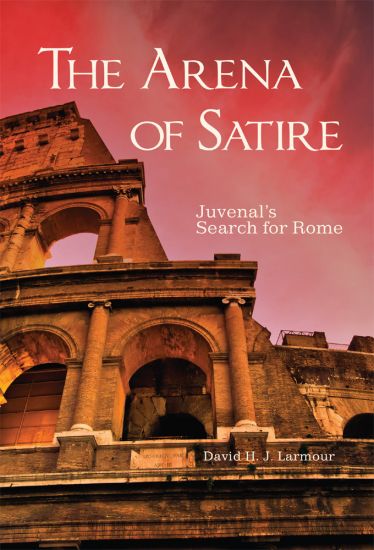
In this first comprehensive reading of Juvenal's satires in more than fifty years, David H. J. Larmour deftly revises and sharpens our understanding of the second-century Roman writer who stands as the archetype for all later practitioners of the satirist's art. The enduring attraction of Juvenal's satires is twofold: they not only introduce the character of the ""angry satirist"" but also offer vivid descriptions of everyday life in Rome at the height of the Empire. In Larmour's interpretation, these two elements are inextricably linked. The Arena of Satire presents the satirist as flaneur traversing the streets of Rome in search of its authentic core - those distinctly Roman virtues that have disappeared amid the corruption of the age. What the vengeful, punishing satirist does to his victims, as Larmour shows, echoes what the Roman state did to outcasts and criminals in the arena of the Colosseum. The fact that the arena was the most prominent building in the city and is mentioned frequently by Juvenal makes it an ideal lens through which to examine the spectacular and punishing characteristics of Roman satire. And the fact that Juvenal undertakes his search for the uncorrupted, authentic Rome within the very buildings and landmarks that make up the actual, corrupt Rome of his day gives his sixteen satires their uniquely paradoxical and contradictory nature. Larmour's exploration of ""the arena of satire"" guides us through Juvenal's search for the true Rome, winding from one poem to the next. He combines close readings of passages from individual satires with discussions of Juvenal's representation of Roman space and topography, the nature of the ""arena"" experience, and the network of connections among the satirist, the gladiator, and the editor - or producer - of Colosseum entertainments. The Arena of Satire also offers a new definition of ""Juvenalian satire"" as a particular form arising from the intersection of the body and the urban landscape - a form whose defining features survive in the works of several later satirists, from Jonathan Swift and Evelyn Waugh to contemporary writers such as Russian novelist Victor Pelevin and Irish dramatist Martin McDonagh.
The Cherokee Frontier

The Cherokee Frontier

David H. Corkran

University of Oklahoma Press
2016
nidottu
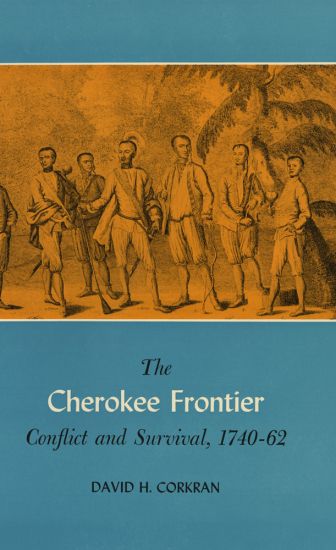
American Indians have talent in both oratory and statesmanship. American history provides abundant examples of Indians' adroit political maneuvering with the whites. Less well known are the maneuvers that took place within individual tribes. The Cherokee Indians are celebrated for their political and social achievements. But the fact that the Cherokee concept of nationalism was formulated long before the nineteenth century has been overlooked. From 1740 until 1762 the Cherokees lived in the area of present-day North Carolina, South Carolina, Georgia, and Virginia, and they were a homogeneous people, albeit struggling in the face of opposition within and without. During this critical period the traditional nationalist forces in the nation had to contend with many brands of factionalism. The traditional leadership, stemming from Overhill Chota, came into conflict with the English puppet leadership at Overhill Great Tellico, and French-English rivalry split the nation into two forces. One, led by Old Hop, the first Beloved Man of the nation, advocated neutrality. The other, led by Attakullaculla, favored the English alliance. After a cruel war with the English, in which two royal expeditionary forces laid waste the Cherokee country, Attakullaculla was able to bring about a peace. This realistic picture of Indian intrigue reveals the influence of intratribal conflict on colonial history - demonstrating that the Cherokees' own problems were more significant than European pressure in shaping events. The story of Cherokee statesmanship in terms of Indian institutions provides fresh insight into this era of colonial and American Indian history.
The Creek Frontier, 1540-1783

The Creek Frontier, 1540-1783

David H. Corkran

University of Oklahoma Press
2016
nidottu
The Creek Frontier, 1540-1783 is the first complete history of an American Indian tribe in the colonial period. Although much has been written of the Spanish, French, and British explorations in North America in the sixteenth and seventeenth centuries, little has been known of the Indian tribes that explorers such as De Soto and De Luna encountered. The Creek Indians, who occupied Alabama, Georgia, and much of northern Florida from the earliest days of Spanish exploration to shortly after the American Civil War, were a power to be reckoned with by Spain, France, and Britain in their efforts to gain control of that area. Always hostile to Spain, the Creeks were natural allies with the British, but they used other Europeans to further their interests. When they gave up their neutral position to ally themselves with the British against the American patriots, the Creeks found themselves completely at the mercy of their victorious enemies. Stressing Creek political institutions and diplomacy, this volume offers the most complete story of the rapacious ""Queen"" Mary Musgrove, and the rise to leadership of Alexander McGillivray. Creek Indian personalities of old emerge to share history's spotlight with the wigged governors they struggled with in order to maintain autonomy for their people.
The Arena of Satire Volume 52

The Arena of Satire Volume 52

David H. J. Larmour

UNIVERSITY OF OKLAHOMA PRESS
2024
nidottu
In this first comprehensive reading of Juvenal’s satires in more than fifty years, David H. J. Larmour deftly revises and sharpens our understanding of the second-century Roman writer who stands as the archetype for all later practitioners of the satirist’s art. The enduring attraction of Juvenal’s satires is twofold: they not only introduce the character of the “angry satirist” but also offer vivid descriptions of everyday life in Rome at the height of the Empire. In Larmour’s interpretation, these two elements are inextricably linked. The Arena of Satire presents the satirist as flaneur traversing the streets of Rome in search of its authentic core—those distinctly Roman virtues that have disappeared amid the corruption of the age. What the vengeful, punishing satirist does to his victims, as Larmour shows, echoes what the Roman state did to outcasts and criminals in the arena of the Colosseum. The fact that the arena was the most prominent building in the city and is mentioned frequently by Juvenal makes it an ideal lens through which to examine the spectacular and punishing characteristics of Roman satire. And the fact that Juvenal undertakes his search for the uncorrupted, authentic Rome within the very buildings and landmarks that make up the actual, corrupt Rome of his day gives his sixteen satires their uniquely paradoxical and contradictory nature. Larmour’s exploration of “the arena of satire” guides us through Juvenal’s search for the true Rome, winding from one poem to the next. He combines close readings of passages from individual satires with discussions of Juvenal’s representation of Roman space and topography, the nature of the “arena” experience, and the network of connections among the satirist, the gladiator, and the editor—or producer—of Colosseum entertainments. The Arena of Satire also offers a new definition of “Juvenalian satire” as a particular form arising from the intersection of the body and the urban landscape—a form whose defining features survive in the works of several later satirists, from Jonathan Swift and Evelyn Waugh to contemporary writers such as Russian novelist Victor Pelevin and Irish dramatist Martin McDonagh.
The Mafia's Greatest Hits

The Mafia's Greatest Hits

David H. Jacobs

KENSINGTON PUBLISHING
2025
pokkari
No one will ever truly know how many gangland executions the Mob has taken out over the years. But for all the wise guys buried in obscurity, the Mafia's sordid history shines bright with this rogues gallery of celebrated, star-making murders. Joey Gallo, killed in Umberto's Clam House, Little Italy, 1975. Abe Reles, the Murder, Inc. stool pigeon who was tossed out of a hotel window in Coney Island in 1941. Albert Anastasia, cut down in a barber's chair in 1957. Carmine Galante, killed in a hail of bullets as he finished lunch in a Brooklyn restaurant in 1977. Joe "The Boss" Masseria, whacked in a Coney Island restaurant in 1933. Big Paul Castellano, gunned down in front of Sparks Steak House in 1985. Told in the breezy, vividly direct tone of a sportswriter covering a ball game, this homicide hall of fame is loaded with thrilling, graphically detailed accounts of the greatest outlandish and brazen executions only the Mob would ever dare to pull off. Welcome to the best of Murder & Mayhem, Inc.
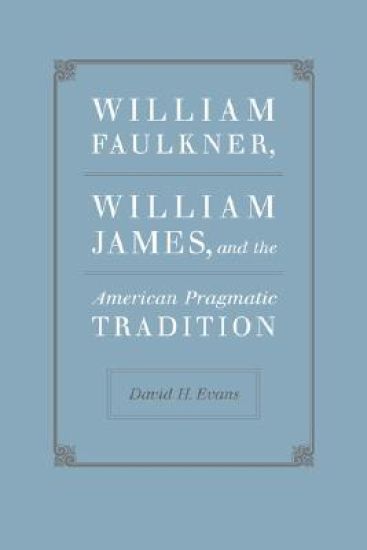
William Faulkner, William James, and the American Pragmatic Tradition

William Faulkner, William James, and the American Pragmatic Tradition

David H. Evans

Louisiana State University Press
2008
sidottu
In William Faulkner, William James, and the American Pragmatic Tradition, David H. Evans pairs the writings of America's most intellectually challenging modern novelist, William Faulkner, and the ideas of America's most revolutionary modern philosopher, William James. Though Faulkner was dubbed an idealist after World War II, Evans demonstrates that Faulkner's writing is deeply connected to the emergence of pragmatism as an intellectual doctrine and cultural force in the early twentieth century. Tracing pragmatism to its very roots, Evans examines the nineteenth-century confidence man of antebellum literature as the original practitioner of the pragmatic principle that a belief can give rise to its own objects. He casts this figure as the missing link between Faulkner and James, giving him new prominence in the prehistory of pragmatism. Moving on to Jamesian pragmatism, Evans contends that James's central innovation was his ability to define truth in narrative terms - just as the confidence man did - as something subjective and personal that continually shapes reality, rather than a set of static, unchanging facts.In subsequent chapters Evans offers detailed interpretations of three of Faulkner's most important novels, Absalom, Absalom!, Go Down, Moses, and The Hamlet, revealing that Faulkner, too, saw truth as fluid. By avoiding conclusion and finality, these three novels embody the pragmatic belief that life and the world are unstable and constantly evolving. Absalom, Absalom! stages a conflict of historical discourses that - much like the pragmatic concept of truth - can never be ultimately resolved. Evans shows us how Faulkner explores the conventional and arbitrary status of racial identity in Go Down, Moses, in a way that is strikingly similar to James's criticism of the concept of identity in general. Finally, Evans reads The Hamlet, a work that is often used to support the idea that Faulkner is opposed to modernity, as a depiction of a distinctly pragmatic and modern world.With its creative coupling of James's philosophy and Faulkner's art, Evans's lively, engaging book makes a bold contribution to Faulkner studies and studies of southern literature.
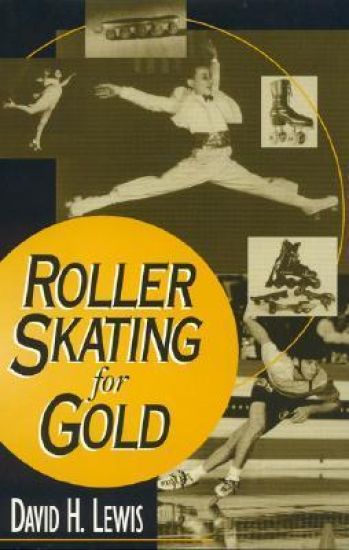
Roller Skating for Gold

Roller Skating for Gold

David H. Lewis

Scarecrow Press
1997
sidottu
Given the popularity of all types of skating—on the ice, on the boards, and on the streets—why isn't roller skating an Olympic event? Author David H. Lewis sought out people involved in every aspect of the sport in an attempt to answer this question. He talked to competition judges and coaches, rink operators and rink organists, and scores of skaters from around the world. The answers he found—and there are many—are likely to anger and astound readers in turn. Those answers, along with a wealth of information on the world of roller skating past, present and future, are detailed Whether you skate for the love of it, or have higher aspirations in the world on wheels, Roller Skating for Gold is fascinating and illuminating reading.