Kirjahaku
Etsi kirjoja tekijän nimen, kirjan nimen tai ISBN:n perusteella.
1000 tulosta hakusanalla David J. Fitzpatrick
Utilizing the principle of reciprocity, Reciprocity and China’s Transboundary Waters: The Law of International Watercourses analyses the past, present and future of the law of international watercourses with a particular focus on China. As a legal principle, reciprocity plays a strong role in the formation, interpretation and maintenance of international law. Implementing this framework, the book examines the development of the law of international watercourses, highlighting how this basic legal principle is a foundational notion. It applies the framework to China and offers insights into one of the most important transboundary states in Asia. As a primarily upstream state, China is of great significance to its transboundary neighbours; however, there remain significant hurdles, misunderstandings and mistrust between China and its neighbours. China is faced with a complex challenge - how to meet its own development needs while also taking into consideration its primarily downstream neighbours? By focusing on this prominent state this work not only fosters a greater understanding of the law of international watercourses within China, but also clarifies and challenges current perceptions of China’s transboundary water treaty practice. More generally, the book provides a past, present and future view on international watercourse law, starting with an analysis of the UN Watercourses Convention and UNECE Water Convention leading to a discussion of reciprocity’s continued influence as well as charting a path forward. This book will be of great interest to legal students and scholars with an interest in international watercourses, environmental politics and international law, as well as students and scholars interested in Chinese politics and natural resource management and conflict.

Perspectives In U.s. Marxist Anthropology
David J. Hakken; Hanna Lessinger; June Nash; Florence Babb
Routledge
2019
sidottu
An assessment of current trends in Marxist anthropology, thiscollection of essays reflects both the unifying force of Marxist thoughtand the diversity of contemporary anthropology. Linked by a commonapproach-a shared commitment to Marxist analysis-the contributorslook at a variety of phenomena, including the problems of labor andwork, in terms of a coherent theory of Marxism. Examining political,economic, and ethnic situations, the authors discuss social structures,ideology, and class formation. This unique volume warrants the attentionof both Marxists and non-Marxists in anthropology and ofscholars in other fields.
The bitter U.S. experience in Vietnam and the pain inflicted on theSoviet Union by its Afghanistan adventure have caused Washington andMoscow to rethink the costs and benefits of unilateral military interventionon behalf of threatened clients, especially in the third world. Also, asthe Cold War winds down, the crusading spirit that has driven superpowercompetition since the end of World War II appears increasingly anachronistic.Expenditures by the superpowers in pursuit of military superiority,or even to ensure parity, are now criticized for the security theydo not provide or for detracting from economic growth. The lattercriticism has grown in importance as the U.S. economy has confrontednew challenges from Japan and Germany and as the Soviet economystruggles to avoid collapse. Thus when Saddam Hussein's August 1990invasion of Kuwait challenged the political and economic status quo inthe oil-rich Middle East, neither the United States nor the Soviet Unionresponded unilaterally. Cooperatively they crafted an international consensusto confront the challenge.
Six of the ten essays in this collection (Lombardi, Villamarin, Chance, Greenow, Robinson, and Cook) were originally presented at a Special Session during the 43rd International Congress of Americanists, held in Vancouver during August, 1979. Jointly organized by David J. Robinson and Juan Villamarin, the session was designed to bring together a group of individuals who had been working on the changing population of colonial Spanish America from various disciplinary perspectives, to facilitate an exchange of information and ideas, and to promote the further investigation of significant research questions. The paper of Brian Evans was presented at the same Congress, in another session, but given its purpose and content it was thought to provide an ideal complement to several papers in the present collection.
Technology Transfer And U.s. Security Assistance
David J Louscher; Michael D Salomone
Routledge
2019
sidottu
The national security issues surrounding U.S. arms sales policies and practices have been the subjects or our research tor the past ten years. In this study the authors’ were determined to conduct a more focussed analysis of emerging policy issues tor security assistance; namely, the relationship between technology transfer and security assistance policies of the U.S. Government. This book assesses the development or indigenous arms production capabilities or recipients or U.S. security assistance. In particular we examine a seldom analyzed level of technology transfer: the transfer or less than state-of-the-art technologies and production capabilities to allies through routine security assistance decisions.
Perspectives In U.s. Marxist Anthropology
David J. Hakken; Hanna Lessinger; June Nash; Florence Babb
Routledge
2021
nidottu
An assessment of current trends in Marxist anthropology, this collection of essays reflects both the unifying force of Marxist thought and the diversity of contemporary anthropology. Linked by a common approach—a shared commitment to Marxist analysis—the contributors look at a variety of phenomena, including the problems of labor and work, in terms
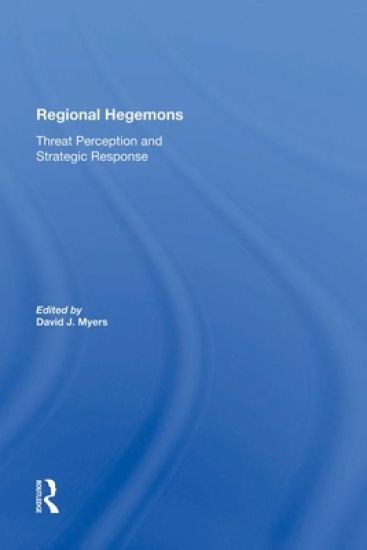
The declining influence of the superpowers in key regions of the world has permitted states such as Israel, in the Middle East and India, in South Asia, to seek geopolitical influence. This study explores the ways in which aspiring regional hegemons view threats to their aspirations and respond to these threats. The contributors analyze important t
Each of the contributions in this book sheds new light on key elements in the changing size, structure, and distribution of the Spanish American population during the colonial period. Several authors provide new source materials, while others manipulate well-known data in innovative ways to provide new insights into the past. In several of the essa
Technology Transfer And U.s. Security Assistance
David J Louscher; Michael D Salomone
Routledge
2021
nidottu
The national security issues surrounding U.S. arms sales policies and practices have been the subjects or our research tor the past ten years. In this study the authors’ were determined to conduct a more focussed analysis of emerging policy issues tor security assistance; namely, the relationship between technology transfer and security assistance policies of the U.S. Government. This book assesses the development or indigenous arms production capabilities or recipients or U.S. security assistance. In particular we examine a seldom analyzed level of technology transfer: the transfer or less than state-of-the-art technologies and production capabilities to allies through routine security assistance decisions.
Utilizing ethnographic and archaeological data and an updated paradigm derived from the best features of cultural ecology and ecological anthropology, this extensively illustrated book addresses over fifteen South American adaptive systems representing a broad cross section of band, village, chiefdom, and state societies throughout the continent ov
Introduces the most up-to-date techniques for soil remediation, including chemical fixation/stabilization, soil vapor extraction, thermally enhanced vapor stripping, biodegradation, and air spargingwritten in a style accessible to nonspecialists. Desc4ibes the ex shu technique of thermal desorption of soil contaminants-a low-cost aftemative to incineration for the removal of organics.
This book focuses on analysing how legal systems set the terms for interactions between human beings and plants. The story that the book recounts is one of experimental lawmaking in Ecuador, a country where over the past decade, governmental officials and civil society advocates have attempted to reconfigure how human individuals and institutions relate to nature, by following an "eco-centric" approach to lawmaking. In doing so, Ecuadorian legislators, administrators, and judges have taken seriously the ontologies of non-human entities, including plants, through a process that has required the continuous navigation of tensions with certain "logics" that pervade conventional legal regimes. The book endeavours to disrupt these conventional assumptions and approaches to lawmaking by taking seriously alternative strategies to reconstitute interactions between people and plants. In doing so, the book argues in favour of an "ecological turn" in laws that govern vegetal life. The analysis is based on a close examination of the experiences that lawmakers in Ecuador have had when experimenting with innovative approaches to re-form relationships between human and non-human beings. Concretely, these experiments have yielded constitutional, legislative, and regulatory changes that inform the inquiry of how intellectual property and plant genetic resources laws – both in Ecuador and worldwide – could become more "ecological" in nature.The argument that the book develops is based on extensive ethnographic fieldwork and empirical research in Ecuador, complemented by archival and doctrinal legal analysis. The contents of the book will be of interest to an academic audience of legal scholars and postgraduate students in law, in addition to scholars and students in the fields of anthropology, sociology, socio-legal studies, and science and technology studies.
A Handbook of Small Data Sets
David J. Hand; Fergus Daly; K. McConway; D. Lunn; E. Ostrowski
CRC Press
2020
nidottu
This book should be of interest to statistics lecturers who want ready-made data sets complete with notes for teaching.
This book focuses on analysing how legal systems set the terms for interactions between human beings and plants. The story that the book recounts is one of experimental lawmaking in Ecuador, a country where over the past decade, governmental officials and civil society advocates have attempted to reconfigure how human individuals and institutions relate to nature, by following an "eco-centric" approach to lawmaking. In doing so, Ecuadorian legislators, administrators, and judges have taken seriously the ontologies of non-human entities, including plants, through a process that has required the continuous navigation of tensions with certain "logics" that pervade conventional legal regimes. The book endeavours to disrupt these conventional assumptions and approaches to lawmaking by taking seriously alternative strategies to reconstitute interactions between people and plants. In doing so, the book argues in favour of an "ecological turn" in laws that govern vegetal life. The analysis is based on a close examination of the experiences that lawmakers in Ecuador have had when experimenting with innovative approaches to re-form relationships between human and non-human beings. Concretely, these experiments have yielded constitutional, legislative, and regulatory changes that inform the inquiry of how intellectual property and plant genetic resources laws – both in Ecuador and worldwide – could become more "ecological" in nature.The argument that the book develops is based on extensive ethnographic fieldwork and empirical research in Ecuador, complemented by archival and doctrinal legal analysis. The contents of the book will be of interest to an academic audience of legal scholars and postgraduate students in law, in addition to scholars and students in the fields of anthropology, sociology, socio-legal studies, and science and technology studies.
Utilizing the principle of reciprocity, Reciprocity and China’s Transboundary Waters: The Law of International Watercourses analyses the past, present and future of the law of international watercourses with a particular focus on China. As a legal principle, reciprocity plays a strong role in the formation, interpretation and maintenance of international law. Implementing this framework, the book examines the development of the law of international watercourses, highlighting how this basic legal principle is a foundational notion. It applies the framework to China and offers insights into one of the most important transboundary states in Asia. As a primarily upstream state, China is of great significance to its transboundary neighbours; however, there remain significant hurdles, misunderstandings and mistrust between China and its neighbours. China is faced with a complex challenge - how to meet its own development needs while also taking into consideration its primarily downstream neighbours? By focusing on this prominent state this work not only fosters a greater understanding of the law of international watercourses within China, but also clarifies and challenges current perceptions of China’s transboundary water treaty practice. More generally, the book provides a past, present and future view on international watercourse law, starting with an analysis of the UN Watercourses Convention and UNECE Water Convention leading to a discussion of reciprocity’s continued influence as well as charting a path forward. This book will be of great interest to legal students and scholars with an interest in international watercourses, environmental politics and international law, as well as students and scholars interested in Chinese politics and natural resource management and conflict.
The Creation of Scientific Psychology
David J. Murray; Stephen W. Link
TAYLOR FRANCIS LTD
2022
nidottu
With an emphasis on developments taking place in Germany during the nineteenth century, this book provides in-depth examinations of the key contributions made by the pioneers of scientific psychology. Their works brought measurement and mathematics into the study of the mind.Through unique analysis of measurement theory by Whewell, mathematical developments by Gauss, and theories of mental processes developed by Herbart, Weber, Fechner, Helmholtz, Müller, Delboeuf and others, this volume maps the beliefs, discoveries, and interactions that constitute the very origins of psychophysics and its offspring Experimental Psychology. Murray and Link expertly combine nuanced understanding of linguistic and historic factors to identify theoretical approaches to relating physicalintensities and psychological magnitudes. With an eye to interactions and influences on future work in the field, the volume illustrates the important legacy that mathematical developments in the nineteenth century have for twentieth and twenty-first century psychologists.This detailed and engaging account fills a deep gap in the history of psychology. The Creation of Scientific Psychology will appeal to researchers, academics, and students in the fields of history of psychology, psychophysics, scientific, and mathematical psychology.
Nicholas Love's Mirror and Late Medieval Devotio-Literary Culture
David J. Falls
Routledge
2019
nidottu
Surviving in 59 complete manuscript versions, few English texts of the late medieval period seem to have achieved the popularity of Nicholas Love's fifteenth-century translation and adaptation of the Latin Meditationes Vitae Christi - The Mirror of the Blessed Life of Jesus Christ. The Mirror has received surprisingly little scholarly attention and is often contextualized in terms of its role in the theological conflict between English ecclesiastical orthodoxy and the teachings of heresiarch John Wycliff. David Falls presents a new account of the text's history which de-centralises, but does not disregard, the influence of the Wycliffite controversy. Falls interrogates preconceptions and investigates new possibilities for understanding the composition, circulation, function and use of Love's Mirror by examining both the textual modifications and additions made by Love in his adaptation of the Latin, and places these alterations in context by examining individual copies of the Mirror. The manuscript copies are read as both sites of literary consumption and nexuses of textual transition, demonstrating that it was Love's ability to inscribe his work with "functional diversity" which explains the Mirror's popularity. This book presents a nuanced picture not only of the Mirror's production, circulation and function, but also the dynamic and flourishing devotio-literary culture of late medieval England in which Love's text operated.
The Improbability Principle: Why Coincidences, Miracles, and Rare Events Happen Every Day
David J. Hand
Scientific American
2015
nidottu
In The Improbability Principle, the renowned statistician David J. Hand argues that extraordinarily rare events are anything but. In fact, they're commonplace. Not only that, we should all expect to experience a miracle roughly once every month. But Hand is no believer in superstitions, prophecies, or the paranormal. His definition of "miracle" is thoroughly rational. No mystical or supernatural explanation is necessary to understand why someone is lucky enough to win the lottery twice, or is destined to be hit by lightning three times and still survive. All we need, Hand argues, is a firm grounding in a powerful set of laws: the laws of inevitability, of truly large numbers, of selection, of the probability lever, and of near enough. Together, these constitute Hand's groundbreaking Improbability Principle. And together, they explain why we should not be so surprised to bump into a friend in a foreign country, or to come across the same unfamiliar word four times in one day. Hand wrestles with seemingly less explicable questions as well: what the Bible and Shakespeare have in common, why financial crashes are par for the course, and why lightning does strike the same place (and the same person) twice. Along the way, he teaches us how to use the Improbability Principle in our own lives--including how to cash in at a casino and how to recognize when a medicine is truly effective. An irresistible adventure into the laws behind "chance" moments and a trusty guide for understanding the world and universe we live in, The Improbability Principle will transform how you think about serendipity and luck, whether it's in the world of business and finance or you're merely sitting in your backyard, tossing a ball into the air and wondering where it will land.
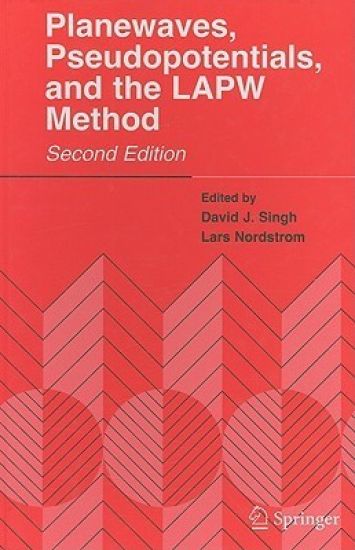
Planewaves, Pseudopotentials, and the LAPW Method
David J. Singh; Lars Nordstrom
Springer-Verlag New York Inc.
2005
sidottu
The first edition of this book, published in 1994, provided an exposition of the LAPW method and its relationship with other electronic structure approaches, especially Car-Parrinello based planewave methods. Since publication of that book, the LAPW method has been transformed from a specialized method used mostly by researchers running their own home made versions, to a popular, widely used method, where most users run standard codes to investigate ma terials of interest to them. This is an exciting development because it opens the door to widespread use of first principles calculations in diverse areas of condensed matter physics and materials science. The positive impact of this on scientific progress is already becoming clear. Also as a result of this trend, the great majority of researchers using the LAPW method are no longer directly in volved in the development of LAPW codes. Nonetheless, it remains important to understand how the LAPW method works, what its limitations are, and how its parameters determine the quahty and efficiency of calculations. The scientist with an understanding of how the method works has a clear advantage. This edition is an updated and expanded treatment of the LAPW method, including descriptions of key developments in the LAPW method since 1994, such as p 1/2 local orbitals, the APW-i-LO method, LDA+U calculations and non-collinear magnetism, as well as much of the material from the first edition.
The aim of this book is to present the mathematics underlying elementary statistical methods in as simple a manner as possible. These methods include independent and paired sample t-tests, analysis of variance, regression, and the analysis of covariance. The author's principle tool is the use of geometric ideas to provide more visual insight and to make the theory accessible to a wider audience than is usually possible.