Kirjahaku
Etsi kirjoja tekijän nimen, kirjan nimen tai ISBN:n perusteella.
1000 tulosta hakusanalla David T. Robison
Fighting Downtown: A Training Necessity for the Heavy Brigade
David T. Seigel
BiblioScholar
2012
nidottu
This monograph examines current U.S. Army urban operations doctrine and training and their adequacy to prepare the Army's heavy forces to fight in future conflicts. The purpose of this examination is to determine whether the heavy brigades are ready to fight in an urban environment. This monograph begins by analyzing urbanization trends in world demographics and their impacts on warfare in the future. This monograph also analyzes the lessons learned and impacts of the relatively recent post-Cold War battles of Mogadishu and Grozny to identify the methods that potential adversaries will likely use to counter the United States combat power advantage. This monograph next analyzes the relevancy of U.S. Army urban operations doctrine and training, focusing primarily at the heavy brigade level. It evaluates heavy brigade doctrine and training by analyzing how well they address full spectrum operations, anticipated threat tactics, light infantry / joint integration, and the use of current equipment and technology. This monograph concludes that the likelihood of U.S. Army heavy brigades participating in an urban conflict is greatly increasing. It also finds that current urban operations doctrine for heavy forces is inadequate, but that new and relevant doctrine will arrive soon. This monograph also finds that urban operations training for heavy forces is insufficient to prepare the force to fight the next war. Lastly, this monograph concludes with recommendations for improving urban operations doctrine and training. This work has been selected by scholars as being culturally important, and is part of the knowledge base of civilization as we know it. This work was reproduced from the original artifact, and remains as true to the original work as possible. Therefore, you will see the original copyright references, library stamps (as most of these works have been housed in our most important libraries around the world), and other notations in the work. This work is in the public domain in the United States of America, and possibly other nations. Within the United States, you may freely copy and distribute this work, as no entity (individual or corporate) has a copyright on the body of the work. As a reproduction of a historical artifact, this work may contain missing or blurred pages, poor pictures, errant marks, etc. Scholars believe, and we concur, that this work is important enough to be preserved, reproduced, and made generally available to the public. We appreciate your support of the preservation process, and thank you for being an important part of keeping this knowledge alive and relevant.
Modeling Vertical Flow Treatment Wetland Hydraulics to Optimize Treatment Efficiency
David T Roen
Biblioscholar
2012
pokkari
Noncombatant Evacuation Operations in Support of the National Military Strategy
David T Stahl
Biblioscholar
2012
pokkari
Consistency Properties for Growth Model Parameters Under an Infill Asymptotics Domain
David T Mills
Biblioscholar
2012
pokkari
Relationships Between Political Development and Intervention
David T London
Biblioscholar
2012
pokkari
Here lay ten short, but tasty treats given to us by The Grim Reaper, while witnessed and written by myself. I had a near death experience & while technically dead The Grim Reaper took me, but not to the afterlife. He took me to witness as he reached out & collected ten souls. Here are their stories, along with one of my own. Each story gives an insight into how they died. They're all very different & personal, but in the end we all meet The Reaper. Happy reading.
David T. Moore, author of "Critical Thinking and Intelligence Analysis," presents a new paradigm for intelligence analysis that he calls "Sensemaking, "a set of philosophical assumptions, substantive propositions, methodological framings, and methods." He looks at the failure of "normal intelligence" to propose a shift "from normal to revolutionary intelligence." Moore uses Churchman's concept of "wicked problems" to lay out the the challenge and he includes discussion of methodology and rigor as it applies to his system. Includes notes, bibliography, index, as well as comments from Phil Williams, Christian Westermann, Emily Matterson, Anthony Olcott, and Gregory Treverton.
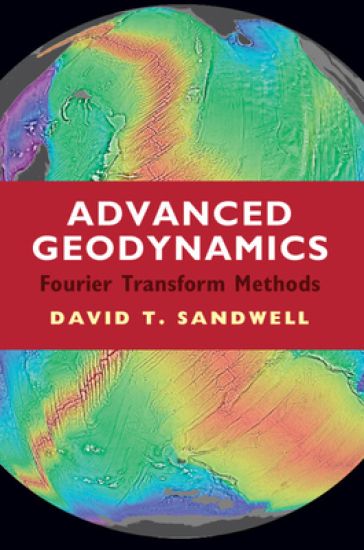
David Sandwell developed this advanced textbook over a period of nearly 30 years for his graduate course at Scripps Institution of Oceanography. The book augments the classic textbook Geodynamics by Don Turcotte and Jerry Schubert, presenting more complex and foundational mathematical methods and approaches to geodynamics. The main new tool developed in the book is the multi-dimensional Fourier transform for solving linear partial differential equations. The book comprises nineteen chapters, including: the latest global data sets; quantitative plate tectonics; plate driving forces associated with lithospheric heat transfer and subduction; the physics of the earthquake cycle; postglacial rebound; and six chapters on gravity field development and interpretation. Each chapter has a set of student exercises that make use of the higher-level mathematical and numerical methods developed in the book. Solutions to the exercises are available online for course instructors, on request.

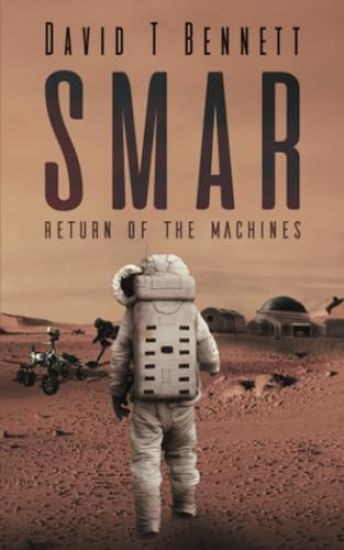
Back on Topside and a chance discovery reunites our gang of misfits for a second perilous adventure. With Nerak and Karel remaining on Topside to watch their discovery, Tega meets with his old friends to meet up with the now-released professor Snikwah at the infamous resort of Rocby-on-Sea. There they meet up with Fisah, an old friend of Ha'ans.Their journey will take them across the Sea of Despair, and along the Ancient Highway. What they find at the end of the Highway amazes and confuses them.Below and in a secret scientific research centre, a strange device from the landing site emits sounds. Unaware of its significance and unsure of its risk to Below, the Hierarchy sends a reluctant Professor Xoc and the device on the fastest and most terrifying way across Topside to meet up with our crew.Meanwhile, Raciv, head of the clerics, is aware of what secrets lie at the end of the Highway. He has deemed that no one finds out the truth about the National Library. Jes is despatched to make sure of this, but with his newfound knowledge and friendship with the once abandoned journalist Asil, will Jes obey or defy his master's orders?What has Asil discovered and just how far will she go to get revenge?All this culminates in a historic meeting of Simians and Machine - which would bring about a new era for both.A new era that will bring about events that will change things forever.
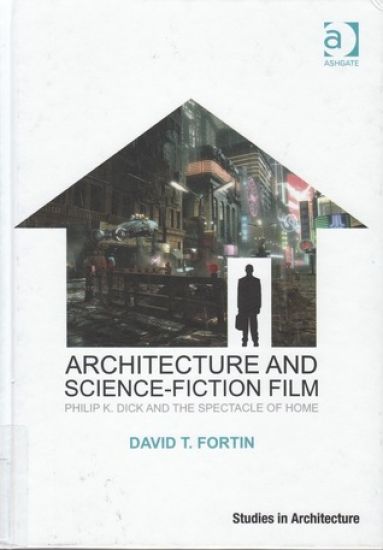
The home is one of our most enduring human paradoxes and is brought to light tellingly in science-fiction (SF) writing and film. However, while similarities and crossovers between architecture and SF have proliferated throughout the past century, the home is often overshadowed by the spectacle of 'otherness'. The study of the familiar (home) within the alien (SF) creates a unique cultural lens through which to reflect on our current architectural condition. SF has always been linked with alienation; however, the conditions of such alienation, and hence notions of home, have evidently changed. There is often a perceived comprehension of the familiar that atrophies the inquisitive and interpretive processes commonly activated when confronting the unfamiliar. Thus, by utilizing the estranging qualities of SF to look at a concept inherently linked to its perceived opposite - the home - a unique critical analysis with particular relevance for contemporary architecture is made possible.

Varieties of Personal Theology starts from the premise that all human beings are folk theologians, active not only in constructing selves but also in constructing worlds and guiding philosophies of life.Through fascinating indepth interviews and surveys, David Gortner looks specifically at 'emerging adults' (aged 18-25) as young theologians who, regardless of religious background, wrestle with fundamental questions of place, purpose, ultimate cause, and ultimate aims in life. This book charts the subtle and significant influences of social class, family, school, work, peer relationships, religion, and intrinsic attitudes and dispositions on young adults' personal theologies, and traces the ways their personal theologies connect with choices they make in their daily lives - in education, jobs, leisure, and relationships. Intentionally crossing boundaries between religious and social science fields, Gortner combines perspectives from both to demonstrate how theological diversity persists in America despite some clear culturally dominant trends. This book reveals how American young adults are active theologians forging diverse ways of seeing and being in the world - shaped by their experiences and in turn continuing to shape their choices in life.