Kirjojen hintavertailu. Mukana 11 342 296 kirjaa ja 12 kauppaa.

Kirjahaku

Etsi kirjoja tekijän nimen, kirjan nimen tai ISBN:n perusteella.

1000 tulosta hakusanalla David-Michael Harding

The Descendants of Hans Michael Wallick in the American Civil War

The Descendants of Hans Michael Wallick in the American Civil War

Michael David Wallick

Createspace Independent Publishing Platform
2012
pokkari
This is the revised edition of the Wallick family's participation in the American Civil War. Two new soldier's stories are told in this renewed volume and several original biographies have been updated with recently discovered materials.Patriarch Hans Michael Wallick arrived in America from Germany in the year 1732. In the one hundred and twenty-nine years between his arrival and the outbreak of the American Civil War, his family had greatly multiplied and prospered, which created a large population of military-aged men. From Lincoln's first call-up of soldiers after the attack on Fort Sumter to Lee's surrender at Appomattox Courthouse, twenty-five Wallicks served in the Union army. These men were at the battles of Gettysburg, Shiloh, Vicksburg, Chancellorsville and Chickamauga, plus many other engagements. Some became prisoners of war and one participated in the most daring and successful escape attempt of the entire conflict. His heroic service is even documented in a United States House of Representatives committee report. Four young men never returned home and three are now buried in our national cemeteries. The war forever changed the lives of these Wallick soldiers, and this book is a chronicle of their service to our country.
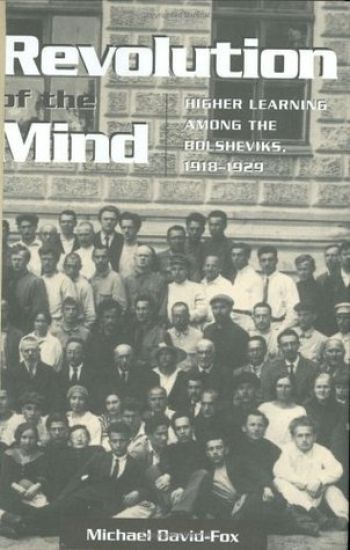
Revolution of the Mind

Revolution of the Mind

David-Fox Michael

CORNELL UNIVERSITY PRESS
1997
sidottu
Using archival materials never previously accessible to Western scholars, Michael David-Fox analyzes Bolshevik Party educational and research initiatives in higher learning after 1917. His fresh consideration of the era of the New Economic Policy and cultural politics after the Revolution explains how new communist institutions rose to parallel and rival conventional higher learning from the Academy of Sciences to the universities. Beginning with the creation of the first party school by intellectuals on the island of Capri in 1909, David-Fox argues, the Bolshevik cultural project was tightly linked to party educational institutions. He provides the first account of the early history and politics of three major institutions founded after the Revolution: Sverdlov Communist University, where the quest to transform everyday life gripped the student movement; the Institute of Red Professors, where the Bolsheviks sought to train a new communist intellectual or red specialist; and the Communist Academy, headquarters for a planned, collectivist, proletarian science.