

Kirjahaku
Etsi kirjoja tekijän nimen, kirjan nimen tai ISBN:n perusteella.
1000 tulosta hakusanalla Dimitris Plantzos


The volume explores the unpublished work of the Greek Orthodox Patriarch Kyrillos Loukaris (c.1570–1638), specifically focusing on his sermons delivered between 1602 and 1626. The study centers on Loukaris’ extant sermons, preserved in an autograph manuscript corpus titled Didachae, currently housed in the collection of the Metochion of the Holy Sepulchre. Following a comprehensive codicological and paleographical examination and the compilation of an annotated inventory of the material, the volume delves into various scholarly inquiries. These include identifying the official corpus of Loukaris’ homiletic work, defining criteria for the standard form, structure, subject matter, and language of the sermons, and analyzing the numerous references to the preacher's diverse readings, including both Orthodox and Latin sources. Moreover, the inventory encompasses all entries found in the codices, presenting the internal classification of the sermons, their methodologies, arguments, the development of each topic, and the application of systems for subsequent processing and revision of the material. Consequently, the description of Loukaris’ unpublished Didachae, regarded as his magnum opus, significantly enriches the modern bibliography on the Patriarch and contributes to the growing field of Eastern Christian homiletics in the early modern period.

Structural Analysis of Composite Wind Turbine Blades
Dimitris I Chortis
Springer International Publishing AG
2013
sidottu
This book concerns the development of novel finite elements for the structural analysis of composite beams and blades. The introduction of material damping is also an important aspect of composite structures and it is presented here in terms of their static and dynamic behavior. The book thoroughly presents a new shear beam finite element, which entails new blade section mechanics, capable of predicting structural blade coupling due to composite coupling and/or internal section geometry. Theoretical background is further expanded towards the inclusion of nonlinear structural blade models and damping mechanics for composite structures. The models effectively include geometrically nonlinear terms due to large displacements and rotations, improve the modeling accuracy of very large flexible blades, and enable the modeling of rotational stiffening and buckling, as well as, nonlinear structural coupling. Validation simulations on specimen level study the geometric nonlinearities effect on the modal frequencies and damping values of composite strips of various angle-ply laminations under either tensile or buckling loading. A series of correlation cases between numerical predictions and experimental measurements give credence to the developed nonlinear beam finite element models and underline the essential role of new nonlinear damping and stiffness terms.

Structural Analysis of Composite Wind Turbine Blades
Dimitris I Chortis
Springer International Publishing AG
2015
nidottu
This book concerns the development of novel finite elements for the structural analysis of composite beams and blades. The introduction of material damping is also an important aspect of composite structures and it is presented here in terms of their static and dynamic behavior. The book thoroughly presents a new shear beam finite element, which entails new blade section mechanics, capable of predicting structural blade coupling due to composite coupling and/or internal section geometry. Theoretical background is further expanded towards the inclusion of nonlinear structural blade models and damping mechanics for composite structures. The models effectively include geometrically nonlinear terms due to large displacements and rotations, improve the modeling accuracy of very large flexible blades, and enable the modeling of rotational stiffening and buckling, as well as, nonlinear structural coupling. Validation simulations on specimen level study the geometric nonlinearities effect on the modal frequencies and damping values of composite strips of various angle-ply laminations under either tensile or buckling loading. A series of correlation cases between numerical predictions and experimental measurements give credence to the developed nonlinear beam finite element models and underline the essential role of new nonlinear damping and stiffness terms.

The aim of this book is to explore science and technology from the viewpoint of creating new knowledge, as opposed to the reinterpretation of existing knowledge in ever greater but uncertain detail. Scientists and technologists make progress by distinguishing between what they regard as meaningful and what they consider as secondary or unimportant. The meaningful is dynamic; typically, the less important is static. Science and technology have made a major contribution to the culture and to the standard of living of our society. From antiquity to the present day, the most distinguished scientists and technologists have been thinkers, experimenters and persons willing and able to challenge “the obvious”. Technology develops products and processes based on the breakthroughs of science. If technologists fail to steadily upgrade their skills, tools and methods, they will only be as good as their last design, risking obsolescence. Using practical examples and case studies, this book documents the correlations existing between science and technology, and elucidates these correlations with practical applications ranging from real-life situations, from R&D to energy production. As it is a salient problem, and a most challenging one to our society, power production has been chosen as a major case study. The holistic approach to science and technology followed by this text enhances the ability to deliver practical results. This book is intended for students and researchers of science, technology and mathematical analysis, while also providing a valuable reference book for professionals. Its subject is one of the most debated problems of mankind.
Model-Free Prediction and Regression
Dimitris N. Politis
Springer International Publishing AG
2015
sidottu
The Model-Free Prediction Principle expounded upon in this monograph is based on the simple notion of transforming a complex dataset to one that is easier to work with, e.g., i.i.d. or Gaussian. As such, it restores the emphasis on observable quantities, i.e., current and future data, as opposed to unobservable model parameters and estimates thereof, and yields optimal predictors in diverse settings such as regression and time series. Furthermore, the Model-Free Bootstrap takes us beyond point prediction in order to construct frequentist prediction intervals without resort to unrealistic assumptions such as normality.Prediction has been traditionally approached via a model-based paradigm, i.e., (a) fit a model to the data at hand, and (b) use the fitted model to extrapolate/predict future data. Due to both mathematical and computational constraints, 20th century statistical practice focused mostly on parametric models. Fortunately, with the advent of widely accessible powerful computing in the late 1970s, computer-intensive methods such as the bootstrap and cross-validation freed practitioners from the limitations of parametric models, and paved the way towards the `big data' era of the 21st century. Nonetheless, there is a further step one may take, i.e., going beyond even nonparametric models; this is where the Model-Free Prediction Principle is useful.Interestingly, being able to predict a response variable Y associated with a regressor variable X taking on any possible value seems to inadvertently also achieve the main goal of modeling, i.e., trying to describe how Y depends on X. Hence, as prediction can be treated as a by-product of model-fitting, key estimation problems can be addressed as a by-product of being able to perform prediction. In other words, a practitioner can use Model-Free Prediction ideas in order to additionally obtain point estimates and confidence intervals for relevant parameters leading to an alternative, transformation-based approach to statistical inference.
Model-Free Prediction and Regression
Dimitris N. Politis
Springer International Publishing AG
2016
nidottu
The Model-Free Prediction Principle expounded upon in this monograph is based on the simple notion of transforming a complex dataset to one that is easier to work with, e.g., i.i.d. or Gaussian. As such, it restores the emphasis on observable quantities, i.e., current and future data, as opposed to unobservable model parameters and estimates thereof, and yields optimal predictors in diverse settings such as regression and time series. Furthermore, the Model-Free Bootstrap takes us beyond point prediction in order to construct frequentist prediction intervals without resort to unrealistic assumptions such as normality.Prediction has been traditionally approached via a model-based paradigm, i.e., (a) fit a model to the data at hand, and (b) use the fitted model to extrapolate/predict future data. Due to both mathematical and computational constraints, 20th century statistical practice focused mostly on parametric models. Fortunately, with the advent of widely accessible powerful computing in the late 1970s, computer-intensive methods such as the bootstrap and cross-validation freed practitioners from the limitations of parametric models, and paved the way towards the `big data' era of the 21st century. Nonetheless, there is a further step one may take, i.e., going beyond even nonparametric models; this is where the Model-Free Prediction Principle is useful.Interestingly, being able to predict a response variable Y associated with a regressor variable X taking on any possible value seems to inadvertently also achieve the main goal of modeling, i.e., trying to describe how Y depends on X. Hence, as prediction can be treated as a by-product of model-fitting, key estimation problems can be addressed as a by-product of being able to perform prediction. In other words, a practitioner can use Model-Free Prediction ideas in order to additionally obtain point estimates and confidence intervals for relevant parameters leading to an alternative, transformation-based approach to statistical inference.

The aim of this book is to explore science and technology from the viewpoint of creating new knowledge, as opposed to the reinterpretation of existing knowledge in ever greater but uncertain detail. Scientists and technologists make progress by distinguishing between what they regard as meaningful and what they consider as secondary or unimportant. The meaningful is dynamic; typically, the less important is static. Science and technology have made a major contribution to the culture and to the standard of living of our society. From antiquity to the present day, the most distinguished scientists and technologists have been thinkers, experimenters and persons willing and able to challenge “the obvious”. Technology develops products and processes based on the breakthroughs of science. If technologists fail to steadily upgrade their skills, tools and methods, they will only be as good as their last design, risking obsolescence. Using practical examples and case studies, this book documents the correlations existing between science and technology, and elucidates these correlations with practical applications ranging from real-life situations, from R&D to energy production. As it is a salient problem, and a most challenging one to our society, power production has been chosen as a major case study. The holistic approach to science and technology followed by this text enhances the ability to deliver practical results. This book is intended for students and researchers of science, technology and mathematical analysis, while also providing a valuable reference book for professionals. Its subject is one of the most debated problems of mankind.

In use values and knowledge creation that leads to innovations.
Dimitris Lamproulis
Lap Lambert Academic Publishing
2017
nidottu
Web2.0-Apps als Werkzeuge des Rahmencurriculums für Fremdsprachen
Dimitris Zeppos
AV Akademikerverlag
2017
nidottu

Les " Bataillons de Sécurité" en Grèce 1943 - 1944
Dimitris Sarris
ÉDITIONS UNIVERSITAIRES EUROPÉENNES
2017
nidottu

Tendencies And Evolution Of American And European Criminal Law
Dimitris Liakopoulos
GRIN Verlag
2021
nidottu

5.2 Organisation und Vorbereitung auf Geschaftsstellenniveau . . . . . . . . . 89 . . 5.3 Durch Elektronik von Arbeitsstunden zu -sekunden ................. 92 5.4 Drei Generationen von Online-Systemen . . . . . . . . . . . . . . . . . . . . 96 . . . . . . . 5.5 Kunden- und managementorientierte Ansatze ........, . . . . . . . . . . 100 . . . . 5.6 Werkzeuge zu unserer VerfUgung . . . . . . . . . . .. . . . . . . . . . . . . . . . . . 104 . . . . 5.7 Eine Entscheidung steht bevor - ProblembewuBtsein des Management ist notig . . . . . . . . . . . . . . . . . . . . . . . . . . . . . 108 . . . . . . . . . . . . . . 6. Bank-Engineering. . . . . . . . . . . . . . . . . . . . . . . . . . . . . . . . III . . . . . . . . . . . . . . 6.1 Einfuhrung.................................................... III 6.2 Wozu Bank-Engineering? . . . . . . . . . . . . . . . . .. . . . . . . . . . . . . . . . . .. . . 112 . 6.3 Informationssysteme im Bankgeschaft. . . . . . . . . . . . . . . . . . . . . 116 . . . . . . . . 6.4 Organisation und Kontrolle . . . . . . . . . . . . . . . . . . . . . . . . . . 121 . . . . . . . . . . . . 6.5 Ein Finanzplanungssystem . . . . . . . . . . . . . . . . . . . . . . . . .. . . . 125 . . . . . . . . . . 6.6 Zielorientierte UnternehmensfUhrung ............................. 128 7. Bankstrategie . . . . . . . . . . . . . . . . . . . . . . . . . . . . . . . . . . 135 . . . . . . . . . . . . . . . . 7.1 Einfuhrung . . . . . . . . . . . . . . . . . . . . . . . . . . . . . . . . . . . 135 . . . . . . . . . . . . . . . . . 7.2 Ein wirklichkeitsnaher strategischer Plan .......................... 136 7.3 Kundenloyalitat................................................ 139 7.4 Die Auswirkunden strategischer Entscheidungen . . . . . . . . . . . . . . . 143 . . . . . 7.5 Management des Wandels ....................................... 145 7.6 Obergangsplane................................................ 150 7.7 Zeiten der U nruhe . . . . . . . . . . . . . . . . . . . . . . . . . . . . . . . 154 . . . . . . . . . . . . . . . 7.8 Planung fur eine anspruchsvolle Kundschaft. . . . . . . . . . . . . . . . . . 156 . . . . . . 8. Die Bank als Profit-Center. . . . . . . . . . . . . . . . . . . . . . . . . .. . . 161 . . . . . . . . . . 8.1 Einfuhrung.................................................... 161 8.2 Die Bedeutung von Gewinnen . . . . . . . . . . . .. . . . . . . . . . . . . . . . . .. . . . 162 . . 8.3 Auswirkungen der Inflation. . . . . . . . . . . . . . . . . . . . . . . . . . . 166 . . . . . . . . . . . 8.4 Die Eindammung der Personalkosten in der Bankindustrie ........... 169 8.5 Neue Finanzierungsregeln ....................................... 174 8.6 Ein Planungsbeispiel aus dem Dariehensgeschaft . . . . . . . . . . . . .. . . . 179 . . . 9. Entscheidungshilfen fUr das Management - ihre Infrastruktur . . . . .. . . 183 9.1 Einfuhrung . . . . . . . . . . . . . . . . . . . . . . . . . . . . . . . . . .. . . 183 . . . . . . . . . . . . . . . 9.2 Das Entscheidungsumfeld ....................................... 184 9.3 Online zu den Computer-Ressourcen . . . . . . . . . . . . . . . . . . . .. . . 187 . . . . . . . 9.4 Die Entscheidung fur eine SystemlOsung . . . . . . . . . . . . . . . . . .. . . 193 . . . . . . VIII 9.5 Praktische Anwendungsbeispiele. . . . . . . . . . . . . . . . . . . . . . . . 196 . . . . . . . . . .


EXIT® - Das Buch: Die Krypto Akten. Codename: AL1A5
Dimitris Chassapakis
Franckh-Kosmos
2022
nidottu

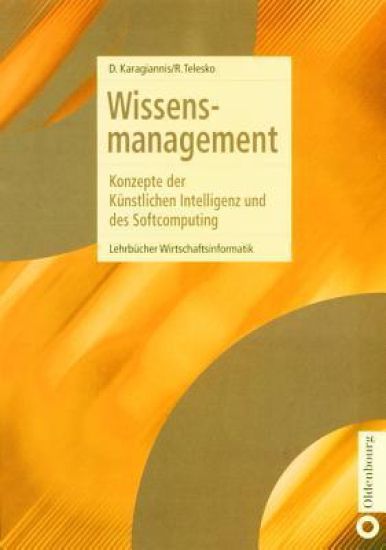
Der Produktionsfaktor Wissen gewinnt zunehmend an Bedeutung fur den Unternehmenserfolg. Das Gebiet Wissensmanagement wird in diesem Band auf neue Art und Weise dargestellt. Dabei werden die Bereiche "klassische Wissensverarbeitung," "Fuzzy Logic" und "Fuzzy-Systeme" sowie "Kunstliche Neuronale Netze" unterschieden und jeweils auf drei Ebenen prasentiert: der Modellierungsebene, der Entwicklungs- und Implementierungsebene sowie der Einsatzebene."

Geschweisste Aluminiumkonstruktionen
Dimitris Kosteas; Gerhard Steidl
Vieweg+Teubner Verlag
1978
nidottu
Dieses Buch wurde mitder Absicht geschrieben, Eigenschaften, Kennwerte, Formeln und Prinzipien bei Konstruktion und Berechnung von geschwei ten Aluminium- Konstruktionen zusammenzustellen. Es ist bestimmt als Arbeits- und Entschei- dungshilfe fiir den Ingenieur in der Praxis, aber auch als Lehrbuch fiir Studenten des konstruktiven I ngenieurbaus. Obwohl heute Aluminium nach Stahl das am meisten verwendete Metall ist, tragen Ausbildungsplane und -moglichkeiten diesem Zustand nur unzureichend Rechnung. Andererseits erscheint demnachst die Neufassung der DI N 4113 T1 und T2 "Alu- miniumkonstruktionen unter vorwiegend ruhender Belastung - Konstruktion und Berechnung". Der Schwerpunkt dieses Buches liegt dementsprechend in der Be- schreibung des Tragverhaltens geschwei ter Aluminiumbauteile sowie der Erlaute- rung und Erganzung entsprechender Richtlinien zur Bemessung und Gestaltung. Es wird keine enzyklopadische Darstellung samtlicher Daten iiber Aluminium vor- genommen. Hierzu gibt es sehr gute Nachschlagwerke mit einer Fiille von Informa- tionen iiber spezielle Gebiete. Es wird vielmehr versucht, den Erfordernissen der Lehre und der Anwendung in der Praxis in iibersichtlicher Weise zu entsprechen, wobei insbesondere Konstruktionen des Bauwesens betrachtet werden. Die be- schriebenen Eigenschaften, die Ausfiihrung und das Verhalten der geschwei ten Verbindungen, verschiedene Bemessungsregeln konnen jedoch im Prinzip fiir Kon- struktionen des Verkehrswesens sowie des Behalter- und Apparatebaus iibernom- men werden. Kapitel 1 stellt eine kurze Einleitung zum Thema der geschwei ten Aluminium- konstruktionen dar. Eine Beschreibung des Werkstoffes Aluminium, seines Gefiige- aufbaus, seiner Legierungen und des Halbzeugs fiir den konstruktiven I ngenieurbau sowie wichtige physikalische Eigenschaften sind im Kapitel 2 (G. Steidl) behandelt.