Personality disorders are probably more common than we think, and yet it does come as quite a shock when someone you are interacting with turns out to be affected.Going beyond the socially acceptable, just to shed a light on what a budding intimacy is like with someone so many would be quick to label "crazy".Is there any hope that love could actually help ?This is a special edition of my recently published ebook. This Lulu Edition features new cover artwork and a revised formatting of the text for a better e-reading experience...
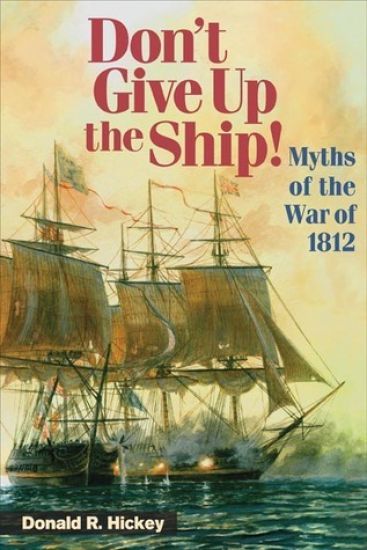
No longer willing to accept naval blockades, the impressment of American seamen, and seizures of American ships and cargos, the United States declared war on Great Britain. The aim was to frighten Britain into concessions and, if that failed, to bring the war to a swift conclusion with a quick strike at Canada. But the British refused to cave in to American demands, the Canadian campaign ended in disaster, and the U.S. government had to flee Washington, D.C., when it was invaded and burned by a British army. By all objective measures, the War of 1812 was a debacle for the young republic, and yet it was celebrated as a great military triumph. The American people believed they had won the war and expelled the invader. Oliver H. Perry became a military hero, Francis Scott Key composed what became the national anthem and commenced a national reverence for the flag, and the U.S.S. Constitution, "Old Ironsides," became a symbol of American invincibility. Every aspect of the war, from its causes to its conclusion, was refashioned to heighten the successes, obscure the mistakes, and blur embarrassing distinctions, long before there were mass media or public relations officers in the Pentagon. In this entertaining and meticulously researched book by America's leading authority on the War of 1812, Donald R. Hickey dispels the many misconcep-tions that distort our view of America's second war with Great Britain. Embracing military, naval, political, economic, and diplomatic analyses, Hickey looks carefully at how the war was fought between 1812 and 1815, and how it was remembered thereafter. Was the original declaration of war a bluff? What were the real roles of Canadian traitor Joseph Willcocks, Mohawk leader John Norton, pirate Jean Laffite, and American naval hero Lucy Baker? Who killed the Shawnee chief Tecumseh and who shot the British general Isaac Brock? Who actually won the war, and what is its lasting legacy? Hickey peels away fantasies and embellishments to explore why cer-tain myths gained currency and how they contributed to the way that the United States and Canada view themselves and each other.
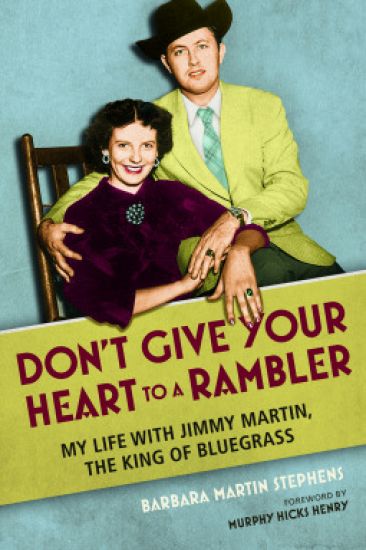
As charismatic and gifted as he was volatile, Jimmy Martin recorded dozens of bluegrass classics and co-invented the high lonesome sound. Barbara Martin Stephens became involved with the King of Bluegrass at age seventeen. Don't Give your Heart to a Rambler tells the story of their often tumultuous life together. Barbara bore his children and took on a crucial job as his booking agent when the agent he was using failed to obtain show dates for the group. Female booking agents were non-existent at that time but she persevered and went on to become the first female booking agent on Music Row. She also endured years of physical and emotional abuse at Martin's hands. With courage and candor, Barbara tells of the suffering and traces the hard-won personal growth she found inside motherhood and her work. Her vivid account of Martin's explosive personality and torment over his exclusion from the Grand Ole Opry fill in the missing details on a career renowned for being stormy. Barbara also shares her own journey, one of good humor and proud achievements, and filled with fond and funny recollections of the music legends and ordinary people she met, befriended, and represented along the way.Straightforward and honest, Don't Give your Heart to a Rambler is a woman's story of the world of bluegrass and one of its most colorful, conflicted artists.
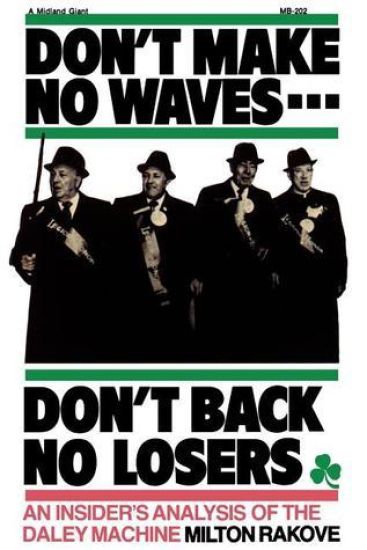
Tis is simply the best book that has been written about politics in Chicago. In the words of Andrew M. Greeley, "It is a very astute and dispassionate analysis of Chicago political life—far and away the best I have ever seen. Rakove is without illusions about either the right or the left." Rakove brings to his study an intimate knowledge of Chicago and the Daley machine, a practitioner's understanding of street-level politics, and a scholar's background in political theory. Blending anecdote with theory and description in a lively style, Rakove has bridged the gap between scholar and layman in a work that will appeal to both.
How do we judge whether we should be willing to follow the views of experts or whether we ought to try to come to our own, independent views? This book seeks the answer in medieval philosophical thought. In this engaging study into the history of philosophy and epistemology, Peter Adamson provides an answer to a question as relevant today as it was in the medieval period: how and when should we turn to the authoritative expertise of other people in forming our own beliefs? He challenges us to reconsider our approach to this question through a constructive recovery of the intellectual and cultural traditions of the Islamic world, the Byzantine Empire, and Latin Christendom. Adamson begins by foregrounding the distinction in Islamic philosophy between taqlid, or the uncritical acceptance of authority, and ijtihad, or judgment based on independent effort, the latter of which was particularly prized in Islamic law, theology, and philosophy during the medieval period. He then demonstrates how the Islamic tradition paves the way for the development of what he calls a "justified taqlid," according to which one develops the skills necessary to critically and selectively follow an authority based on their reliability. The book proceeds to reconfigure our understanding of the relation between authority and independent thought in the medieval world by illuminating how women found spaces to assert their own intellectual authority, how medieval writers evaluated the authoritative status of Plato and Aristotle, and how independent reasoning was deployed to defend one Abrahamic faith against the other. This clear and eloquently written book will interest scholars in and enthusiasts of medieval philosophy, Islamic studies, Byzantine studies, and the history of thought.
How do we judge whether we should be willing to follow the views of experts or whether we ought to try to come to our own, independent views? This book seeks the answer in medieval philosophical thought. In this engaging study into the history of philosophy and epistemology, Peter Adamson provides an answer to a question as relevant today as it was in the medieval period: how and when should we turn to the authoritative expertise of other people in forming our own beliefs? He challenges us to reconsider our approach to this question through a constructive recovery of the intellectual and cultural traditions of the Islamic world, the Byzantine Empire, and Latin Christendom. Adamson begins by foregrounding the distinction in Islamic philosophy between taqlid, or the uncritical acceptance of authority, and ijtihad, or judgment based on independent effort, the latter of which was particularly prized in Islamic law, theology, and philosophy during the medieval period. He then demonstrates how the Islamic tradition paves the way for the development of what he calls a "justified taqlid," according to which one develops the skills necessary to critically and selectively follow an authority based on their reliability. The book proceeds to reconfigure our understanding of the relation between authority and independent thought in the medieval world by illuminating how women found spaces to assert their own intellectual authority, how medieval writers evaluated the authoritative status of Plato and Aristotle, and how independent reasoning was deployed to defend one Abrahamic faith against the other. This clear and eloquently written book will interest scholars in and enthusiasts of medieval philosophy, Islamic studies, Byzantine studies, and the history of thought.
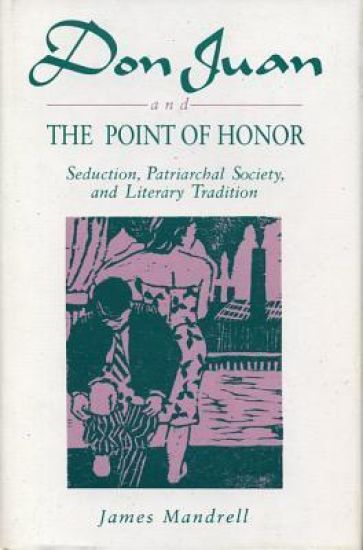
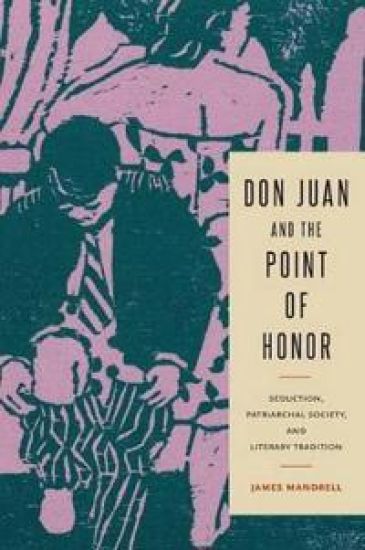
In Don Juan and the Point of Honor, James Mandrell undertakes a systematic examination of the many questions surrounding the legendary character. On the one hand, it might be argued that Don Juan threatens society, since he is supposedly an agent of social anarchy. On the other hand, given his intriguing sexual accomplishments, he could be viewed as a positive expression of life itself. James Mandrell shows what is at stake in the asking of such questions and, moreover, what is at stake in representations and considerations of Don Juan.After a discussion of the ways that Don Juan’s seductive powers infiltrate and influence the interpretations of texts of which he is a part, Mandrell continues with close readings of key Spanish literary works ranging from the seventeenth to the twentieth centuries. All of these works involve interrelated issues as regards Don Juan: the worldly uses and abuses of language; the power of literature to engender and embody other literary texts; seduction and its psychological and social subtexts; and society in relation to Don Juan as well as Don Juan’s role in society. Ultimately, these notions are tied into the concept of honor as it works in literature and society. Mandrell concludes with a study of modern adaptations of Don Juan and his story in various theories of culture, society, and economic organizations. What emerges is a view of Don Juan as a positive social force in patriarchal society and culture—as well as a force operative at the level of desire as it is made manifest in language. Mandrell shows that Don Juan should not be treated as an innocent or outmoded cultural artifact. Instead, he is a character whose story and vicissitudes are still significant in the context of our twenty-first-century world.
An examination of the grassroots movement that campaigned against incinerators to deal with the large amount of waste in American society. The authors' research is based on interviews and newspaper files, and a final chapter discusses the three successful projects and the five defeated ones.
When first proposed in this country during the 1970s, waste-to-energy (WTE) incinerators appeared to be ideal solutions to the growing mounds of trash in our "throw-away" society. Promising to convert useless garbage into electricity while saving precious landfill space, trash incinerators seemed perfectly timed to respond to a national need. Within a decade, however, a grassroots anti-incineration movement emerged as a vibrant offshoot of the environmental movement. In Don't Burn It Here, sociologists Edward Walsh, Rex Warland, and D. Clayton Smith examine this grassroots movement through detailed analyses of the struggles surrounding proposals to build eight municipal incinerators in Pennsylvania, New York, and New Jersey. The eight case histories that form the heart of the book are comparable to hundreds of others across the U.S. The authors' research is based on interviews, focus group discussions, extensive newspaper files, and questionnaire responses from participants on both sides of the conflicts. A final chapter examines the similarities and differences between the three successful projects and the five defeated ones. An overview of the history of the modern incinerator in the U.S. and the emergence of a major national opposition movement provides the necessary context, and throughout the book, the authors make useful comparisons to other national movements seeking legal justice for deprived collectivities such as women and ethnic groups. This project was supported by a grant from the Ford Foundation's Fund for Research in Dispute Resolution. Striving to maintain a balanced treatment of both sides of the incinerator battles, the authors provide fresh theoretical and methodological perspectives on a new type of collective action. They also help to close the gap between theory and empirical data in the social sciences.
In Don Juan and the Point of Honor, James Mandrell undertakes a systematic examination of the many questions surrounding the legendary character. On the one hand, it might be argued that Don Juan threatens society, since he is supposedly an agent of social anarchy. On the other hand, given his intriguing sexual accomplishments, he could be viewed as a positive expression of life itself. James Mandrell shows what is at stake in the asking of such questions and, moreover, what is at stake in representations and considerations of Don Juan.After a discussion of the ways that Don Juan’s seductive powers infiltrate and influence the interpretations of texts of which he is a part, Mandrell continues with close readings of key Spanish literary works ranging from the seventeenth to the twentieth centuries. All of these works involve interrelated issues as regards Don Juan: the worldly uses and abuses of language; the power of literature to engender and embody other literary texts; seduction and its psychological and social subtexts; and society in relation to Don Juan as well as Don Juan’s role in society. Ultimately, these notions are tied into the concept of honor as it works in literature and society. Mandrell concludes with a study of modern adaptations of Don Juan and his story in various theories of culture, society, and economic organizations. What emerges is a view of Don Juan as a positive social force in patriarchal society and culture—as well as a force operative at the level of desire as it is made manifest in language. Mandrell shows that Don Juan should not be treated as an innocent or outmoded cultural artifact. Instead, he is a character whose story and vicissitudes are still significant in the context of our twenty-first-century world.
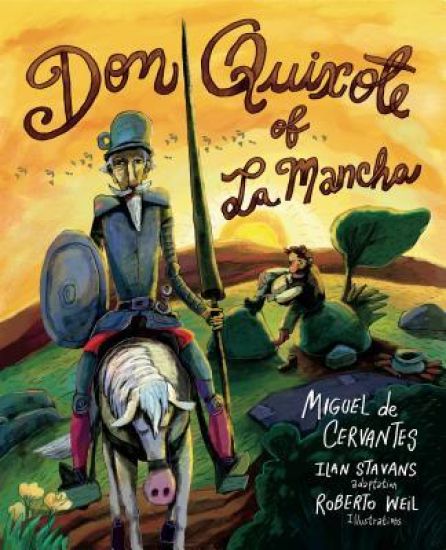
Publisheado originalmente en two partes en 1605 y 1615 y often considereado “the first novela moderna,” Don Quixote de Miguel de Cervantes es indudablemente el libro más influencial del canon literario hispánico. En esta adaptación groundbreakeadora, el comentarista cultural Ilan Stavans y el ilustrador Roberto Weil reimaginan la masterpiece de Cervantes en ways que son a la vez faithfules y whimsicamente irreverentes.En estas páginas, Stavans y Weil payean tributo a la novela de Cervantes así como a sus resonancias complexas en los centuries desde su publicación. El dauntlesseado “mad knight” Don Quixote y su haplesseado squire, Sancho Panza, encuentran los infamosos molinos de viento, contendean con campesinos y nobles disbelieveadores, y seekean relentlesmente al amor imaginario de Don Quixote, Dulcinea. También confrontean a sus propios creadores y adaptadores—Cervantes, Salvador Dalí, Franz Kafka y los propios Stavans y Weil—y tratan de hacer sense de la locura de los drones, taxis y su propia inmortalidad. El resultado es una novela gráfica ambiciosa y compelleante que revela a Don Quixote as “un libro infinito”—una obra que reflectea el pasado, presente y futuro de la condición humana.Availeable en Inglés y Spanglish, esta adaptación inspirada y audaz de una de las great novelas ever escritas seguramente será savoreada por generaciones to come.
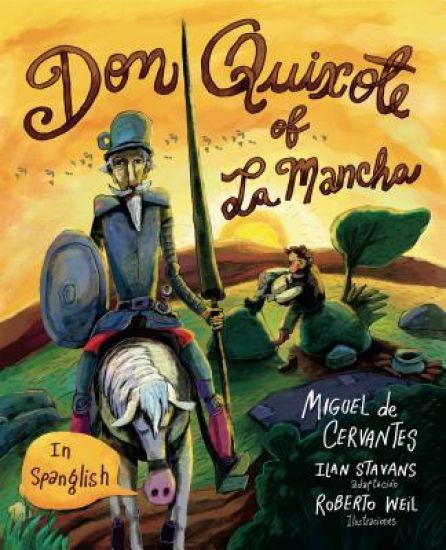
Originally published in two parts in 1605 and 1615 and often considered “the first modern novel,” Miguel de Cervantes’s Don Quixote is undoubtedly the most influential work in the Spanish literary canon. In this groundbreaking graphic adaptation, cultural commentator Ilan Stavans and illustrator Roberto Weil reimagine Cervantes’s masterpiece in ways that are both faithful and whimsically irreverent.In these pages, Stavans and Weil pay tribute to Cervantes’s novel as well as its complex resonances in the centuries since its publication. The dauntless “mad knight” Don Quixote and his hapless squire, Sancho Panza, encounter the infamous windmills, contend with disbelieving peasants and noblemen, and seek relentlessly for Quixote’s imaginary love, Dulcinea. They also confront their own creators and adapters—Cervantes, Salvador Dalí, Franz Kafka, and Stavans and Weil themselves—and try to make sense out of the madness of drones, taxicabs, and their own literary immortality. The result is an ambitious and compelling graphic novel that reveals Don Quixote as un libro infinito—a work that reflects the past, present, and future of the human condition.Available in both English and Spanglish editions, this inspired and audacious interpretation of one of the greatest novels ever written is sure to be savored by generations to come.
Building a brand with impact is one of the most important tasks that any business faces. Few people understand how to actually go about creating an effective brand. This book is a no holds barred guide to what brand building is, what it isn't and exactly what you have to do to build your brand.