Kirjojen hintavertailu. Mukana 12 083 983 kirjaa ja 12 kauppaa.

Kirjahaku

Etsi kirjoja tekijän nimen, kirjan nimen tai ISBN:n perusteella.

1000 tulosta hakusanalla E-Energy 13 Conference Committee

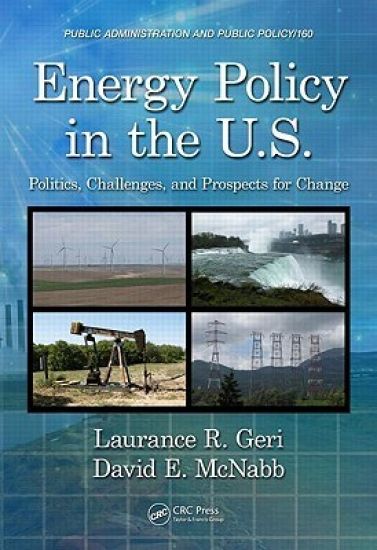
Energy Policy in the U.S.

Energy Policy in the U.S.

Laurance R. Geri; David E. McNabb

Routledge Member of the Taylor and Francis Group
2011
sidottu
In an effort to provide greater awareness of the necessary policy decisions facing our elected and appointed officials, Energy Policy in the U.S.: Politics, Challenges, and Prospects for Change presents an overview of important energy policies and the policy process in the United States, including their history, goals, methods of action, and consequences. In the first half of the book, the authors frame the energy policy issue by reviewing U.S. energy policy history, identifying the policy-making players, and illuminating the costs, benefits, and economic and political realities of currently competing policy alternatives. The book examines the stakeholders and their attempts to influence energy policy and addresses the role of supply and demand on the national commitment to energy conservation and the development of alternative energy sources. The latter half of the book delves into specific energy policy strategies, including economic and regulatory options, and factors that influence energy policies, such as the importance of international cooperation. Renewed interest in various renewable and nontraditional energy resources—for example, hydrogen, nuclear fusion, biomass, and tide motion—is examined, and policy agendas are explored in view of scientific, economic, regulatory, production, and environmental constraints. This book provides excellent insight into the complex task of creating a comprehensive energy policy and its importance in the continued availability of energy to power our way of life and economy while protecting our environment and national security.
The Secret to Being Fiercely Focused: How to Have Less Stress, More Energy and Get More Done by Tackling Your Tolerations
Are You Ready to Declutter Your Mind?The Life-Changing Magic of Tidying Up: The Japanese Art of Decluttering and Organizing, has been off and on the New York Times Best Seller list for years-mostly on. If decluttering your home and office is life-changing, what about decluttering your MIND?Hundreds of thousands of books have been written on success-about finding your why, having clear goals and how to achieve them. What you need to get ahead, how to network your way to the top and how to think and grow rich, is all helpful advice indeed.But what isn't talked about much is what you need to get rid of. Because in order to make room for what you really want, you have to get rid of what you DON'T want.Like a ship sailing the ocean, we pick up barnacles that weigh us down, slow our speed and keep us from smooth sailing.And if we don't acknowledge them and deal with them, they will nag at us, sapping our energy, focus and attention we need for success.These niggly, spirit-sucking, energy-draining, peace-killers steal-often quite stealthily-our joy, our happiness, our energy and our focus. They are called Tolerations-things we tolerate, but shouldn't. And like weeds in a garden, we must recognize them for what they are and hoe them out-or they will take over our garden (life).By learning and applying what you learn in this book, you will: - Get clearer on what you want for your best life. - Clarify, identify and eradicate what you DON'T want. - Find way more Tolerations than you would on your own. - Learn how to keep new Tolerations from creeping in. - Increase your confidence and self-esteem. - Stop settling for less than you deserve. - Have fun up-leveling your life. - Become a model for family and friends. Once you're aware of how important and powerful Toleration Identification and Eradication is, you will find your life flowing more smoothly, you'll have more energy and experience more peace.You will constantly be on the alert for even the smallest Toleration and not allow it to hold you back.Is This Book for You?It is if you truly want to maximize your productivity, achieve your most important goals and live your best life. If you're content to just float through life, taking what comes and live your life by default rather than by design, it's not for you.But if you're ready for real change, or you want to massively up-level the quality of your life, you're going to want to click on the order button and get to work polishing, honing and decluttering your mind and your life.
Change Your Life for Good with the PAME Code of Purpose, Action, Momentum, and Energy: Inspired by groundbreaking research and captivating life storie
Change your life for good - that's a big one Do you feel as if you are stuck in a rut and not living your true purpose in life?Are you itchy to get unstuck but don't know how and where to start?Or are you just afraid that you will fail miserably and embarrass yourself in the process?Change is not always easy. Yet, with the right tools and support, taking a step to change your life for good is easier than you think.You can do it Change Your Life for Good with the PAME Code of Purpose, Action, Momentum, and Energy.Chartered Psychologist, Dr E V Estacio shares groundbreaking research and real life stories from applied psychology, so you too can apply these practical and easy-to-follow techniques to change your life for good.Change Your Life for Good with the PAME Code of Purpose, Action, Momentum, and Energy is the first of the You Can Do It Series that will inspire you to live your passion, take action, and change your life for good.It also comes with a FREE BONUS - 60 motivational quotes that will help you to keep the momentum and stay true to your purpose in life.You will learn about: PURPOSEEffective ways to better understand yourself and what you want in lifeHow to use positive affirmations to manifest the life you want to liveMindfulness and visualization exercises to clarify your purpose and embody your passion in lifeACTIONHow to take the bold leap from dreaming to livingScientific techniques from applied psychology that will help you take real steps toward real actionSurprising reasons why we are so resistant to change, including facts about how our brain works and how to recondition your brain to embrace changeMOMENTUMThe undeniable truth about why difficult life events may not always make you strongerThe psychology behind why you need to celebrate successes in your life and keep a "catalog of wins"How to adopt optimism and how it will make you unstoppableHow to turn your limitations and life's obstacles into opportunities for growthFascinating lessons and inspiration from other people's life storiesENERGYEffective strategies to help you stay motivated for the long termPLUS practical and easy to use tips on how to develop healthier habits, declutter your mind, enrich your faith and spirituality, reconnect with nature, and so much more.This book is full of captivating life stories, positive affirmations, and evidence-based strategies that will help you to transform your life for good.It draws upon scientific research from health psychology, positive psychology, organizational psychology, coaching psychology, client-centered and humanist counselling, brain and cognitive psychology, and critical psychology.PLUS real-world examples and FREE BONUS material filled with motivational quotes to help keep you inspired.Are you ready for change and live your true purpose in life?Scroll back up, click the "buy now" button, and claim your FREE BONUS material with 60 motivational quotes to Change Your Life for Good.
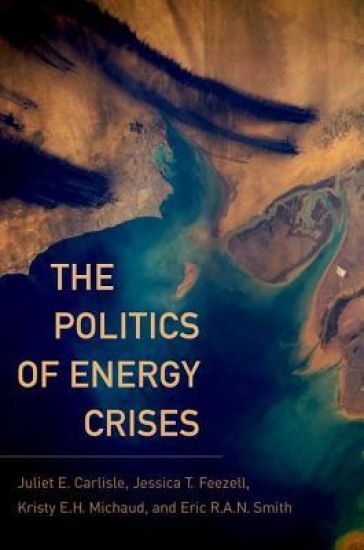
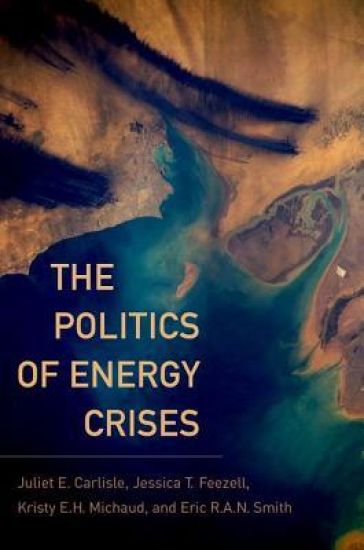
The Politics of Energy Crises

The Politics of Energy Crises

Eric R.A.N. Smith; Juliet E. Carlisle; Jessica T. Feezell; Kristy E.H. Michaud

Oxford University Press Inc
2016
sidottu
Energy crises, which amount to painful combinations of energy shortages and soaring prices, have struck the United States several times in recent decades. Each time they have resulted in political and economic shockwaves because, when gasoline becomes more expensive, the American public tends to react with anger and suspicion. Energy crises instantly put related issues at the top of the nation's agenda, sometimes with dramatic consequences for public policy. What can we learn from recent history, particularly as it may predict the role that volatile public opinion will play throughout the energy policy making process? As The Politics of Energy Crises demonstrates, one can discern patterns in politics and policymaking when looking at the cycles of energy crises in the United States. As such it is the first systematic historical study of political conflict, public opinion, and organized interest group and presidential and congressional action on energy issues, starting with the 1973 OPEC boycott and continuing through the present day. By charting the commonalities in political battles during energy crises, the authors make prognoses about what future energy crises will mean for United States policy.
The Politics of Energy Crises

The Politics of Energy Crises

Eric R.A.N. Smith; Juliet E. Carlisle; Jessica T. Feezell; Kristy E.H. Michaud

Oxford University Press Inc
2016
nidottu
Energy crises, which amount to painful combinations of energy shortages and soaring prices, have struck the United States several times in recent decades. Each time they have resulted in political and economic shockwaves because, when gasoline becomes more expensive, the American public tends to react with anger and suspicion. Energy crises instantly put related issues at the top of the nation's agenda, sometimes with dramatic consequences for public policy. What can we learn from recent history, particularly as it may predict the role that volatile public opinion will play throughout the energy policy making process? As The Politics of Energy Crises demonstrates, one can discern patterns in politics and policymaking when looking at the cycles of energy crises in the United States. As such it is the first systematic historical study of political conflict, public opinion, and organized interest group and presidential and congressional action on energy issues, starting with the 1973 OPEC boycott and continuing through the present day. By charting the commonalities in political battles during energy crises, the authors make prognoses about what future energy crises will mean for United States policy.
Energy and Process Integration

Energy and Process Integration

M. C. Georgiadis; E. N. Pistikopoulos

Begell House Publishers Inc.,U.S.
2006
sidottu
Optimization of the use of energy is of fundamental importance, particularly in view of the increasing tensions the world now faces between energy supply and demand. Chemical processes in general, and distillation processes in particular, account for a significant fraction of the world's energy usage. For example, distillation processes account for around 3% of the energy utilization in the US. There is thus a significant incentive to design systems so that energy utilization is minimized. Much progress has been made by the application of simple methods such as pinch technology (see for instance B. Linnhoff and R. Smith, Heat Exchanger Design Handbook , Begell House), but the problems encountered in complex distillation systems are such that a much higher level approach is needed. Authors Michael Georgiadis and Efstratios Pistikopoulos are from the Centre for Process Systems Engineering (CPSE) at Imperial College. CPSE is an international leader in the areas of process simulation, optimization and control. The application of techniques of the type described in this volume will make an important contribution to making the best use of mankind's increasingly scarce energy resources.
Optimal Control of Energy Resources for State Estimation Over Wireless Channels

Optimal Control of Energy Resources for State Estimation Over Wireless Channels

Alex S. Leong; Daniel E. Quevedo; Subhrakanti Dey

Springer International Publishing AG
2017
nidottu
This brief introduces wireless communications ideas and techniques into the study of networked control systems. It focuses on state estimation problems in which sensor measurements (or related quantities) are transmitted over wireless links to a central observer. Wireless communications techniques are used for energy resource management in order to improve the performance of the estimator when transmission occurs over packet dropping links, taking energy use into account explicitly in Kalman filtering and control. The brief allows a reduction in the conservatism of control designs by taking advantage of the assumed. The brief shows how energy-harvesting-based rechargeable batteries or storage devices can offer significant advantages in the deployment of large-scale wireless sensor and actuator networks by avoiding the cost-prohibitive task of battery replacement and allowing self-sustaining sensor to be operation. In contrast with research on energy harvesting largelyfocused on resource allocation for wireless communication systems design, this brief optimizes estimation objectives such as minimizing the expected estimation error covariance. The resulting power control problems are often stochastic control problems which take into account both system and channel dynamics. The authors show how to pose and solve such design problems using dynamic programming techniques. Researchers and graduate students studying networked control systems will find this brief a helpful source of new ideas and research approaches.
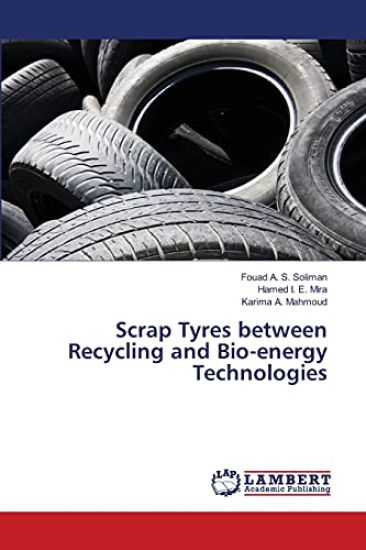
Scrap Tyres between Recycling and Bio-energy Technologies

Scrap Tyres between Recycling and Bio-energy Technologies

Fouad A S Soliman; Hamed I E Mira; Karima A Mahmoud

Lap Lambert Academic Publishing
2021
pokkari
Scrap tyres are a category of waste whose disposal might be problematic due to their highly complex structure, diverse composition of the raw material, and quality of the rubber. Rubber represents the 70-80% of the tyre mass, while the rest is made of steel belts and textile overlays, which during recycling have to be separated from the rubber. Tyre recycling is based on the mechanical, thermal or chemical removal of the rubber fraction. Landfilling of waste tyres was widely adopted in the past and it is still practiced in some countries. Waste tyres may create problems because they are flexible and cannot be compacted.The most noticeable problem asso- ciated with large tyre storage areas is the potential fire hazard they present. Once a tyre pile catches fire, it is very hard, if not impossible, to extinguish. In some instances, tyre piles have been burning for several months with the black fumes being visible for many miles.
Copper for Bright Future of Renewable Energy

Copper for Bright Future of Renewable Energy

Fouad A S Soliman; Hamed I E Mira

Lap Lambert Academic Publishing
2023
pokkari
Copper is a chemical element with the symbol Cu (from Latin: cuprum) and atomic number 29. It is a soft, malleable, and ductile metal with very high thermal and electrical conductivity. A freshly exposed surface of pure copper has a pinkish-orange color. Copper is used as a conductor of heat and electricity, as a building material, and as a constituent of various metal alloys, such as sterling silver used in jewelry, cupronickel used to make marine hardware and coins, and constantan used in strain gauges and thermo-couples for temperature measurement.
Energy Conservation Guidebook, Third Edition

Energy Conservation Guidebook, Third Edition

Dale R. Patrick; Stephen W. Fardo; Ray E. Richardson; Brian W. Fardo

River Publishers
2023
nidottu
Revised and edited, this new third edition reference covers the full scope of energy management techniques and applications for new and existing buildings, with emphasis on the "systems" approach to developing an effective overall energy management strategy. Foremost in the enhancements to the new edition is content that reflects the emphasis on conservation for "green energy" awareness. Also examined are building structural considerations, such as heat loss and gain, windows, and insulation. A thorough discussion of heating and cooling systems basics is provided, along with energy management guidelines. Also covered are energy conservation measures that may be applied for lighting systems, water systems, and electrical systems. Specific energy management technologies and their application are discussed in detail, including solar energy systems, energy management systems, and alternative energy technologies.• Covers the full scope of energy management techniques and applications for new and existing buildings• Emphasizes a "systems" approach to developing an effective overall energy management strategy• Includes enhanced content that reflects the emphasis on conservation for "green energy" awareness
Energy Conservation Guidebook

Energy Conservation Guidebook

Dale R. Patrick; Stephen W. Fardo; Ray E. Richardson; Brian W. Fardo; Mark Barron

River Publishers
2023
sidottu
Efficient energy management and effective conservation procedures have been very important considerations for our society for many years. An oil embargo in the 1970s and early 1980s brought about a new awareness of energy conservation. Because of various factors like loss of tax credits and efficiency standards imposed by the government, public interest dropped considerably in regard to energy conservation. A revival in energy conservation among the general public occurred following the Persian Gulf War in the early 1990s.What does the 21st century hold? Conflicts in the Middle East, high prices for petroleum, and increasing population worldwide will all be significant influences on energy and its conservation. Considerable discussion of climate change, global warming, and increased concerns in regard to our electricity supply have provided motivation for building energy demand to be more flexible. Energy Management and Conservation, Fourth Edition, provides a very practical discussion of how energy can be managed and saved in most types of buildings. This edition not only updates the previous edition but adds updated content concerning energy cost reduction/going green to improve the environment. The authors of this book have written several books that use the systems approach. Through the use of the systems approach, the reader will be able to grasp how different parts of a building fit together to form a unit that uses energy efficiently. This text provides a thorough and practical discussion of the operation of systems that are found in most types of buildings. Each system is discussed with energy management and conservation in mind/going green to save money and improve the environment. There are many ways to manage a building to accomplish efficient energy conservation. Several of the chapters have checklists at the end to summarize ways of conserving energy that relate to the chapter.Important changes in this edition include coverage of governmental requirements from agencies such as Environmental Protection Agency (EPA), United States Department of Energy (USDOE), and American Society of Refrigerating, Heating and Air-Conditioning Engineering (ASHRAE), updated as of 2022 standards. Instrumentation updates include types of sensors and the concept of "smart" devices such as meters. Addition of computer building maintenance management systems and new updates for renewable energy resources are included. Enhancements to existing systems content (such as variable frequency drives for pumps) have been carefully added.
Energy Conservation Guidebook, Third Edition

Energy Conservation Guidebook, Third Edition

Dale R. Patrick; Stephen W. Fardo; Ray E. Richardson; Brian W. Fardo

Apple Academic Press Inc.
2014
sidottu
Revised and edited, this new third edition reference covers the full scope of energy management techniques and applications for new and existing buildings, with emphasis on the "systems" approach to developing an effective overall energy management strategy. Foremost in the enhancements to the new edition is content that reflects the emphasis on conservation for "green energy" awareness. Also examined are building structural considerations, such as heat loss and gain, windows, and insulation. A thorough discussion of heating and cooling systems basics is provided, along with energy management guidelines. Also covered are energy conservation measures that may be applied for lighting systems, water systems, and electrical systems. Specific energy management technologies and their application are discussed in detail, including solar energy systems, energy management systems, and alternative energy technologies. • Covers the full scope of energy management techniques and applications for new and existing buildings • Emphasizes a "systems" approach to developing an effective overall energy management strategy • Includes enhanced content that reflects the emphasis on conservation for "green energy" awareness
Green Hydrogen Energy Systems

Green Hydrogen Energy Systems

Alexandros Arsalis; Fanourios Kourougianni; Andreas V. Olympios; Charalampos Konstantinou; Georgios Yiasoumas; Panos Papanastasiou; Aravind Purushothaman Vellayani; Soteris Kalogirou; George E. Georghiou

Elsevier - Health Sciences Division
2025
nidottu
Green Hydrogen Energy Systems explores the vital technologies and methods for generating, storing, and utilizing green hydrogen. By adopting an energy systems approach, the book offers a comprehensive review of green hydrogen systems, integrating principles, configurations, progress, and applications, bolstered by technoeconomic analyses and performance data. Addressing common challenges, it explains processes for developing and constructing basic and advanced green hydrogen systems. The book details the fundamentals of hydrogen technologies, including thermodynamics, kinetics, energy loss mechanisms, and costs. It covers aspects such as heat release, clean water usage in electrolyzers, system configurations, and includes real-world performance data, case studies, hydrogen hubs, safety, and economics.