Kirjojen hintavertailu. Mukana 12 380 696 kirjaa ja 12 kauppaa.

Kirjahaku

Etsi kirjoja tekijän nimen, kirjan nimen tai ISBN:n perusteella.

1000 tulosta hakusanalla E.M. Forster

An E. M. Forster Chronology

An E. M. Forster Chronology

J. Stape

Palgrave Macmillan
1993
sidottu
This chronology provides a concise and accurate outline of Forster's personal, literary and intellectual life from year to year in a series of crisply written diary entries. While the main focus is on his career as a writer of fiction, most of which falls between 1901 and 1924, the chronicle format also sheds new light on the extent and nature of Forster's political and public commitments during his middle years and into an active old age. Travel, friendships and wide reading are also documented to achieve a coherent picture of a full life. Drawing on numerous unpublished sources, including widely scattered letters and the Forster archive at King's College, Cambridge, this chronology makes available a wealth of new information about Forster the man and writer.
An E. M. Forster Chronology

An E. M. Forster Chronology

J. Stape

Palgrave Macmillan
1993
nidottu
This chronology provides a concise and accurate outline of Forster's personal, literary and intellectual life from year to year in a series of crisply written diary entries. While the main focus is on his career as a writer of fiction, most of which falls between 1901 and 1924, the chronicle format also sheds new light on the extent and nature of Forster's political and public commitments during his middle years and into an active old age. Travel, friendships and wide reading are also documented to achieve a coherent picture of a full life. Drawing on numerous unpublished sources, including widely scattered letters and the Forster archive at King's College, Cambridge, this chronology makes available a wealth of new information about Forster the man and writer.
How to Study an E. M. Forster Novel

How to Study an E. M. Forster Novel

Nigel Messenger

Red Globe Press
1991
nidottu
Forster's novels have always given great pleasure to the general reader but they do present particular problems for those who wish to study them in a more systematic way. The elusiveness of Forster's irony, the complexity of his symbolism and the formal ambiguities in structure that are such a marked feature in all his novels, make any analysis surprisingly challenging. In this book, Nigel Messenger shows you how to set about this task.
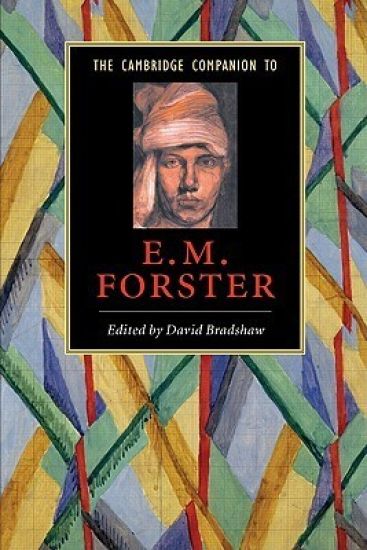
The Cambridge Companion to E. M. Forster
This collection of essays, each one by a recognized expert, provides lively and innovative readings of every aspect of Forster's wide-ranging career. It includes substantial chapters dedicated to his two major novels, Howards End and A Passage to India, and further chapters focus on A Room With a View and Maurice. Forster's connections with the values of Bloomsbury and the lure of Greece and Italy in his work are assessed, as is his vexed relationship with Modernism. Other essays investigate his role as a literary critic, the status of his work within the genres of the novel and the short story, his treatment of sexuality and his attitude to and representation of women. This was the most comprehensive study of Forster's work to be published for many years, providing an invaluable source of comment on and insight into his writings.
The Cambridge Companion to E. M. Forster
This collection of essays, each one by a recognized expert, provides lively and innovative readings of every aspect of Forster's wide-ranging career. It includes substantial chapters dedicated to his two major novels, Howards End and A Passage to India, and further chapters focus on A Room With a View and Maurice. Forster's connections with the values of Bloomsbury and the lure of Greece and Italy in his work are assessed, as is his vexed relationship with Modernism. Other essays investigate his role as a literary critic, the status of his work within the genres of the novel and the short story, his treatment of sexuality and his attitude to and representation of women. This was the most comprehensive study of Forster's work to be published for many years, providing an invaluable source of comment on and insight into his writings.
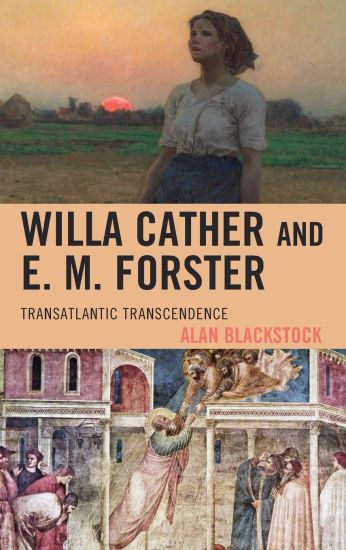
Willa Cather and E. M. Forster

Willa Cather and E. M. Forster

Alan Blackstock

Fairleigh Dickinson University Press
2020
sidottu
Though both Willa Cather and E. M. Forster have been alternately praised as progressives and criticized as conservatives, the novels of both writers embody the tenets of liberal humanism, while at the same time reflecting the tensions associated with modernism (though both of these terms have come under intense critical scrutiny in recent years.) And while a few critics have offered brief comparisons of individual works or particular tendencies of Cather and Forster, none has provided the systematic comparative analysis of the relationship between liberal humanist/modernist tensions and the search for transcendence in their work that this book aims to provide. The principal aims of the present study are to locate the imagined alternatives to the "lamentable present" embodied in the novels of both writers and to explore how literature and the arts might assist in transcending the deficiencies and disunities of life in the modern era.
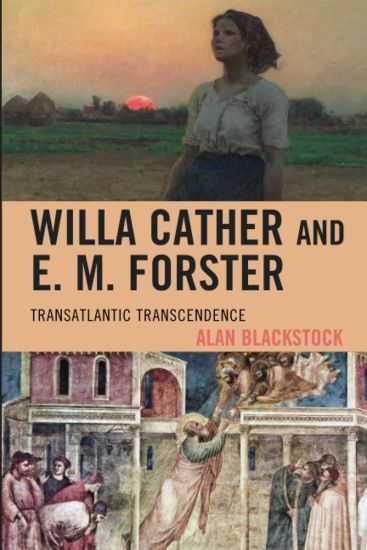
Willa Cather and E. M. Forster

Willa Cather and E. M. Forster

Alan Blackstock

Fairleigh Dickinson University Press
2021
nidottu
Though both Willa Cather and E. M. Forster have been alternately praised as progressives and criticized as conservatives, the novels of both writers embody the tenets of liberal humanism, while at the same time reflecting the tensions associated with modernism (though both of these terms have come under intense critical scrutiny in recent years.) And while a few critics have offered brief comparisons of individual works or particular tendencies of Cather and Forster, none has provided the systematic comparative analysis of the relationship between liberal humanist/modernist tensions and the search for transcendence in their work that this book offers. The principal aims of the present study are to locate the imagined alternatives to the "lamentable present" embodied in the novels of both writers and to explore how literature and the arts might assist in transcending the deficiencies and disunities of life in the modern era.
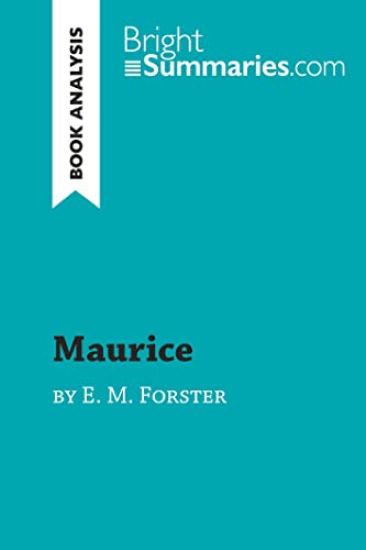
Maurice by E. M. Forster (Book Analysis)

Maurice by E. M. Forster (Book Analysis)

Bright Summaries

BrightSummaries.com
2019
pokkari
Unlock the more straightforward side of Maurice with this concise and insightful summary and analysis This engaging summary presents an analysis of Maurice by E. M. Forster, a romantic novel centred on the title character's burgeoning awareness of his homosexuality and the ways he explores it. Maurice initially embarks on a relationship with one of his fellow students at Cambridge, the highly intellectual Clive Durham. However, after Clive breaks his heart by abruptly ending their relationship, Maurice initially looks for a way of 'curing' his homosexuality, before eventually accepting himself and entering into a committed relationship with the lower-class Alec Scudder. E. M. Forster was a member of the Bloomsbury Group, and is generally considered one of the most important English novelists of the 20th century. At his behest, Maurice was not published until after his death, as homosexuality remained illegal in the United Kingdom throughout most of his lifetime, and he feared the possible repercussions of publishing a book that portrayed same-sex relationships in such a positive light. Find out everything you need to know about Maurice in a fraction of the time This in-depth and informative reading guide brings you: - A complete plot summary- Character studies- Key themes and symbols- Questions for further reflectionWhy choose BrightSummaries.com? Available in print and digital format, our publications are designed to accompany you on your reading journey. The clear and concise style makes for easy understanding, providing the perfect opportunity to improve your literary knowledge in no time. See the very best of literature in a whole new light with BrightSummaries.com
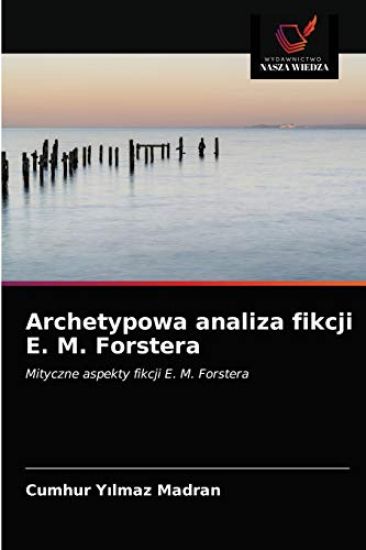
Archetypowa analiza fikcji E. M. Forstera

Archetypowa analiza fikcji E. M. Forstera

Cumhur Yilmaz Madran

Wydawnictwo Nasza Wiedza
2021
pokkari
Książka ma rzucic nieco światla na wykorzystanie mit w, powtarzających się mitycznych obraz w i archetypowych wzor w w jego pracach E. M. Forster. Praca ta analizuje archetypowe obrazy Forstera, odnosząc się szczeg lnie do jego gl wnych dziel. Zastosowana metoda to archetypowa krytyka; zajmuje się archetypami, kt re są pierwotnymi obrazami postrzeganymi w r żnych kulturach, odziedziczonymi od niepamiętnych czas w, wywodzącymi się z "zbiorowej nieświadomości". Archetyp to mityczny symbol, glęboko zakorzeniony w nieświadomości, oparty szerzej na fundamencie natury uniwersalnej niż zwykly symbol literacki i bardziej og lnie wyrażający elemental w czlowieku i naturze. To badanie dowodzi, że Forster przechodzi od fantazji do proroctw. W zależności od tego postępu archetypy Forstera ewoluują. Badanie to przybliża czytelnikowi, w jaki spos b mityczne motywy i archetypy pozwalają autorowi na przekazanie jego wizji rzeczywistości, kt ra jest w istocie ponadczasowa. Ten przegląd archetyp w jest niezbędną lekturą dla wszystkich ludzi zajmujących się literaturą, mitologią i psychoanalizą.
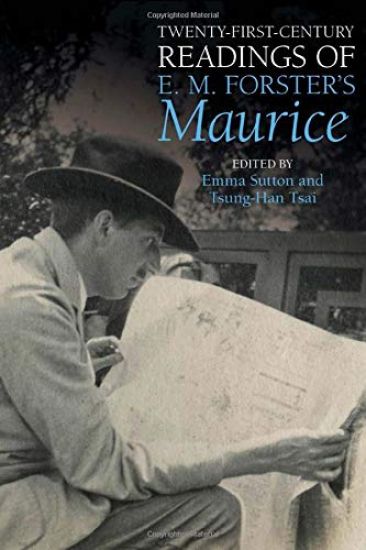
Twenty-First-Century Readings of E. M. Forster's 'Maurice'
This is the first book-length study of Forster’s posthumously-published novel. Nine essays focus exclusively on Maurice and its dynamic afterlives in literature, film and new media during the twentieth and twenty-first centuries. Begun in 1913 and revised over almost fifty years, Maurice became a defining text in Forster’s work and a canonical example of queer fiction. Yet the critical tendency to read Maurice primarily as a ‘revelation’ of Forster’s homosexuality has obscured important biographical, political and aesthetic contexts for this novel. This collection places Maurice among early twentieth-century debates about politics, philosophy, religion, gender, Aestheticism and allegory. Essays explore how the novel interacts with literary predecessors and contemporaries including John Bunyan, Oscar Wilde, Havelock Ellis and Edward Carpenter, and how it was shaped by personal relationships such as Forster’s friendship with Florence Barger. They close-read the textual variants of Forster’s manuscripts and examine the novel’s genesis and revisions. They consider the volatility of its reception, analysing how it galvanizes subsequent generations of writers and artists including Christopher Isherwood, Alan Hollinghurst, Damon Galgut, James Ivory and twenty-first-century online fanfiction writers. What emerges from the volume is the complexity of the novel, as a text and as a cultural phenomenon.
Twenty-First-Century Readings of E. M. Forster's 'Maurice'
This is the first book-length study of Forster’s posthumously-published novel. Nine essays focus exclusively on Maurice and its dynamic afterlives in literature, film and new media during the twentieth and twenty-first centuries. Begun in 1913 and revised over almost fifty years, Maurice became a defining text in Forster’s work and a canonical example of queer fiction. Yet the critical tendency to read Maurice primarily as a ‘revelation’ of Forster’s homosexuality has obscured important biographical, political and aesthetic contexts for this novel. This collection places Maurice among early twentieth-century debates about politics, philosophy, religion, gender, Aestheticism and allegory. Essays explore how the novel interacts with literary predecessors and contemporaries including John Bunyan, Oscar Wilde, Havelock Ellis and Edward Carpenter, and how it was shaped by personal relationships such as Forster’s friendship with Florence Barger. They close-read the textual variants of Forster’s manuscripts and examine the novel’s genesis and revisions. They consider the volatility of its reception, analysing how it galvanizes subsequent generations of writers and artists including Christopher Isherwood, Alan Hollinghurst, Damon Galgut, James Ivory and twenty-first-century online fanfiction writers. What emerges from the volume is the complexity of the novel, as a text and as a cultural phenomenon.