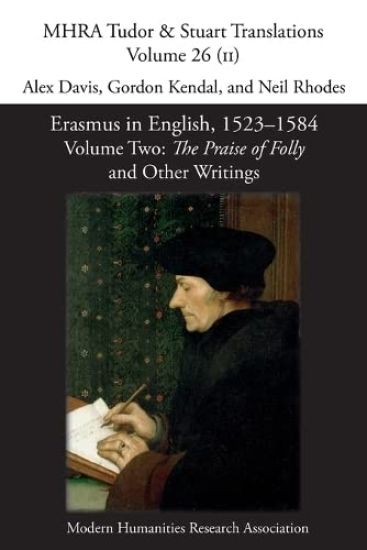
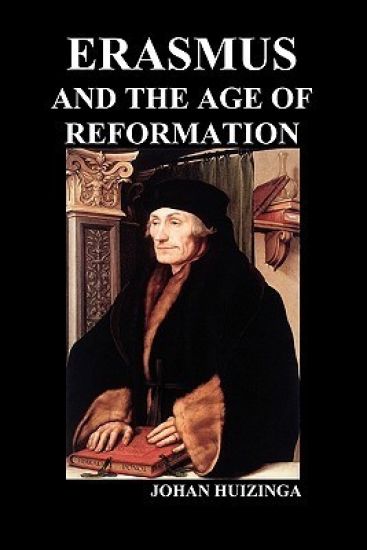
Although not translated into English until 1549, Erasmus's most famous work, the Praise of Folly, has an English provenance as the product of his friendship with Thomas More. The text of the original translation, by Thomas Chaloner, appears here for the first time in a fully annotated, modernised edition. It is presented alongside a selection from the English Paraphrases, a central text of the Edwardian Reformation; translations of two pacifist works, the Bellum Erasmiand The Complaint of Peace, the second of which is constructed as an oration, like Praise of Folly; and the essay on the adage Sileni Alcibiadis.
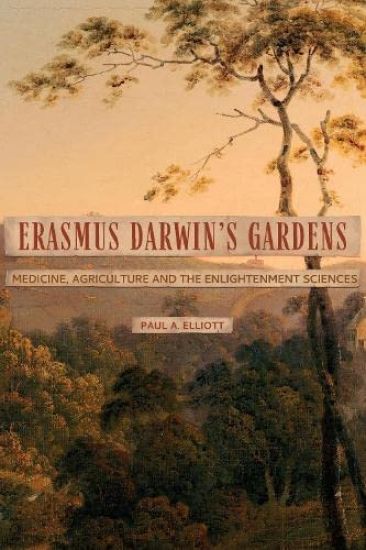
This first full study of Erasmus Darwin's gardening, horticulture and agriculture shows he was as keen a nature enthusiast as his grandson Charles. Famous as the author of the Botanic Garden (1791) and grandfather of Charles Darwin (1809-1882), Erasmus Darwin (1731-1802) was a larger-than-life enlightenment natural philosopher (scientist) and writer who practised as a doctor across the English Midlands for nearly half a century. A practical gardener and horticulturist, Darwin created a botanic garden near Lichfield - which galvanised his poetry - and kept other gardens, an orchard and small "farm" in Derby. Informed by his medical practice and botanical studies, Darwin saw many parallels between animals, plants and humans which aroused hostility during the years of revolution, warfare and reaction, but helped him to write Zoonomia (1794/96) and Phytologia (1800) - his major studies of medicine, agriculture and gardening. Captivated by the changing landscapes and environments of town and country and supported by social networks such as those in Lichfield and Derby, Darwin avidly exchanged ideas about plants, animals and their diseases with family, patients, friends such as the poet Anna Seward (1742-1809), farmers, fellow doctors, huntsmen and even the local mole catcher. The is the first full study of Erasmus Darwin's gardening, horticulture and agriculture. It shows him as keen a nature enthusiast as his contemporary Rev. Gilbert White of Selbourne (1720-1793) or his grandson Charles, fascinated with everything from swarming insects and warring bees to domestic birds and dogs, pigs and livestock on his farm to fungi growing from horse dung in Derby tan yards. Ranging over his observations of plant physiology and anatomy to the use of plant "bandages" in his orchard and electrical machines to hasten seed germination to explosive studies of vegetable "brains", nerves and sensations, the book demonstrates the ways in which Erasmus Darwin's landscape and garden experiences transformed his understanding of nature. They provided him with insights into medicine and the environmental causes of diseases, the classification of plants and animals, chemistry, evolution, potential new medicines and foodstuffs and the ecological interdependency of the natural economy. Like the amorous vegetables of the Loves of the Plants (1789) which fascinated, scandalised and titillated late Georgian society, the many living creatures of Darwin's gardens and farm encountered in this book were for him real, dynamic, interacting and evolving beings who helped inspire and re-affirm his progressive social and political outlook.
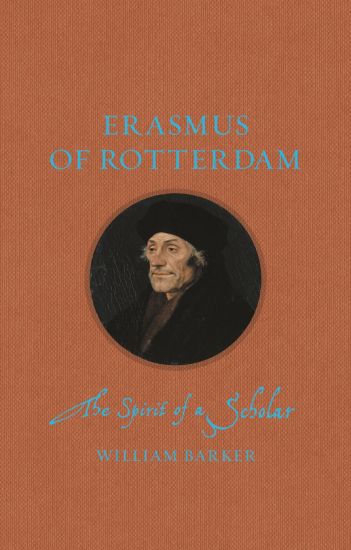
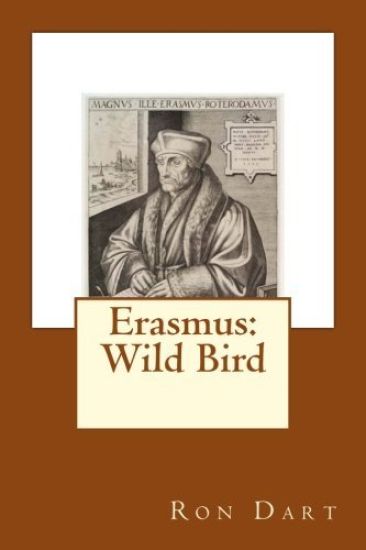
Erasmus of Rotterdam came from an obscure background and through remarkable perseverance, skill, and vision became a powerful intellectual figure in Europe in the early sixteenth century. He was known for his vigorous opposition to war, intolerance and hypocrisy, and at the same time for an irony and subtlety that could confuse his friends as well as his opponents. His ideas influenced the rise of the Reformation and had a huge impact on the humanities, and that continues to today. This book shows how an independent textual scholar was able, by the power of the printing press and his own wits, to attain both fame and notoriety. Erasmus of Rotterdam is the first popular biography in English in twenty years and is based on the immense amount of recent scholarship devoted to Erasmus.
This first full study of Erasmus Darwin's gardening, horticulture and agriculture shows he was as keen a nature enthusiast as his grandson Charles. Famous as the author of the Botanic Garden (1791) and grandfather of Charles Darwin (1809-1882), Erasmus Darwin (1731-1802) was a larger-than-life enlightenment natural philosopher (scientist) and writer who practised as a doctor across the English Midlands for nearly half a century. A practical gardener and horticulturist, Darwin created a botanic garden near Lichfield - which galvanised his poetry - and kept other gardens, an orchard and small "farm" in Derby. Informed by his medical practice and botanical studies, Darwin saw many parallels between animals, plants and humans which aroused hostility during the years of revolution, warfare and reaction, but helped him to write Zoonomia (1794/96) and Phytologia (1800) - his major studies of medicine, agriculture and gardening. Captivated by the changing landscapes and environments of town and country and supported by social networks such as those in Lichfield and Derby, Darwin avidly exchanged ideas about plants, animals and their diseases with family, patients, friends such as the poet Anna Seward (1742-1809), farmers, fellow doctors, huntsmen and even the local mole catcher. The is the first full study of Erasmus Darwin's gardening, horticulture and agriculture. It shows him as keen a nature enthusiast as his contemporary Rev. Gilbert White of Selbourne (1720-1793) or his grandson Charles, fascinated with everything from swarming insects and warring bees to domestic birds and dogs, pigs and livestock on his farm to fungi growing from horse dung in Derby tan yards. Ranging over his observations of plant physiology and anatomy to the use of plant "bandages" in his orchard and electrical machines to hasten seed germination to explosive studies of vegetable "brains", nerves and sensations, the book demonstrates the ways in which Erasmus Darwin's landscape and garden experiences transformed his understanding of nature. They provided him with insights into medicine and the environmental causes of diseases, the classification of plants and animals, chemistry, evolution, potential new medicines and foodstuffs and the ecological interdependency of the natural economy. Like the amorous vegetables of the Loves of the Plants (1789) which fascinated, scandalised and titillated late Georgian society, the many living creatures of Darwin's gardens and farm encountered in this book were for him real, dynamic, interacting and evolving beings who helped inspire and re-affirm his progressive social and political outlook.
This book presents the history of Erasmus, an European humanist; and his essay against war. "With Erasmus a new period opens. Two things broadly distinguish him, as a scholar, from the men before and after him. First, he was not only a refined humanist, writing for the fastidious few, and prizing no judgment but theirs; he took the most profitable authors of antiquity, -profitable in a moral as well as a literary sense, -chose out the best things in them, -and sought to make these things widely known, -applying their wisdom or wit to the circumstances of his own day. Secondly, in all his work he had an educational aim, -and this of the largest kind. The evils of his age, -in Church, in State, in the daily lives of men, -seemed to him to have their roots in ignorance, -ignorance of what Christianity meant, -ignorance of what the Bible taught, -ignorance of what the noblest and most gifted minds of the past, whether Christian or pagan, had contributed to the instruction of the human race. Let true knowledge only spread, and under its enlightening and humanizing influence a purer religion and a better morality will gradually prevail. Erasmus was a man of the world; but with his keen intellect, so quickly susceptible to all impressions, he made the mistake, not uncommon for such temperaments, of overrating the rapidity with which intellectual influences permeate the masses of mankind. However, no one was ever more sistently or brilliantly true to an idea than Erasmus was to his; and it is wonderful how much he achie
This collection of literature attempts to compile many of the classic works that have stood the test of time and offer them at a reduced, affordable price, in an attractive volume so that everyone can enjoy them.
There is a predictable tendency, when teaching the history of Western political philosophy, to cover the classical worthies such as Plato, Aristotle, Seneca, Cicero, Augustine and Aquinas. Then, such moderns as Machiavelli, Locke, Hobbes, Smith, Rousseau, Mill and tribe are walked onto front stage as embodying the liberal tribe. The next step on the theoretical trail is to touch down on trendy postmodern thinkers. And, so the tale unfolds from beginning to end. If much time is spent in doing political theology in the 16th century (most apt and pertinent in 2017, October 1517 being the posting of Luther's 95 Theses on the door of Wittenberg), Luther and Calvin are highlighted as forging the Protestant political way, Anabaptists-Mennonites the pacifist alternate to the magisterial tradition.It is somewhat troubling that political thinkers such as Thomas More, Erasmus and Richard Hooker are often omitted or marginalized in such an overview of Western political thought. This has led, to some degree, to the closing of the mind and a reducing of it to the smallest liberal circle turns. More and Erasmus were close friends and their vision of the common good and just peacemaking tracked a different trail from that of Machiavelli, Luther and Calvin. Hooker, of course, brings together the political vision of the Elizabethan consensus. But, it is to Erasmus that, although mostly studied as a Biblical scholar, we turn in this book. Erasmus was solidly committed to engaging the public sphere in a just, irenical and dovish manner. Such an idealistic vision came as both an affront to the Protestant Magisterial Reformers and Roman Catholics of a Tridentine persuasion. But, Erasmus was no absolute pacifist. He was very much the nimble, subtle and nuanced owl of his age, ever finding a thoughtful and navigating a thoughtful pathway between the pacifist doves and warlike hawks.Erasmus, at a more popular level, is known for Praise of Folly, The Colloquies and Adages. But, The Education of a Christian Prince raises the level of political thought to a higher pitch and place. Such general surveys of Erasmus' political thinking as Erasmus and Our Struggle for Peace: Peace Protests (1950), The Better Part of Valor: More, Erasmus, Colet and Vives on Humanism, War, and Peace 1496-1535 (1962) and The Politics of Erasmus (1978) make it abundantly clear how and why Erasmus understands the role of political thinking and action in a way that diverges from Luther-Calvin and Machiavelli-Hobbes and Locke. Why is Erasmus regularly ignored in the study of political philosophy? His vision still lingers on even though many who have affinities with his thinking know little about him. The fact that one of the most pre-eminent legal theorists of 17th century, Hugo Grotius, was shaped and informed by Erasmus, does need to be duly noted. Much of the work of the United Nations and international law is indebted to Grotius via Erasmus. Most forms of political realism find their leading opponent in Erasmus. So, why is Erasmus regularly ignored in the narrative of Western political philosophy? There is a variety of ways to answer such a question, and it is the hope of this book that by the end, the reasons for studying Erasmus will be amply clear. Erasmus was much too wise and judicious a political thinker to pit the state against society (the former often demonized, the latter often idealized). Erasmus realized, only to keenly and clearly, that state and society need to work together for the common good, each a check and balancing force to correct the aberrations and limitation of each other. - from the Introduction
This book investigates how Erasmus viewed non-Christians and different races, including Muslims, Jews, the indigenous people of the Americas, and Africans. Nathan Ron argues that Erasmus was devoted to Christian Eurocentrism and not as tolerant as he is often portrayed. Erasmus’ thought is situated vis-à-vis the thought of contemporaries such as the cosmographer and humanist Aeneas Sylvius Piccolomini who became Pope Pius II; the philosopher, scholar, and Cardinal, Nicholas of Cusa; and the Dominican missionary and famous defender of the Native Americans, Bartolomé Las Casas. Additionally, the relatively moderate attitude toward Islam which was demonstrated by Michael Servetus, Sebastian Franck, and Sebastian Castellio is analyzed in comparison with Erasmus’ harsh attitude toward Islam/Turks.
This book investigates how Erasmus viewed non-Christians and different races, including Muslims, Jews, the indigenous people of the Americas, and Africans. Nathan Ron argues that Erasmus was devoted to Christian Eurocentrism and not as tolerant as he is often portrayed. Erasmus’ thought is situated vis-à-vis the thought of contemporaries such as the cosmographer and humanist Aeneas Sylvius Piccolomini who became Pope Pius II; the philosopher, scholar, and Cardinal, Nicholas of Cusa; and the Dominican missionary and famous defender of the Native Americans, Bartolomé Las Casas. Additionally, the relatively moderate attitude toward Islam which was demonstrated by Michael Servetus, Sebastian Franck, and Sebastian Castellio is analyzed in comparison with Erasmus’ harsh attitude toward Islam/Turks.
This title from the De Gruyter Book Archive has been digitized in order to make it available for academic research. It was originally published under National Socialism and has to be viewed in this historical context. Learn more here.
Civil War Letters of Erasmus W. Reed - Company B, 9th Pennsylvania infantry, 1861-1864 is an unchanged, high-quality reprint of the original edition of 1861. Hansebooks is editor of the literature on different topic areas such as research and science, travel and expeditions, cooking and nutrition, medicine, and other genres. As a publisher we focus on the preservation of historical literature. Many works of historical writers and scientists are available today as antiques only. Hansebooks newly publishes these books and contributes to the preservation of literature which has become rare and historical knowledge for the future.