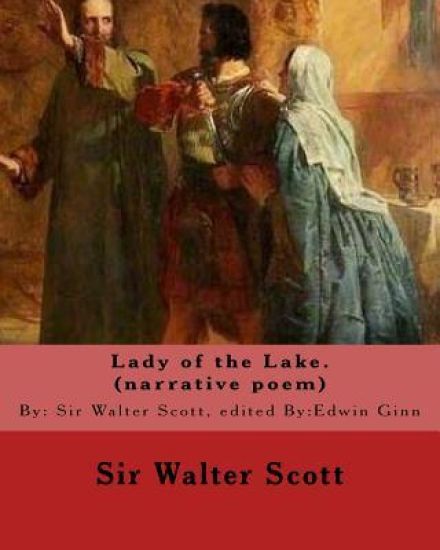
The Lady of the Lake is a narrative poem by Sir Walter Scott, first published in 1810. Set in the Trossachs region of Scotland, it is composed of six cantos, each of which concerns the action of a single day.The poem has three main plots: the contest among three men, Roderick Dhu, James Fitz-James, and Malcolm Graeme, to win the love of Ellen Douglas; the feud and reconciliation of King James V of Scotland and James Douglas; and a war between the lowland Scots (led by James V) and the highland clans (led by Roderick Dhu of Clan Alpine). The poem was tremendously influential in the nineteenth century, and inspired the Highland Revival.By the late nineteenth century, however, the poem was much less popular. (It continued, however, to be a standard reading in elementary schools until the early twentieth century.) Its influence is indirect: Schubert's Ellens Dritter Gesang (later adapted to use the full lyrics of the Latin Ave Maria), Rossini's La Donna del Lago (1819), the Ku Klux Klan custom of cross burning, the last name of U.S. abolitionist Frederick Douglass, and the song "Hail to the Chief", were all inspired by the poem.It shares its name with the Arthurian character, the Lady of the Lake. Other allusions to the legend are scant..... Sir Walter Scott, 1st Baronet, FRSE (15 August 1771 - 21 September 1832) was a Scottish historical novelist, playwright and poet with many contemporary readers in Europe, Australia, and North America. Scott's novels and poetry are still read, and many of his works remain classics of both English-language literature and of Scottish literature. Famous titles include Ivanhoe, Rob Roy, Old Mortality, The Lady of the Lake, Waverley, The Heart of Midlothian and The Bride of Lammermoor. Although primarily remembered for his extensive literary works and his political engagement, Scott was an advocate, judge and legal administrator by profession, and throughout his career combined his writing and editing work with his daily occupation as Clerk of Session and Sheriff-Depute of Selkirkshire. A prominent member of the Tory establishment in Edinburgh, Scott was an active member of the Highland Society and served a long term as President of the Royal Society of Edinburgh (1820-32).......... Edwin Ginn (February 14, 1838 - January 21, 1914) was an American publisher, peace advocate, and philanthropist.
Edwin Abbott Abbott (20 December 1838 - 12 October 1926) was an English schoolmaster and theologian, best known as the author of the novella Flatland (1884).Edwin Abbott Abbott was the eldest son of Edwin Abbott (1808-1882), headmaster of the Philological School, Marylebone, and his wife, Jane Abbott (1806-1882). His parents were first cousins. He was educated at the City of London School and at St John's College, Cambridge, where he took the highest honours in classics, mathematics and theology, and became a fellow of his college. In particular, he was 1st Smith's prizeman in 1861. This seems to be an error by Venn: Colby's preface to Abbott's Flatland states that Abbott was 7th Senior Optime, Senior Classic and 1st Chancellor's Medallist in 1861; William Steadman Aldis was 1st Smith's Prizeman in 1861.] In 1862 he took orders. After holding masterships at King Edward's School, Birmingham, he succeeded G. F. Mortimer as headmaster of the City of London School in 1865 at the early age of twenty-six. Here he oversaw the education of future Prime Minister H. H. Asquith. He was Hulsean lecturer in 1876. He retired in 1889, and devoted himself to literary and theological pursuits. Abbott's liberal inclinations in theology were prominent both in his educational views and in his books. His Shakespearian Grammar (1870) is a permanent contribution to English philology. In 1885 he published a life of Francis Bacon. His theological writings include three anonymously published religious romances - Philochristus (1878), where he tried to raise interest in Gospels reading, Onesimus (1882), and Silanus the Christian (1908). More weighty contributions are the anonymous theological discussion The Kernel and the Husk (1886), Philomythus (1891), his book The Anglican Career of Cardinal Newman (1892), and his article "The Gospels" in the ninth edition of the Encyclop dia Britannica, embodying a critical view which caused considerable stir in the English theological world. He also wrote St Thomas of Canterbury, his Death and Miracles (1898), Johannine Vocabulary (1905), Johannine Grammar (1906). Abbott also wrote educational text books, one being "Via Latina: First Latin Book" which was published in 1898 and distributed around the world within the education system.
Paul the Apostle, commonly known as Saint Paul, and also known by his native name Saul of Tarsuswas an apostle (though not one of the Twelve Apostles) who taught the gospel of the Christ to the first century world.. Edwin Abbott Abbott (20 December 1838 - 12 October 1926) was an English schoolmaster and theologian, best known as the author of the novella Flatland (1884).Edwin Abbott Abbott was the eldest son of Edwin Abbott (1808-1882), headmaster of the Philological School, Marylebone, and his wife, Jane Abbott (1806-1882). His parents were first cousins. He was educated at the City of London School and at St John's College, Cambridge, where he took the highest honours in classics, mathematics and theology, and became a fellow of his college. In particular, he was 1st Smith's prizeman in 1861. This seems to be an error by Venn: Colby's preface to Abbott's Flatland states that Abbott was 7th Senior Optime, Senior Classic and 1st Chancellor's Medallist in 1861; William Steadman Aldis was 1st Smith's Prizeman in 1861.] In 1862 he took orders. After holding masterships at King Edward's School, Birmingham, he succeeded G. F. Mortimer as headmaster of the City of London School in 1865 at the early age of twenty-six. Here he oversaw the education of future Prime Minister H. H. Asquith. He was Hulsean lecturer in 1876. He retired in 1889, and devoted himself to literary and theological pursuits. Abbott's liberal inclinations in theology were prominent both in his educational views and in his books. His Shakespearian Grammar (1870) is a permanent contribution to English philology. In 1885 he published a life of Francis Bacon. His theological writings include three anonymously published religious romances - Philochristus (1878), where he tried to raise interest in Gospels reading, Onesimus (1882), and Silanus the Christian (1908). More weighty contributions are the anonymous theological discussion The Kernel and the Husk (1886), Philomythus (1891), his book The Anglican Career of Cardinal Newman (1892), and his article "The Gospels" in the ninth edition of the Encyclop dia Britannica, embodying a critical view which caused considerable stir in the English theological world. He also wrote St Thomas of Canterbury, his Death and Miracles (1898), Johannine Vocabulary (1905), Johannine Grammar (1906). Abbott also wrote educational text books, one being "Via Latina: First Latin Book" which was published in 1898 and distributed around the world within the education system.
Edwin Abbott Abbott (20 December 1838 - 12 October 1926) was an English schoolmaster and theologian, best known as the author of the novella Flatland (1884).Edwin Abbott Abbott was the eldest son of Edwin Abbott (1808-1882), headmaster of the Philological School, Marylebone, and his wife, Jane Abbott (1806-1882). His parents were first cousins. He was educated at the City of London School and at St John's College, Cambridge, where he took the highest honours in classics, mathematics and theology, and became a fellow of his college. In particular, he was 1st Smith's prizeman in 1861. This seems to be an error by Venn: Colby's preface to Abbott's Flatland states that Abbott was 7th Senior Optime, Senior Classic and 1st Chancellor's Medallist in 1861; William Steadman Aldis was 1st Smith's Prizeman in 1861.] In 1862 he took orders. After holding masterships at King Edward's School, Birmingham, he succeeded G. F. Mortimer as headmaster of the City of London School in 1865 at the early age of twenty-six. Here he oversaw the education of future Prime Minister H. H. Asquith. He was Hulsean lecturer in 1876. He retired in 1889, and devoted himself to literary and theological pursuits. Abbott's liberal inclinations in theology were prominent both in his educational views and in his books. His Shakespearian Grammar (1870) is a permanent contribution to English philology. In 1885 he published a life of Francis Bacon. His theological writings include three anonymously published religious romances - Philochristus (1878), where he tried to raise interest in Gospels reading, Onesimus (1882), and Silanus the Christian (1908). More weighty contributions are the anonymous theological discussion The Kernel and the Husk (1886), Philomythus (1891), his book The Anglican Career of Cardinal Newman (1892), and his article "The Gospels" in the ninth edition of the Encyclop dia Britannica, embodying a critical view which caused considerable stir in the English theological world. He also wrote St Thomas of Canterbury, his Death and Miracles (1898), Johannine Vocabulary (1905), Johannine Grammar (1906). Abbott also wrote educational text books, one being "Via Latina: First Latin Book" which was published in 1898 and distributed around the world within the education system.
Flatland: A Romance of Many Dimensions is an 1884 science fiction novella by the English schoolmaster Edwin Abbott Abbott. As a satire, Flatland offered pointed observations on the social hierarchy of Victorian culture. However, the novella's more enduring contribution is its examination of dimensions; in a foreword to one of the many publications of the novella, noted science writer Isaac Asimov described Flatland as "The best introduction one can find into the manner of perceiving dimensions." As such, the novella is still popular amongst mathematics, physics and computer science students.
Flatland: A Romance of Many Dimensions is a satirical novella by the English schoolmaster Edwin Abbott Abbott, first published in 1884 by Seeley & Co. of London. Written pseudonymously as "A Square", the book used the fictional two-dimensional world of Flatland to comment on the hierarchy of Victorian culture, but the novella's more enduring contribution is its examination of dimensions.The story describes a two-dimensional world occupied by geometric figures, whereof women are simple line-segments, while men are polygons with various numbers of sides. The narrator is a square named A Square, a member of the caste of gentlemen and professionals, who guides the readers through some of the implications of life in two dimensions. The first half of the story goes through the practicalities of existing in a two-dimensional universe as well as a history leading up to the year 1999 on the eve of the 3rd Millennium.
This work has been selected by scholars as being culturally important, and is part of the knowledge base of civilization as we know it. This work was reproduced from the original artifact, and remains as true to the original work as possible. Therefore, you will see the original copyright references, library stamps (as most of these works have been housed in our most important libraries around the world), and other notations in the work.This work is in the public domain in the United States of America, and possibly other nations. Within the United States, you may freely copy and distribute this work, as no entity (individual or corporate) has a copyright on the body of the work.As a reproduction of a historical artifact, this work may contain missing or blurred pages, poor pictures, errant marks, etc. Scholars believe, and we concur, that this work is important enough to be preserved, reproduced, and made generally available to the public. We appreciate your support of the preservation process, and thank you for being an important part of keeping this knowledge alive and relevant.
The Parker Society was the London-based Anglican society that printed in fifty-four volumes the works of the leading English Reformers of the sixteenth century. It was formed in 1840 and disbanded in 1855 when its work was completed. Named after Matthew Parker--the first Elizabethan Archbishop of Canterbury, who was known as a great collector of books--the stimulus for the foundation of the society was provided by the Tractarian movement, led by John Henry Newman and Edward B. Pusey. Some members of this movement spoke disparagingly of the English Reformation, and so some members of the Church of England felt the need to make available in an attractive form the works of the leaders of that Reformation.
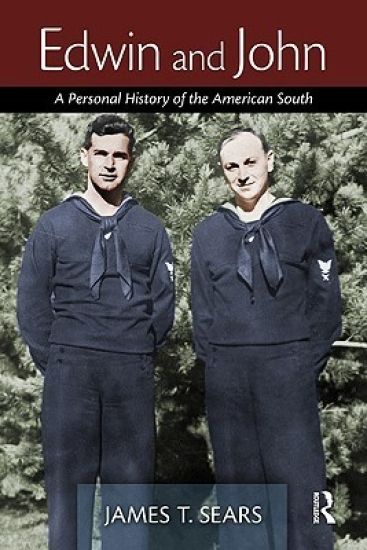
In Edwin and John: A Personal History of the American South, award-winning author James T. Sears interweaves diaries, letters and poems to craft an innovative first-person narrative history that details the hard realities of growing up gay in the South during the early decades of the 20th century. Set against the backdrop of World War II and the post-war South, Edwin and John, provides a unique and intimate approach to queer history by following the 50 year relationship between John Zeigler and Edwin Peacocke that carried them both from their roots in the conservative South, through service in World War II, and into a placid and loving literary life where they opened a bookshop in what was then the small town of Charleston, South Carolina. Edwin and John is a revealing look at queer history, detailing how these two men and their remarkable circle of close friends--which included some of the greatest writers and artists of their era including Prentiss Taylor, Carson McCullers, and John Bennett--endured war, intolerance, and jealousies, while living proud and public lives in far more conservative times.
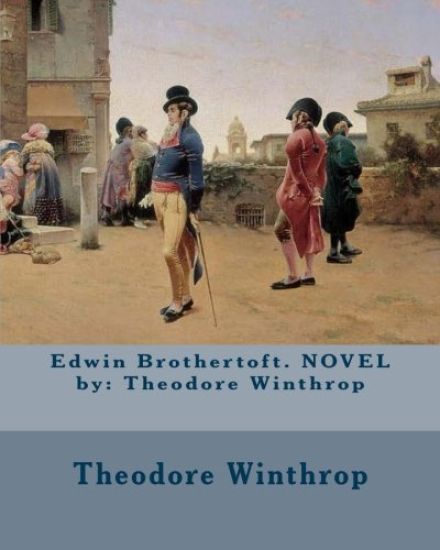
This is a work of fiction. The plot of the novel takes place chiefly in New York during the American Revolutionary War. This work was published posthumously in 1862..................... Major Theodore Woolsey Winthrop (September 22, 1828 - June 10, 1861) was a writer, lawyer, and world traveller. He was one of the first Union officers killed in the American Civil War. Biography: Winthrop was born in New Haven, Connecticut. He was descended through his father from Governor John Winthrop and through his mother from George (Joris) Woolsey, one of the earliest settlers of New Amsterdam, Thomas Cornell (settler) and Jonathan Edwards. He graduated in 1848 from Yale University, where his uncle Theodore Dwight Woolsey was President and he was a member of the Phi Chapter of the Delta Kappa Epsilon Fraternity, he travelled for a year in Great Britain and Europe and then through the United States. After contributing to periodicals, short sketches, and stories, which attracted little attention, Winthrop enlisted in the 7th Regiment, New York State Militia, an early volunteer unit of the Federal Army that answered President Abraham Lincoln's call for troops in 1861. He wrote a popular essay about the experience titled "Our March to Washington." He was appointed Major and soon became an aide-de-camp to Maj. Gen. Benjamin Butler, commander of the Department of Virginia headquartered at Fort Monroe. Battle of Big Bethel: At the Battle of Big Bethel on June 10, 1861, he volunteered for General Ebenezer W. Peirce's staff and drew up a crude plan of battle. After a Federal attack to the enemy right flank was foiled, Winthrop led an ill-fated assault on the Confederate left held by four companies of the 1st Regiment North Carolina Infantry, under the command of Colonel (later Lieutenant General) Daniel Harvey Hill. In the heat of battle, Major Winthrop leapt onto the trunk of a fallen tree and reportedly yelled, "One more charge boys, and the day is ours." Soon thereafter, he was killed by a musket ball to the heart and became the first casualty of rank for the Northern side in what history regards as the first pitched land battle of the Civil War. Ironically, ardent abolitionist Winthrop may have been shot by the African-American slave of a Confederate officer in the 1st North Carolina Infantry. (Three different soldiers, as well as this slave, referred to in the records only as "Sam," claimed to have killed him.)..........................
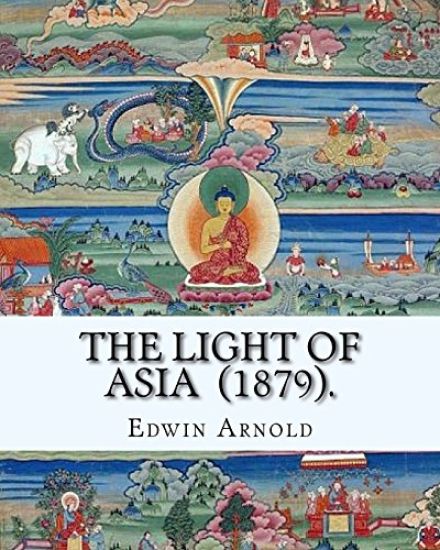
The Light of Asia, subtitled The Great Renunciation, is a book by Sir Edwin Arnold. The first edition of the book was published in London in July 1879. In the form of a narrative poem, the book endeavors to describe the life and time of Prince Gautama Siddhartha, who after attaining enlightenment became The Buddha, The Awakened One. The book presents his life, character, and philosophy, in a series of verses. It is a free adaptation of the Lalitavistara. A few decades before the book's publication, very little was known outside Asia about the Buddha and Buddhism, the religion which he founded, and which had existed for about twenty-five centuries. Arnold's book was one of the first successful attempts to popularize Buddhism for a Western readership.The book has been highly acclaimed from the time it was first published, and has been the subject of several reviews. It has been translated into several languages, including Hindi.................................. Sir Edwin Arnold KCIE CSI (10 June 1832 - 24 March 1904) was an English poet and journalist, who is most known for his work The Light of Asia. Biography: Arnold was born at Gravesend, Kent, the second son of a Sussex magistrate, Robert Coles Arnold. One of his six children was the novelist Edwin Lester Arnold. He was educated at King's School, Rochester; King's College London; and University College, Oxford, where he won the Newdigate prize for poetry in 1852. He became a schoolmaster, at King Edward's School, Birmingham, and in 1856 went to India as Principal of the Government Sanskrit College at Poona, a post which he held for seven years, which includes a period during the mutiny of 1857, when he was able to render services for which he was publicly thanked by Lord Elphinstone in the Bombay Council. Here he received the bias towards, and gathered material for, his future works. Returning to England in 1861 he worked as a journalist on the staff of the Daily Telegraph, a newspaper with which he continued to be associated as editor for more than forty years, and of which he later became editor-in-chief. It was he who, on behalf of the proprietors of the Daily Telegraph in conjunction with the New York Herald, arranged the journey of H.M. Stanley to Africa to discover the course of the Congo River, and Stanley named after him a mountain to the north-east of Albert Edward Nyanza. Arnold must also be credited with the first idea of a great trunk line traversing the entire African continent, for in 1874 he first employed the phrase "Cape to Cairo railway" subsequently popularised by Cecil Rhodes. It was, however, as a poet that he was best known to his contemporaries. The literary task which he set before him was the interpretation in English verse of the life and philosophy of the East. His chief work with this object is The Light of Asia, or The Great Renunciation, a poem of eight books in blank verse which was translated into various languages such as Hindi (tr. by Acharya Ram Chandra Shukla). In it, in Arnold's own words, he attempted 'by the medium of an imaginary Buddhist votary to depict the life and character and indicate the philosophy of that noble hero and reformer, Prince Gautama of India, founder of Buddhism'. It appeared in 1879 and was an immediate success, going through numerous editions in England and America, though its permanent place in literature is quite uncertain. It is an Indian epic, dealing with the life and teaching of the Buddha. The poem was subjected to two lines of criticism: it was held by Oriental scholars to give a false impression of Buddhist doctrine; while, on the other, the suggested analogy between Sakyamuni and Jesus offended the taste of some devout Christians....
EDWIN Name Tracing Workbook - Preschoolers Kindergarten Practice Workbook - Toddlers Writing Notebook - Learn How to Write EDWIN - Preschoolers Activities Teaching your child the basics of writing is a difficult task especially if he or she is full of energy and finds it more difficult to focus. In order to give him a push in the first years of school or kindergartner, we are presenting a revolutionary way of teaching your baby the basics of the alphabet: the name tracing workbook for children. Why our workbook? The name tracing workbook has been designed specifically to teach children the basic of spelling and writing. By learning to write his own name, your child will develop the abilities and skills needed in the first years of schools while having fun. The 100 pages activity book is the perfect choice if you are searching to invest in your child's education from the beginning so don't hesitate and get him the only workbook he needs LEARNING THE FIRST LETTERS teaching your toddler the first letters and how to spell his or her name is difficult, which is why we have designed a special workbook that will make the learning process easier and a lot more fun, adding to the baby's educational fund. PERSONALIZED WORKING: the name is the first word any child should learn how to spell, but it is almost impossible to find special help for that task. EDWIN Name Tracing Workbook is divided in 12 themed chapters that will teach your toddler how to spell his or her name in a fun and interactive way. WHAT IT CONTAINS: EDWIN Name Tracing Workbook counts no less than 100 pages divided in 12 themed sheets that propose recognition activities, letter tracing practice and letter games, that are sure to teach your child the basics of writing and spelling. FOR TODDLERS: EDWIN Name Tracing Workbook is made especially for children aged 3 to 6 so your son or daughter will be well prepared for both kindergarten and first grade Learning the alphabet will be a piece of cake if your kid will already have the foundation letter tracing so why not give him a head start in school. THE PERFECT GIFT: offering a present to a toddler that is both fun and parents-approved is an almost impossible task, but the name tracing workbook has it all: it is educational, personalized and made especially for youngsters ages 3 to 6 so, if you're trying to bring a smile on a kid's face, this is it
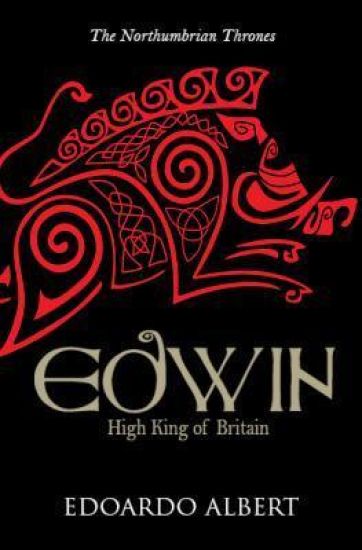
"Edwin, High King of Britain, brings to life the heroic age of our distant past, a splendid novel that leaves the reader wanting more." Bernard Cornwell Debut historical fiction series vividly recreating the rise of the Christian kings of Northumbria, England In 604 AD, Edwin, the deposed king of Northumbria, seeks refuge at the court of King Raedwald of East Anglia. But Raedwald is urged to kill his guest by Aethelfrith, Edwin's usurper. As Edwin walks by the shore, alone and at bay, he is confronted by a mysterious figure--the missionary Paulinus-- who prophesies that he will become High King of Britain. It is a turning point. Through battles and astute political alliances Edwin rises to great power, in the process marrying the Kentish princess Aethelburh. As part of the marriage contract the princess is allowed to retain her Christian faith. But, in these times, to be a king is not a recipe for a long life. This turbulent and tormented period in British history sees the conversion of the Anglo-Saxon settlers who have forced their way on to British shores over previous centuries, arriving first to pillage, then to farm and trade--and to come to terms with the faith of the Celtic tribes they have driven out. The dramatic story of Northumbria's Christian kings helped give birth to England as a nation, English as a language, and the adoption of Christianity as the faith of the English.