Meet Ellen Ochoa, history's first Hispanic female astronaut Follow Ochoa's story as she works at NASA's Ames Research Center while attempting to become an astronaut. Her persistence pays off when she is chosen to be an astronaut on her third try Learn about her accomplishments from her space shuttle missions through her retirement as the director of the Johnson Space Center. Infographics, historic photos, and a glossary enhance readers' understanding of this topic. Additional features include a table of contents, an index, a timeline and fun facts. Aligned to Common Core Standards and correlated to state standards. Checkerboard Library is an imprint of Abdo Publishing, a division of ABDO.
Ellen was born into a poor tenant farmer family before the cholera epidemic in 1831, in Cashel, Co Tipperary. This book follows her story through the landlord-tenant era of The Great Famine of the 1840's, the coffin ships that carried so many emigrants from Ireland, and life in America during the Californian Gold Rush and The American Civil War.There are insights into the historical events happening in Ireland at the time, along with a look at the social and economic background of what life was like for rich and poor alike in Ireland.Eamon Grogan is a retired teacher and lives in Cashel. Among the other books he has published are the crime-thrillers "Exiled by Evil" and "What might have been". He has also published a historical account of the life of Michael Doheny, who was involved in Daniel O Connell's Repeal Movement, The Young Irelander's Revolution of 1848, and was one of the founding members of The Fenian Movement in New York in 1855.
Virginia (1913) is a novel by Ellen Glasgow about a wife and mother who in vain seeks happiness by serving her family. This novel, her eleventh, marked a clear departure from Glasgow's previous work-she had written a series of bestsellers before publishing Virginia-in that it attacked, in a subtle yet unmistakable way, the very layer of society that constituted her readership. Also, as its heroine, though virtuous and god-fearing, is denied the happiness she is craving, its plot did not live up to readers' expectations as far as poetic justice is concerned and was bound to upset some of them. Today, Virginia is seen by many as an outstanding achievement in Glasgow's career, exactly because the author defied literary convention by questioning the foundations of American society around the dawn of the 20th century, be it capitalism, religion or racism. Born in 1864 to a clergyman and his dutiful wife, Virginia grows up as a Southern belle in the town of Dinwiddie, Virginia. Her education is strictly limited to the bare minimum, with anything that might disturb her quiet and comfortable existence vigorously avoided. Thus prepared for life, Virginia falls for the first handsome young man who crosses her path-Oliver Treadwell, the black sheep of a family of capitalist entrepreneurs who, during the time of Reconstruction, brought industry and the railroad to the South. Oliver, who has been abroad and has only recently arrived in Dinwiddie, is a dreamer and an intellectual. An aspiring playwright, his literary ambitions are more important to him than money, and he refuses his uncle's offer to work in his bank. However, when Virginia falls in love with him he realizes that he must be able to support a family, and eventually accepts his uncle's offer to work for the railroad. The young couple get married and have three children, a boy and two girls. Gradually perfecting her household skills, Virginia is able to get by on very little money. When, after many years, Oliver's first play is put on the stage in New York City, his expectations are high. However, the show is a complete failure as the play is far too intellectual and radical for a Broadway audience who wants to be entertained rather than reformed. Reading about the flop in the local newspaper, Virginia for the first time in her life leaves her children, asking her mother to take care of them for a day or two, and takes the night train to New York to be with, and console, her husband-only to be rejected by him, who is in a state of severe depression. When he has recovered from the shock, Oliver makes yet another concession to society and public taste and starts writing "trash". Throughout the years, Virginia leads a vicarious life: She is happy when her husband and children are happy; she makes sure their clothes are in perfect condition while neglecting her own outward appearance; and she is eager to provide for her children the education she herself has been denied. When, at one point, she realizes that the women her age whom she has known since childhood still look quite young while she has aged prematurely, she quickly persuades herself to believe that a life of altruistic subservience is more than worthwhile, that living and acting the way she does is her duty and God's will. Her father's sudden if honourable death-he unsuccessfully tries to prevent the lynching of an innocent young African American and is stabbed in the process by an angry and drunken young man-adds to the gloom that starts creeping into her life, especially when she sees that, as a widow, her mother suddenly loses all her will to live. When she dies only a few months after her husband, Virginia has a premonition that her own fate when losing Oliver could be a similar one.... Ellen Anderson Gholson Glasgow (April 22, 1873 - November 21, 1945) was an American novelist who portrayed the changing world of the contemporary South.
Jules Gabriel Verne ( 8 February 1828 - 24 March 1905 ) was a French novelist, poet, and playwright best known for his adventure novels and his profound influence on the literary genre of science fiction. Verne was born to bourgeois parents in the seaport of Nantes, where he was trained to follow in his father's footsteps as a lawyer, but quit the profession early in life to write for magazines and the stage. His collaboration with the publisher Pierre-Jules Hetzel led to the creation of the Voyages extraordinaires, a widely popular series of scrupulously researched adventure novels including Journey to the Center of the Earth (1864), Twenty Thousand Leagues Under the Sea (1870), and Around the World in Eighty Days (1873). Verne is generally considered a major literary author in France and most of Europe, where he has had a wide influence on the literary avant-garde and on surrealism.His reputation is markedly different in Anglophone regions, where he has often been labeled a writer of genre fiction or children's books, largely because of the highly abridged and altered translations in which his novels are often reprinted. Verne has been the second most-translated author in the world since 1979, ranking between Agatha Christie and William Shakespeare.He has sometimes been called the "Father of Science Fiction", a title that has also been given to H. G. Wells and Hugo Gernsback. Ellen Elizabeth Frewer (1848-1940)
A semi-autobiographical novel by an early feminist New Zealand author, Ellen E. Ellis. The character Wrax is a debased version of the author's husband Oliver, and Zee a weaker version of Ellen. Ellis uses this novel as a vehicle for her views about education, marriage, birth control, prohibition, religion, and female and Maori rights. All these issues are linked to her central concern, the emancipation of women, the novel pre-empting all the central early feminist arguments. Ellis' broad contention is that women need to be emancipated in order to do their 'God-given work' which is to 'bless mankind' and 'fulfil the divine plan of the universe'. She is specific as to the three areas in which emancipation is required, protesting against the spiritual and intellectual oppression of women, the legal oppression of women, and the physical oppression of women.
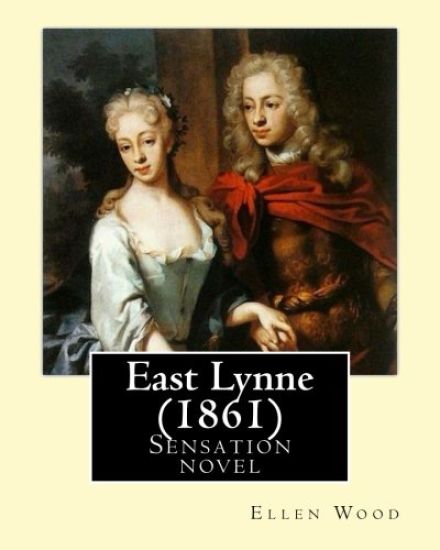
East Lynne is an English sensation novel of 1861 by Ellen Wood. A Victorian bestseller, it is remembered chiefly for its elaborate and implausible plot, centring on infidelity and double identities. There have been numerous stage and film adaptations. The much-"quoted" line "Gone And never called me mother " (variant: "Dead Dead And never called me mother ") does not appear in the book; both variants come from later stage adaptations. The book was originally serialised in The New Monthly Magazine between January 1860 and September 1861, being issued as a three-volume novel on 19 September 1861. Plot summary: Lady Isabel Carlyle, a beautiful and refined young woman, leaves her hard-working lawyer-husband, Carlyle, and her infant children to elope with an aristocratic suitor, Francis Levison, after wrongfully suspecting and becoming jealous of her husband's friendship with Barbara Hare. However once abroad with Levison she realises he has no intention of marrying her, despite her having borne their illegitimate child. He deserts her, Lady Isabel is disfigured in a train accident and the child is killed. Following this Isabel is able to take the position of governess in the household of her former husband and his new wife allowing her to be close to her children but which also becomes a source of great misery. The pressure of keeping up a fa ade and being constantly reminded that her husband has moved on eventually physically weakens her. On her deathbed she tells all to Carlyle who forgives her. Ellen Wood (n e Price; 17 January 1814 - 10 February 1887), was an English novelist, better known in that respect as Mrs. Henry Wood. She is remembered most for her 1861 novel East Lynne, but many of her books became international bestsellers and widely known in the United States. She surpassed the fame of Charles Dickens in Australia. Life: Ellen Price was born in Worcester in 1814. In 1836 she married Henry Wood, who worked in the banking and shipping trade in Dauphin in the South of France, where they lived for 20 years. On the failure of Wood's business, the family (including four children) returned to England and settled in Upper Norwood near London, where Ellen Wood turned to writing. This supported the family (Henry Wood died in 1866). She wrote over 30 novels, many of which (especially East Lynne) enjoyed remarkable popularity. Among the best known are Danesbury House, Oswald Cray, Mrs. Halliburton's Troubles, The Channings, Lord Oakburn's Daughters and The Shadow of Ashlydyat. Her writing tone would be described as "conservative and Christian,"occasionally expressing religious rhetoric. In 1867, Wood purchased the English magazine Argosy, which had been founded by Alexander Strahan in 1865. She wrote much of the magazine herself, but other contributors included Hesba Stretton, Julia Kavanagh, Christina Rossetti, Sarah Doudney and Rosa Nouchette Carey. Wood continued as its editor until her death in 1887, when her son Charles Wood took over. Wood's works were translated into many languages, including French and Russian.Leo Tolstoy, in a 9 March 1872 letter to his older brother Sergei, noted that he was "reading Mrs. Wood's wonderful novel In the Maze". Wood wrote several works of supernatural fiction, including "The Ghost" (1862) and the often anthologized "Reality or Delusion?" (1868). At her death (caused by bronchitis), her estate was valued at over 36,000, which was then a very considerable sum. She was buried in Highgate Cemetery, London. A monument to her was unveiled in Worcester Cathedral in 1916.
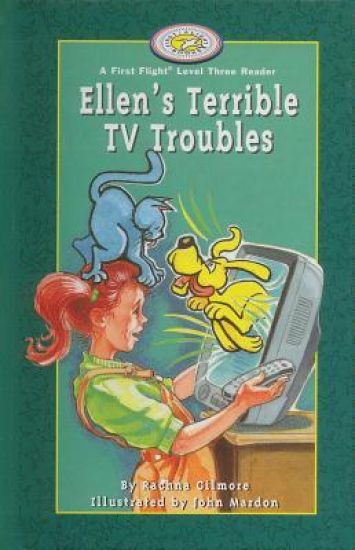
Ellen gets more than she bargained for when her television brings her favourite characters to life in her living room.Young readers will laugh at Ellen's unusual dilemma as well as her clever solution to get everyone back where they belong.
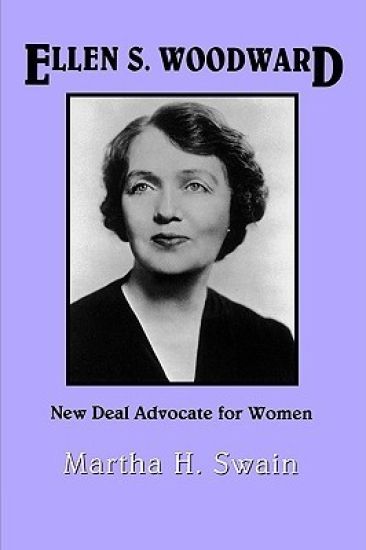
Ellen S. Woodward (1887-1971) was touted as Roosevelt's second most powerful woman appointee. Among American women only Eleanor Roosevelt and Labor Department Secretary Frances Perkins could claim more elevated roles in the circle of FDR's administration.This long overdue biography of such a remarkable leader traces Woodward's odyssey from the parlors of her Mississippi clubwomen associates to a position as director of women's work relief under three successive New Deal agencies from 1933 to 1938.Swain depicts Woodward in the vital roles she took in alleviating the working woman's plight. Particularly rich is Swain's account of Woodward's attempts to remain vital in policymaking during the Truman era, when Eleanor Roosevelt was no longer the central figure of the women's coterie.Without minimizing the limitations of the programs under Woodward's aegis, Swain gives ample attention to the operation and internal dynamics of her ambitious projects. Though some of Woodward's project proved to be disappointing, others became rich legacies for programs in later administrations.
A lively look at an underexplored niche in the history of American ads: pop-ups. Drawing from Ellen G. K. Rubin’s extensive collection of more than 7,000 pop-up books and related ephemera, Animated Advertising demonstrates how animated and dimensional paper devices have been used throughout US history to promote products, art, entertainment, and ideas. The book displays the creativity of advertisers in food, fashion, tobacco, pharmaceuticals, travel, music, politics, and more. Rubin’s diverse examples of historical paper pop-ups show how they leaped from the pack of standard marketing materials to catch the eye and inform patrons and clientele about the items being sold. Illustrated with two hundred and fifty color images, and published to coincide with a Winter 2023 exhibition at the Grolier Club’s New York headquarters, Animated Advertising is a lively look at an underexplored niche in the history of American marketing, graphic design, and paper engineering.
Ellen Meiksins Wood is a leading contemporary political theorist who has been described as the founder, together with Robert Brenner, of 'Political Marxism,' a distinct version of historical materialism which has inspired a research program that spans a number of academic disciplines. Organized thematically, this Reader provides an overview of her original interpretations of capitalism, and many different topics.