

Kirjahaku
Etsi kirjoja tekijän nimen, kirjan nimen tai ISBN:n perusteella.
1000 tulosta hakusanalla Elliott Landy

Bump Elliott
OmniScriptum
2026
pokkari

Bob Elliott (baseball)
OmniScriptum
2026
pokkari

Bill Elliott's NASCAR Challenge
OmniScriptum
2026
pokkari

Chris Elliott
OmniScriptum
2026
pokkari
Compositional Process in Elliott Carter’s String Quartets is an interdisciplinary study examining the evolution and compositional process in Elliott Carter’s five string quartets. Offering a systematic and logical way of unpacking concepts and processes in these quartets that would otherwise remain opaque, the book’s narrative reveals new aspects of understanding these works and draws novel conclusions on their collective meaning and Carter’s place as the leading American modernist. Each of Carter’s five string quartets is driven by a new idea that Carter was exploring during a particular period, which allows for each quartet to be examined under a unique lens and a deeper understanding of his oeuvre at large. Drawing on key ideas from a variety of subjects including performance studies, philosophy, music cognition, musical meaning and semantics, literary criticism, and critical theory, this is an informative volume for scholars and researchers in the areas of music theory and musicology. Analyses are supplemented with sketch study, correspondence, text manuscripts, and other archival sources from the Paul Sacher Stiftung, the Library of Congress, and the New York Public Library.


Blaine/Boyd/Elliott/Finlay Early Family Connections: What happened to some of their early descendants?This book tells the stories of three generations of the Elliott clan from Ireland to America. Those seeking information on their families may find the lost relative listed here. We welcome you to explore these pages and contact us to help you link to your roots and find out how far the branches of your family tree reach.



Mabel Agnes Elliott: Pioneering Feminist, Pacifist Sociologist provides a history of the life and career of the late Mabel Agnes Elliott (1898-1990), a pioneering female sociologist largely forgotten despite her achievements and contributions. A native of Iowa, Elliott earned three degrees in Sociology from Northwestern University. In addition to her career as a sociologist, she was a feminist and a pacifist whose occasional criticism of criminal policies in the United States led to the creation of an FBI file. Despite being largely disregarded by her male colleagues, Elliott wrote a wildly successful textbook, Social Disorganization, that published four editions over thirty years. After starting her career at the University of Kansas and working there for twenty years, she moved to Chatham College in Pennsylvania in 1949 where she was appreciated for her singular abilities. Among her many achievements, she was the first nwoman to be elected Presidet of the Society for the Study of Social Problems in 1957.

Mabel Agnes Elliott: Pioneering Feminist, Pacifist Sociologist provides a history of the life and career of the late Mabel Agnes Elliott (1898-1990), a pioneering female sociologist largely forgotten despite her achievements and contributions. A native of Iowa, Elliott earned three degrees in Sociology from Northwestern University. In addition to her career as a sociologist, she was a feminist and a pacifist whose occasional criticism of criminal policies in the United States led to the creation of an FBI file. Despite being largely disregarded by her male colleagues, Elliott wrote a wildly successful textbook, Social Disorganization, that published four editions over thirty years. After starting her career at the University of Kansas and working there for twenty years, she moved to Chatham College in Pennsylvania in 1949 where she was appreciated for her singular abilities. Among her many achievements, she was the first nwoman to be elected Presidet of the Society for the Study of Social Problems in 1957.

Wild Bill Elliott was a major western star. His screen persona met evil head-on and emerged victorious, bringing cheers from Saturday audiences. This book covers Elliott's entire career. It begins with a biographical sketch and then discusses each of his 78 starring roles as well as his more than 130 supporting roles. The film entries include studio, release date, alternate titles, cast and credit listings, songs, location filming, color, running time, source, story synopsis, notes and commentary, quotations from published reviews and a critical summation of the film. Appendices include Elliott's short films, TV and radio appearances and comic books.
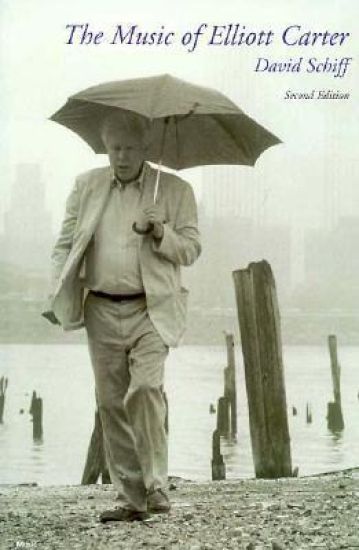
Arguably the most important American composer of the century, Elliott Carter often has been more highly regarded in Europe than in his native land. Interest in his work has grown rapidly in recent years, however, and the celebration of his ninetieth birthday in December, 1998, accompanied by numerous performances and new recordings, undoubtedly will increase the attention of his fellow citizens to this remarkable figure.Authoritative and gracefully written, The Music of Elliott Carter engages composers, performers, and critics, and speaks to concert-goers, whether attuned to or alarmed by the formidable difficulty of Carter's music. David Schiff views the music from the perspective of the composer's development and relates his compositional techniques to those nonmusical arts—contemporary American poetry in particular—with which Carter has been deeply involved. The volume benefits from Schiff's extensive discussions of Carter's works with their most noted performers, including Heinz Holliger, Oliver Knussen, and Ursula Oppens, and from the generous cooperation of the composer himself.This new edition, a thoroughly reorganized, revised, and updated version of the book published in 1983, accounts for the many new works written by Carter since 1980 and accommodates the burgeoning critical literature on his music. Its features include many musical examples and a selected discography. In addition to the new foreword, the composer has provided his listing of three-to-six note chords and a note on "Voyage."
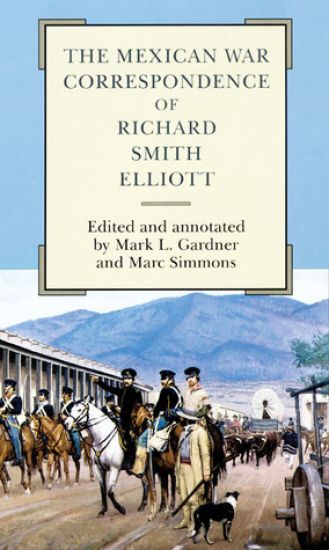
The Mexican War Correspondence of Richard Smith Elliott
Richard Smith Elliott
University of Oklahoma Press
1997
sidottu
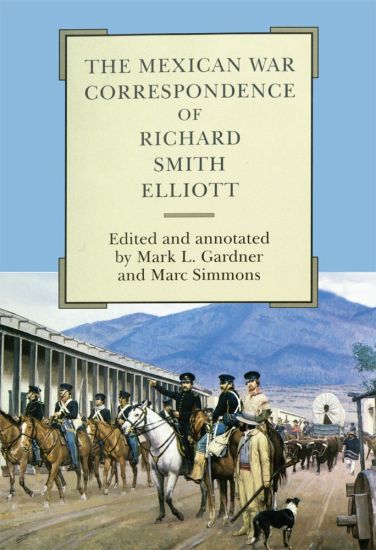
When General Stephen Watts Kearny's Army of the West marched into Santa Fe, New Mexico, on August 18, 1846, Richard Smith Elliott, a young Missouri volunteer, was included in its ranks. In addition to Lieutenant Elliott's duties in the Laclede Rangers, he served as a regular correspondent to the St. Louis Reveille. An entertaining and educated observer, Elliott provided readers back home with an account of the grueling march over the famous Santa Fe Trail, the triumphant entry of the army into Santa Fe, the U.S. occupation of New Mexico, and the volunteers' eventual return to St. Louis.Noted southwestern scholars Mark L. Gardner and Marc Simmons present here, for the first time, all of Elliott's letters published in the Reveille under his nom-de-plume, John Brown, using passages from his autobiography for the same period to fill in a break resulting from a few missing letters. Also included are Elliott's literary sketches, drawn from his Mexican War experiences and the people he met and served with.
The Mexican War Correspondence of Richard Smith Elliott
Richard Smith Elliott
UNIVERSITY OF OKLAHOMA PRESS
2022
nidottu
When General Stephen Watts Kearny's Army of the West marched into Santa Fe, New Mexico, on August 18, 1846, Richard Smith Elliott, a young Missouri volunteer, was included in its ranks. In addition to Lieutenant Elliott's duties in the Laclede Rangers, he served as a regular correspondent to the St. Louis Reveille. An entertaining and educated observer, Elliott provided readers back home with an account of the grueling march over the famous Santa Fe Trail, the triumphant entry of the army into Santa Fe, the U.S. occupation of New Mexico, and the volunteers' eventual return to St. Louis.Noted southwestern scholars Mark L. Gardner and Marc Simmons present here, for the first time, all of Elliott's letters published in the Reveille under his nom-de-plume, John Brown, using passages from his autobiography for the same period to fill in a break resulting from a few missing letters. Also included are Elliott's literary sketches, drawn from his Mexican War experiences and the people he met and served with.
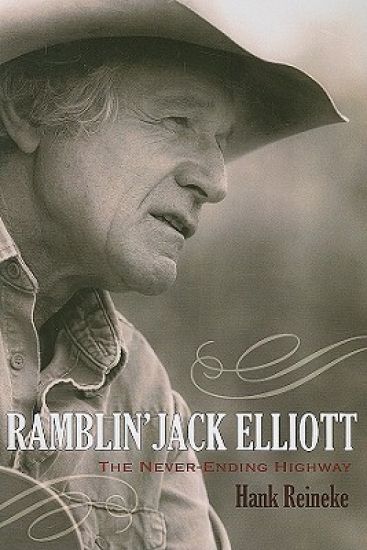
The American singer and guitarist Ramblin' Jack Elliott (1931- ) is a seminal figure in the folk music revivals of the United States and Great Britain. Declared an American treasure by former President Bill Clinton, Elliott has traveled and performed for more than 50 years, and his life and career neatly parallel the ascension of folk music's "renaissance" from the 1940s through the present day. Ramblin' Jack Elliott: The Never-Ending Highway is the first complete biography of this important figure in the history of folk music. Elliott's music and Beat-era sensibility influenced countless artists in the fields of folk, rock, and country and western music, and Hank Reineke provides the full story of Elliott's relationships and influences. Most notably, his associations with Woody Guthrie and Bob Dylan are well-documented: Elliott is considered Guthrie's most famous protégé and Elliott mentored Dylan in his early career. Reineke also recounts how Elliott's life intersected with Derroll Adams, Jack Kerouac and the Beats, Princess Margaret, James Dean, and scores of others. The book examines the full breadth of Elliott's career, discussing how the rough-edged cowboy singer survived in the music industry and eventually won a Grammy Award for Best Traditional Folk Recording and the prestigious National Medal of the Arts. In addition to the biography, Reineke has amassed the first exhaustive and comprehensive discography of albums from the singer's notable back-catalog (1955-2009), including nearly 60 LP and CD issues, many rare and sought-after 78rpm discs, EPs, and 45rpm recordings, as well as a number of contributions to compilations, soundtracks, festival recordings, and guest appearances. This impressive volume is rounded out with a bibliography, an index, and more than 30 photographs, making this a must-have for scholars and fans of American folk music.
Supertiming: The Unique Elliott Wave System
Robert C. Beckman
Harriman House Publishing
2014
pokkari
The classic work on Elliott Wave and market cycles returned to printDuring the 1930s, R. N. Elliott undertook the painstaking procedure of attempting to classify share price movements for the preceding 80 years on Wall Street. It was during the course of this seminal work that Elliott discovered a definable basic rhythm in share price movements which he felt had forecasting value when correctly applied.In 1938 Elliott published his findings in a series of articles with the overall title "The Wave Principle". After publication, Elliott's work drifted into obscurity, until Robert Beckman's Supertiming introduced it to a new audience.In this renowned work, Beckman sets out with three main objectives:1. To clarify obscurities and grey areas of The Wave Principle that were present in Elliott's original writing.2. To incorporate the work of other analysts in order to allow the Wave Principle to have a broader application.3. To show the correct conceptual approach that should be used with the Wave Principle so that one can apply it with confidence and consistency.If you are willing to approach the subject of stock market behaviour with an open mind, who have faith in the fundamental laws of economics and the consistency of human nature, and who would like to avoid the pitfalls that have deluded the investment community for decades, this is the book for you.
Ralph Nelson Elliott (1871-1948) was of that rarest of breeds, a true scholar in the practical world of finance. His fascinating theory of stock market behavior is remarkably unique in that it goes way beyond the usual "get rich quick" methods so characteristic of the bulk of the literature. As A. Hamilton Bolton, founder of the Bank Credit Analyst, said, "He developed his principle into a rational method of stock market analysis on a scale never before attempted. In fact, the Wave Principle is much bigger than a mere stock market method. Over the years, it has has a profound effect on a small coterie of investors who not only have the ability to recognize a theory of immense practical value, but who have the ability to recognize a theory of immense practical value, but who have the ability to appreciate the aesthetic beauty of the human experience in the abstract. The Wave Principle has fascinated philosophers, mathematicians, psychologists, theologians and financiers alike. Now, for the first time ever, after being out of print for decades, the original works of R. N. Elliott have been made available in this one complete volume.