
Kirjahaku
Etsi kirjoja tekijän nimen, kirjan nimen tai ISBN:n perusteella.
405 tulosta hakusanalla Eoin Colfer
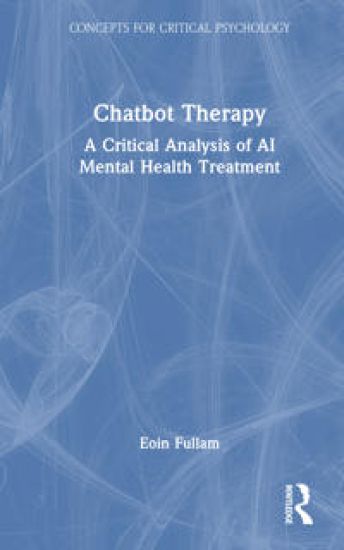
Chatbot Therapy: A Critical Analysis of AI Mental Health Treatment examines automated mental health therapy in the form of therapy chatbots, taking a critical analysis of this new technology.Drawing on historical and emerging scholarship on critical theory, science and technology studies, and critical psychology, this project investigates the social life of mental health therapy applications. The book unearths the assumptions about subjectivity, consciousness, and mental health that underpin these applications, looking predominantly at Wysa and Woebot, but also at other chatbot and non-chatbot mental health applications. It explores the historical emergence of this technology, the technical and design aspects of chatbot therapy apps, the therapeutic methods employed, and the economic context within which therapy chatbots have developed. It centres around the questions of what it means to automate mental health treatment and of how automated interventions alter our understanding of mental suffering and well-being.This highly topical and interdisciplinary study will be of great interest to postgraduate students and researchers in the fields of critical psychology, mental health, cognitive science, artificial intelligence, science and technology studies, and critical theory. It will also be relevant reading for mental health professionals.

Chatbot Therapy: A Critical Analysis of AI Mental Health Treatment examines automated mental health therapy in the form of therapy chatbots, taking a critical analysis of this new technology.Drawing on historical and emerging scholarship on critical theory, science and technology studies, and critical psychology, this project investigates the social life of mental health therapy applications. The book unearths the assumptions about subjectivity, consciousness, and mental health that underpin these applications, looking predominantly at Wysa and Woebot, but also at other chatbot and non-chatbot mental health applications. It explores the historical emergence of this technology, the technical and design aspects of chatbot therapy apps, the therapeutic methods employed, and the economic context within which therapy chatbots have developed. It centres around the questions of what it means to automate mental health treatment and of how automated interventions alter our understanding of mental suffering and well-being.This highly topical and interdisciplinary study will be of great interest to postgraduate students and researchers in the fields of critical psychology, mental health, cognitive science, artificial intelligence, science and technology studies, and critical theory. It will also be relevant reading for mental health professionals.
With Shape It!, teens develop the confidence and competencies they need to pave their own path in an ever-evolving global landscape. With Shape It!, teens develop the confidence and competencies to pave their own path in this ever-evolving global landscape. From developing critical and creative thinking skills and social/emotional aptitudes to working effectively in a group, Shape It! helps create confident, future-ready learners who are able to meet the challenges ahead. The Workbook offers extra practice of the language covered in the Student's Book units and is perfect for the home or classroom. It includes vocabulary and grammar practice, as well as reading, writing, listening and speaking, plus a special section with generic exam material to prepare students for international exams.
‘Public’ and ‘Private’ Playhouses in Renaissance England: The Politics of Publication
Eoin Price
Palgrave Pivot
2015
sidottu
At the start of the seventeenth century a distinction emerged between 'public', outdoor, amphitheatre playhouses and 'private', indoor, hall venues. This book is the first sustained attempt to ask: why? Theatre historians have long acknowledged these terms, but have failed to attest to their variety and complexity. Assessing a range of evidence, from the start of the Elizabethan period to the beginning of the Restoration, the book overturns received scholarly wisdom to reach new insights into the politics of theatre culture and playbook publication. Standard accounts of the 'public' and 'private' theatres have either ignored the terms, or offered insubstantial explanations for their use. This book opens up the rich range of meanings made available by these vitally important terms and offers a fresh perspective on the way dramatists, theatre owners, booksellers, and legislators, conceived the playhouses of Renaissance London.
Complexity and Resilience in the Social and Ecological Sciences
Eoin Flaherty
Palgrave Macmillan
2018
sidottu
This book introduces a new approach to environmental sociology, by integrating complexity-informed social science, Marxian ecological theory, and resilience-based human ecology. It argues that sociologists have largely ignored developments in ecology which move beyond functionalist approaches to systems analysis, and as a result, environmental sociology has failed to capitalise not only on the analytical promise of resilience ecology, but on complementary developments in complexity theory. By tracing the origins and discussing current developments in each of these areas, it offers several paths to interdisciplinary dialogue. Eoin Flaherty argues that complexity theory and Marxian ecology can enhance our understanding of the social aspect of social-ecological systems, whilst a resilience approach can sharpen the analytical power of environmental sociology.
This book offers a discerning narrative on the spectacular rise and fall of the so-called Celtic Tiger economy. It depicts Ireland as a micro-state with a unique reliance on foreign-assisted businesses, driven in part by a favourable taxation regime. It shows that rent-seeking by trades unions and property developers contributed to the fall since 2002. Although the country’s highly centralized government’s pre-disposition to lobbying has yielded international successes, it has also resulted in recurring self-inflicted crises since 1970.This volume shows how Ireland’s export-led growth is associated more with the attraction of foreign-assisted businesses than with the development of critical masses of internationally competitive indigenous businesses. Although the success of foreign-assisted businesses in the pharmaceutical, ICT and finance sectors has been influenced by tax advantages, many of these businesses have been involved in highly productive activity in Ireland over a number of decades. The problem of rent-seeking is shown to have undermined Irish competitiveness in the internationally traded and sheltered sectors. The Irish policy mind-set is shown to lean towards distribution rather than growth. While this has been advantageous for how ‘Ireland Inc.’ interacts with other governments and international businesses, it has also resulted in a failure to resist the destructive effects of capture by lobbies.In conclusion, this book considers future opportunities offered by the EU’s smart-specialization policy and future threats from increased international tax competition. It argues that unless Irish citizens and policymakers change deep-seated attitudes and mind-sets towards business development, the country’s performance for the next number of decades will more likely resemble serial under-achievement than that of a high-performing EU state.
This book is the first truly interdisciplinary intervention into the burgeoning field of Irish ecological criticism. Providing original and nuanced readings of Irish cultural texts and personalities in terms of contemporary ecological criticism, Flannery’s readings of Irish literary fiction, poetry, travel writing, non-fiction, and essay writing are ground-breaking in their depth and scope. Explorations of figures and texts from Irish cultural and political history, including John McGahern, Derek Mahon, Roger Casement, and Tim Robinson, among many others, enable and invigorate the discipline of Irish cultural studies, and international ecocriticism on the whole. This book addresses the need to impress the urgency of lateral ecological awareness and responsibility among Irish cultural and political commentators; to highlight continuities and disparities between Irish ecological thought, writing, and praxis, and those of differential international writers, critics, and activists; and to establish both the singularity and contiguity of Irish ecological criticism to the wider international field of ecological criticism. With the introduction of concepts such as ecocosmopolitanism, "deep" history, ethics of proximity, Gaia Theory, urban ecology, and postcolonial environmentalism to Irish cultural studies, it takes Irish cultural studies in bracing new directions. Flannery furnishes working examples of the necessary interdisciplinarity of ecological criticism, and impresses the relevance of the Irish context to the broader debates within international ecological criticism. Crucially, the volume imports ecological critical paradigms into the field of Irish studies, and demonstrates the value of such conceptual dialogue for the future of Irish cultural and political criticism. This pioneering intervention exhibits the complexity of different Irish cultural and historical responses to ecological exploitation, degradation, and social justice.

A pioneering study of the development of one of the key critical discourses in contemporary Irish studies, this book covers all the major figures, publications and debates within Irish postcolonial criticism, delivering a commentary on this diverse body of work as well as positioning Irish postcolonial criticism within the wider postcolonial field.
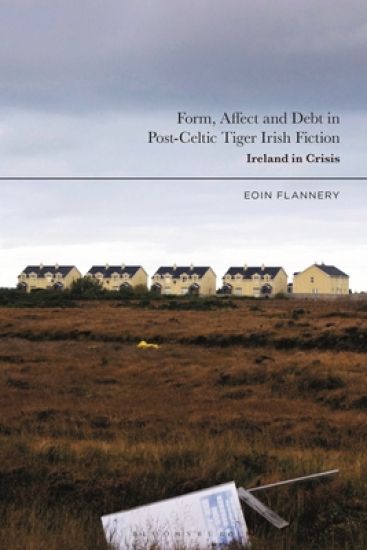
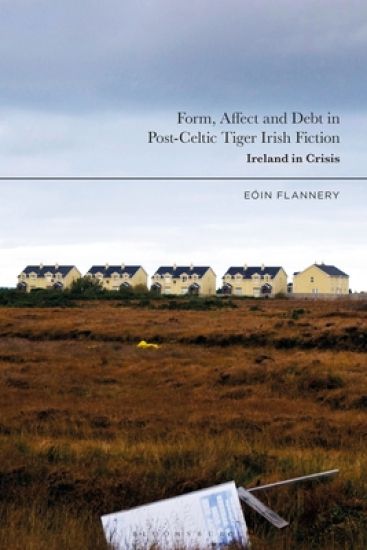
Form, Affect and Debt in Post-Celtic Tiger Irish Fiction
Eoin Flannery
BLOOMSBURY PUBLISHING PLC
2022
sidottu
Based on readings of some of the leading literary voices in contemporary Irish writing, this book explores how these authors have engaged with the events of Ireland’s recent economic ‘boom’ and the demise of the Celtic Tiger period, and how they have portrayed the widespread and contrasting aftermaths. Drawing upon economic literary criticism, affect theory in relation to shame and guilt, and the philosophy of debt, this book offers an entirely original suit of perspectives on both established and emerging authors. Through analyses of the work of writers including Donal Ryan, Anne Haverty, Claire Kilroy, Dermot Bolger, Deirdre Madden, Chris Binchy, Peter Cunningham, Justin Quinn, and Paul Murray, author Eóin Flannery illuminates their formal and thematic concerns. Paying attention to generic and thematic differences, Flannery’s analyses touch upon issues such as: the politics of indebtedness; temporality and narrative form; the relevance of affect theory to understandings of Irish culture and society in an age of austerity; and the relationship between literary fiction and the mechanics of high finance. Insightful and original, Form, Affect and Debt in Post-Celtic Tiger Irish Fiction provides a seminal intervention in trying to grasp the cultural context and the literature of the Celtic Tiger period and its wake.
Form, Affect and Debt in Post-Celtic Tiger Irish Fiction
Eoin Flannery
BLOOMSBURY PUBLISHING PLC
2023
nidottu
Based on readings of some of the leading literary voices in contemporary Irish writing, this book explores how these authors have engaged with the events of Ireland’s recent economic ‘boom’ and the demise of the Celtic Tiger period, and how they have portrayed the widespread and contrasting aftermaths. Drawing upon economic literary criticism, affect theory in relation to shame and guilt, and the philosophy of debt, this book offers an entirely original suit of perspectives on both established and emerging authors. Through analyses of the work of writers including Donal Ryan, Anne Haverty, Claire Kilroy, Dermot Bolger, Deirdre Madden, Chris Binchy, Peter Cunningham, Justin Quinn, and Paul Murray, author Eóin Flannery illuminates their formal and thematic concerns. Paying attention to generic and thematic differences, Flannery’s analyses touch upon issues such as: the politics of indebtedness; temporality and narrative form; the relevance of affect theory to understandings of Irish culture and society in an age of austerity; and the relationship between literary fiction and the mechanics of high finance. Insightful and original, Form, Affect and Debt in Post-Celtic Tiger Irish Fiction provides a seminal intervention in trying to grasp the cultural context and the literature of the Celtic Tiger period and its wake.

A series of dark fantasy paranormal tales, for readers who enjoy horror and thrills In this collection of short stories, animals on a local farm drop dead without warning. Two new lovers open up to each other about their insecurities. A newly-wed young man discovers his husband harbours a dark secret that he's been keeping from him for the last ten years. And a Home Help arrives one morning to find her client has been murdered especially for her to find. ...And More
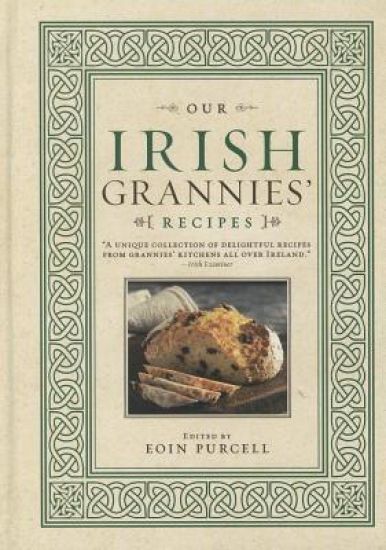
Our Irish Grannies' Recipes: Comforting and Delicious Cooking from the Old Country to Your Family's Table
Eoin Purcell
Sourcebooks
2011
sidottu
Savor the delicious and authentic recipes of traditional Irish cooking.Experience the heartwarming flavors of Ireland This delightful cookbook is a culinary treasure trove, filled with authentic recipes passed down through generations of Irish grandmothers.Delve into the rich culinary heritage of Ireland as you explore a diverse range of comforting and mouthwatering dishes that will transport you straight to the Emerald Isle.Discover the secret behind the perfect Irish soda bread, the satisfying warmth of a comforting bowl of Irish stew, and the heavenly sweetness of a classic apple tart. With easy-to-follow instructions and readily available ingredients, even novice cooks can effortlessly recreate these cherished dishes in their own kitchens.Try your hand at tried-and-tested recipes such as: Ravenscroft Guinness Beef StewTraditional Dublin CoddleGranny's Northern Irish StuffingOld-fashioned Soda SconesWhether you have Irish roots or simply appreciate the soulful nature of traditional cuisine, Our Irish Grannies' Recipes is a must-have addition to your cookbook collection or the perfect gift for St. Patrick's Day, Christmas, or birthdays. Share the love and flavors of Ireland with your family and friends as you bring these treasured recipes to life in your own home.
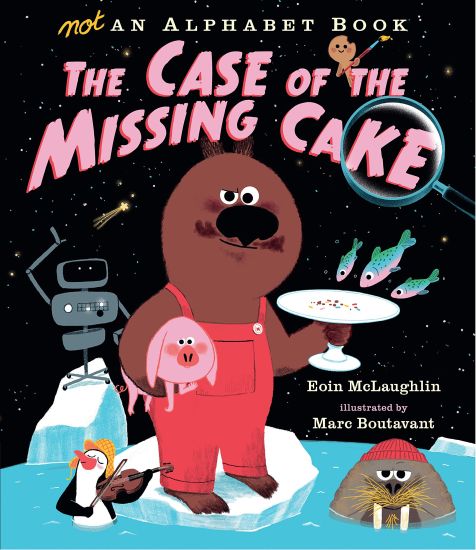
A graphic, bright, imaginative alphabet book, with a smart and laugh-out-loud whodunit twist.This was meant to be a simple alphabet book but something has happened. Something horrible. The most terrible crime! The world’s most completely delicious, tongue-jinglingly, chocolaty cake has been … STOLEN!As Bear travels from A to Z, visiting all sorts of characters, objects and extraordinary places along the way, can YOU help him search for the culprit? But, wait! Are those crumbs on Bear’s page? And are those Bear-shaped pawprints next to the empty cake stand? It seems our narrator might not be as reliable as we first thought...
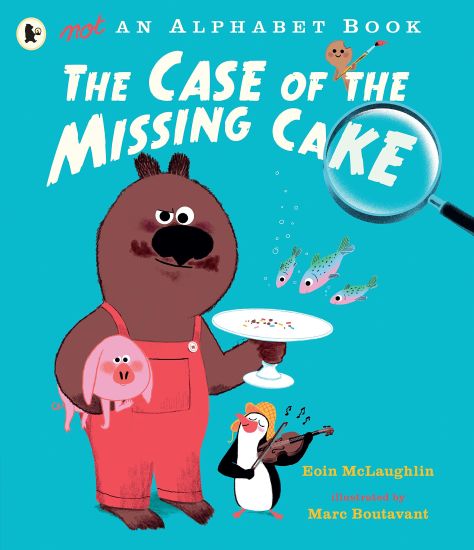
A graphic, bright, imaginative alphabet book, with a smart and laugh-out-loud whodunit twist.This was meant to be a simple alphabet book but something has happened. Something horrible. The most terrible crime! The world’s most completely delicious, tongue-jinglingly, chocolaty cake has been … STOLEN!As Bear travels from A to Z, visiting all sorts of characters, objects and extraordinary places along the way, can YOU help him search for the culprit? But, wait! Are those crumbs on Bear’s page? And are those Bear-shaped pawprints next to the empty cake stand? It seems our narrator might not be as reliable as we first thought...
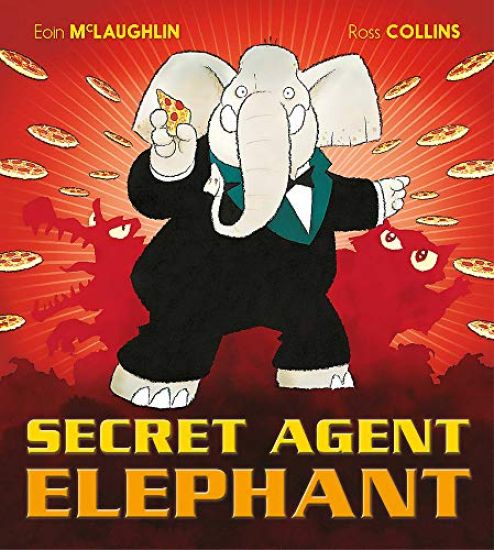
Watch out, supervillains. There's a new spy in town . . .Secret Agent Elephant isn't much good at hiding, or disguises, or driving fast cars - but he DOES look dangerously handsome in a tuxedo. Join the world's biggest, clumsiest super spy on his first mission: to find feline supervillain Vincent le Morte and stop him from destroying the world.Good luck, Agent Elephant. The world is counting on you. AND REMEMBER: DO NOT GET DISTRACTED BY THE MINI PIZZAS!The hilariously funny new book from rising-star Eoin McLaughlin and bestselling illustrator Ross Collins.