Kirjojen hintavertailu. Mukana 12 390 323 kirjaa ja 12 kauppaa.

Kirjahaku

Etsi kirjoja tekijän nimen, kirjan nimen tai ISBN:n perusteella.

1000 tulosta hakusanalla Frederick B Covington

Rowe v. Pacific Quad, Inc.: Deposition File, Plaintiff's Materials

Rowe v. Pacific Quad, Inc.: Deposition File, Plaintiff's Materials

David B. Oppenheimer; Frederick C. Moss

Aspen Publishing
2020
nidottu
In this deposition skills file, Alice Rowe has brought an action under Title VII of the 1964 Civil Rights Act and the Nita Fair Employment Act (which is identical to the California Fair Employment & Housing Act) for sexual harassment and wrongful discharge against her employer, Pacific Quad, Inc. She asserts that her supervisor, operations manager Stanley Schmit, continually leered at her, made offensive sexually suggestive comments to her, brushed by her in order to sexually touch her, and, finally, propositioned her during the two weeks she worked for Pacific Quad. She further alleges that the president of Pacific Quad, John Walsh, was informed of the harassment and ratified it. Rowe claims lost wages, medical expenses (psychotherapy), general damages for emotional distress, and punitive damages. Witnesses may be deposed on the issue of liability only or liability and damages. There are three witnesses for the plaintiff and three for the defendant. The plaintiff and defendant versions are self-contained and can be used independently of each other to teach deposition skills. A trial version of Rowe v. Pacific Quad, Inc. is also available. The deposition and trial files are fully integrated, so that students may use the deposition materials to study deposition practice, using the NITA method, and then go on to study trial practice using the trial materials.

Rowe v. Pacific Quad, Inc.: Deposition File, Defendant's Materials

Rowe v. Pacific Quad, Inc.: Deposition File, Defendant's Materials

David B. Oppenheimer; Frederick C. Moss

Aspen Publishing
2020
nidottu
In this deposition skills file, Alice Rowe has brought an action under Title VII of the 1964 Civil Rights Act and the Nita Fair Employment Act (which is identical to the California Fair Employment & Housing Act) for sexual harassment and wrongful discharge against her employer, Pacific Quad, Inc. She asserts that her supervisor, operations manager Stanley Schmit, continually leered at her, made offensive sexually suggestive comments to her, brushed by her in order to sexually touch her, and, finally, propositioned her during the two weeks she worked for Pacific Quad. She further alleges that the president of Pacific Quad, John Walsh, was informed of the harassment and ratified it. Rowe claims lost wages, medical expenses (psychotherapy), general damages for emotional distress, and punitive damages. Witnesses may be deposed on the issue of liability only or liability and damages. There are three witnesses for the plaintiff and three for the defendant. The plaintiff and defendant versions are self-contained and can be used independently of each other to teach deposition skills. A trial version of Rowe v. Pacific Quad, Inc. is also available. The deposition and trial files are fully integrated, so that students may use the deposition materials to study deposition practice, using the NITA method, and then go on to study trial practice using the trial materials.

Rowe v. Pacific Quad, Inc.: Deposition File, Faculty Materials

Rowe v. Pacific Quad, Inc.: Deposition File, Faculty Materials

David B. Oppenheimer; Frederick C. Moss

Aspen Publishing
2019
nidottu
In this deposition skills file, Alice Rowe has brought an action under Title VII of the 1964 Civil Rights Act and the Nita Fair Employment Act (which is identical to the California Fair Employment & Housing Act) for sexual harassment and wrongful discharge against her employer, Pacific Quad, Inc. She asserts that her supervisor, operations manager Stanley Schmit, continually leered at her, made offensive sexually suggestive comments to her, brushed by her in order to sexually touch her, and, finally, propositioned her during the two weeks she worked for Pacific Quad. She further alleges that the president of Pacific Quad, John Walsh, was informed of the harassment and ratified it. Rowe claims lost wages, medical expenses (psychotherapy), general damages for emotional distress, and punitive damages. Witnesses may be deposed on the issue of liability only or liability and damages. There are three witnesses for the plaintiff and three for the defendant. The plaintiff and defendant versions are self-contained and can be used independently of each other to teach deposition skills. A trial version of Rowe v. Pacific Quad, Inc. is also available. The deposition and trial files are fully integrated, so that students may use the deposition materials to study deposition practice, using the NITA method, and then go on to study trial practice using the trial materials.

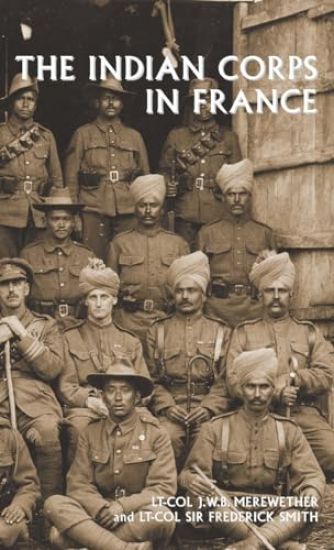
The Indian Corps in France

The Indian Corps in France

Lt-Col J W B Merewether; Lt-Col Frederick Smith

NAVAL MILITARY PRESS
2024
pokkari
The Indian Corps, consisting of two infantry divisions (Meerut and Lahore), arrived in France in September/October 1914. It was commanded by Lieutenant-General Sir James Willcocks who was the most senior officer n the BEF after Field Marshal Sir John French and General Sir Horace Smith-Dorrien. The corps remained on the Western Front till the end of 1915, when it was transferred to the Middle East, a more suitable theatre of war for Indian Army troops. This history was published at the request and under the authority of the India Office, and apart from General Willcocks' own memoirs, With The Indians in France, it is the only record of the corps. It is not altogether a happy tale, as the book makes clear. While there was no questioning the bravery of the troops (five Indian/Gurkha VCs) there were problems of climate, reinforcements, officer casualties (the Indian battalion had only 13 British officers, who were first priority targets for the Germans), not to mention mishandling and lack of understanding on the part of the High Command. Total casualties among Indian Army units amounted to 21,413 (each division had, initially, three British battalions and divisional artillery was British). An unusual and fascinating story and history.
The Indian Corps in France

The Indian Corps in France

Lt-Col J W B Merewether; Lt-Col Frederick Smith

NAVAL MILITARY PRESS
2024
sidottu
The Indian Corps, consisting of two infantry divisions (Meerut and Lahore), arrived in France in September/October 1914. It was commanded by Lieutenant-General Sir James Willcocks who was the most senior officer n the BEF after Field Marshal Sir John French and General Sir Horace Smith-Dorrien. The corps remained on the Western Front till the end of 1915, when it was transferred to the Middle East, a more suitable theatre of war for Indian Army troops. This history was published at the request and under the authority of the India Office, and apart from General Willcocks' own memoirs, With The Indians in France, it is the only record of the corps. It is not altogether a happy tale, as the book makes clear. While there was no questioning the bravery of the troops (five Indian/Gurkha VCs) there were problems of climate, reinforcements, officer casualties (the Indian battalion had only 13 British officers, who were first priority targets for the Germans), not to mention mishandling and lack of understanding on the part of the High Command. Total casualties among Indian Army units amounted to 21,413 (each division had, initially, three British battalions and divisional artillery was British). An unusual and fascinating story and history.
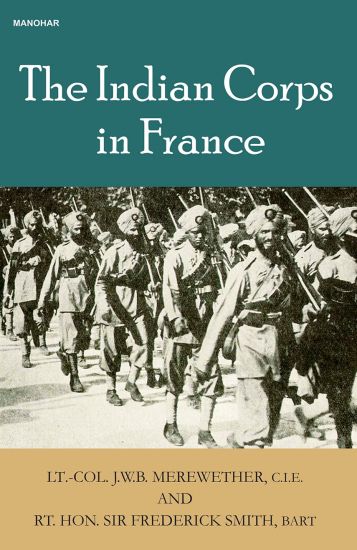
The Indian Corps in France

The Indian Corps in France

J.W.B. Merewether; Frederick Smith

MANOHAR PUBLISHERS AND DISTRIBUTORS
2023
sidottu
This is a historically important and thrilling narrative of the deeds of the Indian Corps in Flanders in France in the early days of the Great War. During the course of the First World War, an Indian Army was raised, trained and equipped for service in India alone and upon its frontiers. Soon, this army was deployed from Egypt on the west to China in the east, and had embraced most of the intervening countries. The landing of two Indian Divisions of the Indian Corps in the harbor of Marseilles in September and October 1914 was not only a great event in the chronicles of the Indian Army, but in the entire human history.