Kirjojen hintavertailu. Mukana 11 342 296 kirjaa ja 12 kauppaa.

Kirjahaku

Etsi kirjoja tekijän nimen, kirjan nimen tai ISBN:n perusteella.

1000 tulosta hakusanalla Frederick Locker

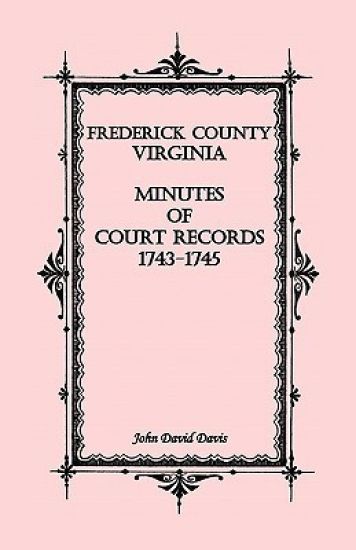
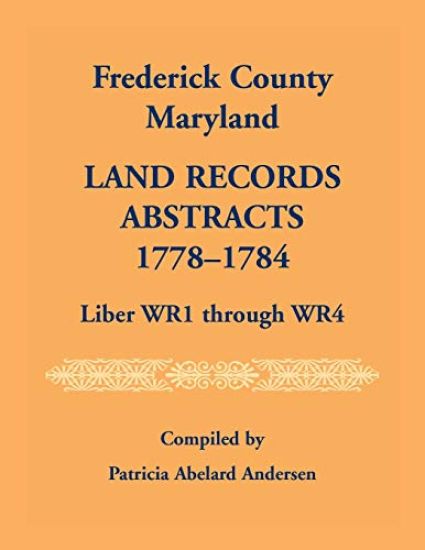
Frederick County, Maryland Land Records Abstracts, 1778-1784, Liber WR1 Through WR4
This volume includes the first four volumes, done under the supervision of William Ritchie, Clerk of Frederick County Court, and labeled WR1 through WR4, containing records from the Revolutionary War Period of 1778-1784.Some of the more interesting records recorded include two naturalizations for former German POWs, two court martials for militia men not appearing for duty, a discharge record signed by General Anthony Wayne, information about establishing a gunlock manufactury in Frederick Town and the sales of Confiscated British property, including Frederick Town ground rents owned by Daniel Dulaney, who left for England at the beginning of the Revolutionary War period.Although it is becoming increasingly easy to access these records online now through the Maryland State Archives, the value that abstracts offer in locating records through their every name indexing, cannot be matched with the indexes available online. The official indexes do not always identify estate sales, bills of sale, Negro sales or manumissions, or depositions and do not index information within deeds, such as mention of neighbors, as well as other documents brought to the court to be recorded. Also, many researchers have difficulty reading the old hand written books, so this also provides a guide and finding aid for the beginning genealogist. The page numbers of the deeds in the original volume are given in the abstracts, so that when desired, the original deeds can be accessed and printed from the Maryland State Archives Web Site.Abstracts are best used as brief guides and indexes to original records, and to find people mentioned in deeds who would otherwise be lost in the records. This series of abstracts focuses on the names of parties in the deeds. This volume contains three indices to aid the researcher: a brief index to interesting items of note; a lengthy full-name index, which includes an occupation section (occupations will sometimes help distinguish a man); and an index to place names, town lots and land tract names.
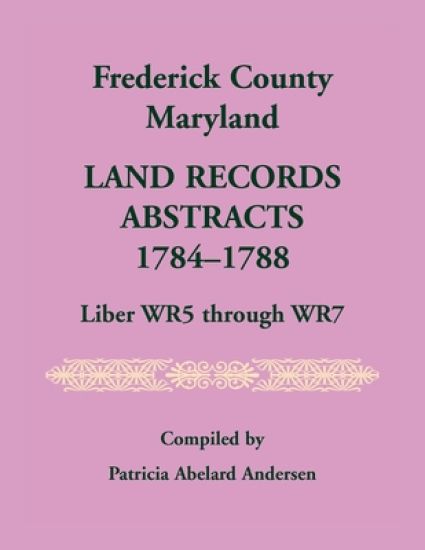
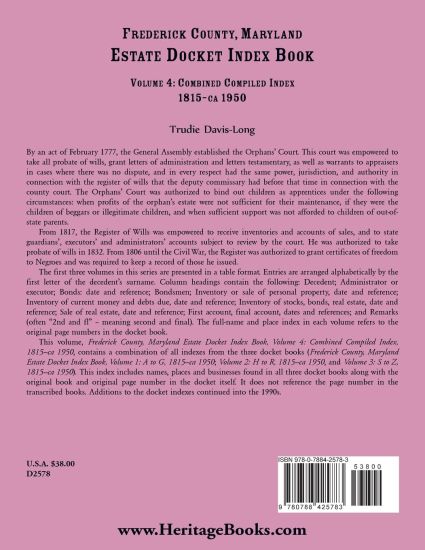
Frederick County, Maryland Estate Docket Index Book, Volume 4
By an act of February 1777, the General Assembly established the Orphans' Court. This court was empowered to take all probate of wills, grant letters of administration and letters testamentary, as well as warrants to appraisers in cases where there was no dispute, and in every respect had the same power, jurisdiction, and authority in connection with the register of wills that the deputy commissary had before that time in connection with the county court. The Orphans' Court was authorized to bind out children as apprentices under the following circumstances: when profits of the orphan's estate were not sufficient for their maintenance, if they were the children of beggars or illegitimate children, and when sufficient support was not afforded to children of out-of-state parents.From 1817, the Register of Wills was empowered to receive inventories and accounts of sales, and to state guardians', executors' and administrators' accounts subject to review by the court. He was authorized to take probate of wills in 1832. From 1806 until the Civil War, the Register was authorized to grant certificates of freedom to Negroes and was required to keep a record of those he issued.The first three volumes in this series are presented in a table format. Entries are arranged alphabetically by the first letter of the decedent's surname. Column headings contain the following: Decedent; Administrator or executor; Bonds: date and reference; Bondsmen; Inventory or sale of personal property, date and reference; Inventory of current money and debts due, date and reference; Inventory of stocks, bonds, real estate, date and reference; Sale of real estate, date and reference; First account, final account, dates and references; and Remarks (often "2nd and fl" - meaning second and final). The full-name and place index in each volume refers to the original page numbers in the docket book.This volume, Frederick County, Maryland Estate Docket Index Book, Volume 4: Combined Compiled Index, 1815-ca 1950, contains a combination of all indexes from the three docket books (Frederick County, Maryland Estate Docket Index Book, Volume 1: A to G, 1815-ca 1950; Volume 2: H to R, 1815-ca 1950, and Volume 3: S to Z, 1815-ca 1950). This index includes names, places and businesses found in all three docket books along with the original book and original page number in the docket itself. It does not reference the page number in the transcribed books. Additions to the docket indexes continued into the 1990s.2022, 81/2x11, paper, 284 pp.
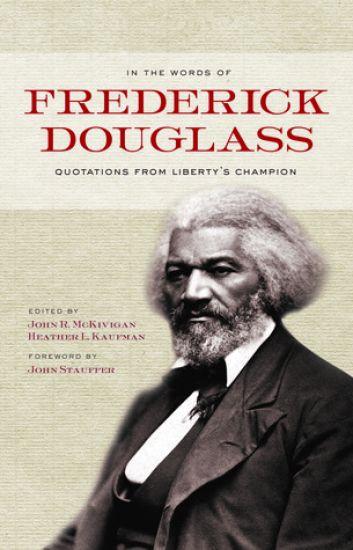
In the Words of Frederick Douglass

In the Words of Frederick Douglass

Frederick Douglass; John Stauffer

Cornell University Press
2012
sidottu
"No people are more talked about and no people seem more imperfectly understood. Those who see us every day seem not to know us."—Frederick Douglass on African Americans "There is no negro problem. The problem is whether the American people have loyalty enough, honor enough, patriotism enough, to live up to their own constitution."—on civil rights "Woman should have justice as well as praise, and if she is to dispense with either, she can better afford to part with the latter than the former."—on women "The thing worse than rebellion is the thing that causes rebellion."—on rebellion "A man is never lost while he still earnestly thinks himself worth saving; and as with a man, so with a nation."—on perseverance "I am ever pleased to see a man rise from among the people. Every such man is prophetic of the good time coming."—on Lincoln Frederick Douglass, a runaway Maryland slave, was witness to and participant in some of the most important events in the history of the American Republic between the years of 1818 and 1895. Beginning his long public career in 1841 as an agent of the Massachusetts Anti-Slavery Society, Douglass subsequently edited four newspapers and championed many reform movements. An advocate of morality, economic accumulation, self-help, and equality, Douglass supported racial pride, constant agitation against racial discrimination, vocational education for blacks, and nonviolent passive resistance. He was the only man who played a prominent role at the 1848 meeting in Seneca Falls that formally launched the women's rights movement. He was a temperance advocate and opposed capital punishment, lynching, debt peonage, and the convict lease system. A staunch defender of the Liberty and Republican parties, Douglass held several political appointments, frequently corresponded with leading politicians, and advised Presidents Lincoln, Grant, Hayes, Garfield, and Harrison. He met with John Brown before his abortive raid on Harpers Ferry, helped to recruit African American troops during the Civil War, attended most national black conventions held between 1840 and 1895, and served as U.S. ambassador to Haiti. Frederick Douglass has left one of the most extensive bodies of significant and quotable public statements of any figure in American history. In the Words of Frederick Douglass is a rich trove of quotations from Douglass. The editors have compiled nearly seven hundred quotations by Douglass that demonstrate the breadth and strength of his intellect as well as the eloquence with which he expressed his political and ethical principles.
The Papers of Frederick Law Olmsted

The Papers of Frederick Law Olmsted

Frederick Law Olmsted

Johns Hopkins University Press
1977
sidottu
"The park throughout is a single work of art, and as such, subject to the primary law of every work of art, namely, that it shall be framed upon a single, noble motive, to which the design of all its parts, in some more or less subtle way, shall be confluent and helpful."-Frederick Law Olmsted For decades Frederick Law Olmsted (1822-1903) designed parks and park systems across the United States, leaving an enduring legacy of designed public space that is enjoyed, studied, and protected today. Olmsted's plans and professional correspondence are a rich source for understanding his remarkable contribution to the quality of urban life in this country and the development of the profession of landscape architecture. His writings also provide a unique record of society and politics in post-Civil War America. Historians, landscape architects, conservationists, city planners and citizens' groups continue to turn to Olmsted for inspiration in their planning and protection of public open space in our cities. This latest volume of the Papers of Frederick Law Olmsted presents the record of his last years of residence in New York City. It includes reports on the design of Riverside and Morningside parks and Tompkins Square in Manhattan, as well as his comprehensive plan for the street system and rapid transit routes of the Bronx. It records his continuing work on Central Park and presents his final retrospective statement, "The Spoils of the Park." In addition, the volume contains an annotated version of the journal in which Olmsted recorded instances of political maneuvering and patronage politics in the years prior to his dismissal from the New York parks department in 1878. Later chapters chronicle the early stages of his planning of the Boston park system-the Back Bay Fens, Arnold Arboretum, and Riverway. Other major commissions, each with its own political complications, were the grounds of the U. S. Capitol, the completion of the new state capitol in Albany, the designing of a park on Mount Royal in Montreal, and construction of the park system of Buffalo, N. Y. The volume also presents Olmsted's commentary on issues of the times including Reconstruction policy and Civil Service reform. The Olmsted Papers project is supported by the National Endowment for the Humanities, the National Historical Publications and Records Commission, the National Trust for the Humanities, the National Association for Olmsted Parks, as well as private foundations and individuals.
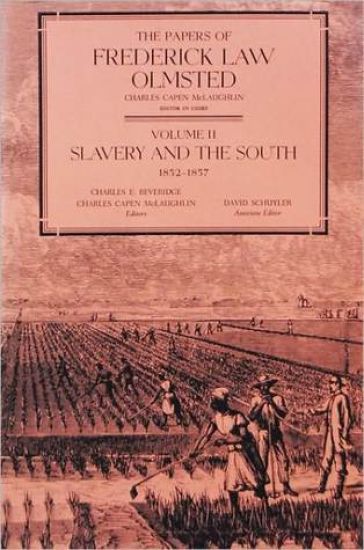
The Papers of Frederick Law Olmsted

The Papers of Frederick Law Olmsted

Frederick Law Olmsted

Johns Hopkins University Press
1981
sidottu
"An indispensable work for any student of the Old South. The book is not merely indispensable; it is challenging and controversial."—New York TimesFor decades Frederick Law Olmsted (1822–1903) designed parks and park systems across the United States, leaving an enduring legacy of designed public space that is enjoyed, studied, and protected today. His plans and professional correspondence offer a rich source for understanding his remarkable contribution to the quality of urban life in this country and the development of the profession of landscape architecture. Olmsted's writings also provide a unique record of society and politics in post–Civil War America. Historians, landscape architects, conservationists, city planners, students, and citizens' groups continue to turn to Olmsted for ideas about the development and conservation of green spaces in urban areas.The Olmsted Papers project is supported by the National Endowment for the Humanities, the National Historical Publications and Records Commission, the National Trust for the Humanities, the National Association for Olmsted Parks, as well as private foundations and individuals.
The Papers of Frederick Law Olmsted

The Papers of Frederick Law Olmsted

Frederick Law Olmsted

Johns Hopkins University Press
1983
sidottu
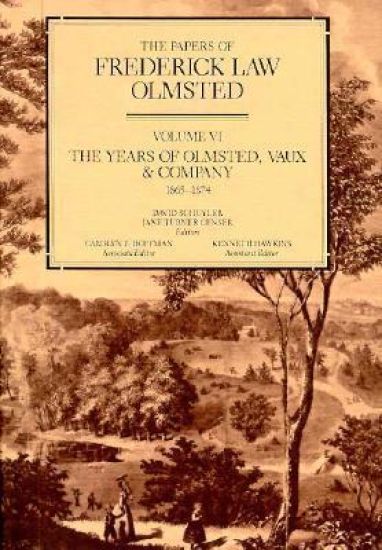
'The Years of Olmsted, Vaux & Company, 1865-1874' documents one of the most productive periods of Olmsted's career. During these years he and Vaux created their classic design for Prospect Park in Brooklyn, drew up plans for Riverside and Morningside parks in Manhattan, and designed Chicago's South Park. Its rich assortment of documents will be of interest to historians, landscape architects, urban planners, and anyone concerned with the roots of modern America. 'The Olmsted Papers project is supported by the Andrew W. Mellon Foundation, the National Endowment for the Humanities, and the National Historical Publications and Records Commission, and is sponsored by The American University.'
The Papers of Frederick Law Olmsted

The Papers of Frederick Law Olmsted

Frederick Law Olmsted

Johns Hopkins University Press
1992
sidottu
The Years of Olmsted, Vaux & Company, 1865-1874 documents one of the most productive periods of Olmsted's career. During these years he and Vaux created their classic design for Prospect Park in Brooklyn, drew up plans for Riverside and Morningside parks in Manhattan, and designed Chicago's South Park. Its rich assortment of documents will be of interest to historians, landscape architects, urban planners, and anyone concerned with the roots of modern America. The Olmsted Papers project is supported by the Andrew W. Mellon Foundation, the National Endowment for the Humanities, and the National Historical Publications and Records Commission, and is sponsored by The American University.
The Papers of Frederick Law Olmsted

The Papers of Frederick Law Olmsted

Frederick Law Olmsted

Johns Hopkins University Press
2007
sidottu
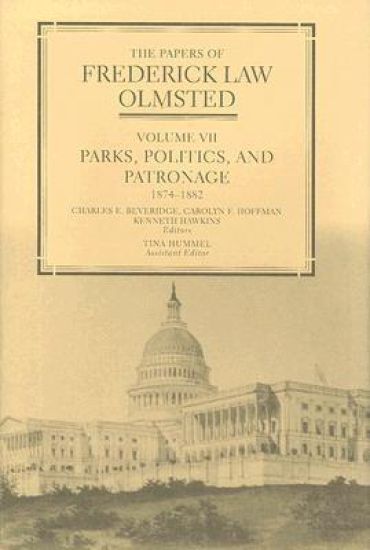
For decades Frederick Law Olmsted (1822-1903) designed parks and park systems across the United States, leaving an enduring legacy of designed public space that is enjoyed, studied, and protected today. His plans and professional correspondence offer a rich source for understanding his remarkable contribution to the quality of urban life in this country and the development of the profession of landscape architecture. Olmsted's writings also provide a unique record of society and politics in post-Civil War America. Historians, landscape architects, conservationists, city planners, and citizens' groups continue to turn to Olmsted for inspiration in their planning and protection of public open space in our cities. This latest and seventh volume of the Papers of Frederick Law Olmsted presents the record of his last years of residence in New York City. It includes reports on the design of Riverside and Morningside parks and Tompkins Square in Manhattan, as well as his comprehensive plan for the street system and rapid transit routes of the Bronx. It records his continuing work on Central Park and presents his final retrospective statement, "The Spoils of the Park." In addition, volume seven contains an annotated version of the journal in which Olmsted recorded instances of political maneuvering and patronage politics in the years before his dismissal from the New York parks department in 1878. Later documents chronicle the early stages of his planning of the Boston park system-the Back Bay Fens, Arnold Arboretum, and Riverway. Other major commissions, each with its own political complications, were the grounds of the U.S. Capitol, the completion of the new state capitol in Albany, the designing of a park on Mount Royal in Montreal, and construction of the park system of Buffalo, New York. The volume also presents Olmsted's commentary on issues of the times including federal Reconstruction policy and civil-service reform. The Olmsted Papers project is supported by the National Endowment for the Humanities, the National Historical Publications and Records Commission, the National Trust for the Humanities, the National Association for Olmsted Parks, as well as private foundations and individuals.
Frederick Douglass' Civil War

Frederick Douglass' Civil War

David W. Blight

Louisiana State University Press
1991
nidottu
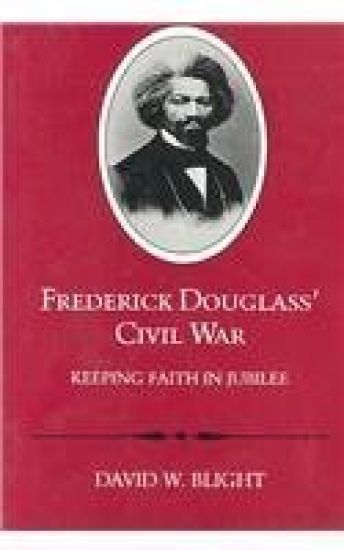
In this sensitive intellectual biography David W. Blight undertakes the first systematic analysis of the impact of the Civil War on Frederick Douglass' life and thought, offering new insights into the meaning of the war in American history and in the Afro-American experience. Frederick Douglass' Civil War follows Douglass' intellectual and personal growth from the political crises of the 1850s through secession, war, black enlistment, emancipation, and Reconstruction. This book provides an engrossing story of Douglass' development of a social identity in relation to transforming events, and demonstrates that he saw the Civil War as the Second American Revolution, and himself as one of the founders of a new nation. Through Douglass' life, his voice, and his interpretations we see the Civil War era and its memory in a new light.
Frederick W. Lander

Frederick W. Lander

Gary L. Ecelbarger

Louisiana State University Press
2001
sidottu
Tall and handsome, vigorous and hot-tempered, fearless to a fault, Frederick W. Lander (1821- 1862) became one of the most name-recognized Americans in the years 1854 to 1862. A top-notch railroad and wagon-road engineer in the western territories, a popular lyceum speaker, a published fiction writer and poet, an adept negotiator with Native Americans, and an agent for the Lincoln administration and the Union army, the Massachusetts native attracted newspaper coverage from coast to coast for his renown and versatility. His name evoked emotion and passion among his friends and associates, including artists, poets, explorers, engineers, soldiers, and politicians, but at his untimely death early in the Civil War, he quickly and tragically descended into anonymity. With an energy that befits his subject, Gary L. Ecelbarger brings to life this intriguing, romantic personality of the nineteenth century, tempting the imagination to consider what Lander might have accomplished had he lived longer.Using more than five hundred unpublished letters and documents written by Lander and his colleagues, superiors, and subordinates, Ecelbarger delves into all of the major aspects of Lander's life but focuses upon its final chapter in the Civil War. Promoted directly from unpaid aide-de-camp to brigadier general, Lander was quickly dubbed ""the great natural American soldier"" by Lieutenant General Winfield Scott for his brilliant promise as a military leader. The author offers a richly detailed narrative of Lander's courageous participation in three campaigns during the first year of the conflict: Rich Mountain, May- July, 1861; Ball's Bluff, September- October, 1861; and the previously undocumented campaign against Stonewall Jackson, January- March, 1862.Ecelbarger studies Lander's flaws, attributes, and achievements to provide a judicious, comprehensive analysis of his actions and character. In Frederick W. Lander, he produces the spellbinding story of a once-forgotten hero who now appears life size.
Frederick Douglass and Herman Melville

Frederick Douglass and Herman Melville

The University of North Carolina Press
2008
nidottu
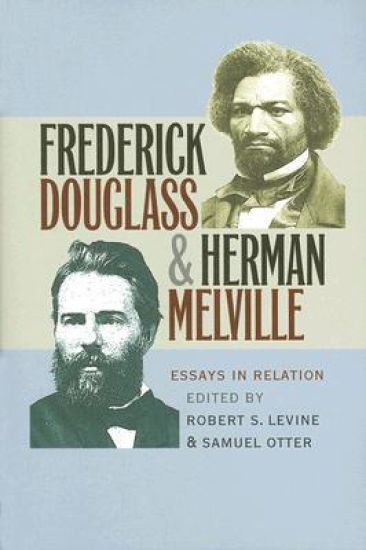
Frederick Douglass (1818-1895) and Herman Melville (1819-1891) addressed in their writings a range of issues that continue to resonate in American culture: the reach and limits of democracy; the nature of freedom; the roles of race, gender, and sexuality; and the place of the United States in the world. Yet they are rarely discussed together, perhaps because of their differences in race and social position. Douglass escaped from slavery and tied his well-received nonfiction writing to political activism, becoming a figure of international prominence. Melville was the grandson of Revolutionary War heroes and addressed urgent issues through fiction and poetry, laboring in increasing obscurity.In eighteen original essays, the contributors to this collection explore the convergences and divergences of these two extraordinary literary lives. Developing new perspectives on literature, biography, race, gender, and politics, this volume ultimately raises questions that help rewrite the color line in nineteenth-century studies.The contributors are Elizabeth Barnes, Hester Blum, Russ Castronovo, John Ernest, William Gleason, Gregory Jay, Carolyn L. Karcher, Rodrigo Lazo, Maurice S. Lee, Robert S. Levine, Steven Mailloux, Dana D. Nelson, Samuel Otter, John Stauffer, Sterling Stuckey, Eric J. Sundquist, Elisa Tamarkin, Susan M. Ryan, David Van Leer, Maurice Wallace, Robert K. Wallace, and Kenneth W. Warren.
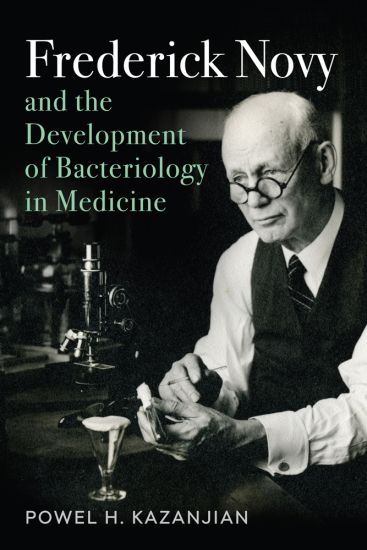
Frederick Novy and the Development of Bacteriology in Medicine

Frederick Novy and the Development of Bacteriology in Medicine

Powel Harold Kazanjian

Rutgers University Press
2017
sidottu
At the turn of the twentieth century, Frederick Novy was the leader among a new breed of full-time bacteriologists at American medical schools. Although historians have examined bacteriologic work done in American health department laboratories, there has been little examination of similar work completed within U.S. medical schools during this period. In Frederick Novy and the Development of Bacteriology in Medicine, medical historian, medical researcher, and clinician Powel H. Kazanjian uses Novy’s archived letters, laboratory notebooks, lecture notes, and published works to examine medical research and educational activities at the University of Michigan and other key medical schools during a formative period in modern medical science.