Kirjojen hintavertailu. Mukana 12 083 983 kirjaa ja 12 kauppaa.

Kirjahaku

Etsi kirjoja tekijän nimen, kirjan nimen tai ISBN:n perusteella.

1000 tulosta hakusanalla Gavin Mortimer

Music in Mainland Southeast Asia

Music in Mainland Southeast Asia

Gavin Douglas

Oxford University Press Inc
2010
muu
Music in Mainland Southeast Asia is one of several case-study volumes that can be used along with Thinking Musically, the core book in the Global Music Series. Thinking Musically incorporates music from many diverse cultures and establishes the framework for exploring the practice of music around the world. It sets the stage for an array of case-study volumes, each of which focuses on a single area of the world. Each case study uses the contemporary musical situation as a point of departure, covering historical information and traditions as they relate to the present. Mainland Southeast Asia is a culturally diverse and musically intriguing area, yet the ethnomusicological record lacks coverage of many of its musical and cultural traditions. Placing the music of this region within a social, cultural, and historical context, Music in Mainland Southeast Asia is the first brief, stand-alone volume to profile the under-represented musical traditions of Burma, Cambodia, Thailand, and Vietnam. It also contains the first introduction to Burmese music ever presented in a music textbook. Drawing on his extensive fieldwork, author Gavin Douglas frames this survey of Southeast Asian music within three key themes: music and diversity, music and political turmoil, and music and globalization. Each theme lends itself to a discussion of the region's classical musical traditions, folk traditions, and contemporary developments. Uniquely focusing on the people who practice these musical traditions—rather than the locales from which the traditions originate—the text also follows individuals out of their native lands and into diasporic communities throughout the world. A vibrant, thorough introduction, Music in Mainland Southeast Asia is ideal for introductory undergraduate courses in world music or ethnomusicology and for upper-level courses in Southeast Asian music or Southeast Asian culture. Packaged with a 70-minute CD containing musical examples, the text features numerous listening activities that actively engage students with the music and the themes. The companion website includes supplementary materials for instructors.
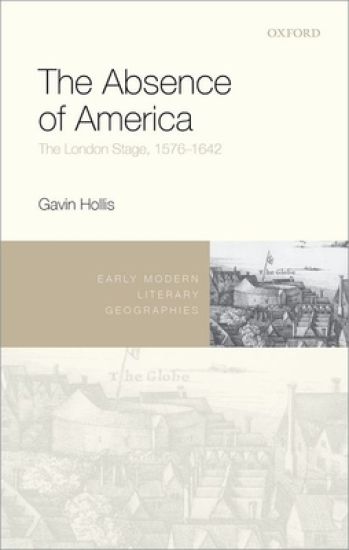
The Absence of America

The Absence of America

Gavin Hollis

Oxford University Press
2015
sidottu
The Absence of America: the London Stage 1576â1642 examines why early modern drama's response to English settlement in the New World was muted, even though the so-called golden age of Shakespeare coincided with the so-called golden age of exploration: no play is set in the Americas; few plays treat colonization as central to the plot; a handful features Native American characters (most of whom are Europeans in disguise). However, advocates of colonialism in the seventeenth century denounced playing companies as enemies on a par with the Pope and the Devil. Instead of writing off these accusers as paranoid cranks, this book takes as its starting point the possibility that they were astute playgoers. By so doing we can begin to see the emergence of a "picture of America," and of the Virginia colony in particular, across a number of plays performed for London audiences: Jonson's Bartholomew Fair, The Staple of News, and his collaboration with Marston and Chapman, Eastward Ho!; Robert Greene's Orlando Furioso; Massinger's The City Madam; Massinger and Fletcher's The Sea Voyage; Middleton and Dekker's The Roaring Girl; Shakespeare's The Tempest, and Fletcher and Shakespeare's Henry VIII. We can glean the significance of this picture, not only for the troubled Virginia Company, but also for London theater audiences. And we can see that the picture that was beginning to form was, as the anti-theatricalists surmised, often slanderous, condemnatory, and, as it were, anti-American.
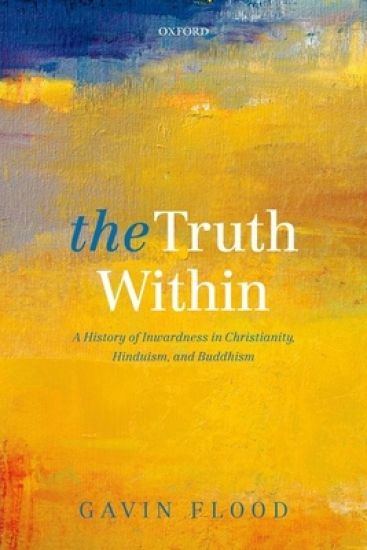
The Truth Within

The Truth Within

Gavin Flood

Oxford University Press
2015
nidottu
The idea that there is a truth within the person linked to the discovery of a deeper, more fundamental, more authentic self, has been a common theme in many religions throughout history and an idea that is still with us today. This inwardness or interiority unique to me as an essential feature of who I am has been an aspect of culture and even a defining characteristic of human being; an authentic, private sphere to which we can retreat that is beyond the conflicts of the outer world. This inner world becomes more real than the outer, which is seen as but a pale reflection. Remarkably, the image of the truth within is found across cultures and this book presents an account of this idea in the pre-modern history of Christianity, Hinduism, and Buddhism. Furthermore, in theistic religions, Christianity and some forms of Hinduism, the truth within is conflated with the idea of God within and in all cases this inner truth is thought to be not only the heart of the person, but also the heart of the universe itself. Gavin Flood examines the metaphor of inwardness and the idea of truth within, along with the methods developed in religions to attain it such as prayer and meditation. These views of inwardness that link the self to cosmology can be contrasted with a modern understanding of the person. In examining the truth within in Christianity, Hinduism, and Buddhism, Flood offers a hermeneutical phenomenology of inwardness and a defence of comparative religion.
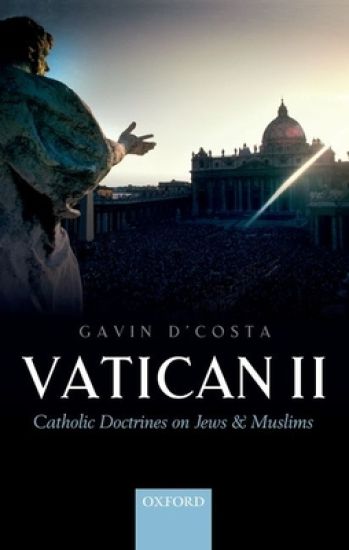
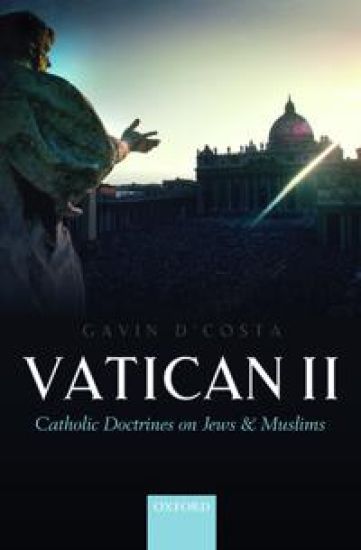
Vatican II

Vatican II

Gavin D'Costa

Oxford University Press
2016
nidottu
Gavin D'Costa breaks new ground in this authoritative study of the Second Vatican Council's doctrines on other religions, with particular attention to Judaism and Islam. The focus is exclusively on the doctrinal foundations found in Lumen Gentium 16 that will serve Catholicism in the twenty first century. D'Costa provides a map outlining different hermeneutical approaches to the Council, whilst synthesising their strengths and providing a critique of their weaknesses. Moreover, he classifies the different authority attributed to doctrines thereby clarifying debates regarding continuity, discontinuity, and reform in doctrinal teaching. Vatican II: Catholic Doctrines on Jews and Muslims expertly examines the Council's revolutionary teaching on Judaism which has been subject to conflicting readings, including the claim that the Council reversed doctrinal teachings in this area. Through a rigorous examination of the debates, the drafts, the official commentary, and with consideration of the previous Council and papal doctrinal teachings on the Jews, D'Costa lays bare the doctrinal achievements of the Council, and concludes with a similar detailed examination of Catholic doctrines on Islam. This innovative text makes essential interventions in the debate about Council hermeneutics and doctrinal teachings on the religions.
Oxford Handbook of Clinical Immunology and Allergy

Oxford Handbook of Clinical Immunology and Allergy

Gavin Spickett

Oxford University Press
2019
muu
This new edition of Clinical Immunology and Allergy is a practical and clinically based guide for clinicians and laboratory staff to aid diagnosis and management of immunological and allergic disease, and provides examples of the correct selection and interpretation of immunological tests for a wide range of conditions. Fully updated from the previous edition, with the addition of new diseases recently identified from the use of genetic testing, and novel biological therapies and autoantibody tests, this title covers the entire breadth of the field, with the information at your fingertips. Split into two sections, the first covering individual diseases and allergies, with diagnosis and management strategies, and the second describing appropriate laboratory tests and their interpretation, the Oxford Handbook of Clinical Immunology and Allergy is an invaluable reference text, and works as a succinct revision guide for the FRCPath in Immunology. Filled with cross-references to create a cohesive overview of a complex subject, and presented in concise bullet-points for detailed direction to the key facts, this handbook provides everything you need to help you in clinical practice.
Catholic Doctrines on the Jewish People after Vatican II
In this timely study Gavin D'Costa explores Roman Catholic doctrines after the Second Vatican Council regarding the Jewish people (1965 - 2015). It establishes the emergence of the teaching that God's covenant with the Jewish people is irrevocable. What does this mean for Catholics regarding Jewish religious rituals, the land, and mission? Catholic Doctrines on the Jewish People after Vatican II establishes that the Catholic Church has a new teaching about the Jewish people: the covenant made with God is irrevocable. D'Costa faces head-on three important issues arising from the new teaching. First, previous Catholic teachings seem to claim Jewish rituals are invalid. He argues this is not the case. Earlier teachings allow us positive insights into the modern question. Second, a nuanced case for Catholic minimalist Zionism is advanced, without detriment to the Palestinian cause. This is in keeping with Catholic readings of scripture and the development of the Holy See's attitude to the State of Israel. Third, the painful question of mission is explored. D'Costa shows the new approach safeguards Jewish identity and allows for the possibility of successful witness by Hebrew Catholics who retain their Jewish identity and religious life.
Blackstone's Employment Law Practice 2019 (book and digital pack)

Blackstone's Employment Law Practice 2019 (book and digital pack)

Gavin Mansfield QC; Lydia Banerjee; Damian Brown QC; Charlotte Davies; Simon Forshaw; Mark Humphreys; Anthony Korn; Eleena Misra; Brian Napier QC; David Reade QC; Catherine Taylor

Oxford University Press
2019
muu
Companion website:www.oup.com/BELP Blackstone's Employment Law Practice 2019 is the only text to provide everything you need for bringing, defending, and appealing employment cases in one single, portable volume, providing an unbeatable combination of clear commentary and key legislation. Drawing together comprehensive coverage of practice and procedure in the Employment Tribunals, Employment Appeal Tribunal, and Central Arbitration Committee, Blackstone's Employment Law Practice 2019 is an essential purchase for all employment practitioners. This new edition offers up-to-date guidance on the latest developments in substantive law, practice, and procedure in the employment tribunal and civil courts. An eminent team of expert authors share consummate experience of every aspect of employment law and practice to offer up-to-date advice and commentary on the latest developments in substantive law and procedure.
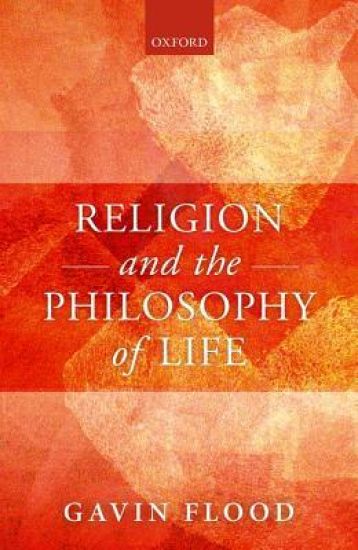
Religion and the Philosophy of Life

Religion and the Philosophy of Life

Gavin Flood

Oxford University Press
2019
sidottu
Religion and the Philosophy of Life considers how religion as the source of civilization transforms the fundamental bio-sociology of humans through language and the somatic exploration of religious ritual and prayer. Gavin Flood offers an integrative account of the nature of the human, based on what contemporary scientists tell us, especially evolutionary science and social neuroscience, as well as through the history of civilizations. Part one contemplates fundamental questions and assumptions: what the current state of knowledge is concerning life itself; what the philosophical issues are in that understanding; and how we can explain religion as the driving force of civilizations in the context of human development within an evolutionary perspective. It also addresses the question of the emergence of religion and presents a related study of sacrifice as fundamental to religions' views about life and its transformation. Part two offers a reading of religions in three civilizational blocks--India, China, and Europe/the Middle East--particularly as they came to formation in the medieval period. It traces the history of how these civilizations have thematised the idea of life itself. Part three then takes up the idea of a life force in part three and traces the theme of the philosophy of life through to modern times. On the one hand, the book presents a narrative account of life itself through the history of civilizations, and on the other presents an explanation of that narrative in terms of life.
ME/CFS and Long Covid

ME/CFS and Long Covid

Gavin Spickett

Oxford University Press
2025
nidottu
Chronic fatigue syndromes are extremely common and it is important that frontline healthcare staff have access to authoritative information to guide their interactions with patients. This book is primarily aimed at General Practitioners, non-specialist physicians, nurses, and therapy staff, to explain how to recognise, diagnose, and treat the condition. Current research clearly indicates that ME/CFS and Long Covid are chronic medical conditions caused by inflammation in the brain consequent upon infection rather than depression, psychological illness, or malingering. The latest information derived from studies on Long Covid and now applied to ME/CFS confirm that the illnesses have a clear underlying pathology and are not purely psychiatric or psychological. This is leading to potential new research-based treatments. This useful and clearly organised book discusses extensive differential diagnoses to ensure that other treatable diseases which present as chronic fatigue are identified and managed. Research-based therapies are reviewed so that healthcare professionals can provide better guidance on management, including evidence (or lack thereof) to support alternative therapies.
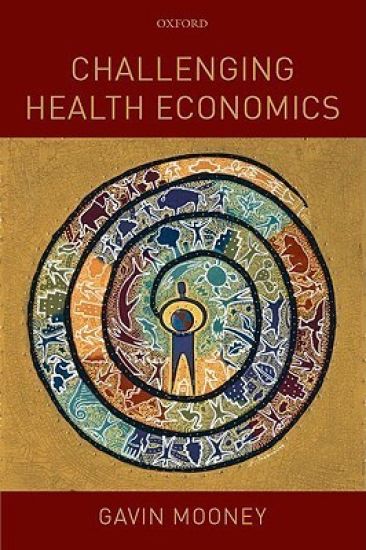
Challenging Health Economics

Challenging Health Economics

Gavin Mooney

Oxford University Press
2009
sidottu
This book mounts a critique of current health economics and provides a better way of looking at the economics of health and health care. It argues that health economics has been too dominated by the economics of health care and has largely ignored the impact of poverty, inequality, poor housing, and lack of education on health. It is suggested that some of the structural issues of economies, particularly the individualism of neo liberalism which is becoming more and more pervasive across the globe, need to be addressed in health economics. The author instead proposes a form of collective decision making through communitarianism, placing value on participation in public life and on institutions, such as health care. It is envisaged this form of decision making can be used at the local, national or global levels. For the last, this would mean a major revamp of global institutions like the World Bank and the IMF. Examples of the impact of the new paradigm on health policy in general but also more specifically on priority setting and equity are included.
Writing after Sidney

Writing after Sidney

Gavin Alexander

Oxford University Press
2006
sidottu
Writing After Sidney examines the literary response to Sir Philip Sidney (1554-86), author of the Arcadia, Astrophil and Stella, and The Defence of Poesy, and the most immediately influential writer of the Elizabethan period. It does so by looking closely both at Sidney and at four writers who had an important stake in his afterlife: his sister Mary Sidney, his brother Robert Sidney, his best friend Fulke Greville, and his niece Mary Wroth. At the same time as these authors wrote their own works in response to Sidney they presented his life and writings to the world, and were shaped by other writers as his literary and political heirs. Readings of these five central authors are embedded in a more general study of the literary and cultural scene in the years after Sidney's death, examining the work of such writers as Spenser, Jonson, Daniel, Drayton, and Herbert. The study uses a wide range of manuscript and printed sources, and key use is made of perspectives from Renaissance literary theory, especially Renaissance rhetoric. The book aims to come to a better understanding of the nature of Sidney's impact on the literature of the fifty or so years after his death in 1586; it also aims to improve our understanding both of Sidney and of the other writers discussed by developing a more nuanced approach to the questions of imitation and example so central to Renaissance literature. It thereby adds to the general store of our understanding of how writing of the English Renaissance offered examples to later readers and writers, and of how it encountered and responded to such examples itself.
Writing after Sidney

Writing after Sidney

Gavin Alexander

Oxford University Press
2010
nidottu
Writing After Sidney examines the literary response to Sir Philip Sidney (1554-86), author of the Arcadia, Astrophil and Stella, and The Defence of Poesy, and the most immediately influential writer of the Elizabethan period. It does so by looking closely both at Sidney and at four writers who had an important stake in his afterlife: his sister Mary Sidney, his brother Robert Sidney, his best friend Fulke Greville, and his niece Mary Wroth. At the same time as these authors wrote their own works in response to Sidney they presented his life and writings to the world, and were shaped by other writers as his literary and political heirs. Readings of these five central authors are embedded in a more general study of the literary and cultural scene in the years after Sidney's death, examining the work of such writers as Spenser, Jonson, Daniel, Drayton, and Herbert. The study uses a wide range of manuscript and printed sources, and key use is made of perspectives from Renaissance literary theory, especially Renaissance rhetoric. The book aims to come to a better understanding of the nature of Sidney's impact on the literature of the fifty or so years after his death in 1586; it also aims to improve our understanding both of Sidney and of the other writers discussed by developing a more nuanced approach to the questions of imitation and example so central to Renaissance literature. It thereby adds to the general store of our understanding of how writing of the English Renaissance offered examples to later readers and writers, and of how it encountered and responded to such examples itself.
Vatican II

Vatican II

Gavin D'Costa

Oxford University Press
2014
sidottu
Gavin D'Costa breaks new ground in this authoritative study of the Second Vatican Council's doctrines on other religions, with particular attention to Judaism and Islam. The focus is exclusively on the doctrinal foundations found in Lumen Gentium 16 that will serve Catholicism in the twenty first century. D'Costa provides a map outlining different hermeneutical approaches to the Council, whilst synthesising their strengths and providing a critique of their weaknesses. Moreover, he classifies the different authority attributed to doctrines thereby clarifying debates regarding continuity, discontinuity, and reform in doctrinal teaching. Vatican II: Catholic Doctrines on Jews and Muslims expertly examines the Council's revolutionary teaching on Judaism which has been subject to conflicting readings, including the claim that the Council reversed doctrinal teachings in this area. Through a rigorous examination of the debates, the drafts, the official commentary, and with consideration of the previous Council and papal doctrinal teachings on the Jews, D'Costa lays bare the doctrinal achievements of the Council, and concludes with a similar detailed examination of Catholic doctrines on Islam. This innovative text makes essential interventions in the debate about Council hermeneutics and doctrinal teachings on the religions.
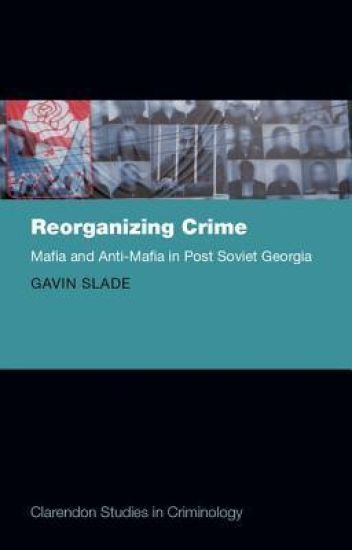
Reorganizing Crime

Reorganizing Crime

Gavin Slade

Oxford University Press
2013
sidottu
Arising from Soviet prison camps in the 1930s, career criminals known as 'thieves-in-law' exist in one form or another throughout post-Soviet countries and have evolved into major transnational organized criminal networks since the dissolution of the USSR. Intriguingly, this criminal fraternity established a particular stronghold in the republic of Georgia where, by the 1990s, they had formed a mafia network of criminal associations that attempted to monopolize protection in both legal and illegal sectors of the economy. This saturation was to such an extent that thieves-in-law appeared to offer an alternative, and just as powerful, system of governance to the state. Following peaceful regime change with 2003's Rose Revolution, Georgia prioritised reform of the criminal justice system generally, and an attack on the thieves-in-law specifically, using anti-organized crime policies that emulated approaches in Italy and America. Criminalization of association with thieves-in-law, radical reforms of the police and prisons, educational change, and controversial, draconian and extra-legal measures, amounted to arguably the most sustained anti-mafia policy implemented in any post-Soviet country - a policy the government believed would pull Georgia out of the Soviet past, declaring it a resounding success. Utilising unique access to primary sources of data, including police files, court cases, archives and expert interviews, Reorganizing Crime: Mafia and Anti-Mafia in Post-Soviet Georgia charts both the longevity and decline of the thieves-in-law, exploring the changes in the levels of resilience of members carrying this elite criminal status, and how this resilience has faded since 2005. Through an innovative and engaging analysis of this often misunderstood cohort of organized crime, this book engages with contemporary debates on the resilience of so-called dark networks, such as organized crime groups and terrorist cells, and tests theories of how and why success in challenging such organizations can occur.
The Truth Within

The Truth Within

Gavin Flood

Oxford University Press
2013
sidottu
The idea that there is a truth within the person linked to the discovery of a deeper, more fundamental, more authentic self, has been a common theme in many religions throughout history and an idea that is still with us today. This inwardness or interiority unique to me as an essential feature of who I am has been an aspect of culture and even a defining characteristic of human being; an authentic, private sphere to which we can retreat that is beyond the conflicts of the outer world. This inner world becomes more real than the outer, which is seen as but a pale reflection. Remarkably, the image of the truth within is found across cultures and this book presents an account of this idea in the pre-modern history of Christianity, Hinduism and Buddhism. Furthermore, in theistic religions, Christianity and some forms of Hinduism, the truth within is conflated with the idea of God within and in all cases this inner truth is thought to be not only the heart of the person, but also the heart of the universe itself. Gavin Flood examines the metaphor of inwardness and the idea of truth within, along with the methods developed in religions to attain it such as prayer and meditation. These views of inwardness that link the self to cosmology can be contrasted with a modern understanding of the person. In examining the truth within in Christianity, Hinduism and Buddhism, Flood offers a hermeneutical phenomenology of inwardness and a defence of comparative religion.
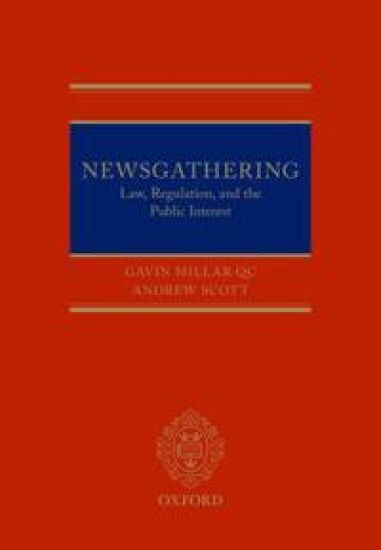
Newsgathering: Law, Regulation, and the Public Interest

Newsgathering: Law, Regulation, and the Public Interest

Gavin Millar QC; Andrew Scott

Oxford University Press
2016
sidottu
This pioneering work draws together the law and other regulatory rules that relate to newsgathering. Written in the post-Leveson environment, each chapter considers a specific newsgathering practice, and covers ethics, (self-) regulatory rules, common law and statutory oversight. In addition to covering the law of England and Wales, the work draws on the relevant jurisprudence of the European Court of Human Rights and applicable EU law. Written by highly-regarded authors Gavin Millar QC and Dr Andrew Scott, this is the first text to cover the full range of newsgathering issues from a legal perspective.
Kwaito's Promise

Kwaito's Promise

Gavin Steingo

University of Chicago Press
2016
sidottu
In mid-1990s South Africa, apartheid ended, Nelson Mandela was elected president, and the country’s urban black youth developed kwaito—a form of electronic music (redolent of North American house) that came to represent the post-struggle generation. In this book, Gavin Steingo examines kwaito as it has developed alongside the democratization of South Africa over the past two decades. Tracking the fall of South African hope into the disenchantment that often characterizes the outlook of its youth today—who face high unemployment, extreme inequality, and widespread crime—Steingo looks to kwaito as a powerful tool that paradoxically engages South Africa’s crucial social and political problems by, in fact, seeming to ignore them. Politicians and cultural critics have long criticized kwaito for failing to provide any meaningful contribution to a society that desperately needs direction. As Steingo shows, however, these criticisms are built on problematic assumptions about the political function of music. Interacting with kwaito artists and fans, he shows that youth aren’t escaping their social condition through kwaito but rather using it to expand their sensory realities and generate new possibilities. Resisting the truism that “music is always political,” Steingo elucidates a music that thrives on its radically ambiguous relationship with politics, power, and the state.
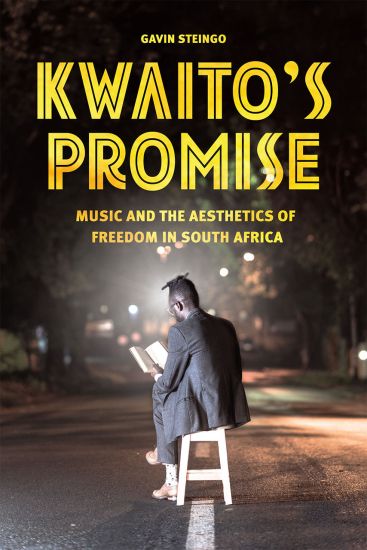
Kwaito's Promise

Kwaito's Promise

Gavin Steingo

University of Chicago Press
2016
nidottu
In mid-1990s South Africa, apartheid ended, Nelson Mandela was elected president, and the country’s urban black youth developed kwaito—a form of electronic music (redolent of North American house) that came to represent the post-struggle generation. In this book, Gavin Steingo examines kwaito as it has developed alongside the democratization of South Africa over the past two decades. Tracking the fall of South African hope into the disenchantment that often characterizes the outlook of its youth today—who face high unemployment, extreme inequality, and widespread crime—Steingo looks to kwaito as a powerful tool that paradoxically engages South Africa’s crucial social and political problems by, in fact, seeming to ignore them. Politicians and cultural critics have long criticized kwaito for failing to provide any meaningful contribution to a society that desperately needs direction. As Steingo shows, however, these criticisms are built on problematic assumptions about the political function of music. Interacting with kwaito artists and fans, he shows that youth aren’t escaping their social condition through kwaito but rather using it to expand their sensory realities and generate new possibilities. Resisting the truism that “music is always political,” Steingo elucidates a music that thrives on its radically ambiguous relationship with politics, power, and the state.
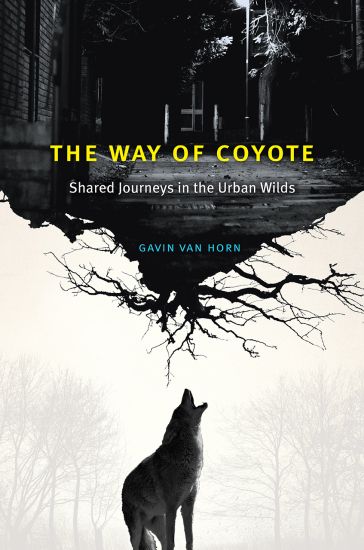
The Way of Coyote

The Way of Coyote

Gavin Van Horn

University of Chicago Press
2018
sidottu
A hiking trail through majestic mountains. A raw, unpeopled wilderness stretching as far as the eye can see. These are the settings we associate with our most famous books about nature. But Gavin Van Horn isn't most nature writers. He lives and works not in some perfectly remote cabin in the woods but in a city-a big city. And that city has offered him something even more valuable than solitude: a window onto the surprising attractiveness of cities to animals. What was once in his mind essentially a nature-free blank slate turns out to actually be a bustling place where millions of wild things roam. He came to realize that our own paths are crisscrossed by the tracks and flyways of endangered black-crowned night herons, Cooper's hawks, brown bats, coyotes, opossums, white-tailed deer, and many others who thread their lives ably through our own. With The Way of Coyote, Gavin Van Horn reveals the stupendous diversity of species that can flourish in urban landscapes like Chicago. That isn't to say city living is without its challenges. Chicago has been altered dramatically over a relatively short timespan-its soils covered by concrete, its wetlands drained and refilled, its river diverted and made to flow in the opposite direction. The stories in The Way of Coyote occasionally lament lost abundance, but they also point toward incredible adaptability and resilience, such as that displayed by beavers plying the waters of human-constructed canals or peregrine falcons raising their young atop towering skyscrapers. Van Horn populates his stories with a remarkable range of urban wildlife and probes the philosophical and religious dimensions of what it means to coexist, drawing frequently from the wisdom of three unconventional guides-wildlife ecologist Aldo Leopold, Taoist philosopher Lao Tzu, and the North American trickster figure Coyote. Ultimately, Van Horn sees vast potential for a more vibrant collective of ecological citizens as we take our cues from landscapes past and present. Part urban nature travelogue, part philosophical reflection on the role wildlife can play in waking us to a shared sense of place and fate, The Way of Coyote is a deeply personal journey that questions how we might best reconcile our own needs with the needs of other creatures in our shared urban habitats.
Interspecies Communication

Interspecies Communication

Gavin Steingo

THE UNIVERSITY OF CHICAGO PRESS
2024
sidottu
A surprising study reveals a plethora of attempts to communicate with non-humans in the modern era. In Interspecies Communication, music scholar Gavin Steingo examines significant cases of attempted communication beyond the human—cases in which the dualistic relationship of human to non-human is dramatically challenged. From singing whales to Sun Ra to searching for alien life, Steingo charts the many ways we have attempted to think about, and indeed to reach, beings that are very unlike ourselves. Steingo focuses on the second half of the twentieth century, when scientists developed new ways of listening to oceans and cosmic space—two realms previously inaccessible to the senses and to empirical investigation. As quintessential frontiers of the postwar period, the outer space of the cosmos and the inner space of oceans were conceptualized as parallel realities, laid bare by newly technologized “ears.” Deeply engaging, Interspecies Communication explores our attempts to cross the border between the human and non-human, to connect with non-humans in the depths of the oceans, the far reaches of the universe, or right under our own noses.