Kirjojen hintavertailu. Mukana 12 548 692 kirjaa ja 12 kauppaa.

Kirjahaku

Etsi kirjoja tekijän nimen, kirjan nimen tai ISBN:n perusteella.

1000 tulosta hakusanalla George Ferdinand Weisel

The Works of George Farquhar: Volume I

The Works of George Farquhar: Volume I

George Farquhar

Clarendon Press
1988
sidottu
George Farquhar was the most popular, and perhaps the best playwright of his time. The Irish-born actor and military officer arrived in London before he was twenty, captivated audiences with his lively, good-natured comedy, philandered with the leading actresses and female playwrights, married a widow with children, and wrote, besides the eight plays, many poems, letters, prologues and epilogues, an epic, and a miscellany, before his untimely death in 1707, not yet thirty. Shirley Strum Kenny has provided the first scholarly edition of the works since Stonehill's in 1730, in a reliable old-spelling text. She has added to the canon materials not printed since the beginning of the eighteenth century, some of which have never before been identified as Farquhar's. Each play has an introduction describing its sources and composition, theatrical and publication history, influence, and textual problems. The introductions to the non-dramatic works contain similar information, and relate the works to the contemporary events which occasioned them. Questions of authorship for newly-identified works, and possible or doubtful attributions are carefully considered.
The Works of George Savile, Marquis of Halifax: Volume II
'Why Halifax, who wrote so well, wrote so little, is hard to explain', commented James Sutherland in his 1969 volume of the Oxford History of English Literature, in which the informal elegance of the author's expression is said to mark 'the culminating point of Restoration prose'. An important figure in the politics of his time, Halifax is increasingly seen as an important literary figure as well. This is the first complete edition of his works to make use of all sixty-one available manuscripts. Of his thirty works, seventeen are being published for the first time, having lain unnoticed for two centuries among family papers. They increase fourfold the extent of Halifax's writings as edited for the Oxford English Texts by Sir Walter Raleigh in 1912. The remaining pieces are based upon a comparison of all known manuscript copies and early printed editions, including two previously unknown holographs. The effect is to revise and deepen our understanding of Halifax in ways that are crucial to understanding his political motivation, as well as to invite further research into the character and intellect of a man described by Hume as possessing 'the finest genius and most extensive capacity' of the politicians in the reign of Charles II.
The Dramatic Works of George Lillo

The Dramatic Works of George Lillo

George Lillo

Clarendon Press
1993
sidottu
George Lillo's domestic tragedies provided the impetus for the development of new forms of serious drama during and after the eighteenth century, on the Continent as well as in the English-speaking theatre. This edition makes available for the first time all of the plays known or thought to have been written by the playwright, in reliable old-spelling texts following modern bibliographical principles. Some have not been reprinted since 1810. Even the much-studied London Merchant has not previously been published in an edition that recognizes the errors contained in the first edition and the authorial revisions introduced in early reprints. The introduction to each play treats its sources, histories of publication and reception in the theatre, and textual problems. The apparatus criticus and historical collations provide full bibliographical detail. Commentary notes discuss the author's use or adaptation of sources and furnish information about links among his own plays, topical background, and literary allusions. Steffensen edition makes possible an informed awareness of Lillo's lesser-known plays in a variety of genres, as an enlightening context for further study of these influential domestic dramas.
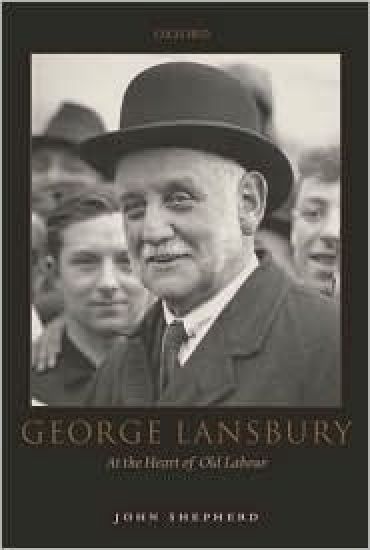
George Lansbury

George Lansbury

John Shepherd

Oxford University Press
2002
sidottu
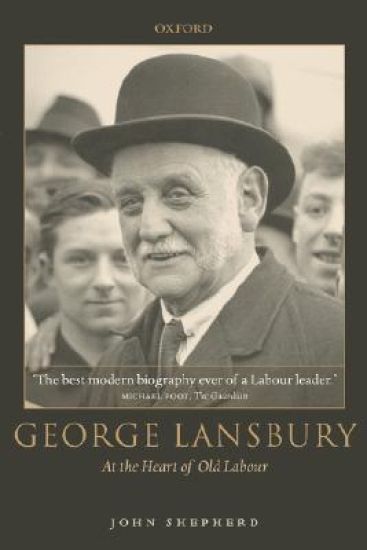
'The most lovable figure in modern politics' was how A.J.P Taylor described the Christian pacifist, George Lansbury. At 73 he took over the helm of the Labour Party of only 46 MPs in the Depression years of the 1930s. Throughout a remarkable life, Lansbury remained an extraordinary politician of the people, associated with a multitude of crusades for social justice. He resigned from Parliament to support 'Votes for Women', and for the next ten years edited the fiery Daily Herald. In 1921 Lansbury led the 'Poplar Rates Rebellion' - when thirty Labour councillors went willingly to prison in defiance of the government, the courts and their own party leadership. As Labour leader, Lansbury was known universally as a committed socialist an implacable opponent of capitalism and imperialism. He never sought personal wealth, travelled everywhere by public transport, and made his home in impoverished East London. His final years were spent in a tireless international peace crusade to prevent the drift towards another world war. In this major new biography, John Shepherd draws on an impressive range of research to reconstruct the life of a charismatic Labour pioneer. He reaffirms George Lansbury's standing at the heart of Old Labour and his importance to British politics as a whole.
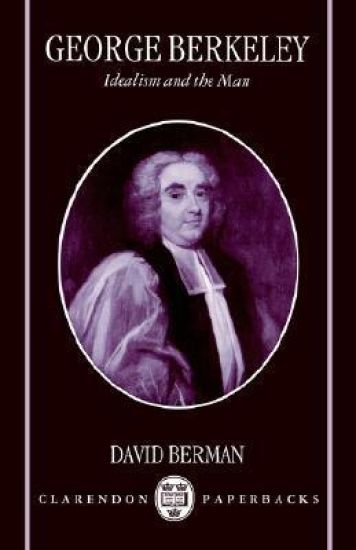
George Berkeley

George Berkeley

Berman

Clarendon Press
1996
nidottu
Unlike nearly all studies of Berkeley, this book looks at the full range of his work and links it with his life - focussing in particular on his religious thought. While aiming to present a clear picture of his career, this book breaks new ground on, among other topics, Berkeley's philosophical strategy, his account of immortality, his Jacobitism, his emotive theory of religious mysteries, and the motivation of his Siris (1744). Also distinctive is the attention paid to the Irish context of his thought, his symbolic frontispieces and portraits, and recent discoveries concerning his life and writings. The Berkeley that emerges from this study is deeper and more human that the usual picture of him as a starry-eyed idealist with every virtue under heaven.
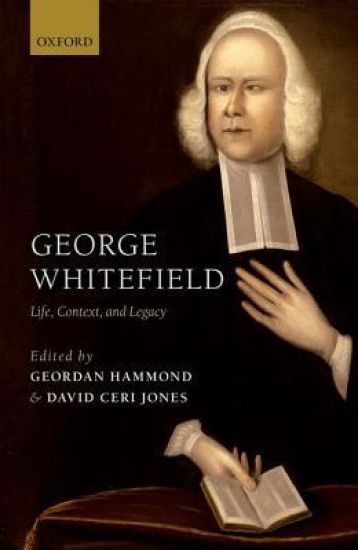
George Whitefield

George Whitefield

Oxford University Press
2016
sidottu
George Whitefield (1714-70) was one of the best known and most widely travelled evangelical revivalists in the eighteenth century. For a time in the middle decades of the eighteenth century, Whitefield was the most famous person on both sides of the Atlantic. An Anglican clergyman, Whitefield soon transcended his denominational context as his itinerant ministry fuelled a Protestant renewal movement in Britain and the American colonies. He was one of the founders of Methodism, establishing a distinct brand of the movement with a Calvinist orientation, but also the leading itinerant and international preacher of the evangelical movement in its early phase. Called the 'Apostle of the English empire', he preached throughout the whole of the British Isles and criss-crossed the Atlantic seven times, preaching in nearly every town along the eastern seaboard of America. His own fame and popularity were such that he has been dubbed 'Anglo-America's first religious celebrity', and even one of the 'Founding Fathers of the American Revolution'. This collection offers a major reassessment of Whitefield's life, context, and legacy, bringing together a distinguished interdisciplinary team of scholars from both sides of the Atlantic. In chapters that cover historical, theological, and literary themes, many addressed for the first time, the volume suggests that Whitefield was a highly complex figure who has been much misunderstood. Highly malleable, Whitefield's persona was shaped by many audiences during his lifetime and continues to be highly contested.
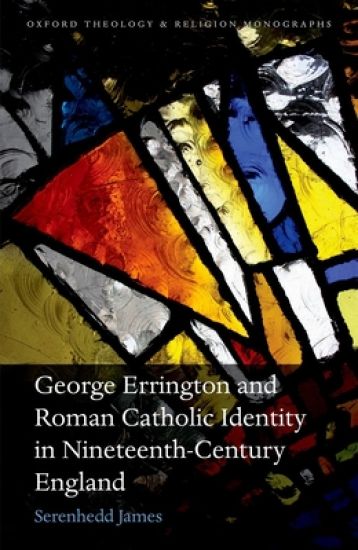
George Errington and Roman Catholic Identity in Nineteenth-Century England
The Victorian Archbishop of Trebizond, George Errington (1804-1886) was one of the most prominent figures of nineteenth-century English Roman Catholicism. He was involved in the resurgence of the English Catholic Church, and would have achieved the highest offices himself had not a dispute between him and Cardinal Wiseman led to his fall from favour in the eyes of Propaganda Fide. He has come to be regarded as the leader of an 'Old Catholic' party as the struggle continued for dominance in the period of consolidation following the restoration of the hierarchy in 1850. An intimate of Newman, Errington maintained a large correspondence which covers almost every church controversy of his lifetime. His letters shed light on subjects which have long since been dormant and in some cases indicate that the popular interpretations of some affairs are not as clear-cut as has been argued by others. They also expose the various factions in the English Catholic Church at the time, and the slippery nature of the Roman administration. In this comprehensive work, Serenhedd James explores George Errington's motives and actions, and analyses the forces that were at play in the English Catholic Church of the nineteenth century. James highlights that matters of policy were clouded by issues of personality, and where politicking, as much as prayer, was an integral part of its way of life.
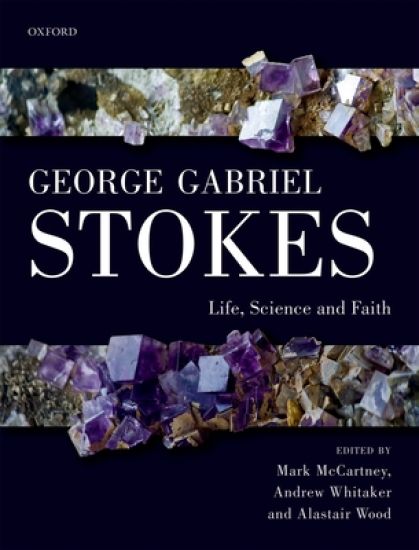
George Gabriel Stokes

George Gabriel Stokes

Oxford University Press
2019
sidottu
George Gabriel Stokes was one of the most important mathematical physicists of the 19th century. During his lifetime he made a wide range of contributions, notably in continuum mechanics, optics and mathematical analysis. His name is known to generations of scientists and engineers through the various physical laws and mathematical formulae named after him, such as the Navier-Stokes equations in fluid dynamics. Born in Ireland into a family of academics, clergymen and physicians, he became the longest serving Lucasian Professor of Mathematics at Cambridge. Impressive as his own scientific achievements were, he made an equally important contribution as a sounding board for his contemporaries, providing good judgement and mathematical rigour in his wide correspondence and during his 31 years as Secretary of the Royal Society where he played a major role in the direction of British science. Outside his own area he was a distinguished public servant and MP for Cambridge University. He was keenly interested in the relation between science and religion and wrote at length on their interaction. Stokes was a remarkable scientist who lived in an equally remarkable age of discovery and innovation. This edited collection of essays brings together experts in mathematics, physics and the history of science to cover the many facets of Stokes's life in a scholarly but accessible way to mark the bicentenary of his birth.
George Orwell

George Orwell

Oxford University Press
2025
sidottu
George Orwell has never been more quoted and misquoted. Can he be rescued from the soundbites? George Orwell remains a work in progress. He is, or has become, a meme, a global writer, a national treasure, a London statue, a scholarly society, a Prize and a Journal, a trope and a show, various movies, various murals, various misquotations, two adjectives, at least half a dozen fictions and most recently “a dead metaphor” with plenty more accolades to come. George Orwell: Life and Legacy by Colls is an intellectual biography which offers an original account of Orwell's life and work from his birth in the high noon of British imperialism in 1903, to his death on the eve of the Cold War in 1950. Orwell's life played out against a background of two world wars, two great revolutions, one long global depression, the rise and rise of Communism, and the war-time pre-eminence of the United. Yet no matter how alert he was to all these great struggles, and no matter how guarded he was in his personal life, Orwell never turned away from the question of who he was, and the contradictions that entailed. His two great modern masterpieces Animal Farm (1945) and Nineteen Eighty-Four (1949) arrived to define the age he lived in. Interest in him has never abated since; no writer is more quoted or misquoted. Orwell is in danger of being lost to soundbites. Colls reveals the author once again.
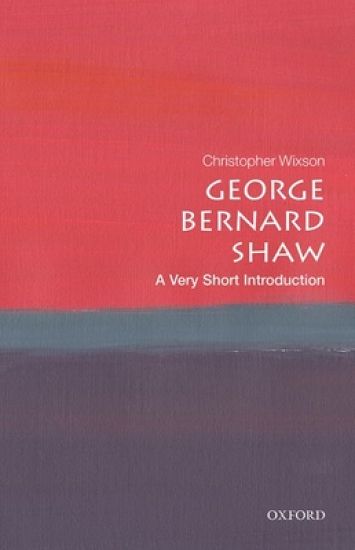
George Bernard Shaw

George Bernard Shaw

Christopher Wixson

Oxford University Press
2020
nidottu
George Bernard Shaw has been called the second greatest playwright in English (after William Shakespeare) and one of the inventors of modern celebrity as the most famous public intellectual of his time. Beginning in the 1880s, as a critic and as a playwright, he transformed British drama, bringing to it intellectual substance, ethical imperatives, and modernity itself, setting the theatrical course for the subsequent century. That his legacy endures seventy years after his death is testament to the prescience of his thinking and his prolific creativity. This Very Short Introduction looks at Shaw's life, starting with his upbringing in Ireland, and then takes a chronological approach through his works. Considering Shaw's committed antagonism on behalf of a range of socio-political issues; his use of comedy as a mode for communicating serious ideas; and his rhetorical style that pushes conventional boundaries, Christopher Wixson provides an overview of the creative evolution of core themes throughout Shaw's long career. ABOUT THE SERIES: The Very Short Introductions series from Oxford University Press contains hundreds of titles in almost every subject area. These pocket-sized books are the perfect way to get ahead in a new subject quickly. Our expert authors combine facts, analysis, perspective, new ideas, and enthusiasm to make interesting and challenging topics highly readable.
George Eliot

George Eliot

Juliette Atkinson

Oxford University Press
2025
nidottu
Very Short Introductions: Brilliant, Sharp, Inspiring George Eliot pushed the boundaries of fiction and of Victorian society. She was an extraordinary woman whose unconventional life meant that she was judged harshly by family, friends, and strangers. Eliot wanted to draw attention to the feelings and motivations of ordinary people, so that we might feel more generous towards each other. But human beings are complex, and to capture that complexity Eliot drew on an astonishing range of philosophical, psychological, and scientific ideas. She hoped her work might do good, yet she was clear-eyed about the limits of both human sympathy and the novel. In this Very Short Introduction, Juliette Atkinson explores the ideas feeding Eliot's fiction and looks at the literary techniques - such as narrative voice, genre, imagery, structure, and syntax - that she used to embody them. These shape her recurrent themes: the stifling nature of gossip, the hardships experienced by commonplace individuals, the duty of practising fellow-feeling and the difficulty of doing so. Atkinson argues that George Eliot was a social outcast who became a sage, through the creation of some of the most influential novels ever written in English. ABOUT THE SERIES: The Very Short Introductions series from Oxford University Press contains hundreds of titles in almost every subject area. These pocket-sized books are the perfect way to get ahead in a new subject quickly. Our expert authors combine facts, analysis, perspective, new ideas, and enthusiasm to make interesting and challenging topics highly readable.
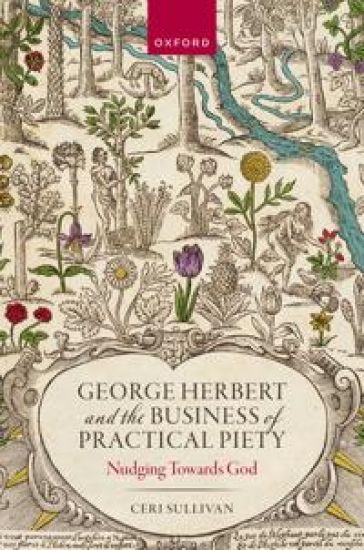
George Herbert and the Business of Practical Piety

George Herbert and the Business of Practical Piety

Ceri Sullivan

Oxford University Press
2024
sidottu
Contemporary nudge theory points out that people make good choices over issues where they have had past experience of similar circumstances, where there is reliable, substantial, and relevant information about the situation, and where they will get prompt feedback about the effect of their decision. Yet none of these conditions apply to the most vital choice of action facing early modern Protestants: how can they be saved? In George Herbert and the Business of Practical Piety, Ceri Sullivan uses nudge theory to show how practical divinity disregards the doleful conclusions of predestination--that salvation cannot be earned--to supply readers with suggestions on how to prepare to act, regardless of their final destiny. Such texts create cognitive niches to support cheerful, godly thought and action, in a way which is far from being despairing or compulsive. Their nudges were repeatedly put into practice by Herbert's friends, the Ferrars, who tried to form an ideal religious community at Little Gidding. These prescriptions and examples illustrate how George Herbert's The Temple (1633) is a compendium of the techniques of choice architecture. Herbert's poems are full of the humour emerging from a life of faith which is willing to guard high ideals by low cunning, stooping to use the least little things to change a self. George Herbert and the Business of Practical Piety initially calls on theories of the extended mind to ask what sort of minor physical and social structures scaffold decisions, then examines a selection of nudges used by Herbert: contracts with the self, building a mind, cleaning a heart, conversing with God, making to-do lists, and working on working well.
George Akropolites: The History

George Akropolites: The History

Oxford University Press
2007
sidottu
This is the first English translation and study of George Akropolites' History, the main Greek source for the history of Byzantium between 1204 and 1261. Akropolites relates what happened to Byzantium after the Latin conquest of its capital, Constantinople, by the Fourth Crusade in 1204. He narrates the fragmentation of the Byzantine world, describing how the newly established 'empire' in Anatolia prevailed over its foreign and Byzantine enemies to recapture the capital in 1261. Akropolites was an eyewitness to most of the events he relates and a man close to the emperors he served, and his account has therefore influenced modern perceptions of this period. It has been an essential source for all those studying the eastern Mediterranean in the thirteenth century. However, until now historians have made use of his History without knowing anything about its author. Ruth Macrides remedies this deficiency by providing a detailed guide to Akropolites' work and an analysis of its composition, which places it in the context of medieval Greek historical writing.
George Oppen and the Fate of Modernism

George Oppen and the Fate of Modernism

Peter Nicholls

Oxford University Press
2007
sidottu
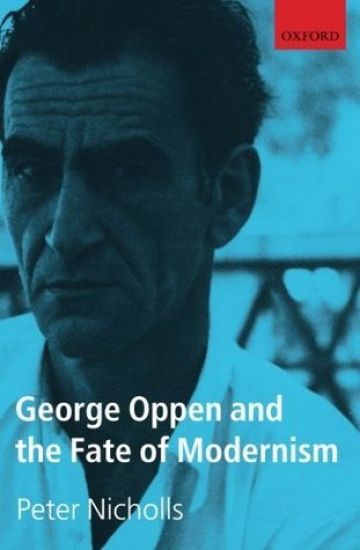
Regard for George Oppen's poetry has been growing steadily over the last decade. Peter Nicholls's study offers a timely opportunity to engage with a body of work which can be both luminously simple and intriguingly opaque. Nicholls charts Oppen's commitment to Marxism and his later explorations of a 'poetics of being' inspired by Heidegger and Existentialism, providing detailed accounts of each of the poet's books. He is the first critic to draw extensively on the Oppen archive, with its thousands of pages of largely unpublished notes and drafts for poems; in doing so, he is able to map the distinctive contours of Oppen's poetic thinking and to investigate the complex origins of many of his poems. Oppen emerges from this study as a writer of mercurial intensities for whom every poem constitutes a 'beginning again', a freeing of the mind from thoughts known in advance. A strikingly innovative and challenging poetics results from Oppen's attempt to avoid what he regards as the errors of the modernist avant-garde and to create instead a designedly 'impoverished' aesthetic which keeps poetry close to the grain of experience and to the political and ethical dilemmas it constantly poses.
George Lansbury

George Lansbury

John Shepherd

Oxford University Press
2004
nidottu
'The most loveable figure in modern politics' was how A. J. P. Taylor described the Christian pacifist, George Lansbury, who at 73 took over the helm of the Labour Party of only 46 MPs in the Depression years of the 1930s. Throughout a remarkable life, Lansbury remained an extraordinary politician of the people, associated with a multitude of crusades for social justice. He resigned from Parliament to support 'Votes for Women' and for the next ten years edited the fiery Daily Herald. In 1921 Lansbury led the 'Poplar Rates Rebellion' - when thirty Labour councillors went willingly to prison in defiance of the government, the courts, and their own party leadership. As Labour leader, Lansbury was known universally as a committed socialist and an implacable opponent of capitalism and imperialism. He never sought personal wealth, travelled everywhere by public transport, and made his home in impoverished East London. His final years were spent in a tireless international peace crusade to prevent the drift towards another world war. In this major new biography, John Shepherd draws on an impressive range of research to reconstruct the life of a charismatic Labour pioneer. He reaffirms George Lansbury's standing at the heart of Old Labour and his importance to British politics as a whole.
George Oppen and the Fate of Modernism

George Oppen and the Fate of Modernism

Peter Nicholls

Oxford University Press
2013
nidottu
Regard for George Oppen's poetry has been growing steadily over the last decade. Peter Nicholls's study offers a timely opportunity to engage with a body of work which can be both luminously simple and intriguingly opaque. Nicholls charts Oppen's commitment to Marxism and his later explorations of a 'poetics of being' inspired by Heidegger and Existentialism, providing detailed accounts of each of the poet's books. He is the first critic to draw extensively on the Oppen archive, with its thousands of pages of largely unpublished notes and drafts for poems; in doing so, he is able to map the distinctive contours of Oppen's poetic thinking and to investigate the complex origins of many of his poems. Oppen emerges from this study as a writer of mercurial intensities for whom every poem constitutes a 'beginning again', a freeing of the mind from thoughts known in advance. A strikingly innovative and challenging poetics results from Oppen's attempt to avoid what he regards as the errors of the modernist avant-garde and to create instead a designedly 'impoverished' aesthetic which keeps poetry close to the grain of experience and to the political and ethical dilemmas it constantly poses.