Kirjojen hintavertailu. Mukana 11 342 296 kirjaa ja 12 kauppaa.

Kirjahaku

Etsi kirjoja tekijän nimen, kirjan nimen tai ISBN:n perusteella.

1000 tulosta hakusanalla George Malcolm Stratton

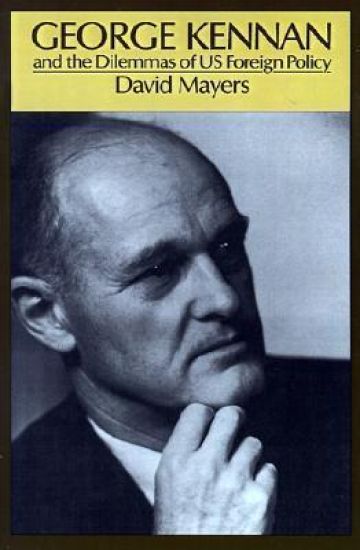
George Kennan and the Dilemmas of US Foreign Policy

George Kennan and the Dilemmas of US Foreign Policy

David Mayers

Oxford University Press Inc
1990
nidottu
One of a select group of American foreign service officers to receive specialized training on the Soviet Union in the late 1920s and early 1930s, George Frost Kennan eventually became the American government's chief expert on Soviet affairs during the height of the Cold War. Drawing upon a wealth of original research, David Mayers' fascinating life of George Kennan examines his high-level participation in foreign policy-making and interprets his political and philosophical development within a historical framework. Mayers presents an engaging and lucid account of Kennan's training; his rise to prominence during the late 1940s and his policy failures; and his later roles as critic of America's external policy, advocate of détente with the Soviet Union, and proponent of nuclear arms limitation. Mayers also explores Kennan's complicated relationships with such important political figures and analysts as Dean Acheson, John Foster Dulles, and Walter Lippmann.
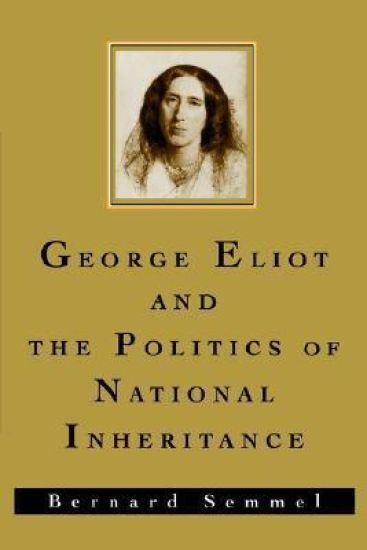
George Eliot and the Politics of National Inheritance
In this stimulating intellectual history of the ideas behind George Eliot's novels, Bernard Semmel argues that the popularity of Eliot's fiction can be attributed to a nostalgia for a lost heritage. Writing at a time when society was transforming itself from a traditional to a modern one, Eliot, however, viewed herself as intellectually `disinherited', largely because of her estrangement from her father and brother. Through detailed analyses of Eliot's novels, and a study of the intellectual currents of the time, Semmel demonstrates that the theme of inheritance provided the central ideas in Eliot's novels. Semmel argues that Eliot wrote of inheritance both in the common meaning of the term, as in the transfer of goods and property from parents to children, and in the more metaphoric sense of the inheritance of both the benefits and the burdens of the historical past, particularly those of the nation's culture and traditions (Eliot viewed nationality as an especially important moral force). Semmel also sees Eliot's use of the politics of inheritance as a debt to the philosophical view called Positivism, which was a major force in nineteenth-century culture. Eliot's difficult personal associations with leading Positivists, however, led her to a political compromise that pervades her later work. Semmel dissects the Politics of Middlemarch and convincingly demonstrates Eliot's variations on the theme of inheritance and her acceptance of the gradualist reform processes in (as opposed to a radiacl criticism of) Britain's political life.
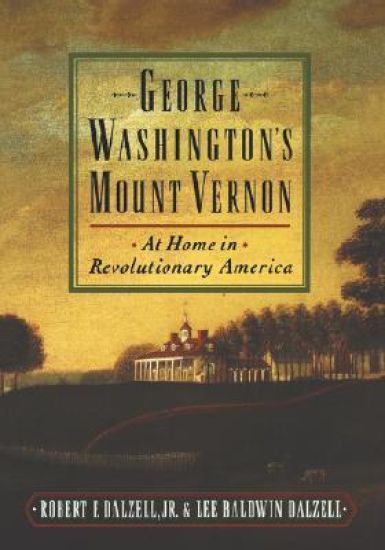
George Washington's Mount Vernon

George Washington's Mount Vernon

F. Dalzell

Oxford University Press Inc
2000
nidottu
George Washington's Mount Vernon brings together--for the first time--the details of Washington's 45-year endeavor to build and perfect Mount Vernon. In doing so it introduces us to a Washington few of his contemporaries knew, and one little noticed by historians since. Here we meet the planter/patriot who also genuinely loved building, a man passionately human in his desire to impress on his physical surroundings the stamp of his character and personal beliefs. As chief architect and planner of the countless changes made at Mount Vernon over the years, Washington began by imitating accepted models of fashionable taste, but as time passed he increasingly followed his own ideas. Hence, architecturally, as the authors show, Mount Vernon blends the orthodox and the innovative in surprising ways, just as the new American nation would. Equally interesting is the light the book sheds on the process of building at Mount Vernon, and on the people--slave and free--who did the work. Washington was a demanding master, and in their determination to preserve their own independence his workers often clashed with him. Yet, as the Dalzells argue, that experience played a vital role in shaping his hopes for the future of American society--hope that embraced in full measure the promise of the revolution in which he had led his fellow citizens. George Washington's Mount Vernon thus compellingly combines the two sides of Washington's life--the public and the private--and uses the combination to enrich our understanding of both. Gracefully written, with more than 80 photographs, maps, and engravings, the book tells a fascinating story with memorable insight.
George Washington and the Art of Business

George Washington and the Art of Business

Mark McNeilly

Oxford University Press Inc
2008
sidottu
George Washington ranks as one of the great military leaders in history. The character traits he exemplified, and the leadership skills he employed, enabled him to defeat what was then the world's most powerful nation. In this marvelous book, Mark McNeilly shows today's managers how they can learn from Washington's career--both his triumphs and setbacks--to succeed as leaders in their chosen field. McNeilly paints vivid portraits of some of the crucial moments in Washington's military career, from the early debacle on Long Island Heights to the masterstroke at Trenton. There Washington, aided by his use of intelligence and disinformation, and by his great fortitude in the face of truly daunting conditions, routed the Hessians. McNeilly uses these stirring military encounters to underscore Washington's managerial genius: to persuade and inspire, to open up the decision-making process, to seize opportunities when they arise, to persevere when setbacks occurred, and to learn from his mistakes. Indeed, the true value of the book lies in McNeilly's brilliant ability to link military and business strategy, revealing that successful corporate leaders must possess many of the same traits that Washington did. Using examples from the NFL, Cadillac, Coke, Samsung, Embraer, IBM and others, McNeilly shows how business leaders can apply Washington's principles for success. Blending colorful military and business history with crystal-clear commentary, George Washington and the Art of Business belongs of the shelves of all executives who want to hone their leadership skills.
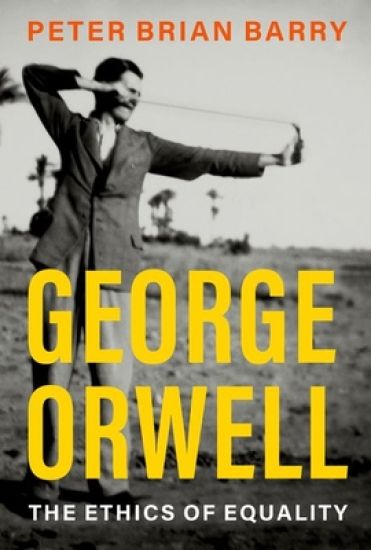
George Orwell

George Orwell

Peter Brian Barry

OXFORD UNIVERSITY PRESS INC
2023
sidottu
George Orwell is sometimes read as disinterested in (if not outright hostile) to philosophy. Yet a fair reading of Orwell's work reveals an author whose work was deeply informed by philosophy and who often revealed his philosophical sympathies. Orwell's written works are of ethical significance, but he also affirmed and defended substantive ethical claims about humanism, well-being, normative ethics, free will and moral responsibility, moral psychology, decency, equality, liberty, justice, and political morality. In George Orwell: The Ethics of Equality, philosopher Peter Brian Barry avoids a narrow reading of Orwell that considers only a few of his best-known works and instead considers the entirety of Orwell's corpus, including his fiction, journalism, essays, book reviews, diaries, and correspondence, contending that there are ethical commitments discernible throughout his work that ground some of his best-known pronouncements and positions. While Orwell is often read as a humanist, egalitarian, and socialist, too little attention has been paid to the nuanced versions of those doctrines that he endorsed and the philosophical sympathies that led him to embrace them. Barry illuminates Orwell's philosophical sympathies and contributions that have either gone unnoticed or been underappreciated. Philosophers interested in Orwell now have a text that explores many of the philosophical themes in his work and Orwell's readers now have a text that makes the case for regarding him as a worthy philosopher as well as one of the greatest Anglophone writers of the 20th century.
George Gascoigne, A Hundreth Sundrie Flowres

George Gascoigne, A Hundreth Sundrie Flowres

George Gascoigne

Oxford University Press
2000
sidottu
This is the only edition of George Gascoigne's A Hundreth Sundrie Flowres to respect the integrity of the first edition, which he published as an anonymous anthology in 1573. Earlier editors either based their work on The Posies of George Gascoigne Esquire, self-censored and published in 1575, or omitted the two plays, Supposes and Jocasta. But, from a bibliographical point of view, the plays are an integral part of the first edition, and the work that suffers most from revision is Gascoigne's masterpiece, The Adventures of Master F.J. The critical apparatus of this edition allows the reader to reconstruct the changes Gascoigne made to The Posies, and all the works which appear there for the first time are included. Half of the works in this edition, including the plays and Gascoigne's longest poem, `The fruites of Warre', have never received any commentary before. The commentary closely studies Gascoigne's use of his sources, especially in his translations from the Italian, and situates his works in their literary and social milieux. It also includes all of the extensive marginal notes that Gabriel Harvey made in his copy of The Posies. The biographical introduction corrects a number of mistakes in Prouty's standard biography and, in particular, offers a fuller, more accurate account of Gascoigne's military service in the Netherlands.
The Works of George Farquhar: Volume I

The Works of George Farquhar: Volume I

George Farquhar

Clarendon Press
1988
sidottu
George Farquhar was the most popular, and perhaps the best playwright of his time. The Irish-born actor and military officer arrived in London before he was twenty, captivated audiences with his lively, good-natured comedy, philandered with the leading actresses and female playwrights, married a widow with children, and wrote, besides the eight plays, many poems, letters, prologues and epilogues, an epic, and a miscellany, before his untimely death in 1707, not yet thirty. Shirley Strum Kenny has provided the first scholarly edition of the works since Stonehill's in 1730, in a reliable old-spelling text. She has added to the canon materials not printed since the beginning of the eighteenth century, some of which have never before been identified as Farquhar's. Each play has an introduction describing its sources and composition, theatrical and publication history, influence, and textual problems. The introductions to the non-dramatic works contain similar information, and relate the works to the contemporary events which occasioned them. Questions of authorship for newly-identified works, and possible or doubtful attributions are carefully considered.
The Works of George Savile, Marquis of Halifax: Volume II
'Why Halifax, who wrote so well, wrote so little, is hard to explain', commented James Sutherland in his 1969 volume of the Oxford History of English Literature, in which the informal elegance of the author's expression is said to mark 'the culminating point of Restoration prose'. An important figure in the politics of his time, Halifax is increasingly seen as an important literary figure as well. This is the first complete edition of his works to make use of all sixty-one available manuscripts. Of his thirty works, seventeen are being published for the first time, having lain unnoticed for two centuries among family papers. They increase fourfold the extent of Halifax's writings as edited for the Oxford English Texts by Sir Walter Raleigh in 1912. The remaining pieces are based upon a comparison of all known manuscript copies and early printed editions, including two previously unknown holographs. The effect is to revise and deepen our understanding of Halifax in ways that are crucial to understanding his political motivation, as well as to invite further research into the character and intellect of a man described by Hume as possessing 'the finest genius and most extensive capacity' of the politicians in the reign of Charles II.
The Dramatic Works of George Lillo

The Dramatic Works of George Lillo

George Lillo

Clarendon Press
1993
sidottu
George Lillo's domestic tragedies provided the impetus for the development of new forms of serious drama during and after the eighteenth century, on the Continent as well as in the English-speaking theatre. This edition makes available for the first time all of the plays known or thought to have been written by the playwright, in reliable old-spelling texts following modern bibliographical principles. Some have not been reprinted since 1810. Even the much-studied London Merchant has not previously been published in an edition that recognizes the errors contained in the first edition and the authorial revisions introduced in early reprints. The introduction to each play treats its sources, histories of publication and reception in the theatre, and textual problems. The apparatus criticus and historical collations provide full bibliographical detail. Commentary notes discuss the author's use or adaptation of sources and furnish information about links among his own plays, topical background, and literary allusions. Steffensen edition makes possible an informed awareness of Lillo's lesser-known plays in a variety of genres, as an enlightening context for further study of these influential domestic dramas.
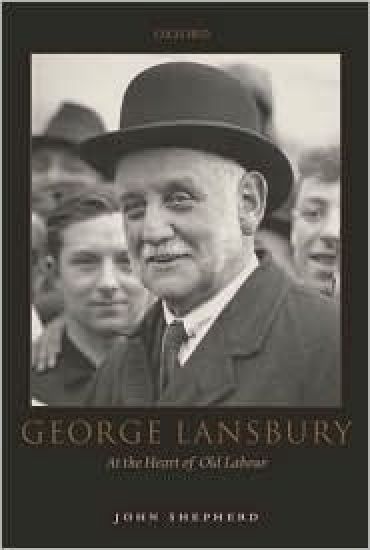
George Lansbury

George Lansbury

John Shepherd

Oxford University Press
2002
sidottu
'The most lovable figure in modern politics' was how A.J.P Taylor described the Christian pacifist, George Lansbury. At 73 he took over the helm of the Labour Party of only 46 MPs in the Depression years of the 1930s. Throughout a remarkable life, Lansbury remained an extraordinary politician of the people, associated with a multitude of crusades for social justice. He resigned from Parliament to support 'Votes for Women', and for the next ten years edited the fiery Daily Herald. In 1921 Lansbury led the 'Poplar Rates Rebellion' - when thirty Labour councillors went willingly to prison in defiance of the government, the courts and their own party leadership. As Labour leader, Lansbury was known universally as a committed socialist an implacable opponent of capitalism and imperialism. He never sought personal wealth, travelled everywhere by public transport, and made his home in impoverished East London. His final years were spent in a tireless international peace crusade to prevent the drift towards another world war. In this major new biography, John Shepherd draws on an impressive range of research to reconstruct the life of a charismatic Labour pioneer. He reaffirms George Lansbury's standing at the heart of Old Labour and his importance to British politics as a whole.
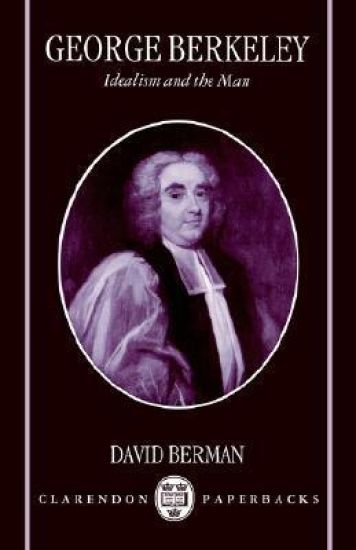
George Berkeley

George Berkeley

Berman

Clarendon Press
1996
nidottu
Unlike nearly all studies of Berkeley, this book looks at the full range of his work and links it with his life - focussing in particular on his religious thought. While aiming to present a clear picture of his career, this book breaks new ground on, among other topics, Berkeley's philosophical strategy, his account of immortality, his Jacobitism, his emotive theory of religious mysteries, and the motivation of his Siris (1744). Also distinctive is the attention paid to the Irish context of his thought, his symbolic frontispieces and portraits, and recent discoveries concerning his life and writings. The Berkeley that emerges from this study is deeper and more human that the usual picture of him as a starry-eyed idealist with every virtue under heaven.
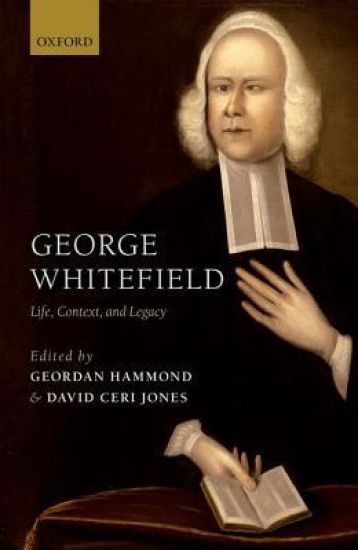
George Whitefield

George Whitefield

Oxford University Press
2016
sidottu
George Whitefield (1714-70) was one of the best known and most widely travelled evangelical revivalists in the eighteenth century. For a time in the middle decades of the eighteenth century, Whitefield was the most famous person on both sides of the Atlantic. An Anglican clergyman, Whitefield soon transcended his denominational context as his itinerant ministry fuelled a Protestant renewal movement in Britain and the American colonies. He was one of the founders of Methodism, establishing a distinct brand of the movement with a Calvinist orientation, but also the leading itinerant and international preacher of the evangelical movement in its early phase. Called the 'Apostle of the English empire', he preached throughout the whole of the British Isles and criss-crossed the Atlantic seven times, preaching in nearly every town along the eastern seaboard of America. His own fame and popularity were such that he has been dubbed 'Anglo-America's first religious celebrity', and even one of the 'Founding Fathers of the American Revolution'. This collection offers a major reassessment of Whitefield's life, context, and legacy, bringing together a distinguished interdisciplinary team of scholars from both sides of the Atlantic. In chapters that cover historical, theological, and literary themes, many addressed for the first time, the volume suggests that Whitefield was a highly complex figure who has been much misunderstood. Highly malleable, Whitefield's persona was shaped by many audiences during his lifetime and continues to be highly contested.
George Errington and Roman Catholic Identity in Nineteenth-Century England
The Victorian Archbishop of Trebizond, George Errington (1804-1886) was one of the most prominent figures of nineteenth-century English Roman Catholicism. He was involved in the resurgence of the English Catholic Church, and would have achieved the highest offices himself had not a dispute between him and Cardinal Wiseman led to his fall from favour in the eyes of Propaganda Fide. He has come to be regarded as the leader of an 'Old Catholic' party as the struggle continued for dominance in the period of consolidation following the restoration of the hierarchy in 1850. An intimate of Newman, Errington maintained a large correspondence which covers almost every church controversy of his lifetime. His letters shed light on subjects which have long since been dormant and in some cases indicate that the popular interpretations of some affairs are not as clear-cut as has been argued by others. They also expose the various factions in the English Catholic Church at the time, and the slippery nature of the Roman administration. In this comprehensive work, Serenhedd James explores George Errington's motives and actions, and analyses the forces that were at play in the English Catholic Church of the nineteenth century. James highlights that matters of policy were clouded by issues of personality, and where politicking, as much as prayer, was an integral part of its way of life.