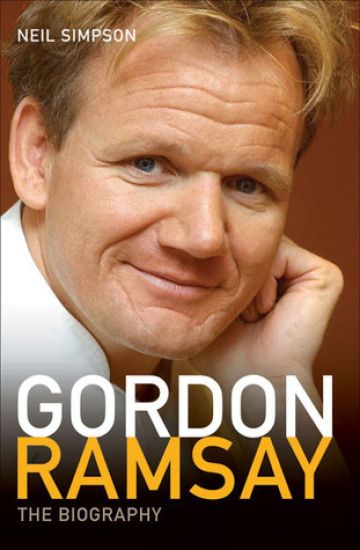
A wonderful biography of the undisputed king of celebrity chefs, Neil Simpson paints a fascinating picture of the man in full, and uncovers the secret tragedies that turned Gordon Ramsay into one of the most driven, successful and angry men in Britain. He details: the violent, alcoholic, absent father who died just days after the pair had been reconciled as adults; the best-friend and protege whose bizarre suicide came hours after the two had shared a final meal; the decade-long battle to save his younger brother from heroin addiction and crime; and, the real reason why Gordon wasn't at the birth of any of his four children - and has never changed a nappy in his life. Sometimes hilarious and frequently heart-breaking, Gordon Ramsay's life story runs from the council estates of Glasgow and the picture post-card countryside of Stratford-upon-Avon to some of the finest and most expensive restaurants in the world. This is his incredible, inspiring story.
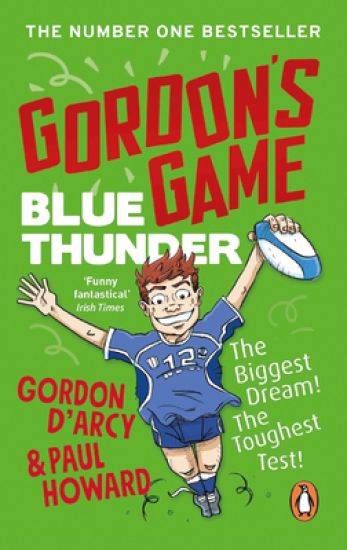
Gordon is back for more mayhem and mischief in the second book in the laugh-out-loud Gordon's Game series!__________Gordon D'Arcy - the only kid at school with a Six Nations medal hidden under his pillow! Though helping Ireland to win the Grand Slam feels like it was just a dream.Now, he's been given a brand new challenge - the chance to play for Leinster.After learning so many lessons playing for Ireland - including how to make a complete eejit of himself in front of millions of people - fitting in at Leinster should be a breeze. Right?Unfortunately, not. After his first training session, he sees why the team is mocked for being 'soft' (those stories about players wearing fake tan? All true!). Now he knows why so many people from Leinster support Munster.But Gordon settles down to work under an inspiring coach named Joe Schmidt. Joe promises that, with hard work, discipline and a bit of self-belief, Leinster can win the European Cup.Maybe another dream can come true!
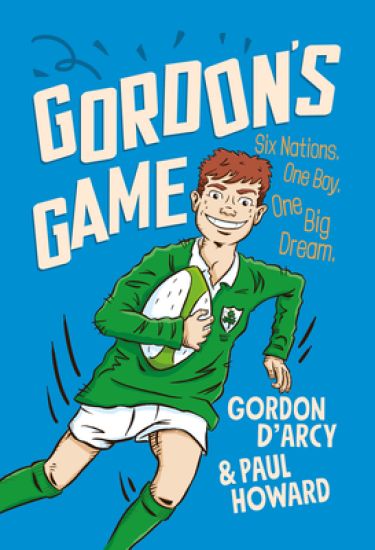
A rugby-mad boy. A huge game. And a chance for an epic win . . . or an epic fail!Gordon D'Arcy is an ordinary boy, but he's not so ordinary once he gets a rugby ball in his hands. He's the star player for Wexford Wanderers and dreams of one day wearing the Ireland jersey. A dream like that means hard work, raw talent and never losing sight of your goals.But Gordon has a wild streak that often lands him in trouble. Mum and Dad think that if he can just channel his energy, all will be well. Then something utterly mad happens and he gets a chance to live his biggest dream. Can he stay on his game and do everyone proud? Or will trouble follow him . . . like it usually does? Gordon's Game is a funny and inspiring adventure for rugby lovers of all ages!'A cracking read . . . which will appeal to all the family' Irish Country Magazine
Gordon is back again for his biggest challenge yet in the third book of the hilarious Gordon's Game series!__________Gordon D'Arcy has achieved a lot in his short life. He has won the Six Nations with Ireland and the European Cup with Leinster.Not bad for a boy who's still at school!Now, he has a brand-new opportunity - the chance to play for the famous British and Irish Lions as they tour South Africa. But before he can get on the plane, he must overcome the injury that threatens to end his career, and make the difficult choice between rugby and friendship.Gordon has to help Clive Woodward pull off a series win against South Africa and their fearsome forwards - the notorious Bomb Squad.And he certainly has to keep his wits about him when he finds himself in a wildlife reserve, surrounded by animals that want to eat him for dinner!Is another dream about to come true for Gordon D'Arcy? Or has this young Lion finally bitten off more than he can chew?
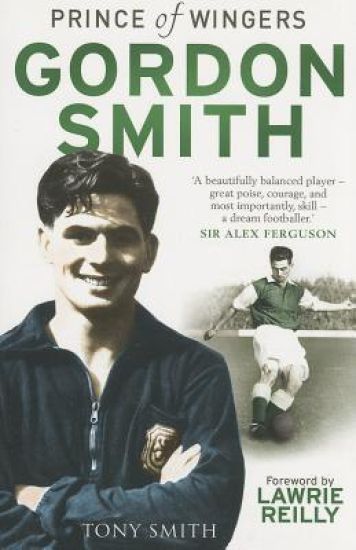
"Gordon Smith: Prince of Wingers" is a biographical story recounting the life of legendary footballer Gordon Smith written by his son Tony. One of the 'Famous Five', Gordon Smith won the league with Hibernian on three separate occasions during an eighteen-year-long glittering career with the club. With Heart of Midlothian he won another league medal as well as a League Cup medal, followed by yet another championship medal with Dundee. He represented his country on thirty-nine separate occasions, captaining them three times. His mesmeric skills and grace gave joy to many football fans, not only during his time with the Leith club, but also whilst playing for Heart of Midlothian, Dundee and Scotland. The book itself describes Gordon's life from humble beginnings in backstreet alleys kicking stones in place of a football to the stature of becoming one of the most naturally gifted players in the history of British football - whilst giving readers a unique insight into the life of this very private man.
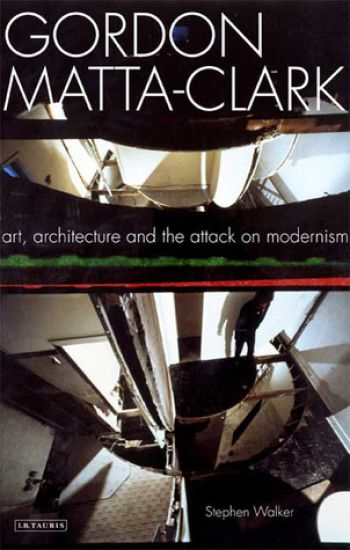
Known for - and even overshadowed by - his brutal and spectacular building cuts, Gordon Matta-Clark's oeuvre is unique in the history of American art. He worked in the 1970s on the boarders between art and architecture and his diverse practice is often understood as an outright rejection of the tenets of high modernism. Stephen Walker argues instead for the artist's ambivalent relationship with the architectural heritage he is often claimed to disavow, thus making this the first book to extrapolate Matta-Clark's thinking beyond its immediate context.Walker considers the broad range of Matta-Clark's ephemeral practice, from montage to actual interventions and from performance art and installation to drawing, film and video. Bringing to the fore the consistent themes and issues explored through this broad range of media, and in particular the complex notion of the 'discreet violation', he reveals the continued relevance of Matta-Clark's artistic and theoretical oeuvre to the reception of artistic and architectural work today.
Charles George Gordon gained universal respect and affection in the slums of urban Victorian Britain fighting on spiritual battlegrounds.Later, he obtained the same reputation as he commanded in battle Chinese, Egyptian, and African (but never British) troops, to become a British military hero. General Gordon died while trying to save Khartoum from fire and sword in 1885, the mourning from a grateful nation was only surpassed by the death's of Henry Havelock at Lucknow and Nelson at Trafalgar.Gladstone, Britain's Prime Minister at the time feared it would bring down his government. He is now known as one of Britain's greatest military heroes in the line of Wellington, Nelson, Havelock, Harris and Montgomery.There are 4 parts to this well researched and exciting biography: Part One: 'Yellow Jacket', 1833-1864.Part Two: 'The Liberator' 1865-1879.Part Three: 'The Pillar of Cloud' 1880-1883.Part Four: 'Too Late' 1884-1885.John Pollock, author of other highly praised biographies (including Havelock's), draws on extensive, but little used, manuscript sources to vividly retell a fascinating and colourful true story of an extraordinary figure.
What you are is what you eat - and everyone wants to be healthy and look their best. Gordon Ramsay - super-fit chef, marathon runner and high-energy television presenter - is a great advertisement for eating well and staying in the peak of good health. In this book, he has put together over 100 dishes that are completely in tune with the way we want to eat today - packed with fresh ingredients cooked in the most healthy way to achieve maximum flavour. Geared around our daily lives, Gordon gives ideas and recipes for healthy breakfasts, lunches, barbecues, suppers, desserts, kids and entertaining, demonstrates healthy cooking methods that guarantee optimum flavour, and tells us which are his own favourite healthy ingredients. The recipes include Mango and Smoked Chicken Salad, Griddled Squid with Roasted Peppers and Cannellini Beans, Wild Mushroom Risotto with Baked Courgettes and Roasted Peaches with Vanilla and Spices. With its fresh, colourful photographs and clean modern design, this bestselling cookery book is a must have for anyone interested in healthy cooking.
General Charles Gordon (1833-85) remains one of the most enigmatic figures in British military history. His brilliant feats of leadership, first in the Crimea, then in China, where he saved the emperor's throne from the Taiping rebels, made him a hero in the eyes of the British who came to known him as 'Chinese Gordon'. This book, taken in facsimile from a work published in 1896, covers the life of Gordon from his earliest days up to his tragic end at Khartoum. The author portrays Gordon as an example of all that is excellent in British manhood, though later historians have thrown some doubt on his true character. Nonetheless, this work presents a faithful picture of the man within the context of his own generation.
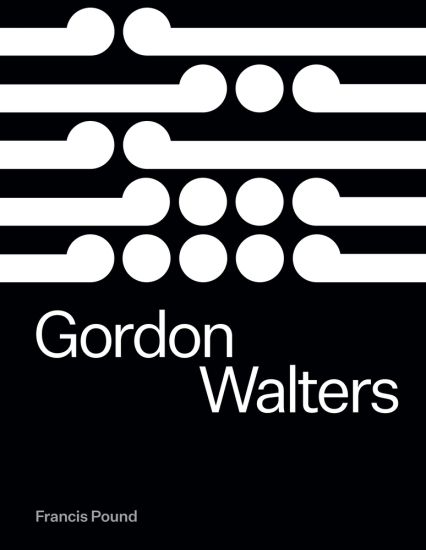
In this remarkable study by the late Francis Pound, author of the landmark Invention of New Zealand, we are introduced to the making of a New Zealand modernist – tracing the work of Gordon Walters (1919–1995) from student charcoal sketches in the 1930s to the revelation of the mature Koru works at the 1966 New Vision Gallery exhibition in Auckland. Pound follows Walters through steps and missteps, explorations and diversions, travel in Aotearoa and overseas, as the artist discovers new forms, invents others and discards many more. Pound looks hard at the paint, the brushes, the rulers, the scrapbooks, to reveal an artist at work. And, resolutely internationalist like the artist, the author provides not only astute insights into Walters’ art, but also a guide to the elements and ideas that informed the work – notably, Maori and Pacific art, surrealism, Mondrian, De Stijl, the Bauhaus and Euro-American abstraction, conceptual art and minimalism. With Francis Pound accompanying us through the work as guide, critic, wit and enthusiast, Gordon Walters is an extraordinary journey into twentieth-century art.
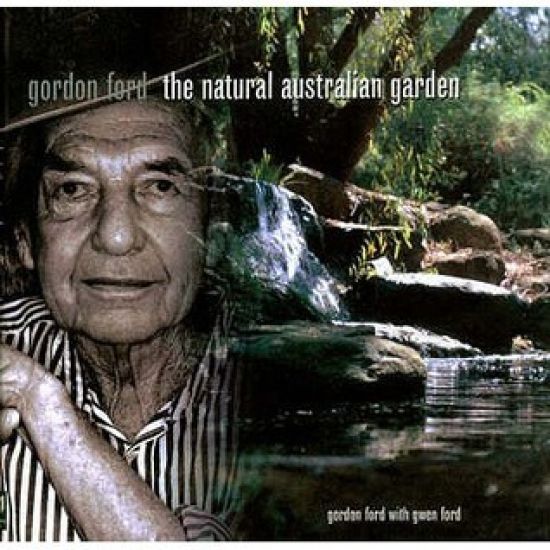
Landscaper Gordon Ford, working in the tradition of Ellis Stones and Edna Walling, is recognised as one of the Australia's leading landscape designers. This volume illustrates his mastery of the natural Australian style of garden design, using the natural elements of rocks, water, trees and plants.
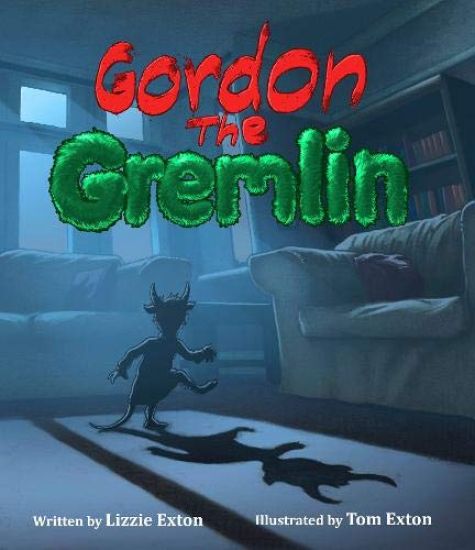
Being Naughty is just so much fun, especially for Gordon the Gremlin. But what happens when there is nobody around to affect with your mischief. When Gordon is left all alone he promises to change his ways, but will he be able to keep that promise?
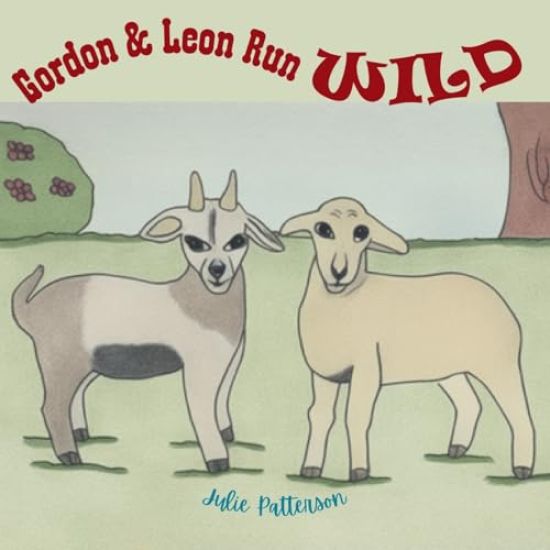
Leon the Lamb and Gordon the Goat loved to play and wrestle. They were determined to break out and explore. Stung be a bee, Leon was in pain. Thanks to Gordon, he got the stinger out. Gordon had dilemmas of his own as he became stuck in a hole, pinned by his horns. They came across a house and had lots of fun swinging on the clothesline and pulling the clothes off. They loved the sound the pegs made: Ping Snap Crack They crunched away on the vegetable garden before finding water to drink, when Gordon fell in the dam. A quick-thinking Leon soon rescued him. They encountered a fox and Gordon stepped up to shoo it away. Gordon and Leon had an argument about who was the bravest and strongest of all. Leon became hurt, and Gordon was feeling awful for hurting his friend. They soon sent Gordon away on a big truck
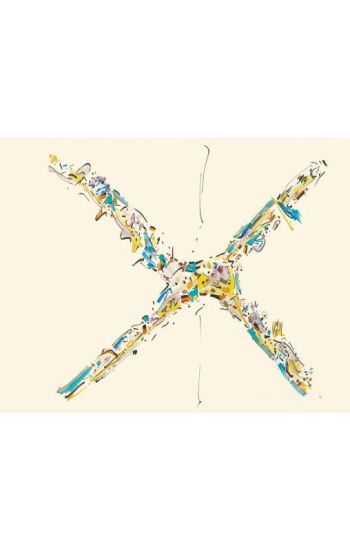
Well known for his radical "anarchitectural" interventions throughout the 1970s, Gordon Matta-Clark (1943-78) was always deeply, though less publicly, committed to drawing. His works on paper--which span three-dimensional reliefs, calligraphy and notebook entries--capture the interdisciplinary spirit that defined the art world in the 1970s, testifying to his interest in the crossovers between visual and performance arts. Gordon Matta-Clark: The Beginning of Trees and the End, published on the occasion of the eponymous 2015 show at David Zwirner, New York, documents his extraordinary accomplishment as a draftsman. Organized by theme, the catalogue presents selections from Matta-Clark's Cut Drawings, Energy Rooms, Energy Trees and his own "calligraphy," many of which have never been published. Perhaps the best known of the group, the Cut Drawings explore smaller-format versions of his architectural interventions; slicing meticulously through several layers of paper, gesso or cardboard, Matta-Clark created flat sculptural works that emphasized the voids created by extracting matter. Drawings with Matta-Clark's own "calligraphy" emphasize the medium of drawing as an independent form. Some of the most elaborate and colorful compositions include trees, several of which refer to Matta-Clark's Tree Dance performance at Vassar College in 1971. Near-abstract tree shapes also incorporate his calligraphic marks, with branches constructed from imaginary letters. Matta-Clark's Notebooks, which combine elements of Surrealist automatic drawing with an interest in choreography, appealed to performance artists, including Laurie Anderson and Trisha Brown. This unparalleled presentation of Matta-Clark's drawings is accompanied by new scholarship by Briony Fer, as well as an interview with artist Sarah Sze by Jessamyn Fiore, co-director of the Estate of Gordon Matta-Clark.
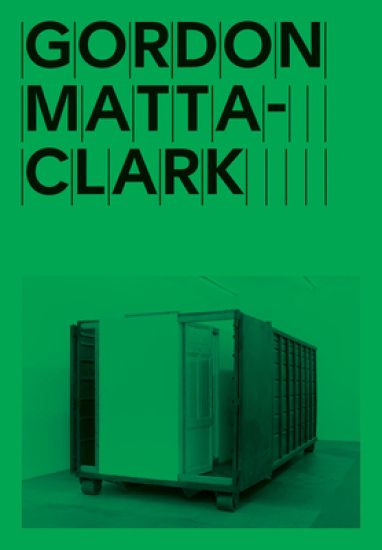
A new publication spotlights Gordon Matta-Clark’s only extant architectural piece In 1972, Gordon Matta-Clark (1943–78) installed a dumpster on the street between 98 and 112 Greene Street in New York’s SoHo neighborhood, an architectural artwork he called Open House. Matta-Clark used discarded, scavenged materials—old pieces of wood, doors—to subdivide the space inside the dumpster, creating corridors and small rooms within the container. Dancers and artists moved around the space, their pedestrian movements activating the sculpture and captured in a Super-8 film of the piece. Matta-Clark is best known for his building cuts and architectural interventions. Because of the nature of this work and its context—sited in spaces abandoned or slated for demolition—Matta-Clark’s “anarchitecture” was almost necessarily ephemeral, surviving as only documentation and sculptural sections. Open House (1972) is the only still-extant architectural piece by Matta-Clark. Gordon Matta-Clark: Open House is the first publication to focus on this crucial piece by the artist, using it as a way into his complex body of work. Featuring contributions from Sophie Costes, Thierry Davila and Lydia Yee, this volume takes a historical and theoretical approach to Open House and Matta-Clark’s entire oeuvre.