The 12th edition of Organic Chemistry continues Solomons, Fryhle & Snyder's tradition of excellence in teaching and preparing students for success in the organic classroom and beyond. A central theme of the authors' approach to organic chemistry is to emphasize the relationship between structure and reactivity. To accomplish this, the content is organized in a way that combines the most useful features of a functional group approach with one largely based on reaction mechanisms. The authors' philosophy is to emphasize mechanisms and their common aspects as often as possible, and at the same time, use the unifying features of functional groups as the basis for most chapters. The structural aspects of the authors' approach show students what organic chemistry is. Mechanistic aspects of their approach show students how it works. And wherever an opportunity arises, the authors' show students what it does in living systems and the physical world around us.
Organic Chemistry 13th Edition continues Solomons, Fryle, and Snyder's tradition of excellence in teaching and preparing students for success in both the classroom and beyond. Central to the authors is their approach in emphasizing organic chemistry's relationship between structure and reactivity. To accomplish this, the content is organized in a way that combines the most useful features of a functional group approach with one largely based on reaction mechanisms. The authors' philosophy is to emphasize mechanisms and their common aspects as often as possible, and at the same time, use the unifying features of functional groups as the basis for most chapters. The structural aspects of the authors' approach show students what organic chemistry is. Mechanistic aspects of their approach show students how it works. And wherever an opportunity arises, the authors show students what it does in living systems and the physical world around us.
Organic Chemistry, 13th edition provides a comprehensive, yet accessible, treatment of all the essential organic chemistry concepts, with emphasis on relationship between structure and reactivity in the subject. The textbook includes all the concepts covered in a typical organic chemistry textbook but is unique in its skill-development approach to the subject. Numerous hands-on activities and real-world examples are integrated throughout the text to help students understand both the "why" and the "how" behind organic chemistry. This International Adaptation offers new and updated content with improved presentation of all course material. It offers new material on several topics, including the relevance of intermolecular forces in the immune response and vaccines like those for Covid-19, the chemistry of breathing (carbonic anhydrase), how conjugation and complexation affect the color of lobsters, and how biodegradable polymers are used to stabilize vaccines and pharmaceuticals. Content is revised to reflect the current understanding of chemical processes, and improved depictions of longstanding mechanisms. This edition builds on the ongoing pedagogical strength of the book with the inclusion of additional worked and end-of-chapter problems and an engaging set of new problems entitled "Chemical Consultant Needed". These draw from the primary chemical literature and give students experience of working with more complex, polyfunctional structures, and areas where key transformations take place.
The story of the RCA VideoDisc is a rare inside look at a company and the way it conducts the complex process of science-based innovation. For nearly fifty years the RCA name was synonymous with innovation in the industries it helped to build - radio and television broadcasting and manufacturing, and electronics. Under David Sarnoff’s leadership the company developed an organization and a management style that gave it the ability to turn scientific discoveries into business achievement time after time. VideoDisc was RCA’s attempt to recapture that leadership after a decade in which David Sarnoff’s successors tried to follow the more fashionable paths to corporate growth of unrelated diversification and acquisition. But RCA’s ability to innovate had been undermined through disuse, and it proved unable to innovate as effectively as its Japanese competitors. Margaret Graham’s book presents an absorbing account of how RCA shaped a sophisticated consumer electronics technology in a research and development effort that spanned fifteen years. We see how the company’s history, its structure, its technical capability, and its competition all influenced the choices that were made in moving VideoDisc from laboratory to development group to market, and ultimately to withdrawal from the marketplace. Graham’s book seeks to examine the nature of science-based innovation as a management problem. It also describes the complex workings of a large corporate R&D organization and the relationship that exists between it and the other components of a major diversified corporation. Above all RCA and the VideoDisc shows that there is nothing innate about the ability to innovate technologically. It is an organizational and managerial skill that must be fostered, maintained, supported, and understood if it is to be practiced effectively. For those inside and outside corporate life who have wondered what industrial research is, why it costs so much, and why it often seems to take so long to produce commercial results, this book will be a valuable introduction to the ‘business of research’.
The story of the RCA VideoDisc is a rare inside look at a company and the way it conducts the complex process of science-based innovation. For nearly fifty years the RCA name was synonymous with innovation in the industries it helped to build - radio and television broadcasting and manufacturing, and electronics. This book, first published in 1986, presents an absorbing account of how RCA shaped a sophisticated consumer electronics technology in a research and development effort that spanned fifteen years. We see how the company's history, its structure, its technical capability, and its competition all influenced the choices that were made in moving VideoDisc from laboratory to development group to market, and ultimately to withdrawal from the marketplace. Graham's book seeks to examine the nature of science-based innovation as a management problem. It also describes the complex workings of a large corporate R&D organization and the relationship that exists between it and the other components of a major diversified corporation. Above all RCA and the VideoDisc shows that there is nothing innate about the ability to innovate technologically.
""Africa, The Near East And The War"" is a book written by the University of California that provides a comprehensive analysis of the role played by Africa and the Near East during World War I. The book covers a wide range of topics, including the political and economic factors that led to the conflict, the military strategies employed by the various nations, and the impact of the war on the people and societies of Africa and the Near East. The authors draw on a wealth of primary sources, including government documents, personal accounts, and historical records, to provide a detailed and nuanced account of this pivotal period in world history. The book is an essential resource for anyone interested in the history of Africa and the Near East, as well as the broader history of World War I.Contributing Authors Include J. H. Breasted, F. J. Klingberg, L. C. Uren, L. B. Loeb, H. A. Steiner, M. W. Graham. Lectures Delivered Under The Auspices Of The Committee On International Relations On The Los Angeles Campus Of The University Of California, Spring 1942.This scarce antiquarian book is a facsimile reprint of the old original and may contain some imperfections such as library marks and notations. Because we believe this work is culturally important, we have made it available as part of our commitment for protecting, preserving, and promoting the world's literature in affordable, high quality, modern editions, that are true to their original work.
Paleoecological data from the Quaternary Period (2.6 million years ago to present) provides an opportunity for educational outreach for the earth and biological sciences. Paleoecology data repositories serve as technical hubs and focal points within their disciplinary communities and so are uniquely situated to help produce teaching modules and engagement resources. The Neotoma Paleoecology Database provides support to educators from primary schools to graduate students. In collaboration with pedagogical experts, the Neotoma Paleoecology Database team has developed teaching modules and model workflows. Early education is centered on discovery; higher-level educational tools focus on illustrating best practices for technical tasks. Collaborations among pedagogic experts, technical experts and data stewards, centered around data resources such as Neotoma, provide an important role within research communities, and an important service to society, supporting best practices, translating current research advances to interested audiences, and communicating the importance of individual research disciplines.
""Exchange, Prices, and Production in Hyperinflation: Germany, 1920-1923"" is a comprehensive study of the economic conditions that led to hyperinflation in Germany during the early 20th century. The book is written by Frank D. Graham, a renowned economist who has extensively researched the topic of hyperinflation.The book begins by providing a historical overview of Germany's economic situation before and during the hyperinflation period. Graham then analyzes the impact of hyperinflation on exchange rates, prices, and production. He examines the role of the government, banks, and other economic actors in exacerbating or mitigating the inflationary pressures.Throughout the book, Graham provides detailed quantitative data and analysis to support his arguments. He also draws on contemporary accounts and primary sources to provide a vivid picture of the social and political consequences of hyperinflation. The book concludes with a discussion of the lessons that can be learned from Germany's experience and their relevance for modern economic policy.Overall, ""Exchange, Prices, and Production in Hyperinflation: Germany, 1920-1923"" is an essential read for anyone interested in understanding the causes and consequences of hyperinflation, as well as the broader economic and political forces that shape our world.This is a new release of the original 1930 edition.This scarce antiquarian book is a facsimile reprint of the old original and may contain some imperfections such as library marks and notations. Because we believe this work is culturally important, we have made it available as part of our commitment for protecting, preserving, and promoting the world's literature in affordable, high quality, modern editions, that are true to their original work.
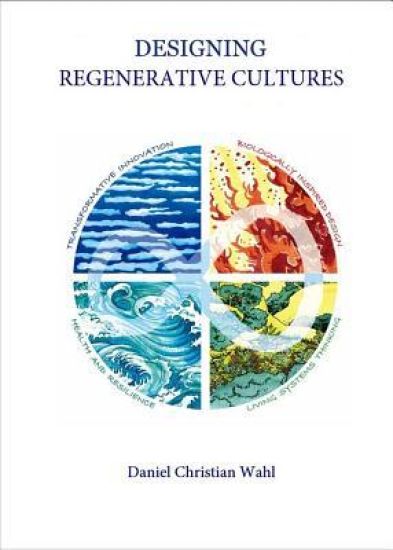
This is a 'Whole Earth Catalog' for the 21st century: an impressive and wide-ranging analysis of what's wrong with our societies, organizations, ideologies, worldviews and cultures - and how to put them right. The book covers the finance system, agriculture, design, ecology, economy, sustainability, organizations and society at large. In it, Daniel Wahl explores ways in which we can reframe and understand the crises that we currently face and explores how we can live our way into the future. Moving from patterns of thinking and believing to our practice of education, design and community living, he systematically shows how we can stop chasing the mirage of certainty and control in a complex and unpredictable world. The book asks how can we collaborate in the creation of diverse regenerative cultures adapted to the unique biocultural conditions of place? How can we create conditions conducive to life? "This book is a valuable contribution to the important discussion of the worldview and value system we need to redesign our businesses, economies, and technologies - in fact, our entire culture - so as to make them regenerative rather than destructive." Fritjof Capra, author of The Web of Life, coauthor of The Systems View of Life: A Unifying Vision. "This is an excellent addition to the literature on ecological design and it will certainly form a keystone in the foundations of the new MA in Ecological Design Thinking at Schumacher College, Devon. It not only contains a wealth of ideas on what Dr Wahl has termed 'Designing Regenerative Cultures' but what is probably more important, it provides some stimulating new ways of looking at persistent problems in our contemporary culture and hence opens up new ways of thinking and acting in the future." Seaton Baxter OBE, Professor in Ecological Design Thinking, Schumacher College, UK
The uses of computers in chemistry are many and varied, from the modelling of solid state systems to the design of complex molecules which can be used as drugs. This Primer provides an introduction to the many methods currently used by practising computational chemists and shows the value of computers in modern chemical research. In this clearly written text, the authors describe the various computational techniques available and explain how they can be applied to single molecules, to assemblies of molecules, and to molecules undergoing reaction. An introductory chapter outlines the hardware and software available, and looks at some applications and developments. Subsequent chapters cover quantum mechanics, molecular mechanics, statistical mechanics, the modelling of biomolecules, and drug design. Whilst emphasizing the use of computers to model biological systems, and the authors explain how the methods can be applied to a whole range of chemical problems. This primer will give students of chemistry a sound appreciation of the many ways in which modern computational methods can be used to solve real chemical problems.
This book explores the various manifestations of eating disorders in literature, including cannibalism, the magic attributes of food, religiously motivated fasting, and children's eating problems, from the classical period to Toni Morrison, in American, British, and European texts.The underlying, unifying theme is the role of eating choices as a means of self-empowerment. The texts discussed are different in genre (narrative, drama, epic and lyric poetry, and an autobiographical memoir), but they all reveal, in whatever setting, the individual's longing for autonomy of some kind. In many socially restrictive situations, eating patterns are the only choice available, especially for women. So disorderly eating becomes a tool for self-assertion as a rebellion against an unacceptable dominant ethos.Disorderly Eaters reveals that creative writers were, by sheer observation, aware of the dynamics of eating disorders long before the medical community came to recognize and institutionalize the syndromes in the nineteenth century. The literary portrayals analyzed here could act as illuminating exemplars for those involved in the treatment of eating disorders and those who suffer from them, too.