Kirjahaku
Etsi kirjoja tekijän nimen, kirjan nimen tai ISBN:n perusteella.
1000 tulosta hakusanalla Guillermo Calderon
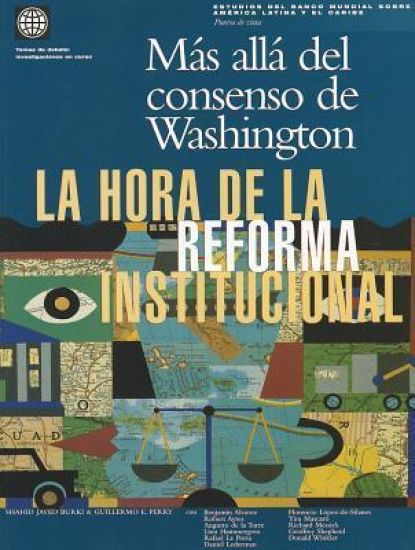
This report examines the precise nature of the required institutional reforms needed to achieve higher sustained rates of growth and to make a dent in poverty reduction and provides a framework for their design and implementation. The more modest objective is to examine how the concepts of the new institutional economics are useful for analyzing and designing institutions and to evaluate how political economy concepts can be used to develop strategies for implementing institutional reforms. Employing some of these concepts, the report demonstrates that sound institutional reform can be technically and politically viable in the following key sectors: banking; capital markets and legal institutions; educational institutions; judicial reforms; and public administration.
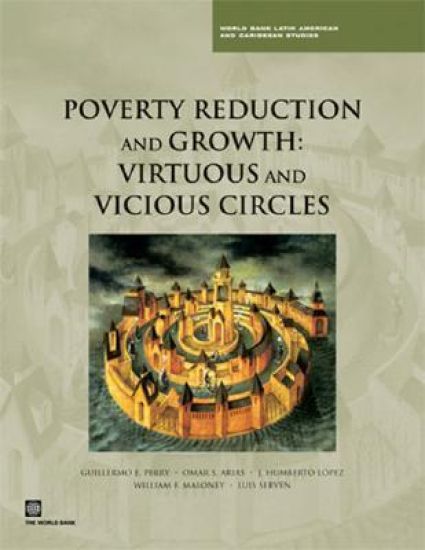
Poverty Reduction and Growth
Guillermo E. Perry; Luis Serven; William F. Maloney
World Bank Publications
2006
nidottu
That raising income levels alleviates poverty, and that growth can be more or less effective in doing so, is well known and has received renewed attention in the search for pro-poor growth. What is less well explored is the reverse channel - that poverty may, in fact, be part of the reason for a country's poor growth performance. This report is about the existence of these vicious circles in Latin America and about the alternatives to convert them into virtuous circles in which poverty reduction and high growth reinforce each other.
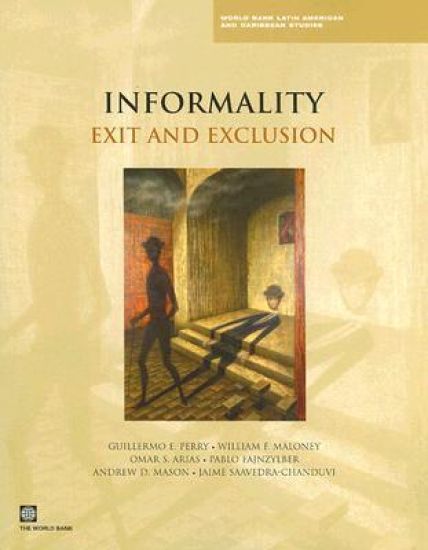
Informality
Guillermo Perry; Omar S. Arias; Pablo Fajnzylber; William F. Maloney; Andrew Mason; Jaime Saavedra-Chanduvi
World Bank Publications
2007
nidottu
Informality: Exit and Exclusion analyzes informality in Latin America, exploring root causes and reasons for and implications of its growth. The authors use two distinct but complementary lenses: informality driven by ""exclusion"" from state benefits or the circuits of the modern economy, and driven by voluntary ""exit"" decisions resulting from private cost-benefit calculations that lead workers and firms to opt out of formal institutions. They find both lenses have considerable explanatory power to understand the causes and consequences of informality in the region.""Informality: Exit and Exclusion"" concludes that reducing informality levels and overcoming the ""culture of informality"" will require actions to increase aggregate productivity in the economy, reform poorly designed regulations and social policies, and increase the legitimacy of the state by improving the quality and fairness of state institutions and policies. Although the study focuses on Latin America, its analysis, approach, and conclusions are relevant for all developing countries."" Informality: Exit and Exclusion"" will be of value to professionals and academics studying labor market, social protection, tax, microenterprise development, and urban public policies, and to those working in government, international organizations, research institutions, and universities.
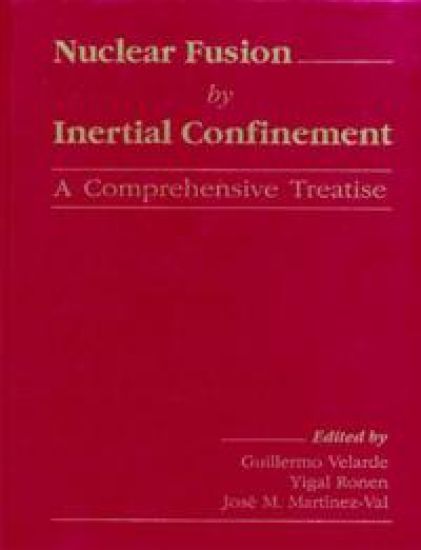
Nuclear Fusion by Inertial Confinement
Guillermo Velarde; Yigal Ronen; Jose M. Martinez-Val
CRC Press Inc
1992
sidottu
Nuclear Fusion by Inertial Confinement provides a comprehensive analysis of directly driven inertial confinement fusion. All important aspects of the process are covered, including scientific considerations that support the concept, lasers and particle beams as drivers, target fabrication, analytical and numerical calculations, and materials and engineering considerations. Authors from Australia, Germany, Italy, Japan, Russia, Spain, and the U.S. have contributed to the volume, making it an internationally significant work for all scientists working in the Inertial Confinement Fusion (ICF) field, as well as for graduate students in engineering and physics with interest in ICF.
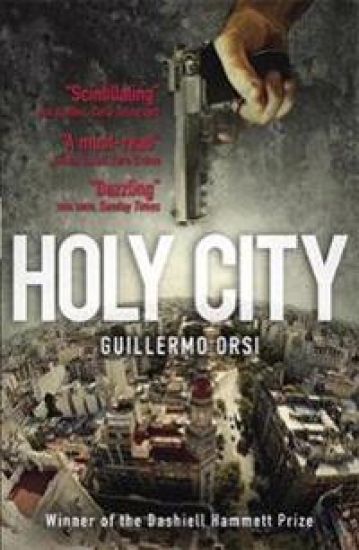
A passenger liner runs aground on the muddy banks of the Río de la Plata. One by one, its passengers are abducted by Buenos Aires' criminal classes. As the kidnapping of three foreign businessmen sends stock markets into freefall, the job of solving the chaos falls onto the weary shoulders of Deputy Inspector Walter Carroza of the serious-crime squad. But top of his agenda is former Miss Bolivia Ana Torrente. Why are the bodies of the men who try to take her to bed always found minus a head?
Goodfellas meets White Fang. By the BAFTA-winning screenwriter of Amores Perros."An epic tale" Sunday Times Crime Club"A fast-moving, intriguing and virile novel" Irish Examiner"Of all the wolves you will see in your life, one alone will be your master."Yukon, Canada's far north. A young man tracks a wolf through the wilderness. The one his grandfather warned him about. In Mexico City, Juan Guillermo has pledged vengeance. For his murdered brother, Carlos. For his parents, sentenced to death by their grief. But in 1960s Mexico justice is sold to the highest bidder, and the Catholic fanatics who killed Carlos are allied to Zunita, a corrupt and influential police commander. If he is to quench his thirst for revenge Juan Guillermo will have to answer his inner call of the wild and discover what links his destiny to a hunter on the other side of America.A gripping coming of age thriller of vengeance and destiny set between Mexico City's murderous 1960s underworld and the bleak tundras of Canada's most remote province.Translated from the Spanish by Frank Wynne and Jessie Mendez Sayer
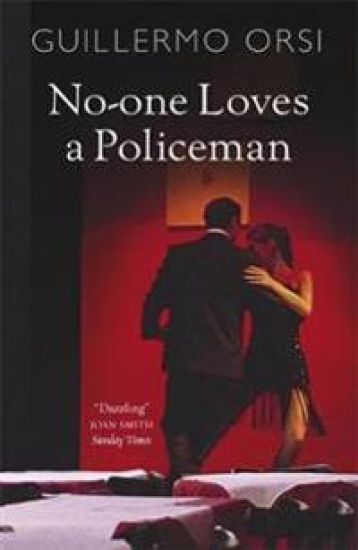
It is December 2001 and Argentina is in political and economic meltdown. Pablo Martelli, once in an elite branch of the police force known to all as the 'National Shame', is a shadow of his former self, scraping by as a bathroom salesman. He cannot forget the enigmatic woman he met in a dance hall. She left him when she found out who he was working for, and he has never recovered from the blow. Late one evening, Martelli is summoned to a friend's coastal retreat. He arrives to find his friend dead and is drawn into a bewildering sequence of events, on an odyssey that leads him through vast, empty pampas, along endless highways and into ghost towns seething with danger and brutality, to the ailing heart of his country. Before long he is forced to uncover the truth of his past life. It is a dangerous confession: after all, no-one loves a policeman. A highly original crime novel with a rich, dark humour, a host of extraordinary characters and plenty of smoking guns.
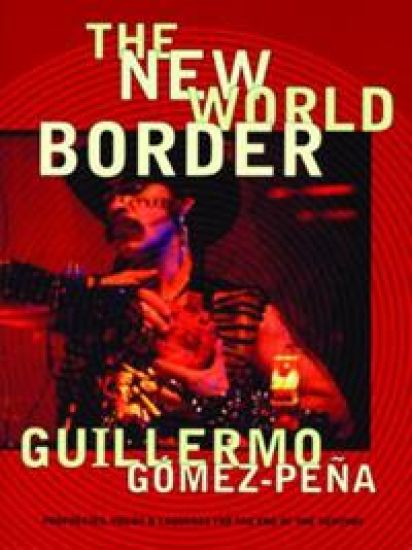
The New World Border is a carnivalesque inversion of ethnic and geo-political ideology, a disorienting free-fall into the space between cultures, and a head-on collision with the real and imagined borders that separate North and South. Hero of a thousand syncretic faces -- intercultural interpreter, reverse anthropologist, experimental linguist, and political artist of the first order -- Guillermo Gomez-Pena has won international acclaim for his efforts to create a hybrid culture and to articulate a borderless ethos. In this new collection of essays, poems, and performance texts, Gomez-Pena muses, often tongue-in-cheek, on matters of race, nationality, language, and identity. With a heady mix of pop culture, provocative iconography, political satire, ethnic stereotypes, and guerrilla theory, he explores "the territory of cultural misunderstanding." "In everything he does, he remains an indomitably playful phrasemaker; a fertile rethinker of cultural contradictions, cliches, and conundrums; and an inspiring recruiter for a playground army of cultural pluralists." --The Village Voice "Gomez-Pena invites the reader into uncharted territory: the vast, intercontinental border zone where people live between and across cultures and countries, creating a thoroughly hybrid society where the only cultural "others" are those who stubbornly resist "mestizaje". The New World Border is both wildly entertaining and thoughtfully incisive, inducing a kind of cultural vertigo that erases the borders between 'us' and 'them'. The New World Border is a required addition to all literary and multicultural studies collections!" --Midwest Book Review "Guillermo Gomez Pena is a clear example of the work that originates from and about the border. His work deals with borders, with their existence, construction, reconstruction, definition, and eventual questioning. In this context, the aim of this essay is to explore the way the artist puts into practice his conceptualization of the border reality in The New World Border: Prophecies for the End of the Century, which toured worldwide and in front of very diverse, international audiences." --Amaia Ibarraran Bigalondo, Journal of Contemporary Drama in English Guillermo Gomez-Pena was born in Mexico City in 1955 and came to the U.S. in 1978. His work, which includes performance art, poetry, journalism, criticism, and cultural theory, explores cross-cultural issues and North/South relations. He is the recipient of an American Book Award for The New World Border and a MacArthur Foundation Genius Award, among many other honors. One of his other works, Codex Espangliensis, was also published by City Lights Publishers.
Codex Espangliensis
Guillermo Gómez-Peña; Chagoya Enrique; Rice Felicia
CITY LIGHTS BOOKS
2001
sidottu
Inspired by the pre-Hispanic codices that escaped immolation during colonial invasions, this artists' book opens out in accordion folds expanding to a length of over 21 feet. Rice has created a series of beautiful and jarring montages in which the mixture of languages, slang, poetry, and prose of Gomez-Pena's performance texts are woven through and around Chagoya's collages filled with pre-Hispanic drawings, colonial-era representations of New World natives, and comic book superheroes. Irreverent to the last, Gomez-Pena and Chagoya employ iconic figures and persistent stereotypes to overturn the fantasies of nationalism, ethnocentrism, and historical amnesia that cloud international relations. Rice's masterful typographic compositions orchestrate the text's many voices and views, offering a history of the Americas which must be read forward and backward, in fragments and in recurring episodes - in short, as history itself tends to unfold. Guillermo Gomez-Pena was born in Mexico City in 1955 and came to the U.S. in 1978. His work, which includes performance art, poetry, journalism, criticism, and cultural theory, explores cross-cultural issues and North/South relations. He is the recipient of an American Book Award for The New World Border (City Lights) and a MacArthur Foundation Genius Award, among many other honors. Enrique Chagoya is a Mexican-born painter and printmaker who has been living and working in the U.S. since 1977. The recipient of two NEA Fellowships, his most recent show of paintings was at the DeYoung Museum in San Francisco. He currently teaches at Stanford University. Felicia Rice is a book artist, typographer, printer, and publisher whose work has earned her many honors. She lectures and exhibits internationally, and her books are represented in the collections of various museums and libraries. She currently directs the graphic design and production program at the University of California, Santa Cruz Extension.
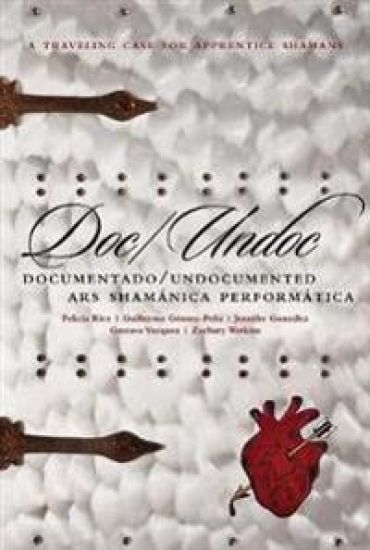
There are no other books like this, that explore the intersection of image, sound, still and moving image, and performance to create an experimental book work, the book as performance art and participatory experience. Includes a USB drive containing video performance art and sound art that accompanied the live installation documented by this book.An illustrated essay by art historian/critic Jennifer Gonzalez deftly places the project in a context of the history of installation art, curiosity cabinets, and developments in fine art book-making.The introduction by book artist Felicia Rice tells the story of the collaboration, from its inception to completion as a traveling multi-media artbook installation, replete with video projections and sound art to accompany an altar-style interactive suitcase of objects, including a codex-style book containing performance texts that interact with fine art printmaking. Gomez-Pena is an internationally renowned artist with a wide following whose work deals with issues of identity across borders. This book presents his performance texts in context of visual, video and sound art collaborators.Felicia Rice has previously published the Codex Espangliensis in collaboration with Gomez-Pena, a groundbreaking, influential work that is in special collections and libraries world wide.
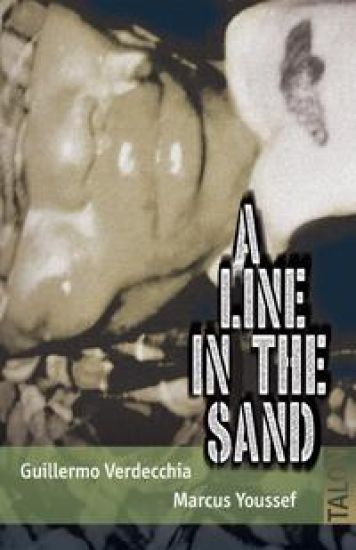
In the autumn of 1990, during Operation Desert Storm, two young men, one a troubled Canadian soldier, the other a teenage Palestinian black-marketeer, meet in the scorched Qatari desert. Breaching the divide of a profound cultural misunderstanding and against a backdrop of massive global conflict, these two become unlikely and secret friends. This tenuous friendship is severed by the torture and murder of the 16-year-old Palestinian inside the Canadian base--an act to which the Canadian soldier was at least a witness and perhaps a willing participant. Weaving poetic drama with myriad documentary sources, A Line in the Sand rips the benevolent mask off recent western peacekeeping operations and challenges Canada's long treasured national mythology that it is a nation of quiet diplomats. It asks us to imagine how horrors like these could be perpetrated with our money, in our name and by people much like us. Cast of three to five men.
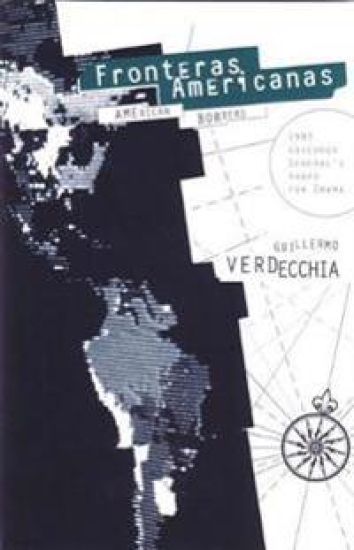
Fuelled by equal parts outrage, intelligence and wit, Fronteras Americanas re-creates one person's struggle to construct a home between two cultures, while exploding the images and constructs built up around Latinos and Latin America. This one-person play works through bold juxtapositions and satiric reference points: Simon Bolivar and Speedy Gonzales; Columbus and Fodor's travel guides; Ricky Ricardo and the Latin Lover; Â La Bamba' and Placido Domingo; Carlos Fuentes and American made-for-TV drug-wars movies. Verdecchia twirls stereotypes and cliches, offers comparative histories, examines myths and mysticism, and provides lessons in language and dancing.Cast of one man.
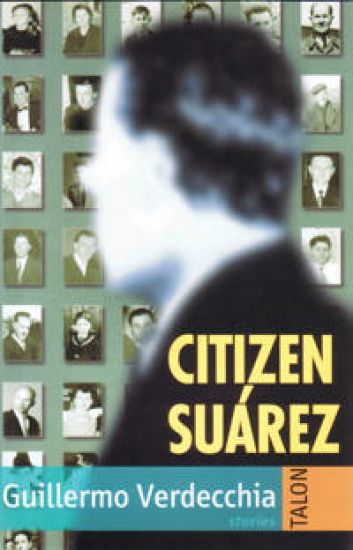
Guillermo Verdecchia is primarily known for his award-winning plays; Citizen Suarez is his first book of short stories, and it is a remarkable debut. These stories take on the quintessential issues forced upon a generation betrayed by their citizenship--a betrayal the more profound because it subsists primarily in the global death of the nation-state. These are stories about people traveling, wandering or lost between countries and languages--people caught between the impulse to flee and the desire to belong. Sex, geography and politics grip the protagonists of these pieces, demanding promises, compromises and resolutions. These are stories about power--personal, civic, sexual, filial, political--and how, lubricious, it slips between the fingers. Quiet, careful, witty, they document and celebrate survival--consolations, complicities and accommodations in the face of indifference, cruelty and fear. The characters of these stories are known to the reader, intimately known, because they are revealed to us in the way that only we know ourselves--in those darkest recesses of the desires and fears we imagine, we hide from others, and thus, also from those we love.Most astonishing of all for a writer venturing into a new genre for the first time is the elegant surety of his style--Verdecchia speaks in these stories with the fatalistic lyricism of Lorca, the philosophical ambiguity of Paz, and the emotional scalpel of Marquez.
Guillermo Verdecchia's first play, Another Country (originally Final Decisions [War] ), was his response to his home country Argentina's Dirty War in 1976--83, when leaders of the military junta held that their campaign against "leftist subversives and terrorists" was the beginning of the Third World War. The scale of their undertaking was defined by their statement: "First we will kill all the subversives; then, their collaborators; later, those who sympathize with them; afterward, those who remain indifferent; and finally, those who are undecided." The public relations firm Burson-Marsteller was hired to make Argentina look good while the junta (trained in counter-insurgency at the U.S.-based and funded School of the Americas, or The School of the Coups as it's known in Latin America) and its collaborators reorganized the nation. His latest play, bloom (the title is taken from a line in Paul Celan's poem, "Psalm": "we bloom in thy spite"), overflows with images from T.S.Eliot's The Waste Land("hooded hordes swarming over endless plains, stumbling in cracked earth," among others), and seems utterly contemporaneous with his first, in the context of the current destruction of Afghanistan and Iraq, part of the larger effort of an international reorganization of the world we know as "The War on Terror." Published together here for the first time, these plays constitute an unsparing interrogation of a world perpetually at war.
Fuelled by equal parts outrage, intelligence, and wit, Fronteras Americanas recreates one person's struggle to construct a home between two cultures, while exploding the images and constructs built up around Latinos and Latin America. This one-person play works through bold juxtapositions and satiric reference points: Simon Bolivar and Speedy Gonzales; Columbus and Fodor's travel guides; Ricky Ricardo and the Latin Lover; La Bamba and Placido Domingo; Carlos Fuentes and American drug-war movies. Verdecchia twirls stereotypes and cliches, offers comparative histories, examines myths and mysticism, and provides lessons in language and dancing. However, even as the ungovernable and surrealistic Fecundo Morales Secundo, or "Wideload," edifies us about how sex between a "Latin" and a "Saxon" can be "a mind-expanding and culturally enriching experience," eloquently quoting Octavio Paz and Federico Garcia Lorca in direct response to contemporary struggles and injustices, he also transcends his role of "estereotype," reaching a place beyond maps that are only metaphors where borders are more than divisions between countries and take on the most outlandish properties.In Verdecchia's preface to the new edition, when examining his reasons for bringing forth a "refried" form of Fronteras Americanas in the 21st century, he indicates: There are, after all, people all over the globe living, crossing, resisting, defining, and defending linguistic, cultural, racial, gender, psycho- geographical, cartographic, political and other borders. While the world has changed in many ways since I first wrote and performed it, the processes of migration, displacement, and globalization that informed the play's creation have only accelerated. Some of us may lead more networked lives now, but the Border is alive and well and living all over the globe. Cast of 1 man.
Employee Participation and Labor Law in the American Workplace
Guillermo J. Grenier; Raymond L. Hogler
Praeger Publishers Inc
1992
sidottu
This book is a comprehensive treatment of worker participation in the United States and its relation to the legal system. The purpose of the study is to analyze the meaning and practice of industrial democracy and to propose statutory reforms that would benefit both management and labor. It is unique in its interdisciplinary approach, which combines research from the fields of history, law, industrial relations, sociology, and organizational behavior.Labor-management cooperation and worker participation are subjects of vigorous debate. This work examines the arguments concerning the benefits and deficiencies of involvement programs, their impact on union relationships, and their function as techniques to enhance productivity and competitiveness in the workplace. The study traces the history of participation from its inception in the 1870s through the 1980s, surveying the case law from 1934 to 1991, and provides a political and economic context for the analysis of participation. The book will be of interest to scholars and professionals in industrial relations, industrial sociology, labor law, and labor studies.
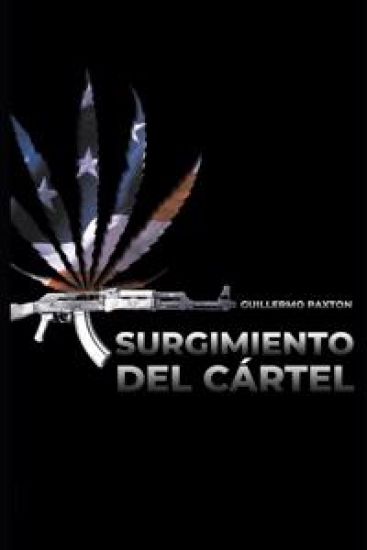
Memo Smith was a talented deputy with the Do a Ana Sheriff's Department. After letting illegal immigrants go from a traffic stop, the border patrol pressures the department to get rid of him. After resigning from the department and a bitter divorce, Smith moves to Juarez, Mexico to save money and instead becomes a key player in the new Juarez Cartel. Lalo Torres, a newly promoted detective with the El Paso Police Department, happens upon corruption within his division that is linked with the Juarez Cartel. Despite threats and a few attempts on his life, Lalo continues his investigation which leads to tragedy. He teeters on the edge of sanity as he becomes an avenging angel and takes out the corrupt police and the members of the cartel, one by one. Based on true events in the author's life, Cartel Rising takes the reader deep into the workings of the drug trade and the Mexican Mafia.