

Kirjahaku
Etsi kirjoja tekijän nimen, kirjan nimen tai ISBN:n perusteella.
1000 tulosta hakusanalla HENRY CONSTABLE
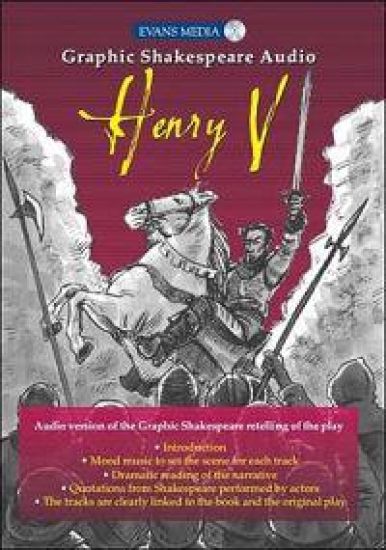
Henry V
Evans Brothers Ltd
2013
cd
These audio CDs from this popular series is an ideal introduction to Shakespeare's plays, but can equally be used as revision aids. The main characters and key events are brought to life in the simplified narrative retellings of the plays, and short extracts from the original plays focus on key speeches in Shakespeare's language
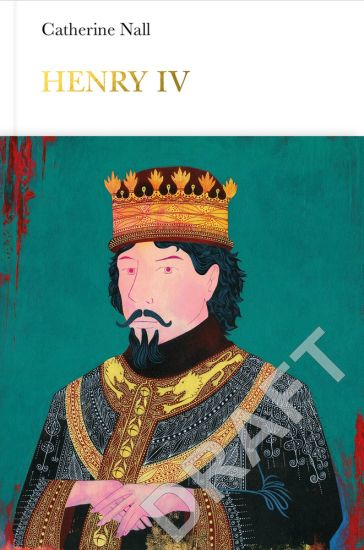
When Henry IV seized the throne from his cousin Richard II, people saw it as a hopeful new beginning for England. The first monarch to have English as his mother tongue since the Norman conquest, Henry seemed to embody the ideals of chivalric kingship: mercy, piety, military prowess and learning.Yet deposing a crowned monarch was not a stable foundation on which to build a reign. Henry IV found himself challenged from all sides, plagued by conspiracies, rebellions, assassination attempts and crippling debts, while his tense relationships with Parliament and with his own son, Shakespeare's Prince Hal, saw his grip on power falter. Nevertheless, he was the first king and founder of a Lancastrian dynasty which would go on to shape England for centuries to come.In this lively study, Catherine Nall reappraises a monarch who weathered upheaval and uncertainty and held on to the throne through sheer force of will.

'Most contemporaries would have argued that it was a king's job to put in peril his soul for the good of his Church and of his people. But Henry was too determined to live a life of a saint'Henry III, the son of King John, was catapulted onto the throne aged just nine and reigned for fifty-six years, during which time his self-conscious piety often put him at odds with those around him. Yet as this sparkling account makes clear, he deserves to be better known: for the birth of Parliament, the building of Westminster Abbey, and the development of a kingdom that still recognizably exists today.
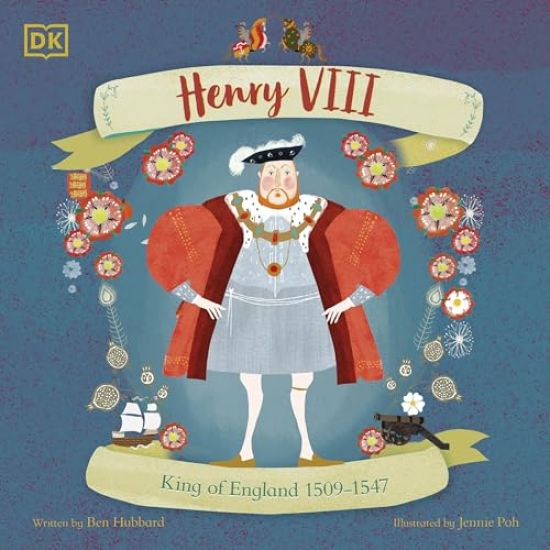
Delve into the past and explore the life and reign of Henry VIII in this fascinating biography for children.Learn about one of the most famous monarchs in British history in this biography for kids aged 5-11 exploring Henry VIII's life.Bright, playful illustrations and simple, age-appropriate text makes this book the perfect introduction to the infamous Tudor king. Henry VIII covers all the key moments in the fascinating man's life, from his struggles to father a son and the fates of his six wives, to the formation of the Church of England and wars with France and Scotland.This children’s book on Henry VIII offers:- New information about Henry’s life on every page, from his route to a divorce and the fates of his six wives to his military victories and his love of parties.- The third installment, after Queen Elizabeth II and King Charles III, in the best-selling History’s Greatest Leaders series.- Educational information about the British monarchy for young historians.This biography for children brought to you by the publisher of Queen Elizabeth: A Platinum Jubilee Celebration and King Charles III will supplement your child's learning and curiosity as it reveals the secrets of a larger-than-life king from long ago.More in the seriesAt DK, we believe in the power of discovery. So why stop here? If you enjoyed learning about one of Britain’s most well-known kings, then why not try other books in the History’s Greatest Leaders series, Queen Elizabeth: A Platinum Jubilee Celebration and King Charles III?

PRE-ORDER NOW! Magic meets monarchy as England’s most notorious queens seize back their crowns and their stories — for fans of Juno Dawson and SIX the Musical. --------------------- Anne Boleyn is going to die, and neither her cleverness nor her witchery can save her. So when her late rival, Catalina de Aragón, miraculously appears in her cell at the Tower of London on the eve of her execution, very much alive and offering a daring escape plan, no one is more surprised than Anne. Lina doesn’t have Anne’s magic—but she has just as much hate for England’s wretched king. Severed from her daughter and stripped of all her influence, Lina breathes only for the Hellebore Sisterhood, a clandestine and powerful society with a vested interest in keeping both queens alive…and using their particular skills to advance womankind. Anne and Lina’s old rivalries pale in comparison to a common enemy. One by one, they capture their pawns, infiltrating the court, recruiting the new queens in Henry’s orbit, and eliminating the men who plotted against them. Always inching closer to their true target... And they want his head.

When Jack Westbrook takes a trip to the countryside to meet old friends, he has no idea that he's in for the worst party of his life.With Henry's Last Party, Julian Wright has created something truly unique: a murder mystery that somehow defies the usual trappings of the genre. This play is well suited to professionals and amateurs alike, needing only a small cast and a single setting.Well, what are you waiting for? Come and join the party!
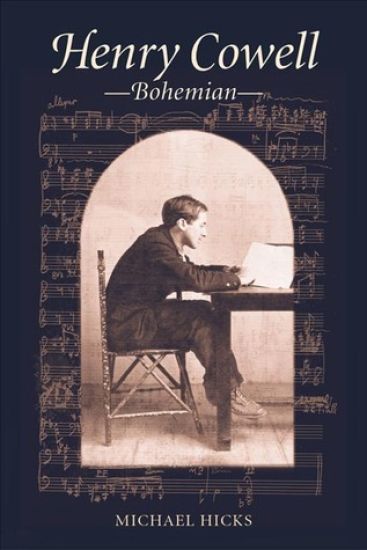
Author of New Musical Resources and a teacher of John Cage, Lou Harrison, and Burt Bacharach, Henry Cowell is regarded as an innovator, rebel, and genius. Celebrated for the novelty of his playing, Cowell popularized a series of experimental piano-playing techniques that included pounding his fists and forearms on the keys and plucking the piano strings directly to achieve the exotic, dissonant sounds he desired. Michael Hicks shows how the maverick composer, writer, teacher, and performer built his career on the intellectual and aesthetic foundations of his parents, community, and teachers--and exemplified the essence of bohemian California. Hicks traces Cowell's radical ideas to teachers like Charles Seeger, Samuel Seward, and E. G. Stricklen, his childhood in the tightknit artistic communities in the San Francisco Bay area, and the immeasurable influence of his parents. Focusing on Cowell's formative and most prolific years, Hicks examines the philosophical fervor that fueled the artist's whirlwind compositions and the ways his irrepressible spirit helped foster an appreciation in the United States and Europe for a new brand of American music.
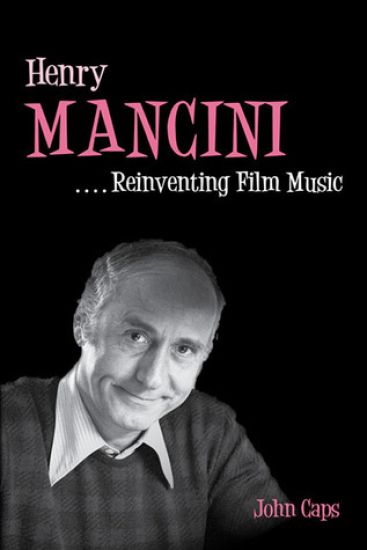
Through film composer Henry Mancini, mere background music in movies became part of pop culture--an expression of sophistication and wit with a modern sense of cool and a lasting lyricism that has not dated. The first comprehensive study of Mancini's music, Henry Mancini: Reinventing Film Music describes how the composer served as a bridge between the Big Band period of World War II and the impatient eclecticism of the Baby Boomer generation, between the grand formal orchestral film scores of the past and a modern American minimalist approach. Mancini's sound seemed to capture the bright, confident, welcoming voice of the middle class's new efficient life: interested in pop songs and jazz, in movie and television, in outreach politics but also conventional stay-at-home comforts. As John Caps shows, Mancini easily combined it all in his music. Mancini wielded influence in Hollywood and around the world with his iconic scores: dynamic jazz for the noirish detective TV show Peter Gunn, the sly theme from The Pink Panther, and his wistful folk song "Moon River" from Breakfast at Tiffany's. Through insightful close readings of key films, Caps traces Mancini's collaborations with important directors and shows how he homed in on specific dramatic or comic aspects of the film to create musical effects through clever instrumentation, eloquent musical gestures, and meaningful resonances and continuities in his scores. Accessible and engaging, this fresh view of Mancini's oeuvre and influence will delight and inform fans of film and popular music. John Caps is an award-winning writer and producer of documentaries. He served as producer, writer, and host for four seasons of the National Public Radio syndicated series The Cinema Soundtrack, featuring interviews with and music of film composers. He lives in Baltimore, Maryland. A volume in the series Music in American Life

Through film composer Henry Mancini, mere background music in movies became part of pop culture--an expression of sophistication and wit with a modern sense of cool and a lasting lyricism that has not dated. The first comprehensive study of Mancini's music, Henry Mancini: Reinventing Film Music describes how the composer served as a bridge between the Big Band period of World War II and the impatient eclecticism of the Baby Boomer generation, between the grand formal orchestral film scores of the past and a modern American minimalist approach. Mancini's sound seemed to capture the bright, confident, welcoming voice of the middle class's new efficient life: interested in pop songs and jazz, in movie and television, in outreach politics but also conventional stay-at-home comforts. As John Caps shows, Mancini easily combined it all in his music. Mancini wielded influence in Hollywood and around the world with his iconic scores: dynamic jazz for the noirish detective TV show Peter Gunn, the sly theme from The Pink Panther, and his wistful folk song "Moon River" from Breakfast at Tiffany's. Through insightful close readings of key films, Caps traces Mancini's collaborations with important directors and shows how he homed in on specific dramatic or comic aspects of the film to create musical effects through clever instrumentation, eloquent musical gestures, and meaningful resonances and continuities in his scores. Accessible and engaging, this fresh view of Mancini's oeuvre and influence will delight and inform fans of film and popular music. John Caps is an award-winning writer and producer of documentaries. He served as producer, writer, and host for four seasons of the National Public Radio syndicated series The Cinema Soundtrack, featuring interviews with and music of film composers. He lives in Baltimore, Maryland. A volume in the series Music in American Life
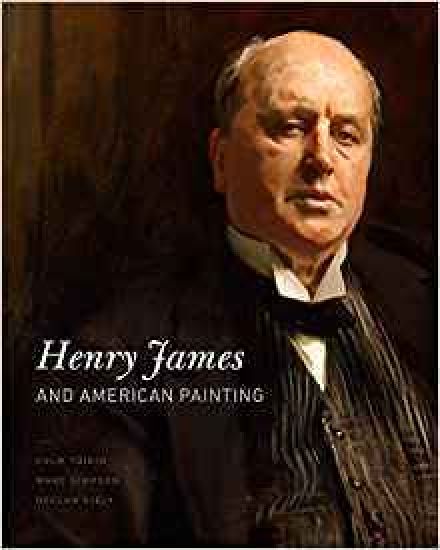
Henry James and American Painting
Colm Tóibín; Marc Simpson; Declan Kiely
Pennsylvania State University Press
2017
sidottu
Depicting characters like the eponymous young sculptor in Roderick Hudson and spaces like the crowded galleries in The Wings of the Dove, Henry James’s iconic novels reflect the significance of the visual culture of his society. In this book, novelist and critic Colm Tóibín joins art historian Marc Simpson and Declan Kiely of The Morgan Library & Museum to reveal how essential the language and imagery of the arts—and friendships with artists—were to James’s writing.The authors consider the paintings, photographs, drawings, and sculpture produced by artists in James’s circle, assess how his pictorial aesthetic developed, and discuss why he destroyed so many personal documents and what became of those that survived. In examining works by figures such as John La Farge, Hendrik Andersen, and John Singer Sargent alongside selections from James’s novels, personal letters, and travel writings, Tóibín, Simpson, and Kiely explore the novelist’s artistic and social milieu. They show him to be a writer with a painterly eye for colors and textures, shapes and tastes, and for the blending of physical and psychological impressions. In many cases, the characters populating James’s fiction are ciphers for his artist friends, whose demeanors and experiences inspired James to immortalize them on the page. He also wrote critically about art, most notably about the work of his friend Sargent.A refreshing new perspective on a master novelist who was greatly nourished by his friendships with artists, Henry James and American Painting reveals a James whose literary imagination, in Tóibín’s words, “seemed most at ease with the image” and the work of creating fully realized portraits of his characters.

Procès-verbaux, 1671-1793; publiés pour la Société de l'histoire de l'art français sous le patronage de l'Académie des beaux arts par Henry Lemonnier; Volume 5
Henry Lemonnier; Paris Académie Royale d'Architecture
Wentworth Press
2018
pokkari

Le curé de Lanslevillard; pièce en 4 tableaux, d'après la nouvelle d'Henry Bordeaux
Henry Bordeaux
Wentworth Press
2018
pokkari
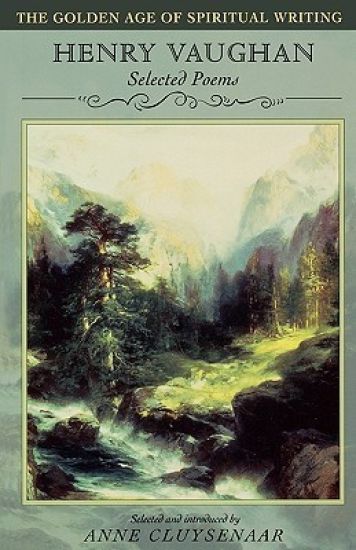
Henry Vaughan (1621-1695) was a 'cavalier' poet who sided with the king during the civil war. His influences included George Herbert and this volume is the fifth in a series on seventeenth century spiritual writing.
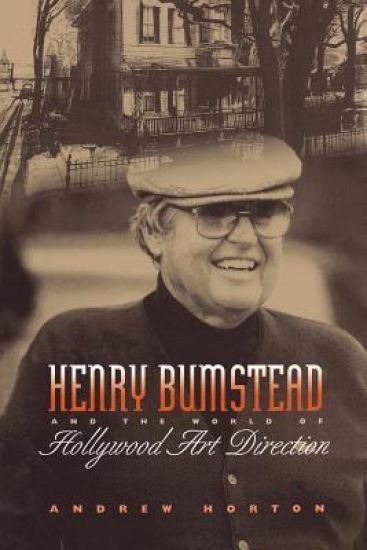
Henry Bumstead and the World of Hollywood Art Direction
Andrew Horton
University of Texas Press
2003
pokkari
From a hotel in Marrakech in The Man Who Knew Too Much, to small-town Alabama in To Kill a Mockingbird, to Mission Control in Space Cowboys, creating a fictional, yet wholly believable world in which to film a movie has been the passion and life's work of Henry Bumstead, one of Hollywood's most celebrated production designers. In a career that has spanned nearly seventy years, Bumstead has worked on more than one hundred movies and television films. His many honors include Academy Awards for Art Direction for To Kill a Mockingbird and The Sting, as well as nominations for Vertigo and The Unforgiven. This popularly written and extensively illustrated book tells the intertwining stories of Henry Bumstead's career and the evolution of Hollywood art direction. Andrew Horton combines his analysis of Bumstead's design work with wide-ranging interviews in which Bumstead talks about working with top directors, including Alfred Hitchcock, George Roy Hill, Robert Mulligan, and Clint Eastwood, as well as such stars as Paul Newman, Robert Redford, Doris Day, Jimmy Stewart, Sidney Poitier, Bill Cosby, Jerry Lewis, and James Cagney. Numerous production drawings, storyboards, and film stills illustrate how Bumstead's designs translated to film. This portrait of Bumstead's career underscores an art director's crucial role in shaping the look of a film and also tracks the changes in production design from the studio era through location shooting to today's use of high-tech special effects.
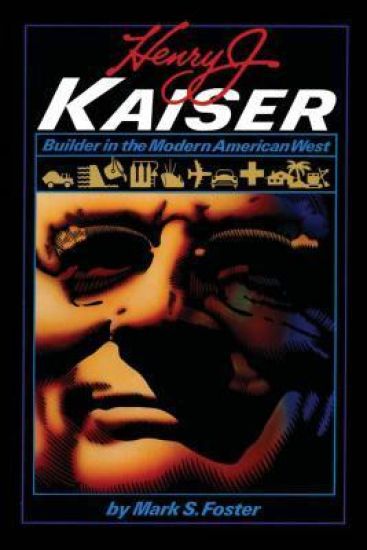
In the 1940s Henry J. Kaiser was a household name, as familiar then as Warren Buffett and Donald Trump are now. Like a Horatio Alger hero, Kaiser rose from lower-middle-class origins to become an enormously wealthy entrepreneur, building roads, bridges, dams, and housing. He established giant businesses in cement, aluminum, chemicals, steel, health care, and tourism. During World War II, his companies built cargo planes and Liberty ships. After the war, he manufactured the Kaiser-Frazer automobile. Along the way, he also became a major force in the development of the western United States, including Hawaii.Henry J. Kaiser: Builder in the Modern American West is the first biography of this remarkable man. Drawing on a wealth of archival material never before utilized, Mark Foster paints an evenhanded portrait of a man of driving ambition and integrity, perhaps the ultimate "can-do" capitalist. He covers Kaiser's entire life (1882–1967), emphasizing many business ventures. He demonstrates that Kaiser was the prototypical "frontier" entrepreneur who often used government and union support to tame the "wilderness."Though today the Kaiser industries are no longer under family management, the Kaiser legacy remains great. Kaiser played a major role in building the Hoover, Bonneville, Grand Coulee, and Shasta dams. The Kaiser-Permanente Medical Care Program still provides comprehensive health care for millions of subscribers. Kaiser-planned communities remain in Los Angeles; San Francisco; Portland, Oregon; and Boulder City, Nevada. Kaiser Engineers was actively engaged in hundreds of huge construction jobs across the nation and around the world.U.S. and business historians, scholars of the modern West, and general readers will all find much to absorb them in this well-written biography.
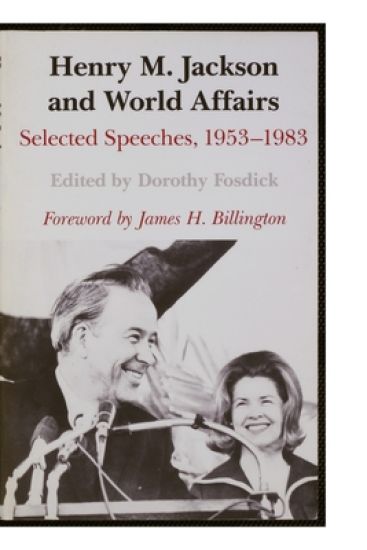
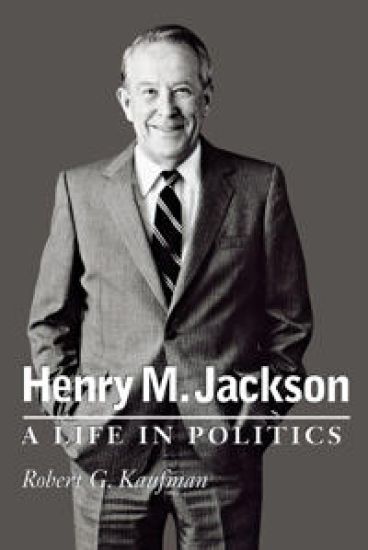
Henry M. Jackson ranks as one of the great legislators in American history. With a Congressional career spanning the tenure of nine Presidents, Jackson had an enormous impact on the most crucial foreign policy and defense issues of the Cold War era, as well as a marked impact on energy policy, civil rights, and other watershed issues in domestic politics.Jackson first arrived in Washington, D.C., in January 1941 as the Democratic representative of the Second District of Washington State, at the age of 28 the youngest member of Congress. “Scoop” Jackson won reelection time and again by wide margins, moving to the Senate in 1953 and serving there until his death in 1983. He became a powerful voice in U.S. foreign policy and a leading influence in major domestic legislation, especially concerning natural resources, energy, and the environment, working effectively with Senator Warren Magnuson to bring considerable federal investment to Washington State.A standard bearer for the New Deal-Fair Deal tradition of Roosevelt and Truman, Jackson advocated a strong role for the federal government in the economy, health care, and civil rights. He was a firm believer in public control of electric and nuclear power, and leveled stern criticism at the oil industry’s “obscene profits” during the energy crisis of the 1970s. He ran for the presidency twice, in 1972 and 1976, but was defeated for the nomination first by George McGovern and then by Jimmy Carter, marking the beginning of a split between dovish and hawkish liberal Democrats that would not be mended until the ascendance of Bill Clinton.Jackson’s vision concerning America’s Cold War objectives owed much to Harry Truman’s approach to world affairs but, ironically, found its best manifestation in the actions taken by the Republican administration of Ronald Reagan. An early and strong supporter of Israel and of Soviet dissidents, he strongly opposed the Nixon/Kissinger policy of detente as well as many of Carter’s methods of dealing with the Soviet Union.Robert Kaufman has immersed himself in the life and times of Jackson, poring over the more than 1,500 boxes of written materials and tapes that make up the Jackson Papers housed at the University of Washington, as well as the collections of every presidential library from Kennedy through Reagan. He interviewed many people who knew Jackson, both friends and rivals, and consulted other archival materials and published sources dealing with Jackson, relevant U.S. political history and commentary, arms negotiation documents, and congressional reports. He uses this wealth of material to present a thoughtful and encompassing picture of the ideas and policies that shaped America’s Cold War philosophy and actions.