Kirjojen hintavertailu. Mukana 11 244 527 kirjaa ja 12 kauppaa.

Kirjahaku

Etsi kirjoja tekijän nimen, kirjan nimen tai ISBN:n perusteella.

447 tulosta hakusanalla Hadrian F. Cook

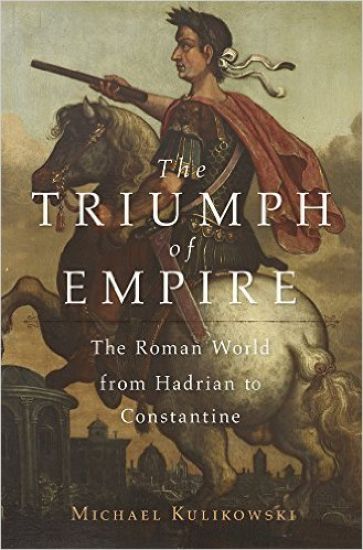
The Triumph of Empire: The Roman World from Hadrian to Constantine
The Triumph of Empire takes readers into the political heart of imperial Rome and recounts the extraordinary challenges overcome by a flourishing empire. Michael Kulikowski's history begins with the reign of Hadrian, who visited the farthest reaches of his domain and created stable frontiers, and spans to the decades after Constantine the Great, who overhauled the government, introduced a new state religion, and founded a second Rome. Factionalism and intrigue sapped the empire from within, even at its apex. Roman politics could resemble a blood sport: rivals resorted to assassination; emperors rose and fell with bewildering speed, their reigns measured in weeks, not years; and imperial succession was never entirely assured. Canny emperors--including Marcus Aurelius, Septimius Severus, and Diocletian--constantly cultivated the aristocracy's favor to maintain a grip on power. Despite such volatility, the Roman Empire protected its borders, defeating successive attacks from Goths and Germans, Persians and Parthians. Yet external threats persisted and the imperial government sagged under its own administrative weight. Religion, too, was in flux with the rise of Christianity and other forms of monotheism. In the fourth century CE, Constantine and his heirs reformed imperial institutions by separating civilian and military hierarchies, restructuring the government of both provinces and cities, and ensuring the prominence of Christianity. The Triumph of Empire is a fresh, authoritative narrative of Rome at its height and of its evolution--from being the central power of the Mediterranean world to becoming one of several great Eurasian civilizations.
Documents Illustrating the Principates of Nerva, Trajan and Hadrian
In this volume, originally published in 1966, E. Mary Smallwood compiles a thorough list of documents and physical artefacts from the reign of the first three of the Five Good Emperors. It was Nerva, and his two adopted successors, Trajan and Hadrian, who paved the way for Rome's Golden Age - each winning the cooperation and approval of the Roman Senate. Smallwood's text contains an extensive collection of materials from the societies of these first 'good emperors', complete with indices of significant persons, coins and other subjects of general relevance. Smallwood quotes directly from imperial papers and letters, references numerous busts and statues, and uses laws, currency and minutes of meetings to compile a fantastic overview of items from this period in Roman history. This work will remain a highly beneficial research tool for scholars and historians interested in the detailed study of the documents and artefacts of this age.
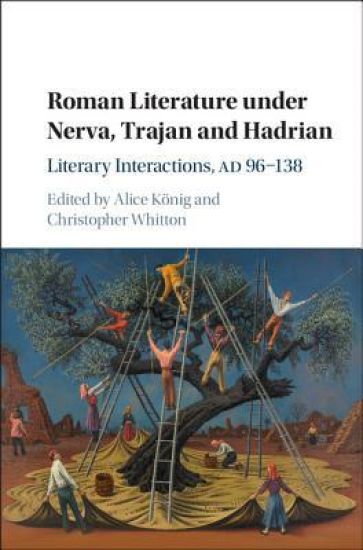
Roman Literature under Nerva, Trajan and Hadrian
This volume is the first holistic investigation of Roman literature and literary culture under Nerva, Trajan and Hadrian (AD 96–138). With case studies from Frontinus, Juvenal, Martial, Pliny the Younger, Plutarch, Quintilian, Suetonius and Tacitus among others, the eighteen chapters offer not just innovative readings of literary (and some 'less literary') texts, but a collaborative enquiry into the networks and culture in which they are embedded. The book brings together established and novel methodologies to explore the connections, conversations and silences between these texts and their authors, both on and off the page. The scholarly dialogues that result not only shed fresh light on the dynamics of literary production and consumption in the 'High Roman Empire', but offer new provocations to students of intertextuality and interdiscursivity across classical literature. How can and should we read textual interactions in their social, literary and cultural contexts?
Roman Literature under Nerva, Trajan and Hadrian
This volume is the first holistic investigation of Roman literature and literary culture under Nerva, Trajan and Hadrian (AD 96–138). With case studies from Frontinus, Juvenal, Martial, Pliny the Younger, Plutarch, Quintilian, Suetonius and Tacitus among others, the eighteen chapters offer not just innovative readings of literary (and some 'less literary') texts, but a collaborative enquiry into the networks and culture in which they are embedded. The book brings together established and novel methodologies to explore the connections, conversations and silences between these texts and their authors, both on and off the page. The scholarly dialogues that result not only shed fresh light on the dynamics of literary production and consumption in the 'High Roman Empire', but offer new provocations to students of intertextuality and interdiscursivity across classical literature. How can and should we read textual interactions in their social, literary and cultural contexts?