Kirjojen hintavertailu. Mukana 12 016 292 kirjaa ja 12 kauppaa.

Kirjahaku

Etsi kirjoja tekijän nimen, kirjan nimen tai ISBN:n perusteella.

1000 tulosta hakusanalla Helene Block Fields

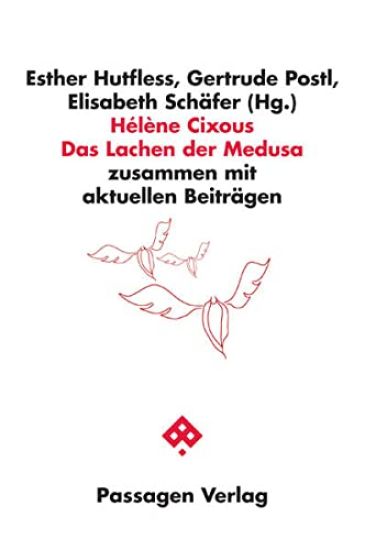
Hélène Cixous, écriture féminine and Musical Analysis
Out of roiling French feminist theory in the 1970s, philosopher and writer H l ne Cixous developed the practice of lecture feminine - based on the notion of criture f minine - as an analytic approach in her own seminars. In musicology, it wasn't until the 1990s that gender studies introduced new attitudes as methods. Might Cixous' lecture f minine serve as a historically rooted analytic approach for musicology and multimedia today? A theory of otherness that brings the body into play with the intellect, that questions the validity of the text, that poetically encourages a collective and respectful approach to reading with an abundance of interpretations: All of these notions and more are included in lecture f minine. The first extensive attempt to adapt lecture f minine to music analysis, the current volume offers experts and students in the areas of music, musicology, gender studies, and philosophy a concise introduction to this 'method'. Terms such as feminine, the other, and phallogocentrism are discussed in relationship to poststructuralism, Lacan, Freud, and other thought.
Helene Appel Among Tress (Bilingual edition)
In her painting, Helene Appel reflects the things of everyday life with high precision. Whether it is a piece of meat, lettuce leaves, fishing nets, twigs, plastic bags or puddles, Appel presents her cropped subjects in plan view, on untreated canvas in a realistic scale. If one takes a closer look, though, this attitude reveals its radical nature. Detaching herself completely from the tradition of still life, Appel does not strive to develop a painterly signature, does not emphasize her distinctive ductus. Instead, she carefully seeks an adequate mode of expression for each of her pictorial objects, thus emphasizing their particular physical presence. Despite the realistic representation, Appel's works evoke a sense of a high degree of abstraction. The impression is that of a distanced look that creates a tension between the familiar and the unaccustomed questioning the relationship we have to our environment.
Helene B. Grossmann: Share the Light

Helene B. Grossmann: Share the Light

Raimund Thomas; Christoph Vitali

Hirmer Verlag
2017
sidottu
Helene B. Grossmann draws on a great tradition of light painting. She creates works of light and color whose impact unfolds far from any representationalism. This volume presents for the first time a comprehensive overview of her oeuvre and shows how th e artist arrives at her powerful compositions. Nature in ever - changing light is Helene B. Grossmann’s source of inspiration. Through abstraction and the application of countless layers of paint she arrives at the distinct glow inherent to her works. In bo th small and large formats she has captured the fluid phenomenon of light on canvas in a wide variety of color diffractions. An unobstructed space opens up for the viewer, giving rise to intimations of landscapes, tableaus and spatiality. The basis for eac h and every painting is the artist’s sketchbook. In it she lays out a first general outline of the composition by means of color planes and lines. In doing so, she often artistically reflects on masterpieces of painting and takes up the particular lighting used in them.
Helene Elisabeth Prinzessin von Isenburg

Helene Elisabeth Prinzessin von Isenburg

Friedrich Pfad

Wistana Gmbh
2019
pokkari
Helene Elisabeth Prinzessin von Isenburg erlangte als Mutter Elisabeth durch den von ihr mitgegr ndeten Verein Stille Hilfe f r Kriegsgefangene und Internierte internationale Bekanntheit. Vor allem ihr Engagement f r die von den alliierten Milit rgerichten abgeurteilten Frauen und M nner hat das heutige Bild ber sie gepr gt. Da dies allerdings nur ein Teil ihrer Arbeit war, ist kaum bekannt. So setzte sie sich bereits w hrend der Kriegszeit f r die Dachauer KZ-H ftlinge ein und k mmerte sich nach Kriegsende um die Familienangeh rigen internierter Personen, die oft in g nzlicher Mittellosigkeit ihr Dasein fristen mussten.Der Autor Friedrich Pfad analysiert in diesem Buch nicht nur akribisch die ber sie in Umlauf gebrachten Behauptungen - u.a. von den Professoren Heinz K hnrich, Ulrich Herbert und Norbert Frei sowie den Journalisten Ernst Klee, Andrea R pke und Oliver Schr m -, sondern kl rt auch ber die schwierigen Umst nde und Bedingungen der deutschen Nachkriegszeit auf. Bei dieser eingehenden Spurensuche kristallisiert sich ein Netzwerk heraus, das zu der Vereinigung der Verfolgten des Naziregimes - Bund der Antifaschistinnen und Antifaschisten f hrt, die wiederum wohlwollende Unterst tzung verschiedener Bundestagsabgeordneten - z.B. Diether Dehm, Ulla Jelpke und Gregor Gysi - erh lt. Dem Autor ist es somit gelungen, ein unscheinbar agierendes Netzwerk aufzudecken, das durch seine unredliche Arbeit das augenscheinliche Ziel verfolgt, die politische Einflussnahme nachhaltig zu sichern. Dabei stellt sich heraus, da es diesem Personenkreis besonders w hrend der Amtszeit von Bundeskanzlerin Angela Merkel gelungen ist, seinen Einfluss in einem bislang unbekannten Ausma auszubauen.In diesem Buch wird nicht nur das bisher vermittelte Geschichtsbild ber die deutschen Nachkriegsjahre in Frage gestellt, sondern auch eine vergangenheitspolitische Manipulation von Akteuren - die dem Marxistisch-Sozialistischen Untergrund zuzurechnen sind - nachgewiesen.
Helene Hanssen

Helene Hanssen

Lis Mikkelsen

-
2021
sidottu
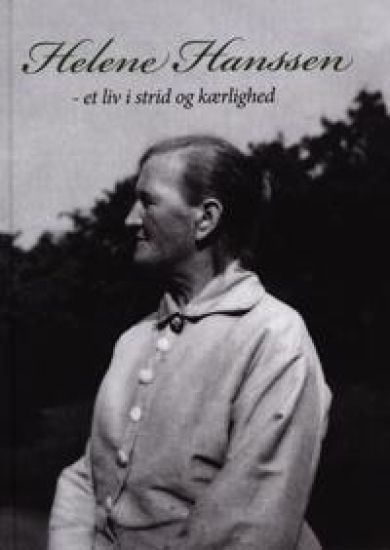
De danske sønderjyders førstemand H.P. Hanssen har altid fået stor og velfortjent opmærksomhed. Men havde han ikke haft sin kone som organisator, er det tvivlsomt, om han var nået så langt. Helene Hanssen skrev mange breve til sin mand. Først i forlovelsestiden, og også senere da han blev landdagsmand og rigsdagsmand i Berlin og var væk 8 måneder om året. Hun sørgede for at arkivere deres korrespondance, så man i dag kan følge deres liv næsten fra dag til dag. ”Helene Hanssen – et liv i strid og kærlighed” er en biografi om kvinden bag Genforeningen. Helene Hanssens hjem var en veldrevet gård på Sundeved. Hun havde svært ved at tilpasse sig de normer, man dengang havde. Hun havde ikke lyst til de ting, piger helst skulle beskæftige sig med. Hun var ikke huslig og hadede det sorte komfur. Hellere ville hun læse eller tumle rundt med drengene. Hendes ældre søstre søgte at holde hende til arbejdet. Hendes skolegang var elendig og hun fortalte senere mange gange, at hun ikke havde lært noget af betydning i sin barndoms skole. Da hun traf det opadstigende politiske talent Hans Peter Hanssen var det to modsætninger, der mødtes. Han var vant til anerkendelse og positiv interesse. Hun var vant til kritik. De to unge forlovede sig i 1882, og nu fulgte en 6 år lang forlovelse, hvor Helene prøvede at indhente noget af det forsømte, hvad uddannelse angik. Hun var 3 gange på Askov og fik her øjnene op for, hvordan skolegang kunne være. Helene Iversen uddannede sig først som mejerske, senere blev hun en kort tid lærer. Hun sluttede med at stå i lære i ekspeditionen på Fyns Tidende, så hun kunne være med til at administrere en avis. Hendes forlovede havde planer om at blive redaktør. I 1888 blev de gift. De første år boede de i Sønderborg. I 1892 købte de avisen Hejmdal i Aabenraa. Hans Peter var meget ude at holde foredrag og blev i 1896 valgt til landdagen i Berlin. Helene overtog avisdriften og pasningen af Hafnia kontoret. Sideløbende fik hun 10 børn på 14 år og passede også dem og den store husholdning. Hun var ikke et nemt menneske og stødte tit sammen med de ansatte på Hejmdal. Hun sagde tingene ligeud og kunne ikke omgås med flere sandheder. Det blev et for en kvinde dengang usædvanligt liv. Helene Hanssen rådgav sin mand i politiske spørgsmål og sørgede for at holde ham ved jorden. Hun var uimponeret og sørgede for, at de mange børn kom godt i vej. Helene Hanssen var sin mand en uvurderlig støtte i kampen for at få Sønderjylland dansk.
Helene Bauer in Vienna: Political Economy Between Two World Wars
The year is 1914--a highly unusual time for a Polish Jewish woman to leave her husband and children and relocate to Vienna. Yet Helene Gumplowitz Landau takes this bold step, driven by her unwavering passion for socialism and her love for Otto Bauer, a leading Austrian Marxist a decade her junior. In the intellectual circles of Vienna's First Republic, Helene Bauer emerges as a prominent Marxist economist and social scientist. She becomes one of the first female economists to challenge the founding figures of neoliberalism, Ludwig von Mises and Friedrich Hayek. She critiques Otto Neurath for the flaws in his vision of a moneyless economy, confronts Ottmar Spann--Austria's foremost philosopher and ideologue of the fascist corporatist state--and is among the earliest voices warning that the Great Depression could fuel the rise of fascism. Helene Bauer spent her final years in exile in the United States, her contributions largely forgotten in Austria's Second Republic. Yet, a century later, her incisive analyses of the crises of her time remain strikingly relevant, offering profound insights into the challenges of today.