Matrices are used in many fields such as statistics, econometrics, mathematics, natural sciences and engineering. They provide a concise, simple method for describing long and complicated computations. This is a comprehensive handbook and dictionary of terms for matrix theory.
"Cool Conduct" is an elegant interpretation of attitudes and mentalities that informed the Weimar Republic by a scholar well known for his profound knowledge of this period. Helmut Lethen writes of "cool conduct" as a cultivated antidote to the heated atmosphere of post-World War I Germany, as a way of burying shame and animosity that might otherwise make social contact impossible.
"The Cylinder" investigates the surprising proliferation of cylindrical objects in the nineteenth century, such as steam engines, phonographs, panoramas, rotary printing presses, silos, safety locks, and many more. Examining this phenomenon through the lens of kinematics, the science of forcing motion, Helmut Muller-Sievers provides a new view of the history of mechanics and of the culture of the industrial revolution, including its literature that focuses on the metaphysics and aesthetics of motion. Muller-Sievers explores how nineteenth-century prose falls in with the specific rhythm of cylindrical machinery, re-imagines the curvature of cylindrical spaces, and conjoins narrative progress and reflection in a single stylistic motion. Illuminating the intersection of engineering, culture, and literature, he argues for a concept of culture that includes an epoch's relation to the motion of its machines.
This title is part of UC Press's Voices Revived program, which commemorates University of California Press’s mission to seek out and cultivate the brightest minds and give them voice, reach, and impact. Drawing on a backlist dating to 1893, Voices Revived makes high-quality, peer-reviewed scholarship accessible once again using print-on-demand technology. This title was originally published in 1964.
This title is part of UC Press's Voices Revived program, which commemorates University of California Press’s mission to seek out and cultivate the brightest minds and give them voice, reach, and impact. Drawing on a backlist dating to 1893, Voices Revived makes high-quality, peer-reviewed scholarship accessible once again using print-on-demand technology. This title was originally published in 1964.
From their inception, Siegel modular forms have been studied extensively because of their significance in both automorphic functions in several complex variables and number theory. The comprehensive theory of automorphic forms to subgroups of algebraic groups and the arithmetical theory of modular forms illustrate these two aspects in an illuminating manner. The author's aim is to present a straightforward and easily accessible survey of the main ideas of the theory at an elementary level, providing a sound basis from which the reader can study advanced works and undertake original research. This book is based on lectures given by the author for a number of years and is intended for a one-semester graduate course, though it can also be used profitably for self-study. The only prerequisites are a basic knowledge of algebra, number theory and complex analysis.
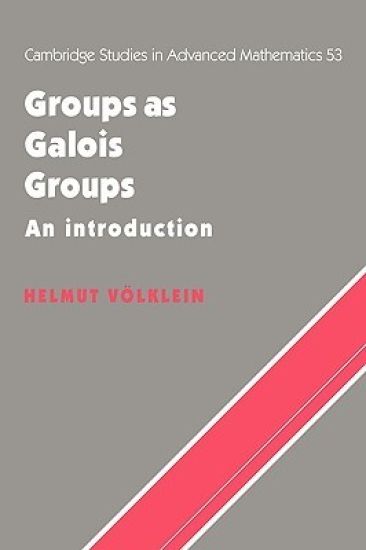
This book describes various approaches to the Inverse Galois Problem, a classical unsolved problem of mathematics posed by Hilbert at the beginning of the century. It brings together ideas from group theory, algebraic geometry and number theory, topology, and analysis. Assuming only elementary algebra and complex analysis, the author develops the necessary background from topology, Riemann surface theory and number theory. The first part of the book is quite elementary, and leads up to the basic rigidity criteria for the realisation of groups as Galois groups. The second part presents more advanced topics, such as braid group action and moduli spaces for covers of the Riemann sphere, GAR- and GAL- realizations, and patching over complete valued fields. Graduate students and mathematicians from other areas (especially group theory) will find this an excellent introduction to a fascinating field.
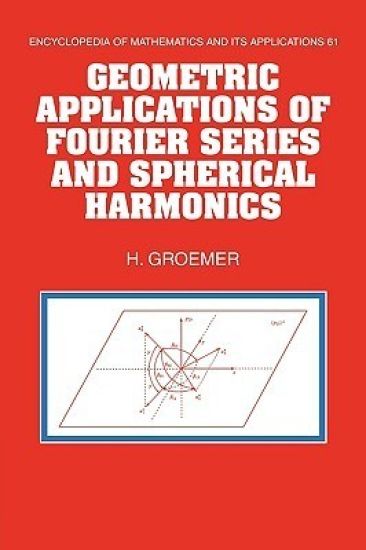
This book provides a comprehensive presentation of geometric results, primarily from the theory of convex sets, that have been proved by the use of Fourier series or spherical harmonics. An important feature of the book is that all necessary tools from the classical theory of spherical harmonics are presented with full proofs. These tools are used to prove geometric inequalities, stability results, uniqueness results for projections and intersections by hyperplanes or half-spaces and characterisations of rotors in convex polytopes. Again, full proofs are given. To make the treatment as self-contained as possible the book begins with background material in analysis and the geometry of convex sets. This treatise will be welcomed both as an introduction to the subject and as a reference book for pure and applied mathematics.
The main theme of this book is micromagnetism and microstructure as well as the analysis of the relations between characteristic properties of the hysteresis loop and microstructure. Also presented is an analysis of the role of microstructure in the fundamental magnetic properties (for example, magnetorestriction or critical behaviour) of crystalline and amorphous alloys. The authors apply the theory of micromagnetism to all aspects of advanced magnetic materials including domain patterns and magnetization processes under the influence of defect structures. Coverage includes modern developments in computational micromagnetism and its application to spin structures of small particles and platelets. It will be of interest to researchers and graduate students in condensed matter, physics, electrical engineering and materials science, as well as to industrial researchers working in the electrotechnical and recording industry.
A survey of the new theories of inflation that have developed over the past two decades in response to the inflationary pressures experienced by Western countries examines the shifting debate from explaining inflation as a "causal" process to explaining its increase as a result of constantly changing expectations.
The main theme of this book is micromagnetism and microstructure as well as the analysis of the relations between characteristic properties of the hysteresis loop and microstructure. Also presented is an analysis of the role of microstructure in the fundamental magnetic properties (for example, magnetorestriction or critical behaviour) of crystalline and amorphous alloys. The authors apply the theory of micromagnetism to all aspects of advanced magnetic materials including domain patterns and magnetization processes under the influence of defect structures. Coverage includes modern developments in computational micromagnetism and its application to spin structures of small particles and platelets. It will be of interest to researchers and graduate students in condensed matter, physics, electrical engineering and materials science, as well as to industrial researchers working in the electrotechnical and recording industry.
About half a century ago C. L. Siegel discovered a new type of automorphic forms in several variables in connection with his famous work on the analytic theory of quadratic forms. Since then Siegel modular forms have been studied extensively because of their significance in both automorphic functions in several complex variables and number theory. The comprehensive theory of automorphic forms to subgroups of algebraic groups and the recent arithmetical theory of modular forms illustrate these two aspects in an illuminating manner. The author’s aim is to present a straightforward and easily-accessible survey of the main ideas of the theory at an elementary level, providing a sound basis from which the reader can study advanced works and undertake original research. This book is based on lectures given by the author for a number of years and is intended for a one-semester graduate course, though it can also be used profitably for self-study. The only prerequisites are a basic knowledge of algebra, number theory and complex analysis.
The various approaches to pest control are reviewed with emphasis on their history, advantages, disadvantages and future potential. The book discusses how far chemical control has created problems and how far these may be solved by further chemical control or by alternative methods. The reasons why insects are pest problems are discussed so that the ecological merits and demerits of the various control methods can be assessed. Stress is laid on both the biotic and economic environments in which pest control has to operate. • Presents a balanced case concerning the advantages and disadvantages of the chemical control of pests in historical context. • A wide variety of examples are cited and an up-to-date guide to original sources is presented. • Thoroughly revised and updated edition of a highly successful concise textbook.
In 1963 Walter Feit and John G. Thompson published a proof of a 1911 conjecture by Burnside that every finite group of odd order is solvable. This proof, which ran for 255 pages, was a tour-de-force of mathematics and inspired intense effort to classify finite simple groups. This book presents a revision and expansion of the first half of the proof of the Feit–Thompson theorem. Simpler, more detailed proofs are provided for some intermediate theorems. Recent results are used to shorten other proofs. The book will make the first half of this remarkable proof accessible to readers familiar with just the rudiments of group theory.
This is the first comprehensive exposition of the application of spherical harmonics to prove geometric results. All the necessary tools from classical theory of spherical harmonics are presented with full proofs. These tools are used to prove geometric inequalities, uniqueness results for projections and intersection by planes or half-spaces, stability results, and characterisations of convex bodies of a particular type, such as rotors in convex polytopes. Results arising from these analytical techniques have proved useful in many applications, particularly those related to stereology. To make the treatment as self-contained as possible the book begins with background material in analysis and the geometry of convex sets. This reference will be welcomed by both pure and applied mathematicians.
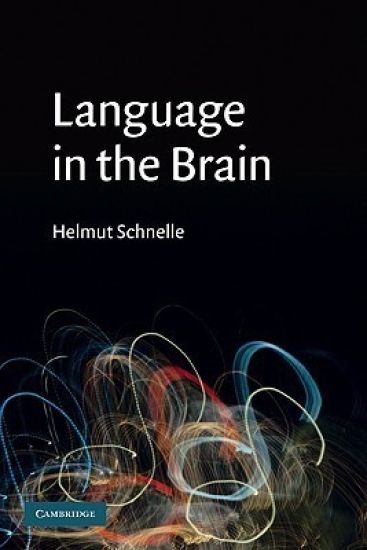
Linguistics, neurocognition, and phenomenological psychology are fundamentally different fields of research. Helmut Schnelle provides an interdisciplinary understanding of a new integrated field in which linguists can be competent in neurocognition and neuroscientists in structure linguistics. Consequently the first part of the book is a systematic introduction to the function of the form and meaning-organising brain component - with the essential core elements being perceptions, actions, attention, emotion and feeling. Their descriptions provide foundations for experiences based on semantics and pragmatics. The second part is addressed to non-linguists and presents the structural foundations of currently established linguistic frameworks. This book should be serious reading for anyone interested in a comprehensive understanding of language, in which evolution, functional organisation and hierarchies are explained by reference to brain architecture and dynamics.
This book describes various approaches to the Inverse Galois Problem, a classical unsolved problem of mathematics posed by Hilbert at the beginning of the century. It brings together ideas from group theory, algebraic geometry and number theory, topology, and analysis. Assuming only elementary algebra and complex analysis, the author develops the necessary background from topology, Riemann surface theory and number theory. The first part of the book is quite elementary, and leads up to the basic rigidity criteria for the realisation of groups as Galois groups. The second part presents more advanced topics, such as braid group action and moduli spaces for covers of the Riemann sphere, GAR- and GAL- realisations, and patching over complete valued fields. Graduate students and mathematicians from other areas (especially group theory) will find this an excellent introduction to a fascinating field.
Linguistics, neurocognition, and phenomenological psychology are fundamentally different fields of research. Helmut Schnelle provides an interdisciplinary understanding of a new integrated field in which linguists can be competent in neurocognition and neuroscientists in structure linguistics. Consequently the first part of the book is a systematic introduction to the function of the form and meaning-organising brain component - with the essential core elements being perceptions, actions, attention, emotion and feeling. Their descriptions provide foundations for experiences based on semantics and pragmatics. The second part is addressed to non-linguists and presents the structural foundations of currently established linguistic frameworks. This book should be serious reading for anyone interested in a comprehensive understanding of language, in which evolution, functional organisation and hierarchies are explained by reference to brain architecture and dynamics.
This book opens the debate about German history in the long term – about how ideas and political forms are traceable across what historians have taken to be the sharp breaks of German history. Smith argues that current historiography has become ever more focused on the twentieth century, and on twentieth-century explanations for the catastrophes at the center of German history. Against conventional wisdom, he considers continuities - nation and nationalism, religion and religious exclusion, racism and violence - that are the center of the German historical experience and that have long histories. Smith explores these deep continuities in novel ways, emphasizing their importance, while arguing that Germany was not on a special path to destruction. The result is a series of innovative reflections on the crystallization of nationalist ideology, on patterns of anti-Semitism, and on how the nineteenth-century vocabulary of race structured the twentieth-century genocidal imagination.