Kirjojen hintavertailu. Mukana 12 390 323 kirjaa ja 12 kauppaa.

Kirjahaku

Etsi kirjoja tekijän nimen, kirjan nimen tai ISBN:n perusteella.

1000 tulosta hakusanalla Henry Styron

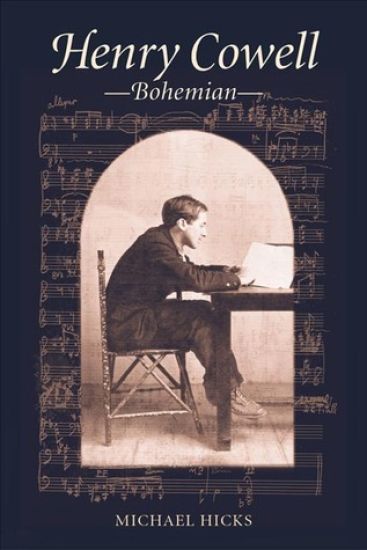
Henry Cowell, Bohemian

Henry Cowell, Bohemian

Michael Hicks

University of Illinois Press
2002
sidottu
Author of New Musical Resources and a teacher of John Cage, Lou Harrison, and Burt Bacharach, Henry Cowell is regarded as an innovator, rebel, and genius. Celebrated for the novelty of his playing, Cowell popularized a series of experimental piano-playing techniques that included pounding his fists and forearms on the keys and plucking the piano strings directly to achieve the exotic, dissonant sounds he desired. Michael Hicks shows how the maverick composer, writer, teacher, and performer built his career on the intellectual and aesthetic foundations of his parents, community, and teachers--and exemplified the essence of bohemian California. Hicks traces Cowell's radical ideas to teachers like Charles Seeger, Samuel Seward, and E. G. Stricklen, his childhood in the tightknit artistic communities in the San Francisco Bay area, and the immeasurable influence of his parents. Focusing on Cowell's formative and most prolific years, Hicks examines the philosophical fervor that fueled the artist's whirlwind compositions and the ways his irrepressible spirit helped foster an appreciation in the United States and Europe for a new brand of American music.
Henry Mancini

Henry Mancini

John Caps

University of Illinois Press
2012
sidottu
Through film composer Henry Mancini, mere background music in movies became part of pop culture--an expression of sophistication and wit with a modern sense of cool and a lasting lyricism that has not dated. The first comprehensive study of Mancini's music, Henry Mancini: Reinventing Film Music describes how the composer served as a bridge between the Big Band period of World War II and the impatient eclecticism of the Baby Boomer generation, between the grand formal orchestral film scores of the past and a modern American minimalist approach. Mancini's sound seemed to capture the bright, confident, welcoming voice of the middle class's new efficient life: interested in pop songs and jazz, in movie and television, in outreach politics but also conventional stay-at-home comforts. As John Caps shows, Mancini easily combined it all in his music. Mancini wielded influence in Hollywood and around the world with his iconic scores: dynamic jazz for the noirish detective TV show Peter Gunn, the sly theme from The Pink Panther, and his wistful folk song "Moon River" from Breakfast at Tiffany's. Through insightful close readings of key films, Caps traces Mancini's collaborations with important directors and shows how he homed in on specific dramatic or comic aspects of the film to create musical effects through clever instrumentation, eloquent musical gestures, and meaningful resonances and continuities in his scores. Accessible and engaging, this fresh view of Mancini's oeuvre and influence will delight and inform fans of film and popular music. John Caps is an award-winning writer and producer of documentaries. He served as producer, writer, and host for four seasons of the National Public Radio syndicated series The Cinema Soundtrack, featuring interviews with and music of film composers. He lives in Baltimore, Maryland. A volume in the series Music in American Life
Henry Mancini

Henry Mancini

John Caps

University of Illinois Press
2015
nidottu
Through film composer Henry Mancini, mere background music in movies became part of pop culture--an expression of sophistication and wit with a modern sense of cool and a lasting lyricism that has not dated. The first comprehensive study of Mancini's music, Henry Mancini: Reinventing Film Music describes how the composer served as a bridge between the Big Band period of World War II and the impatient eclecticism of the Baby Boomer generation, between the grand formal orchestral film scores of the past and a modern American minimalist approach. Mancini's sound seemed to capture the bright, confident, welcoming voice of the middle class's new efficient life: interested in pop songs and jazz, in movie and television, in outreach politics but also conventional stay-at-home comforts. As John Caps shows, Mancini easily combined it all in his music. Mancini wielded influence in Hollywood and around the world with his iconic scores: dynamic jazz for the noirish detective TV show Peter Gunn, the sly theme from The Pink Panther, and his wistful folk song "Moon River" from Breakfast at Tiffany's. Through insightful close readings of key films, Caps traces Mancini's collaborations with important directors and shows how he homed in on specific dramatic or comic aspects of the film to create musical effects through clever instrumentation, eloquent musical gestures, and meaningful resonances and continuities in his scores. Accessible and engaging, this fresh view of Mancini's oeuvre and influence will delight and inform fans of film and popular music. John Caps is an award-winning writer and producer of documentaries. He served as producer, writer, and host for four seasons of the National Public Radio syndicated series The Cinema Soundtrack, featuring interviews with and music of film composers. He lives in Baltimore, Maryland. A volume in the series Music in American Life
Henry James and American Painting

Henry James and American Painting

Colm Tóibín; Marc Simpson; Declan Kiely

Pennsylvania State University Press
2017
sidottu
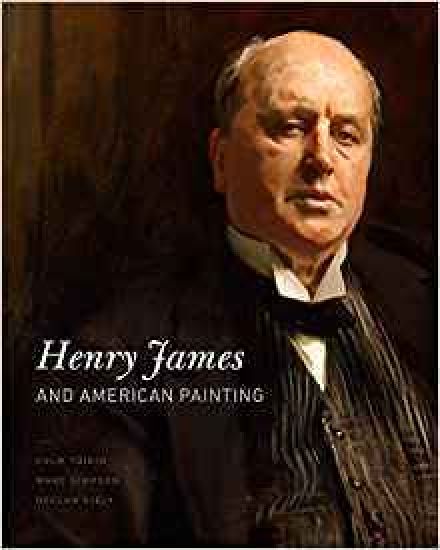
Depicting characters like the eponymous young sculptor in Roderick Hudson and spaces like the crowded galleries in The Wings of the Dove, Henry James’s iconic novels reflect the significance of the visual culture of his society. In this book, novelist and critic Colm Tóibín joins art historian Marc Simpson and Declan Kiely of The Morgan Library & Museum to reveal how essential the language and imagery of the arts—and friendships with artists—were to James’s writing.The authors consider the paintings, photographs, drawings, and sculpture produced by artists in James’s circle, assess how his pictorial aesthetic developed, and discuss why he destroyed so many personal documents and what became of those that survived. In examining works by figures such as John La Farge, Hendrik Andersen, and John Singer Sargent alongside selections from James’s novels, personal letters, and travel writings, Tóibín, Simpson, and Kiely explore the novelist’s artistic and social milieu. They show him to be a writer with a painterly eye for colors and textures, shapes and tastes, and for the blending of physical and psychological impressions. In many cases, the characters populating James’s fiction are ciphers for his artist friends, whose demeanors and experiences inspired James to immortalize them on the page. He also wrote critically about art, most notably about the work of his friend Sargent.A refreshing new perspective on a master novelist who was greatly nourished by his friendships with artists, Henry James and American Painting reveals a James whose literary imagination, in Tóibín’s words, “seemed most at ease with the image” and the work of creating fully realized portraits of his characters.
Henry Vaughan

Henry Vaughan

Henry Vaughan

SPCK Publishing
2004
nidottu
Henry Vaughan (1621-1695) was a 'cavalier' poet who sided with the king during the civil war. His influences included George Herbert and this volume is the fifth in a series on seventeenth century spiritual writing.
Henry Bumstead and the World of Hollywood Art Direction

Henry Bumstead and the World of Hollywood Art Direction

Andrew Horton

University of Texas Press
2003
pokkari
From a hotel in Marrakech in The Man Who Knew Too Much, to small-town Alabama in To Kill a Mockingbird, to Mission Control in Space Cowboys, creating a fictional, yet wholly believable world in which to film a movie has been the passion and life's work of Henry Bumstead, one of Hollywood's most celebrated production designers. In a career that has spanned nearly seventy years, Bumstead has worked on more than one hundred movies and television films. His many honors include Academy Awards for Art Direction for To Kill a Mockingbird and The Sting, as well as nominations for Vertigo and The Unforgiven. This popularly written and extensively illustrated book tells the intertwining stories of Henry Bumstead's career and the evolution of Hollywood art direction. Andrew Horton combines his analysis of Bumstead's design work with wide-ranging interviews in which Bumstead talks about working with top directors, including Alfred Hitchcock, George Roy Hill, Robert Mulligan, and Clint Eastwood, as well as such stars as Paul Newman, Robert Redford, Doris Day, Jimmy Stewart, Sidney Poitier, Bill Cosby, Jerry Lewis, and James Cagney. Numerous production drawings, storyboards, and film stills illustrate how Bumstead's designs translated to film. This portrait of Bumstead's career underscores an art director's crucial role in shaping the look of a film and also tracks the changes in production design from the studio era through location shooting to today's use of high-tech special effects.
Henry J. Kaiser

Henry J. Kaiser

Mark S. Foster

University of Texas Press
1989
pokkari
In the 1940s Henry J. Kaiser was a household name, as familiar then as Warren Buffett and Donald Trump are now. Like a Horatio Alger hero, Kaiser rose from lower-middle-class origins to become an enormously wealthy entrepreneur, building roads, bridges, dams, and housing. He established giant businesses in cement, aluminum, chemicals, steel, health care, and tourism. During World War II, his companies built cargo planes and Liberty ships. After the war, he manufactured the Kaiser-Frazer automobile. Along the way, he also became a major force in the development of the western United States, including Hawaii.Henry J. Kaiser: Builder in the Modern American West is the first biography of this remarkable man. Drawing on a wealth of archival material never before utilized, Mark Foster paints an evenhanded portrait of a man of driving ambition and integrity, perhaps the ultimate "can-do" capitalist. He covers Kaiser's entire life (1882–1967), emphasizing many business ventures. He demonstrates that Kaiser was the prototypical "frontier" entrepreneur who often used government and union support to tame the "wilderness."Though today the Kaiser industries are no longer under family management, the Kaiser legacy remains great. Kaiser played a major role in building the Hoover, Bonneville, Grand Coulee, and Shasta dams. The Kaiser-Permanente Medical Care Program still provides comprehensive health care for millions of subscribers. Kaiser-planned communities remain in Los Angeles; San Francisco; Portland, Oregon; and Boulder City, Nevada. Kaiser Engineers was actively engaged in hundreds of huge construction jobs across the nation and around the world.U.S. and business historians, scholars of the modern West, and general readers will all find much to absorb them in this well-written biography.
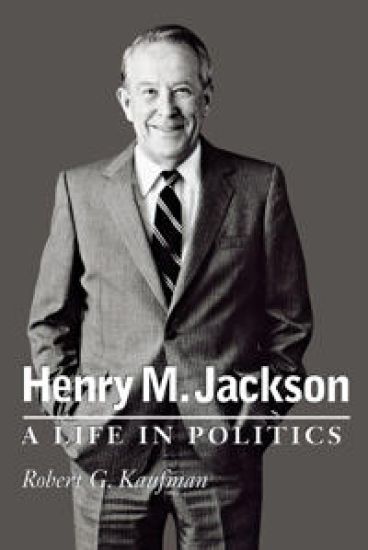
Henry M. Jackson

Henry M. Jackson

Robert G. Kaufman

University of Washington Press
2015
pokkari
Henry M. Jackson ranks as one of the great legislators in American history. With a Congressional career spanning the tenure of nine Presidents, Jackson had an enormous impact on the most crucial foreign policy and defense issues of the Cold War era, as well as a marked impact on energy policy, civil rights, and other watershed issues in domestic politics.Jackson first arrived in Washington, D.C., in January 1941 as the Democratic representative of the Second District of Washington State, at the age of 28 the youngest member of Congress. “Scoop” Jackson won reelection time and again by wide margins, moving to the Senate in 1953 and serving there until his death in 1983. He became a powerful voice in U.S. foreign policy and a leading influence in major domestic legislation, especially concerning natural resources, energy, and the environment, working effectively with Senator Warren Magnuson to bring considerable federal investment to Washington State.A standard bearer for the New Deal-Fair Deal tradition of Roosevelt and Truman, Jackson advocated a strong role for the federal government in the economy, health care, and civil rights. He was a firm believer in public control of electric and nuclear power, and leveled stern criticism at the oil industry’s “obscene profits” during the energy crisis of the 1970s. He ran for the presidency twice, in 1972 and 1976, but was defeated for the nomination first by George McGovern and then by Jimmy Carter, marking the beginning of a split between dovish and hawkish liberal Democrats that would not be mended until the ascendance of Bill Clinton.Jackson’s vision concerning America’s Cold War objectives owed much to Harry Truman’s approach to world affairs but, ironically, found its best manifestation in the actions taken by the Republican administration of Ronald Reagan. An early and strong supporter of Israel and of Soviet dissidents, he strongly opposed the Nixon/Kissinger policy of detente as well as many of Carter’s methods of dealing with the Soviet Union.Robert Kaufman has immersed himself in the life and times of Jackson, poring over the more than 1,500 boxes of written materials and tapes that make up the Jackson Papers housed at the University of Washington, as well as the collections of every presidential library from Kennedy through Reagan. He interviewed many people who knew Jackson, both friends and rivals, and consulted other archival materials and published sources dealing with Jackson, relevant U.S. political history and commentary, arms negotiation documents, and congressional reports. He uses this wealth of material to present a thoughtful and encompassing picture of the ideas and policies that shaped America’s Cold War philosophy and actions.
Henry M. Jackson

Henry M. Jackson

Robert G. Kaufman

University of Washington Press
2015
sidottu
Henry M. Jackson ranks as one of the great legislators in American history. With a Congressional career spanning the tenure of nine Presidents, Jackson had an enormous impact on the most crucial foreign policy and defense issues of the Cold War era, as well as a marked impact on energy policy, civil rights, and other watershed issues in domestic politics.Jackson first arrived in Washington, D.C., in January 1941 as the Democratic representative of the Second District of Washington State, at the age of 28 the youngest member of Congress. "Scoop" Jackson won reelection time and again by wide margins, moving to the Senate in 1953 and serving there until his death in 1983. He became a powerful voice in U.S. foreign policy and a leading influence in major domestic legislation, especially concerning natural resources, energy, and the environment, working effectively with Senator Warren Magnuson to bring considerable federal investment to Washington State.A standard bearer for the New Deal-Fair Deal tradition of Roosevelt and Truman, Jackson advocated a strong role for the federal government in the economy, health care, and civil rights. He was a firm believer in public control of electric and nuclear power, and leveled stern criticism at the oil industry's "obscene profits" during the energy crisis of the 1970s. He ran for the presidency twice, in 1972 and 1976, but was defeated for the nomination first by George McGovern and then by Jimmy Carter, marking the beginning of a split between dovish and hawkish liberal Democrats that would not be mended until the ascendance of Bill Clinton.Jackson's vision concerning America's Cold War objectives owed much to Harry Truman's approach to world affairs but, ironically, found its best manifestation in the actions taken by the Republican administration of Ronald Reagan. An early and strong supporter of Israel and of Soviet dissidents, he strongly opposed the Nixon/Kissinger policy of detente as well as many of Carter's methods of dealing with the Soviet Union.Robert Kaufman has immersed himself in the life and times of Jackson, poring over the more than 1,500 boxes of written materials and tapes that make up the Jackson Papers housed at the University of Washington, as well as the collections of every presidential library from Kennedy through Reagan. He interviewed many people who knew Jackson, both friends and rivals, and consulted other archival materials and published sources dealing with Jackson, relevant U.S. political history and commentary, arms negotiation documents, and congressional reports. He uses this wealth of material to present a thoughtful and encompassing picture of the ideas and policies that shaped America's Cold War philosophy and actions.
Henry James' American Girl

Henry James' American Girl

Virginia C. Fowler

University of Wisconsin Press
1984
sidottu
The figure of the American girl is one that surfaces regularly in Henry James s fiction. Most prominent in the international novels, where the compelling portrait of an Isabel Archer or a Maggie Verver commands attention. James s girl is a complex character eager for experience yet crippled by fear, hungry for selfhood yet tragically incapable of achieving it. In this lucid exploration of James s young women, Professor Fowler examines the psychology, literary function, and cultural roots of the American girl. The result is a new perspective on James s fiction and a reassessment of his views on feminine identity, sexual relations, and American culture that will be of interest and value to all students of American literature, women s studies, and Henry James."
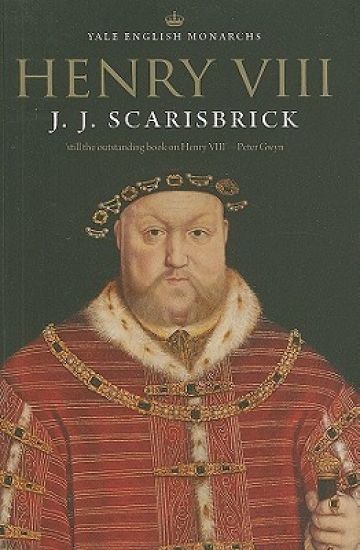
Henry VIII

Henry VIII

J. J. Scarisbrick

Yale University Press
2011
pokkari
Henry VIII's forceful personality dominated his age and continues to fascinate our own. In few other reigns have there been developments of such magnitude—in politics, foreign relations, religion, and society—that have so radically affected succeeding generations. Above all the English Reformation and the break with Rome are still felt more than four centuries on. First published in 1968, J. J. Scarisbrick's Henry VIII remains the standard account, a thorough exploration of the documentary sources, stylishly written and highly readable. In an updated foreword, Professor Scarisbrick takes stock of subsequent research and places his classic account within the context of recent publications. "It is the magisterial quality of J.J. Scarisbrick's work that has enabled it to hold the field for so long."—Steve Gunn, Times Literary Supplement
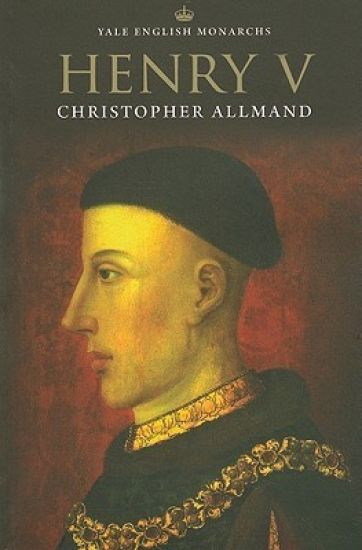
Henry V

Henry V

Christopher Allmand

Yale University Press
2011
pokkari
Thanks in part to Shakespeare, Henry V is one of England's best-known monarchs. The image of the king leading his army against the French, and the great victory at Agincourt, are part of English historical tradition. Yet, though indeed a soldier of exceptional skill, Henry V's reputation needs to be seen against a broader background of achievement. This sweepingly majestic book is based on the full range of primary sources and sets the reign in its full European context. Christopher Allmand shows that Henry V not only united the country in war but also provided domestic security, solid government, and a much needed sense of national pride. The book includes an updated foreword which takes stock of more recent publications in the field. "A far more rounded picture of Henry as a ruler than any previous study."--G.L. Harris, The Times
Henry VII

Henry VII

S. B. Chrimes

Yale University Press
1999
pokkari
Founder of the Tudor dynasty, Henry VII was a crucial figure in English history. In this acclaimed study of the king’s life and reign, the distinguished historian S. B. Chrimes explores the circumstances surrounding Henry’s acquisition of the throne, examines the personnel and machinery of government, and surveys the king’s social, political, and economic policies, law enforcement, and foreign strategy. This edition of the book includes a new critical introduction and bibliographical updating by George Bernard.
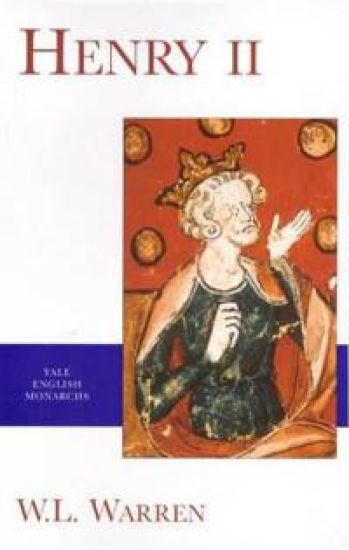
Henry II

Henry II

W.L. Warren

Yale University Press
2000
pokkari
Henry II (1133-1189) was an enigma in his own time and has continued to excite widely divergent judgments ever since. His quarrel with Archbishop Becket, his troubled relationships with his sons and with his wife, Eleanor of Aquitaine, and other dramatic incidents of his reign present rich material for historical novelists, playwrights, and filmmakers, but with no unanimity of interpretation. This masterful biography provides a comprehensive reappraisal of Henry II, the man and king. W. L. Warren explores a full range of contemporary sources to illuminate the king’s policy and personality as well as the events of his reign.Henry II’s greatness as a king is not in doubt. From an early age he impressed his will on a turbulent realm and established new standards of law and order in seemingly ungovernable territories. He fought and won the first great war over the balance of power in western Europe, laid the foundations for the growth of English Common Law and of royal administration, and destroyed the possibility that the realm might disintegrate into feudal principalities. Warren focuses on the actions of the king and, while not underrating the importance of the famous crises of Henry’s reign, gives equal attention to incidents that are little-known but equally revealing.
Henry VI

Henry VI

Bertram Wolffe

Yale University Press
2001
pokkari
In this widely acclaimed biography, Bertram Wolffe challenges the traditional view of Henry VI as an unworldly, innocent, and saintly monarch and offers instead a finely drawn but critical portrait of an ineffectual ruler. Drawing on widespread contemporary evidence, Wolffe describes the failures of Henry’s long reign from 1422 to 1471, which included the collapse of justice, the loss of the French territories, and the final disintegration of his government. He argues that the posthumous cult of Henry was promoted by Henry VII as a way of excusing his uncle’s political failures while enhancing the image of the dynasty. This edition includes a new foreword by John Watts that discusses the book and its place in the evolving literature.Reviews of the earlier edition: “A brilliant biography that brings us as near as we are ever likely to come to this elusive personality.” —Sunday Times (London) “A powerful, compulsively readable portrait.” —Observer “Much learning, skillfully deployed as here, evokes pleasure as well as admiration.” —R.L. Storey, Times Literary Supplement
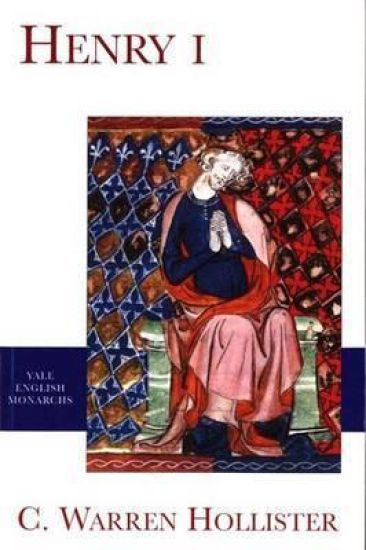
Henry I

Henry I

C. Warren Hollister

Yale University Press
2003
pokkari
Henry I, son of William the Conqueror, ruled from 1100 to 1135, a time of fundamental change in the Anglo-Norman world. This long-awaited biography, written by one of the most distinguished medievalists of his generation, offers a major reassessment of Henry’s character and reign. Challenging the dark and dated portrait of the king as brutal, greedy, and repressive, it argues instead that Henry’s rule was based on reason and order. C. Warren Hollister points out that Henry laid the foundations for judicial and financial institutions usually attributed to his grandson, Henry II. Royal government was centralized and systematized, leading to firm, stable, and peaceful rule for his subjects in both England and Normandy. By mid-reign Henry I was the most powerful king in Western Europe, and with astute diplomacy, an intelligence network, and strategic marriages of his children (legitimate and illegitimate), he was able to undermine the various coalitions mounted against him. Henry strove throughout his reign to solidify the Anglo-Norman dynasty, and his marriage linked the Normans to the Old English line.Hollister vividly describes Henry’s life and reign, places them against the political background of the time, and provides analytical studies of the king and his magnates, the royal administration, and relations between king and church. The resulting volume is one that will be welcomed by students and general readers alike.
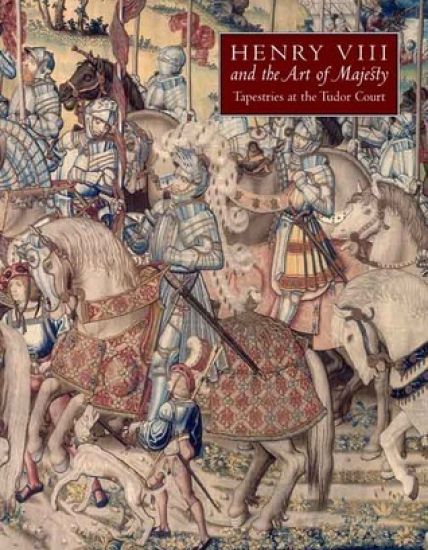
Henry VIII and the Art of Majesty

Henry VIII and the Art of Majesty

Thomas P. Campbell

Yale University Press
2007
sidottu
Luxurious, beautiful, and portable, tapestry was the pre-eminent art form of the Tudor court. Henry VIII amassed an unrivaled collection over the course of his reign, and the author weaves the history of this magnificent collection into the life of its owner with an engaging narrative style. Now largely dispersed or destroyed, Henry’s extensive inventory is here reassembled and reveals how, through tapestry, Henry identified himself with historic, religious, and mythological figures, putting England in dialogue—and competition—with the leading courts of Early Modern Europe while promoting his own religious and political agendas at home. Campbell’s original account sheds new light on Tudor political and artistic culture and the court’s response to Renaissance aesthetic ideals. Sumptuously illustrated with newly commissioned photographs, this stunning re-creation of Europe’s greatest tapestry collection challenges the predominantly text-driven histories of the period and offers a fascinating new perspective on the life of Henry VIII.Published for the Paul Mellon Centre for Studies in British Art