Kirjahaku
Etsi kirjoja tekijän nimen, kirjan nimen tai ISBN:n perusteella.
1000 tulosta hakusanalla Herman Bisbee
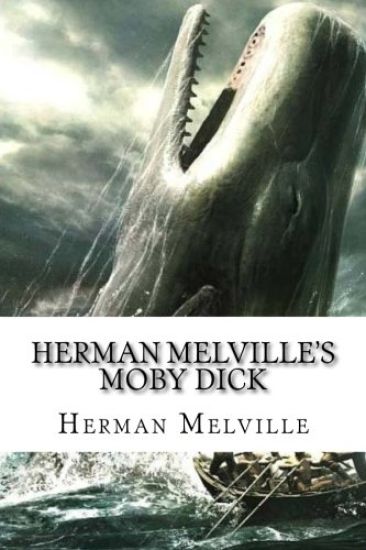
Herman Melville's Moby Dick
Herman Melville
Createspace Independent Publishing Platform
2017
pokkari
A masterful adaptation of the timeless literary classic, faithfully and beautifully rendered by an award-winning artist. In striking black-and-white illustrations, Chabout retells the story of the Great American Novel. Captain Ahab strikes out on a voyage, obsessively seeking revenge on the great white whale that took his leg. This hardcover edition collects both of the Vents d'Ouest volumes, printed in English for the first time.
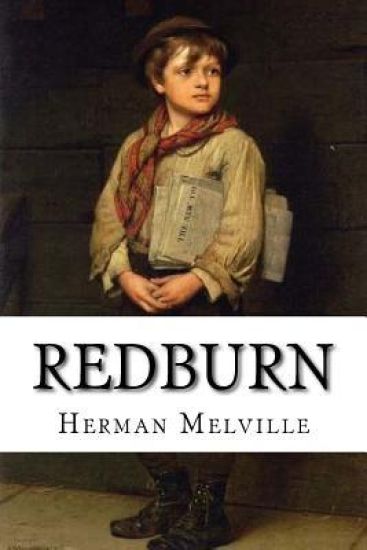
Wellington Redburn is a fifteen-year-old from the state of New York, with only one dream - to run away to sea. However, when he does fulfil this long-held fantasy, he quickly finds that reality as a cabin boy is far harsher than he ever imagined. Mocked by the crew on board the Highlander for his weakness and bullied by the vicious and merciless sailor Jackson, Wellington must struggle to endure the long journey from New York to Liverpool. But when he does reach England, he is equally horrified by what he finds there: poverty, desperation and moral corruption. Inspired by Melville's own youthful experiences on board a cargo boat, this is a compelling tale of innocence transformed, through bitter experience, into disillusionment. A fascinating sea journal and coming-of-age tale, Redburn provides a unique insight into the mind of one of America's greatest novelists.
The Confidence-Man: His Masquerade (1857) by: Herman Melville. ( NOVEL )
Herman Melville
Createspace Independent Publishing Platform
2017
nidottu
Battle-Pieces and Aspects of the War, (1866). By: Herman Melville: Poetry
Herman Melville
Createspace Independent Publishing Platform
2017
nidottu
Herman Melville, best novels
Herman Melville
Createspace Independent Publishing Platform
2017
nidottu
Herman Melville (1819 - 1891) was an American novelist, poet, and writer of short stories. His contributions to the Western canon are the whaling novel Moby-Dick (1851); the short work Bartleby, the Scrivener (1853) about a clerk in a Wall Street office; the slave ship narrative Benito Cereno (1855); and Billy Budd, Sailor (1924). When asked which of the great American writers he most admired, Vladimir Nabokov replied: "When I was young I liked Poe, and I still love Melville, whom I did not read as a boy." Around his twentieth year he was a schoolteacher for a short time, then became a seaman when his father met business reversals. On his first voyage he jumped ship in the Marquesas Islands, where he lived for a time. His first book, an account of that time, Typee, became a bestseller and Melville became known as the "man who lived among the cannibals". After Omoo, the sequel to his first book, Melville began to work philosophical issues in his third book, the elaborate Mardi (1849). The public indifference to Moby-Dick (1851), and Pierre (1852), put an end to his career as a popular author. From 1853 to 1856 he wrote short fiction for magazines, collected as The Piazza Tales (1856). In this book: Moby Dick Bartleby Typee
Bulldog Drummond (1920) by: Herman Cyril McNeile
Herman Cyril McNeile
Createspace Independent Publishing Platform
2017
nidottu
Hugh "Bulldog" Drummond is a British fictional character, created by H. C. McNeile and published under his pen name "Sapper". Following McNeile's death in 1937, the novels were continued by Gerard Fairlie and later Henry Reymond.The Bulldog Drummond stories of H. C. McNeile follow Captain Hugh "Bulldog" Drummond, DSO, MC. Drummond is a member of "the Breed", a class of Englishman who were patriotic, loyal and "physically and morally intrepid". Drummond is a wealthy gentleman, formerly an officer in the fictional "Royal Loamshire Regiment", who, after the First World War, spends his new-found leisure time looking for adventure. McNeile first wrote the Drummond character as a detective for a short story in The Strand Magazine, but the portrayal was not successful and was changed for the novel Bull-dog Drummond, which was a thriller. a] The character was an amalgam of McNeile's friend Gerard Fairlie, and his idea of an English gentleman, although writer J.D. Bourn disputes Fairlie's claim to be a model for the character, noting that "he was still at school when Sapper created his ... hero
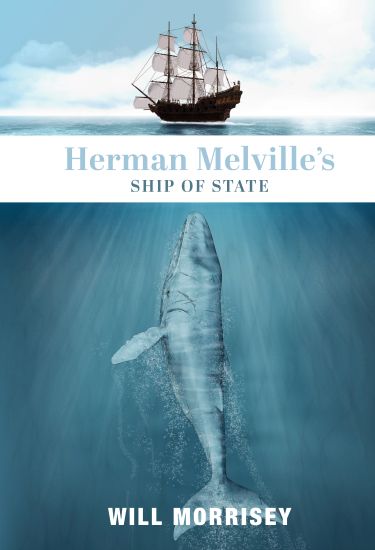
William Morrisey unravels Melville’s “loomings” of the great whale, showing them to be important threads of politics and theories of governance. The Young America of Melville’s day valorized popular sovereignty such that moral law suppressed by the majority rule was bringing America to state of being that could only then be ruled by the mightiest of the mighty––the great Leviathan, who reigns in the boundless chaotic sea separated from “stable land.” The force of the created world and the necessary ordering achieved through conquest are dominating themes of Melville’s great tale, but as Morrisey observes approaching the great whale, ruler of the untamable seas, is for captain (ruler) an opportunity to destroy it. But for the sailor (the ruled) being close to the white whale is a moment for understanding, and in turn of being understood. Yet in what sense is being seen, for human beings of moral bearings, not also an impulse to self-impose? “The modern Ishmael wants to see, not to kill, perhaps to be seen, and surely not to be killed. Americans too need to come to terms with the white whale, if they are to perceive reality as it is without bringing destruction upon themselves.” Is Melville proposing an utterly new philosophy of ruler and ruled, of a proper gauge of the immeasurable chaos that is nature? “Does Melville also intend to be a founder in the ‘New World’?” Morrisey’s study is a compelling look at the early political moments of a new nation, but one that at the time perceived itself as already aging and maturing in the process of political voyage and adventure. Dangers lie ahead, Melville seems to warn, and in his disenchantment of the vigor of the Young America he once endorsed he tells the story of what really happens when democracy is idealized and the surrounding waters of chaos are thereby veiled; and yet also of what happens when one would seek to command the chaos only to transform into the unpredictably destructive prey he pursues, especially under the guise of moral outrage. Melville, like Ishmael, urges a new vision of both God and nature, and challenges the notion of rule in all its expressions. Americans, the people of the New World, are invited to be unafraid, but also careful. In wandering as on the open waters one wonders, beyond civic boundaries and conventions, and in that wonder one may finally come face to face with what is good and grand––but in beholding the great white whale, can one resist the urge to conquest, now that he is likewise by the leviathan beholden? Is the rule of man and the coronation of a specific dialectic of power an untenable victory, given that “‘Nature is nobody’s ally’: it wounds or kills any person or nation that violates it, impartially”? Morrisey writes with lucidity and weaves together elements of history, literature, politics and perhaps his own affinity for Ishmael’s passenger spirit to reveal just how broad and boundless of a narrative Melville’s Moby Dick truly is.
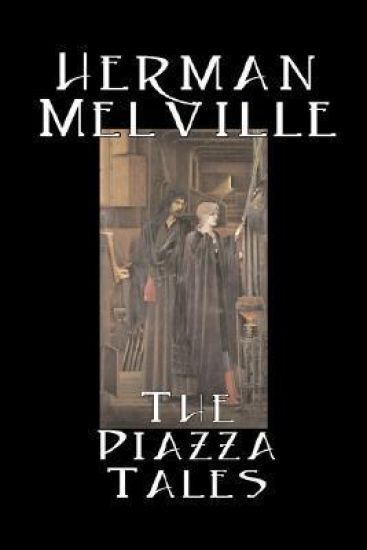
The Piazza Tales by Herman Melville, Fiction, Classics, Literary
Herman Melville
Aegypan
2007
pokkari
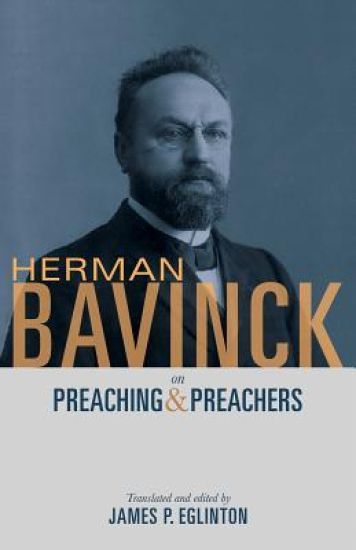
Herman Bavinck on Preaching and Preachers
Hendrickson Publishers Inc
2017
pokkari
Dutch theologian Herman Bavinck (1854-1921) is widely celebrated as one of the most eloquent divines in the Reformed tradition. And yet there is a curious gap between Bavinck the theologian and the preachers who read him in the present day. How Bavinck preached, or what and how he thought about the act of preaching, are largely unknown. The largest barrier is that his writings on preaching were previously untranslated-until now. Herman Bavinck on Preaching & Preachers is a welcome translation from Dutch of Bavinck's thoughts on preaching and preachers, and includes one of his only written sermons.For Bavinck, the sermon was the most important part of the worship service, and the preaching of the word is the decisive mark of the church. He believed that the preacher must be a student of the word, search it in all its riches and depth, in its unity and diversity. Translator and editor James Eglinton describes this book as a "useful and very interesting text on how to preach theology" and a "message that sorely needs to be heard if pulpits during our own time are to improve." This is the first time this book is in print. Herman Bavinck on Preaching & Preachers has never been published before in either Dutch or English.
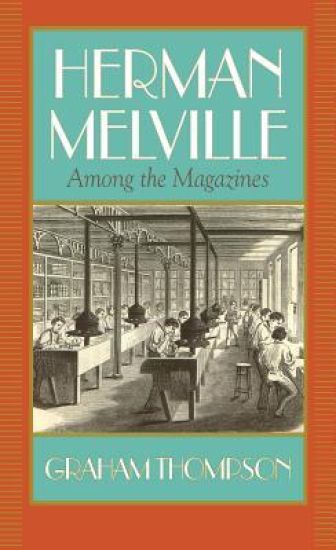
What I feel most moved to write, that is banned, - it will not pay. Yet, altogether, write the other way I cannot."" Herman Melville wrote these words as he struggled to survive as a failing novelist. Between 1853 and 1856, he did write ""the other way,"" working exclusively for magazines. He earned more money from his stories than from the combined sales of his most well known novels, Moby-Dick, Pierre, and The Confidence-Man.In Herman Melville Graham Thompson examines the author's magazine work in its original publication context, including stories that became classics, such as ""Bartelby, the Scrivener"" and ""Benito Cereno,"" alongside lesser-known work. Using a concept he calls ""embedded authorship,"" Thompson explores what it meant to be a magazine writer in the 1850s and discovers a new Melville enmeshed with forgotten materials, editors, writers, and literary traditions. He reveals how Melville responded to the practical demands of magazine writing with dazzling displays of innovation that reinvented magazine traditions and helped create the modern short story.

The Bullying Stops Here - Adventures of Little Herman
Herman J Woodfork
Total Publishing and Media
2023
sidottu
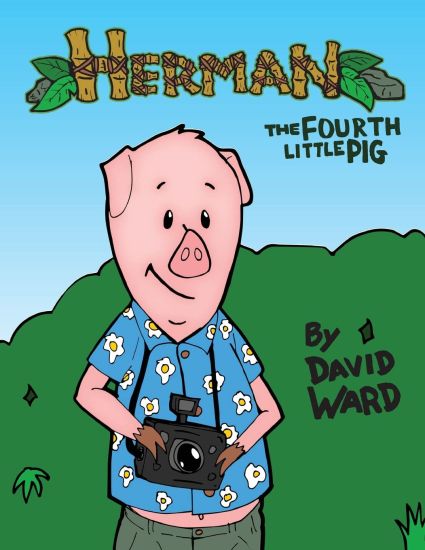
HERMAN, THE FOURTH LITTLE PIG tells the tale of the previously unknown 4th Little Pig. Herman escapes the Big Bad Wolf and runs to the coast, where he takes a sailboat to a tropical island. He first builds a small shelter out of palm tree leaves, but it gets destroyed by a storm. He then builds one from bamboo, but it also gets destroyed by a storm. Finally he discovers a cave on the island, and survives the biggest storm yet. A new spin on a classic tale of trial and error.
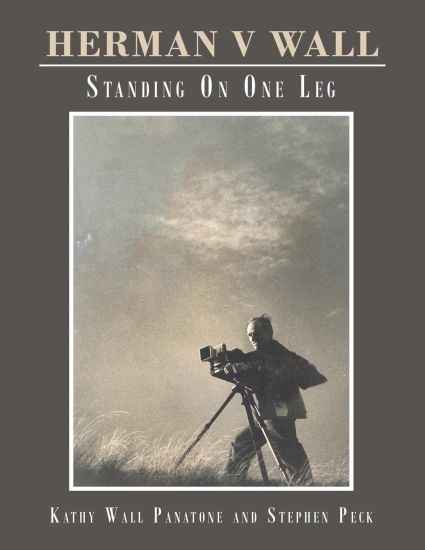
In a career spanning six decades, Herman V Wall was recognized for his photographic skills as one of the best of the 20th century. There is something essential and compelling in his photos, whether the renowned D-Day landing pictures (the first to be seen by the American public) or the delicacy of his signature flower photographs. He perfected a blending of artistic intuition with the technical skills required for award-winning images. Thanks to the persistence of his wife, Ruth Hawks Wall, and his daughter, Katherine Wall Panatone, a unique archive of photos, correspondence, awards, and genealogical details have been preserved. Over one hundred of these items are published in this book, many for the first time.
In a career spanning six decades, Herman V Wall was recognized for his photographic skills as one of the best of the 20th century. There is something essential and compelling in his photos, whether the renowned D-Day landing pictures (the first to be seen by the American public) or the delicacy of his signature flower photographs. He perfected a blending of artistic intuition with the technical skills required for award-winning images. Thanks to the persistence of his wife, Ruth Hawks Wall, and his daughter, Katherine Wall Panatone, a unique archive of photos, correspondence, awards, and genealogical details have been preserved. Over one hundred of these items are published in this book, many for the first time.

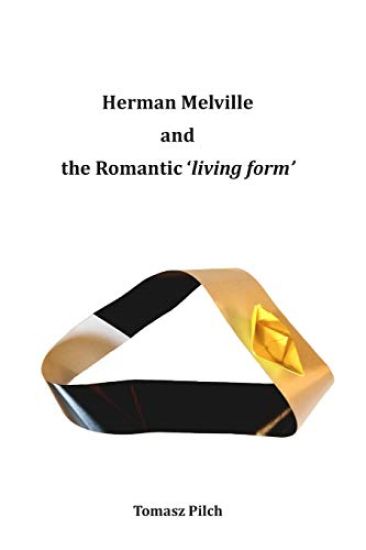
Herman Melville and the Romantic Living Form is an attempt to re-open the discussion on the identity of Herman Melville's experimental novels, i.e. Mardi, Moby-Dick, Pierre, and The Confidence-Man. Since the beginning of their existence, they have constituted a problem for critics and literary historians because they combine a range of intriguing ideas with a form that has ever defied efforts to classify it on the basis of the existing concepts of literary communication both contemporary to its author and later. An interesting proposition apparently offering a way out of the deadlock is the hypothesis put forth by Denise Gigante in her Life. Organic Form and Romanticism suggesting that a number of Romantic literary works, whose structures deviate significantly from the traditional concepts of a union between form and subject matter may have been an effect of efforts to realize the Romantic idea of organicity in literary practice. Gigante points out the fact that the complex of intuitions brought to the discourse by the concept of organicity should not be restricted to the popular image of a static shape characterized by a harmonious interdependence of component parts and their unification in the structure of the whole. The metaphor also endorses intuiting the origination of the work as a process of mysterious self-shaped growing. A literary practice founded upon such principles would naturally be liberated from the dictate of both the author's preconceptions and intentions permitting the work to apparently germinate like a plant giving its identity away only after a series of transmutations, at the very end. When approached from that angle, Melville's novels reveal a consistent practice of following the free-flowing intuition driven by the author's philosophical compulsions, turning writing into exploration, and the narratives into instruments of intellectual investigation. This novel viewpoint on the well-known structures opens a range of fresh avenues into Melville's artistic concerns and ambitions, and suggests previously-unexplored interpretations of his seeming flaws and irregularities. Last but not least, the Romantic epigenesist poetics reconstructed by Denise Gigante may prove a valuable instrument of critical analysis even beyond the times that brought it about - for example, it is quite likely that many Post-Modernism aficionados might find it rewarding if they take the trouble to juxtapose e.g. Melville's Mardi with Thomas Pynchon's Gravity's Rainbow or Joseph Heller's Catch-22.
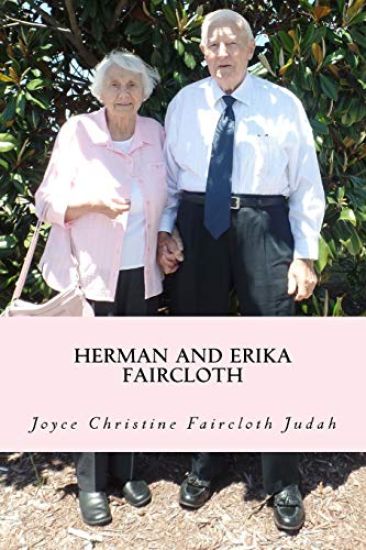
Herman and Erika Faircloth: The Early Years
J. Christy Judah M. Ed
Createspace Independent Publishing Platform
2018
nidottu
It was a union meant to be with Erika from the Polish village and Herman from Fayetteville, NC, USA. Their paths crossed and the lineage began. The World War II Years and the Korean War Years presented many challenges but Herman R. Faircloth and Erika Else Kreisler fought through the barriers which threatened to keep them apart. This is the way it was...