Moby-Dick; or, The Whale is a novel by American writer Herman Melville, published in 1851 during the period of the American Renaissance. Sailor Ishmael tells the story of the obsessive quest of Ahab, captain of the whaler the Pequod, for revenge on Moby Dick, the white whale that on the previous whaling voyage bit off Ahab's leg at the knee. The novel was a commercial failure and out of print at the time of the author's death in 1891, but during the 20th century, its reputation as a Great American Novel was established. William Faulkner confessed he wished he had written it himself, and D. H. Lawrence called it "one of the strangest and most wonderful books in the world", and "the greatest book of the sea ever written". "Call me Ishmael" is among world literature's most famous opening sentences. 3] The product of a year and a half of writing, the book draws on Melville's experience at sea, on his reading in whaling literature, and on literary inspirations such as Shakespeare and the Bible. The white whale is modeled on the notoriously hard to catch actual albino whale Mocha Dick, and the ending is based on the sinking of the whaler Essex by a whale. The detailed and realistic descriptions of whale hunting and of extracting whale oil, as well as life aboard ship among a culturally diverse crew, are mixed with exploration of class and social status, good and evil, and the existence of God. In addition to narrative prose, Melville uses styles and literary devices ranging from songs, poetry, and catalogs to Shakespearean stage directions, soliloquies, and asides.
Typee: A Peep at Polynesian Life is the first book by American writer Herman Melville, published first in London, then New York, in 1846. Considered a classic in travel and adventure literature, the narrative is partly based on the author's actual experiences on the island Nuku Hiva in the South Pacific Marquesas Islands in 1842, liberally supplemented with imaginative reconstruction and adaptation of material from other books. The title is from the province Tai Pi Vai. Typee was Melville's most popular work during his lifetime; it made him notorious as the "man who lived among the cannibals Typee is "in fact, neither literal autobiography nor pure fiction". Melville "drew his material from his experiences, from his imagination, and from a variety of travel books when the memory of his experiences were inadequate." He departed from what actually happened in several ways, sometimes by extending factual incidents, sometimes by fabricating them, and sometimes by what one scholar calls "outright lies".
Redburn: His First Voyage is the fourth book by the American writer Herman Melville, first published in London in 1849. The book is semi-autobiographical and recounts the adventures of a refined youth among coarse and brutal sailors and the seedier areas of Liverpool. Melville wrote Redburn in less than ten weeks. While one scholar describes it as "arguably his funniest work," scholar F.O. Matthiessen calls it "the most moving of its author's books before Moby-Dick".Unable to find employment at home, young Wellingborough Redburn signs on the Highlander, a merchantman out of New York City bound for Liverpool, England. Representing himself as the "son of a gentleman" and expecting to be treated as such, he discovers that he is just a green hand, a "boy", the lowest rank on the ship, assigned all the duties no other sailor wants, like cleaning out the "pig-pen", a longboat that serves as a shipboard sty.
The narrator, an elderly lawyer who has a very comfortable business helping wealthy men deal with mortgages, title deeds, and bonds, relates the story of the strangest man he has ever known. The narrator already employs two scriveners, Nippers and Turkey. Nippers suffers from chronic indigestion, and Turkey is a drunk, but the office survives because in the mornings Turkey is sober even though Nippers is irritable, and in the afternoon Nippers has calmed down even though Turkey is drunk.
The Piazza Tales is a collection of six short stories by American writer Herman Melville, published by Dix & Edwards in the United States in May 1856 and in Britain in June. Except for the newly written title story, "The Piazza," all of the stories had appeared in Putnam's Monthly in 1853-1855. The collection includes what has long been regarded as the author's three most important achievements in the genre of short fiction, "Bartleby, the Scrivener", "Benito Cereno", and "The Encantadas", his sketches of the Galapagos Islands. Melville had originally intended to entitle the volume Benito Cereno and Other Sketches, but settled on the definitive title after he had written the introductory story. The book received largely favorable reviews, with reviewers especially praising "The Encantadas".but did not sell well enough to get Melville out of his financial straits, probably because short fiction for magazines had little appeal to bookbuyers. After Melville was rediscovered until the end of the twentieth century, the short works attracting the most critical attention were "Bartleby," "Benito Cereno" and "The Encantadas," with "The Piazza" a little behind those.In addition to the five stories, Melville wrote an introductory story for which the volume was titled. Scholar Douglas Robillard believes that this served the purpose of making the stories to appear "more closely joined than they actually are." The contract for the book was signed on 17 March 1856, it was advertised on 5 April as "in press" and should have been available by 15 May--though a copy was deposited for copyright on May 20. The volume was printed by Miller & Holman, Printers and Stereotypers, of New York, as a duodecimo volume of 431 pages, excluding seven pages of advertisements for other product by the same publishers.Biographer Parker observes that to reach that number of pages the book was padded out by leaving excessive white space. The front and back covers were ornamented by a border of rules and rosettes. The spine displayed the title, names of author and publishers stamped in gold, and the volume was priced at $1.00. In June the book was advertised together with another as "TWO GOOD SUMMER BOOKS". In 1922, three years after the centennial of Melville's birth, the first reissue of the collection appeared as part of the Constable collected edition."The Lightning-Rod Man" was chosen for inclusion in William Evans Burton's of Wit and Humor of 1857, with an illustration by Henry Louis Stephens. No other original illustration for one of his works appeared during Melville's lifetime. "The Lightning-Rod Man" the one Melville tale to be available throughout his lifetime.... Herman Melville (August 1, 1819 - September 28, 1891) was an American novelist, short story writer, and poet of the American Renaissance period. His best known works include Typee (1846), a romantic account of his experiences in Polynesian life, and his whaling novel Moby-Dick (1851). His work was almost forgotten during his last thirty years. His writing draws on his experience at sea as a common sailor, exploration of literature and philosophy, and engagement in the contradictions of American society in a period of rapid change. He developed a complex, baroque style: the vocabulary is rich and original, a strong sense of rhythm infuses the elaborate sentences, the imagery is often mystical or ironic, and the abundance of allusion extends to Scripture, myth, philosophy, literature, and the visual arts. Born in New York City as the third child of a merchant in French dry goods, Melville's formal education ended abruptly after his father died in 1832, leaving the family in financial straits. Melville briefly became a schoolteacher before he took to sea in 1839 as a common sailor on a merchant ship. In 1840 he signed aboard the whaler Acushnet for his first whaling voyage, but jumped ship in the Marquesas Islands.
Israel Potter: His Fifty Years of Exile is the eighth book by American writer Herman Melville, first published in serial form in Putnam's Monthly magazine between July 1854 and March 1855, and in book form by G. P. Putnam & Co. in March 1855. A pirated edition was also published in London by George Routledge in May 1855. The book is loosely based on a pamphlet (108-page) autobiography that Melville acquired in the 1840s, Life and Remarkable Adventures of Israel R. Potter (Providence, Rhode Island, 1824). Plot: When Israel Potter leaves his plow to fight in the American Revolution, he's immediately thrown into the Battle of Bunker Hill, where he receives multiple wounds. However, this does not deter him, and after hearing a rousing speech by General George Washington, he volunteers for further duty, this time at sea, where more ill fortune awaits him. Israel is captured by the British Navy and taken to England. Yet, he makes his escape, and this triggers a series of extraordinary events and meetings with remarkable people. Along the way, Israel encounters King George III, who takes a liking to the Yankee rebel and shelters him in Kew Gardens; Benjamin Franklin, who presses Israel into service as a spy; John Paul Jones, who invites Israel to join his crew aboard The Ranger; and Ethan Allen, whom Israel attempts to free from a British prison. Throughout these adventures, Israel Potter acquits himself bravely, but his patriotic valor does not bring him any closer to his dream of returning to America. After the war, Israel finds himself in London, where he descends into poverty. Finally, fifty years after he left his plough, he makes his way back to his beloved Berkshires. However, few things remain the same. Soon, Israel fades out of being, his name out of memory, and he dies on the same day the oldest oak on his native lands is blown down.... Herman Melville (August 1, 1819 - September 28, 1891) was an American novelist, short story writer, and poet of the American Renaissance period. His best known works include Typee (1846), a romantic account of his experiences in Polynesian life, and his whaling novel Moby-Dick (1851). His work was almost forgotten during his last thirty years. His writing draws on his experience at sea as a common sailor, exploration of literature and philosophy, and engagement in the contradictions of American society in a period of rapid change. He developed a complex, baroque style: the vocabulary is rich and original, a strong sense of rhythm infuses the elaborate sentences, the imagery is often mystical or ironic, and the abundance of allusion extends to Scripture, myth, philosophy, literature, and the visual arts. Born in New York City as the third child of a merchant in French dry goods, Melville's formal education ended abruptly after his father died in 1832, leaving the family in financial straits. Melville briefly became a schoolteacher before he took to sea in 1839 as a common sailor on a merchant ship. In 1840 he signed aboard the whaler Acushnet for his first whaling voyage, but jumped ship in the Marquesas Islands. After further adventures, he returned to Boston in 1844. His first book, Typee (1845), a highly romanticized account of his life among Polynesians, became such a best-seller that he worked up a sequel, Omoo (1847). These successes encouraged him to marry Elizabeth Shaw, of a prominent Boston family, but were hard to sustain. His first novel not based on his own experiences, Mardi (1849), is a sea narrative that develops into a philosophical allegory, but was not well received. Redburn (1849), a story of life on a merchant ship, and his 1850 expose of harsh life aboard a Man-of-War, White-Jacket yielded warmer reviews but not financial security..
A masterful adaptation of the timeless literary classic, faithfully and beautifully rendered by an award-winning artist. In striking black-and-white illustrations, Chabout retells the story of the Great American Novel. Captain Ahab strikes out on a voyage, obsessively seeking revenge on the great white whale that took his leg. This hardcover edition collects both of the Vents d'Ouest volumes, printed in English for the first time.
Wellington Redburn is a fifteen-year-old from the state of New York, with only one dream - to run away to sea. However, when he does fulfil this long-held fantasy, he quickly finds that reality as a cabin boy is far harsher than he ever imagined. Mocked by the crew on board the Highlander for his weakness and bullied by the vicious and merciless sailor Jackson, Wellington must struggle to endure the long journey from New York to Liverpool. But when he does reach England, he is equally horrified by what he finds there: poverty, desperation and moral corruption. Inspired by Melville's own youthful experiences on board a cargo boat, this is a compelling tale of innocence transformed, through bitter experience, into disillusionment. A fascinating sea journal and coming-of-age tale, Redburn provides a unique insight into the mind of one of America's greatest novelists.
Herman Melville (1819 - 1891) was an American novelist, poet, and writer of short stories. His contributions to the Western canon are the whaling novel Moby-Dick (1851); the short work Bartleby, the Scrivener (1853) about a clerk in a Wall Street office; the slave ship narrative Benito Cereno (1855); and Billy Budd, Sailor (1924). When asked which of the great American writers he most admired, Vladimir Nabokov replied: "When I was young I liked Poe, and I still love Melville, whom I did not read as a boy." Around his twentieth year he was a schoolteacher for a short time, then became a seaman when his father met business reversals. On his first voyage he jumped ship in the Marquesas Islands, where he lived for a time. His first book, an account of that time, Typee, became a bestseller and Melville became known as the "man who lived among the cannibals". After Omoo, the sequel to his first book, Melville began to work philosophical issues in his third book, the elaborate Mardi (1849). The public indifference to Moby-Dick (1851), and Pierre (1852), put an end to his career as a popular author. From 1853 to 1856 he wrote short fiction for magazines, collected as The Piazza Tales (1856). In this book: Moby Dick Bartleby Typee
Hugh "Bulldog" Drummond is a British fictional character, created by H. C. McNeile and published under his pen name "Sapper". Following McNeile's death in 1937, the novels were continued by Gerard Fairlie and later Henry Reymond.The Bulldog Drummond stories of H. C. McNeile follow Captain Hugh "Bulldog" Drummond, DSO, MC. Drummond is a member of "the Breed", a class of Englishman who were patriotic, loyal and "physically and morally intrepid". Drummond is a wealthy gentleman, formerly an officer in the fictional "Royal Loamshire Regiment", who, after the First World War, spends his new-found leisure time looking for adventure. McNeile first wrote the Drummond character as a detective for a short story in The Strand Magazine, but the portrayal was not successful and was changed for the novel Bull-dog Drummond, which was a thriller. a] The character was an amalgam of McNeile's friend Gerard Fairlie, and his idea of an English gentleman, although writer J.D. Bourn disputes Fairlie's claim to be a model for the character, noting that "he was still at school when Sapper created his ... hero
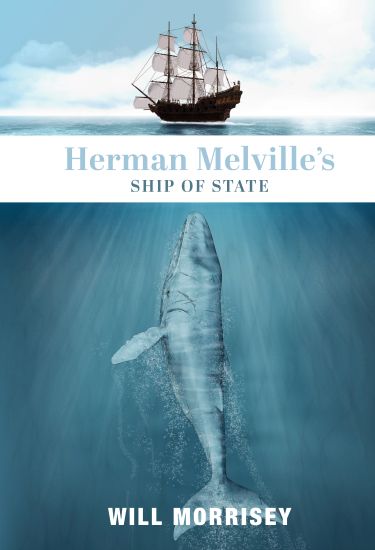
William Morrisey unravels Melville’s “loomings” of the great whale, showing them to be important threads of politics and theories of governance. The Young America of Melville’s day valorized popular sovereignty such that moral law suppressed by the majority rule was bringing America to state of being that could only then be ruled by the mightiest of the mighty––the great Leviathan, who reigns in the boundless chaotic sea separated from “stable land.” The force of the created world and the necessary ordering achieved through conquest are dominating themes of Melville’s great tale, but as Morrisey observes approaching the great whale, ruler of the untamable seas, is for captain (ruler) an opportunity to destroy it. But for the sailor (the ruled) being close to the white whale is a moment for understanding, and in turn of being understood. Yet in what sense is being seen, for human beings of moral bearings, not also an impulse to self-impose? “The modern Ishmael wants to see, not to kill, perhaps to be seen, and surely not to be killed. Americans too need to come to terms with the white whale, if they are to perceive reality as it is without bringing destruction upon themselves.” Is Melville proposing an utterly new philosophy of ruler and ruled, of a proper gauge of the immeasurable chaos that is nature? “Does Melville also intend to be a founder in the ‘New World’?” Morrisey’s study is a compelling look at the early political moments of a new nation, but one that at the time perceived itself as already aging and maturing in the process of political voyage and adventure. Dangers lie ahead, Melville seems to warn, and in his disenchantment of the vigor of the Young America he once endorsed he tells the story of what really happens when democracy is idealized and the surrounding waters of chaos are thereby veiled; and yet also of what happens when one would seek to command the chaos only to transform into the unpredictably destructive prey he pursues, especially under the guise of moral outrage. Melville, like Ishmael, urges a new vision of both God and nature, and challenges the notion of rule in all its expressions. Americans, the people of the New World, are invited to be unafraid, but also careful. In wandering as on the open waters one wonders, beyond civic boundaries and conventions, and in that wonder one may finally come face to face with what is good and grand––but in beholding the great white whale, can one resist the urge to conquest, now that he is likewise by the leviathan beholden? Is the rule of man and the coronation of a specific dialectic of power an untenable victory, given that “‘Nature is nobody’s ally’: it wounds or kills any person or nation that violates it, impartially”? Morrisey writes with lucidity and weaves together elements of history, literature, politics and perhaps his own affinity for Ishmael’s passenger spirit to reveal just how broad and boundless of a narrative Melville’s Moby Dick truly is.