Henry Jackson van Dyke (November 10, 1852 - April 10, 1933) was an American author, educator, and clergyman. *Biography* Henry van Dyke was born on November 10, 1852, in Germantown, Pennsylvania. He graduated from Poly Prep Country Day School in 1869, Princeton University, in 1873 and from Princeton Theological Seminary, 1877. He served as a professor of English literature at Princeton between 1899 and 1923. Van Dyke chaired the committee that wrote the first Presbyterian printed liturgy, The Book of Common Worship of 1906. In 1908-09 Dr. van Dyke was a lecturer at the University of Paris.By appointment of President Woodrow Wilson, a friend and former classmate of van Dyke, he became Minister to the Netherlands and Luxembourg in 1913. Shortly after his appointment, World War I threw Europe into dismay. Americans all around Europe rushed to Holland as a place of refuge. Although inexperienced as an ambassador, van Dyke conducted himself with the skill of a trained diplomat, maintaining the rights of Americans in Europe and organizing work for their relief. He later related his experiences and perceptions in the book Pro Patria (1921).Van Dyke resigned as ambassador at the beginning of December 1916 and returned to the United States. He was subsequently elected to the American Academy of Arts and Letters and received many other honors. Van Dyke was a friend of Helen Keller. Keller writes, "Dr. van Dyke is the kind of a friend to have when one is up against a difficult problem. He will take trouble, days and nights of trouble, if it is for somebody else or for some cause he is interested in. 'I'm not an optimist, ' says Dr. van Dyke, 'there's too much evil in the world and in me. Nor am I a pessimist; there is too much good in the world and in God. So I am just a meliorist, believing that He wills to make the world better, and trying to do my bit to help and wishing that it were more.'" He died on April 10, 1933. He is buried in Princeton Cemetery. A biography of Van Dyke, titled Henry Van Dyke: A Biography, was written by his son Tertius van Dyke and published in 1935.. Howard Crosby Butler (March 7, 1872 Croton Falls, New York - August 13, 1922 Neuilly) was a United States educator and archaeologis
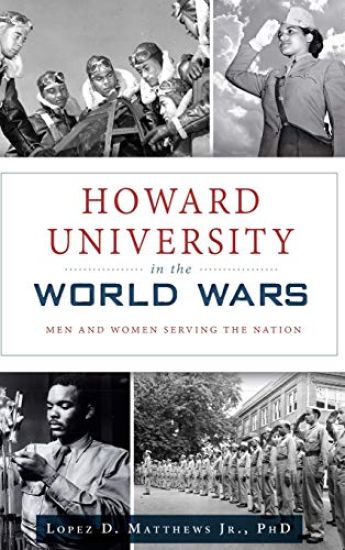
Despite African Americans' lack of political, social and economic equality in the United States, the students of Howard University answered the call to service in both world wars. Howard supported its men and women in the quest to serve their nation. The university started an army training program during the First World War, and Howard faculty, staff and students pushed the War Department to begin an officer training school for African Americans. The university organized a Reserve Officer Training program in the interwar years, the first at an HBCU. Many of the famed Tuskegee Airmen of World War II were trained first at Howard. Based on a collection of letters sent by Howard students and alumni to the university, historian and archivist Lopez D. Matthews illuminates their wartime experiences.
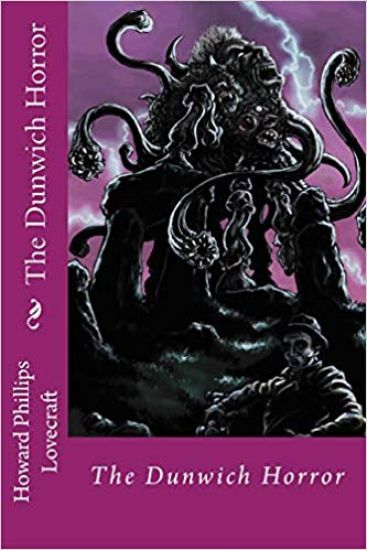
"The Dunwich Horror" is a short story by H. P. Lovecraft. Written in 1928, it was first published in the April 1929 issue of Weird Tales (pp. 481-508). It takes place in Dunwich, a fictional town in Massachusetts. It is considered one of the core stories of the Cthulhu Mythos. "The Dunwich Horror" is one of the few tales Lovecraft wrote wherein the heroes successfully defeat the antagonistic entity or monster of the story.
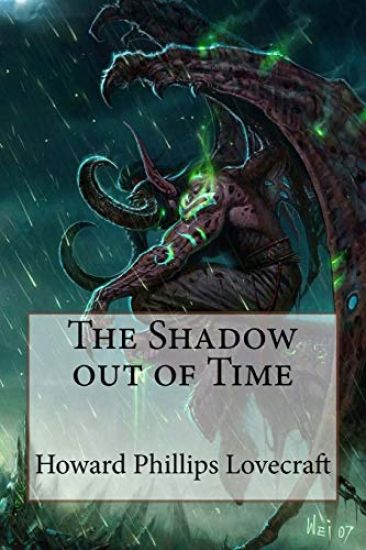
"The Shadow Out of Time" indirectly tells of the Great Race of Yith, an extraterrestrial species with the ability to travel through space and time. The Yithians accomplish this by switching bodies with hosts from the intended spatial or temporal destination. The story implies that the effect when seen from the outside is similar to spiritual possession.
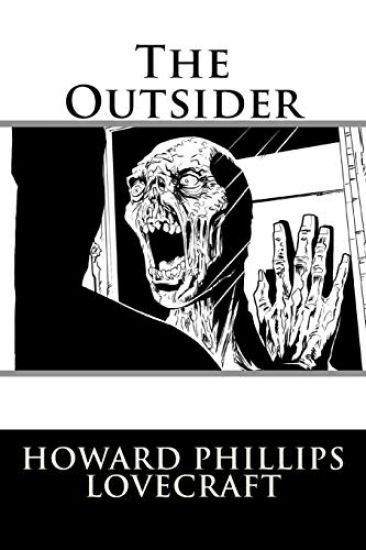
"The Outsider" is a short story by American horror writer H. P. Lovecraft. Written between March and August 1921, it was first published in Weird Tales, April 1926. In this work, a mysterious man who has been living alone in a castle for as long as he can remember decides to break free in search of human contact and light. "The Outsider" is one of Lovecraft's most commonly reprinted works and is also one of the most popular stories ever to be published in Weird Tales. "The Outsider" combines Horror, Fantasy, and Gothic Fiction to create a nightmarish story, containing themes of loneliness, the abhuman, and the afterlife.
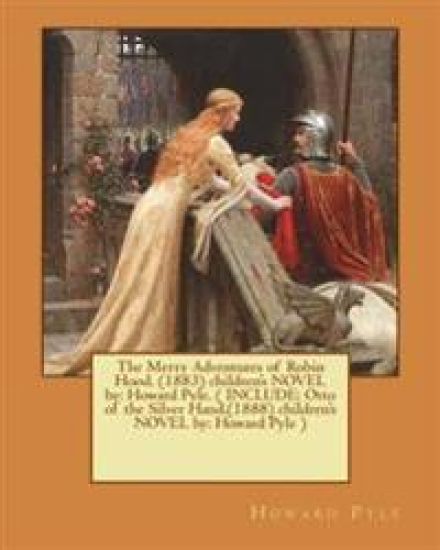
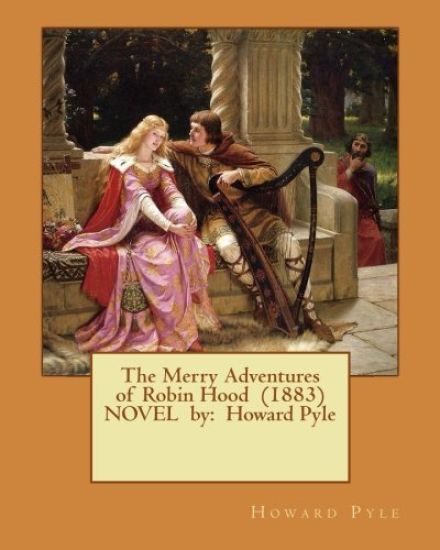
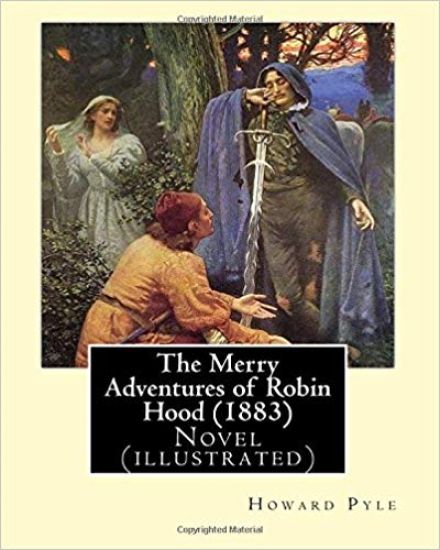
The Merry Adventures of Robin Hood of Great Renown in Nottinghamshire is an 1883 novel by the American illustrator and writer Howard Pyle. Consisting of a series of episodes in the story of the English outlaw Robin Hood and his band of Merry Men, the novel compiles traditional material into a coherent narrative in a colorful, invented "old English" idiom that preserves some flavor of the ballads, and adapts it for children. The novel is notable for taking the subject of Robin Hood, which had been increasingly popular through the 19th century, in a new direction that influenced later writers, artists, and filmmakers through the next century.
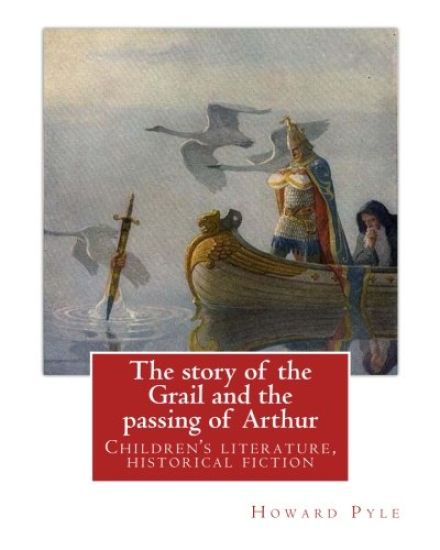
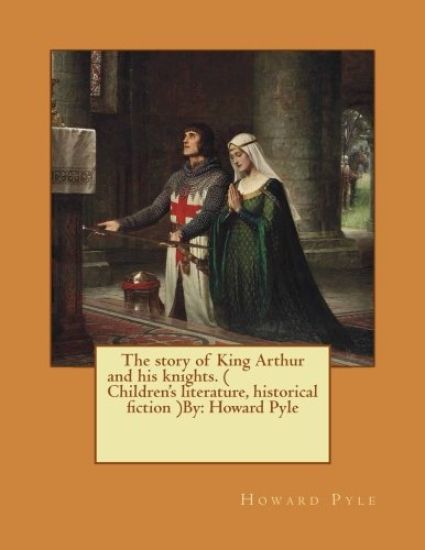
The Story of King Arthur and His Knights is a November 1903 novel by the American illustrator and writer Howard Pyle. It was published by Charles Scribner's Sons. Pyle's illustrations for the stories have been called "glorious", with the text and the illustrations complementing each other.The book consists of a large series of episodes in the legend of the mythological first king of Britain King Arthur and his knights of the Round Table King Arthur is infatuated with the Lady Guinevere, the daughter of his friend, King Leodegrance, and visits Cameliard, where she resides. with Merlin's help, disguises himself as a peasant and works as a gardener below her tower. Meanwhile, King Ryence threatens Leodegrance for much of his lands, and also for the notorious Duke of North Umber being able to marry Guinevere. The Duke torments the people of Cameliard by parading in front
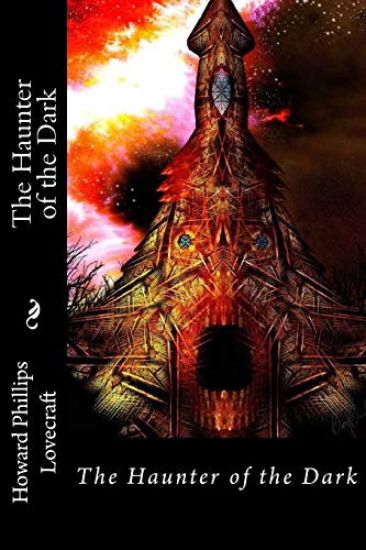
The story takes place in Providence, Rhode Island and revolves around the Church of Starry Wisdom. The cult uses an ancient artifact known as the Shining Trapezohedron to summon a terrible being from the depths of time and space. The Shining Trapezohedron was discovered in Egyptian ruins, in a box of alien construction, by Professor Enoch Bowen before he returned to Providence, Rhode Island in 1844. Members of the Church of Starry Wisdom in Providence would awaken the Haunter of the Dark, an avatar of Nyarlathotep, by gazing into the glowing crystal. Summoned from the black gulfs of chaos, this being could show other worlds, other galaxies, and the secrets of arcane and paradoxical knowledge; but he demanded monstrous sacrifices, hinted at by disfigured skeletons that were later found in the church. The Haunter of the Dark was banished by light and could not cross a lighted area.
The Merry Adventures of Robin Hood of Great Renown in Nottinghamshire is an 1883 novel by the American illustrator and writer Howard Pyle. Consisting of a series of episodes in the story of the English outlaw Robin Hood and his band of Merry Men, the novel compiles traditional material into a coherent narrative in a colorful, invented "old English" idiom that preserves some flavor of the ballads, and adapts it for children. The novel is notable for taking the subject of Robin Hood, which had been increasingly popular through the 19th century, in a new direction that influenced later writers, artists, and filmmakers through the next century. PLOT: The plot follows Robin Hood as he becomes an outlaw after a conflict with foresters and through his many adventures and runs with the law. Each chapter tells a different tale of Robin as he recruits Merry Men, resists the authorities, and aids his fellow man. The popular stories of Little John defeating Robin in a fight with staffs, of Robin's besting at the hands of Friar Tuck, and of his collusion with Allan-a-Dale all appear. In the end, Robin and his men are pardoned by King Richard the Lionheart and his band are incorporated into the king's retinue, much to the dismay of the Sheriff of Nottingham. Howard Pyle (March 5, 1853 - November 9, 1911) was an American illustrator and author, primarily of books for young people. A native of Wilmington, Delaware, he spent the last year of his life in Florence, Italy. In 1894 he began teaching illustration at the Drexel Institute of Art, Science and Industry (now Drexel University). After 1900, he founded his own school of art and illustration, named the Howard Pyle School of Illustration Art. The scholar Henry C. Pitz later used the term Brandywine School for the illustration artists and Wyeth family artists of the Brandywine region, several of whom had studied with Pyle.Some of his more notable students were N. C. Wyeth, Frank Schoonover, Elenore Abbott, Ethel Franklin Betts, Anna Whelan Betts, Harvey Dunn, Clyde O. DeLand, Philip R. Goodwin, Thornton Oakley, Violet Oakley, Ellen Bernard Thompson Pyle, Olive Rush, Allen Tupper True, Elizabeth Shippen Green, Arthur E. Becher, William James Aylward, and Jessie Willcox Smith. Pyle's home and studio in Wilmington, where he taught his students, is still standing and is listed on the National Register of Historic Places....
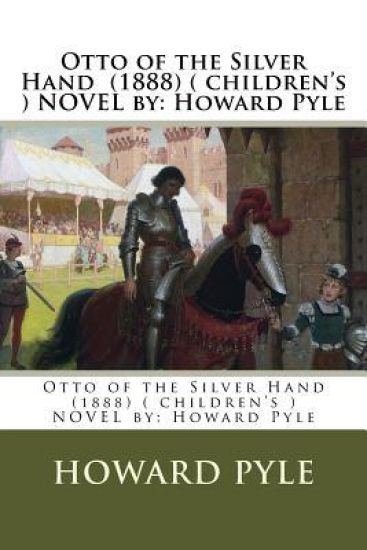
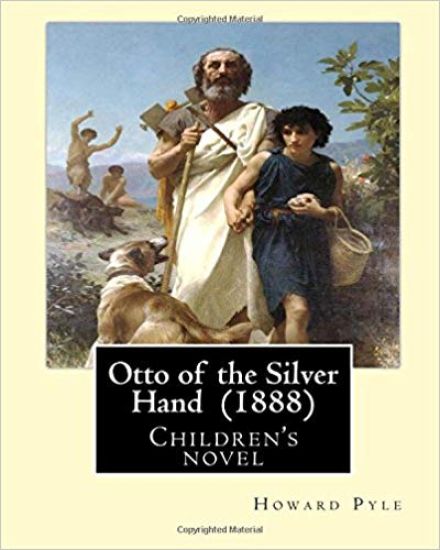
Otto of the Silver Hand is a children's novel about the Dark Ages written and illustrated by Howard Pyle. It was first published in 1888 by Charles Scribner's Sons. The novel was one of the first written for young readers that went beyond the chivalric ideals of the time period, and showed how cruel the time period could really be. PLOT: The book centers around the life of Otto, the son of German warlord Baron Conrad. Otto's mother, Baroness Matilda, has died in premature labour, brought on by the sight of the Baron's battle wounds, prompting Conrad to take his newborn son to be raised in a nearby monastery. When Otto reaches the age of eleven his father returns to claim him from the gentle monks, taking him back to live in Castle Drachenhausen, ("Dragons' House", in German) the ancestral mountaintop fortress from which the Baron launches his attacks. Here Otto learns of and is horrified by his father's life as a robber baron. Otto is particularly horrified by the revelation of how Conrad killed a defeated, surrendering enemy, Baron Frederick. A rival robber baron, Baron Frederick had been with his men defending a column of merchants in return for the tribute they were paying him. Shortly thereafter, Baron Conrad obeys a summons to the Imperial Court, taking the vast majority of his men-at-arms with him as an impressive escort but leaving Castle Drachenhausen practically undefended as a result. The late Baron Frederick's heir, his nephew Baron Henry, then attacks the castle and burns it to the ground. Baron Henry then takes Otto captive to his own fortress, Castle Trutzdrachen ("Dragon-scorner," in German). In the dungeon of his castle, Baron Henry explains to Otto that he has sworn a solemn oath that any member of Baron Conrad's House who fell into his hands would never be able to strike a blow like the one which killed his uncle, Baron Frederick. Because Otto is so young, the Baron keeps this oath by cutting off his right hand instead of killing him, and as an afterthought has a healer sent to tend to him. While Otto is feverish from the pain of his wound, he is comforted by Baron Henry's eight-year-old daughter Pauline, who visits his cell. Otto's father Baron Conrad then returns and rescues him with the help of a few remaining loyal followers. Baron Henry and his men give chase and Otto's father kills Baron Henry in single combat but dies in the process, choosing to sacrifice his life so that his son can escape. Otto flees to the monastery where he grew up and is given refuge there. After Otto regains his health the Abbot accompanies him to an audience with the Emperor, who promises restitution and takes responsibility for Otto's future upbringing. Otto becomes a respected statesman, marries his former captor's daughter Pauline, and is known for his wise counsel and peaceful nature. His amputated swordhand is replaced by an artificial and immobile one made of silver. The Emperor has Castle Drachenhausen rebuilt for the couple and over the gatehouse is carved the motto "Manus Argentea Quam Manus Ferrea Melior Est", which translated from Latin means "A hand of silver is better than a hand of iron".... Howard Pyle (March 5, 1853 - November 9, 1911) was an American illustrator and author, primarily of books for young people. A native of Wilmington, Delaware, he spent the last year of his life in Florence, Italy.