This work has been selected by scholars as being culturally important and is part of the knowledge base of civilization as we know it.This work is in the public domain in the United States of America, and possibly other nations. Within the United States, you may freely copy and distribute this work, as no entity (individual or corporate) has a copyright on the body of the work.Scholars believe, and we concur, that this work is important enough to be preserved, reproduced, and made generally available to the public. To ensure a quality reading experience, this work has been proofread and republished using a format that seamlessly blends the original graphical elements with text in an easy-to-read typeface.We appreciate your support of the preservation process, and thank you for being an important part of keeping this knowledge alive and relevant.
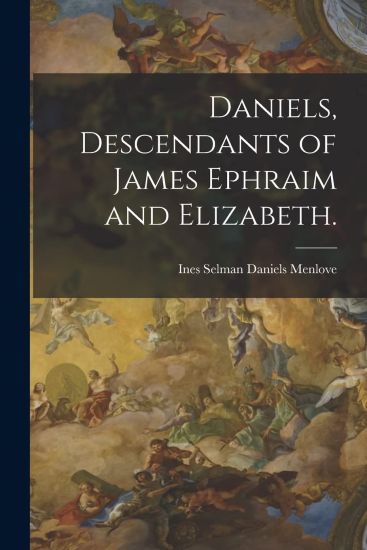
This is a genealogy of the Daniels family, tracing their descendants from James Ephraim and Elizabeth Daniels. The book includes detailed biographical information and family trees up to the mid-20th century. Anyone interested in genealogy or tracing their family roots will find this book invaluable.This work has been selected by scholars as being culturally important, and is part of the knowledge base of civilization as we know it.This work is in the "public domain in the United States of America, and possibly other nations. Within the United States, you may freely copy and distribute this work, as no entity (individual or corporate) has a copyright on the body of the work.Scholars believe, and we concur, that this work is important enough to be preserved, reproduced, and made generally available to the public. We appreciate your support of the preservation process, and thank you for being an important part of keeping this knowledge alive and relevant.
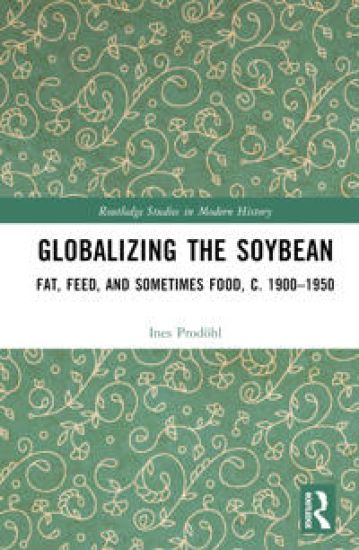
Globalizing the Soybean asks how the soybean conquered the West and analyzes why and how the crop gained entry into agriculture and industry in regions beyond Asia in the first half of the twentieth century.Historian Ines Prodöhl describes the soybean’s journey centered on three hubs: Northeast China, as the crop’s main growing area up to the Second World War; Germany, to where most of the beans in the interwar period were shipped; and the United States, which became the leading cultivator of soy worldwide during the 1940s. This book explores the German and U.S. adoption of the soybean being closely tied to global economic and political changes, such as the two world wars and the Great Depression. The attraction of the soybean to stakeholders on both sides of the Atlantic was linked to a need for cheap alternatives to butter and lard and a desire for greater quantities of meat, which led to the soybean becoming a cheap resource for fat and fodder. Only occasionally was it also used as food.This volume is useful for anyone who is studying or interested in economic history and commodity trading in the twentieth century. It is also connected to the histories of capitalism, globalization, imperialism, and materiality.The Open Access version of this book, available at www.taylorfrancis.com, has been made available under a Creative Commons Attribution-Non Commercial-No Derivatives 4.0 license
Globalizing the Soybean asks how the soybean conquered the West and analyzes why and how the crop gained entry into agriculture and industry in regions beyond Asia in the first half of the twentieth century.Historian Ines Prodöhl describes the soybean’s journey centered on three hubs: Northeast China, as the crop’s main growing area up to the Second World War; Germany, to where most of the beans in the interwar period were shipped; and the United States, which became the leading cultivator of soy worldwide during the 1940s. This book explores the German and U.S. adoption of the soybean being closely tied to global economic and political changes, such as the two world wars and the Great Depression. The attraction of the soybean to stakeholders on both sides of the Atlantic was linked to a need for cheap alternatives to butter and lard and a desire for greater quantities of meat, which led to the soybean becoming a cheap resource for fat and fodder. Only occasionally was it also used as food.This volume is useful for anyone who is studying or interested in economic history and commodity trading in the twentieth century. It is also connected to the histories of capitalism, globalization, imperialism, and materiality.The Open Access version of this book, available at www.taylorfrancis.com, has been made available under a Creative Commons Attribution-Non Commercial-No Derivatives 4.0 license
Medium-Sized Cities in the Age of Globalisation provides a brand-new perspective on academic discussions of globalisation through exploring urban development outside of select global cities including Paris, Tokyo, and London, and instead focuses on medium-sized cities in the context of a globalising world.Combining the author’s expertise with extensive research, this book fills a gap in the scholarly debate on globalisation and urban development, with chapters of the book giving detailed insight on urban governance and economy, local identity, and urban representation. Through a range of visual sources including maps, tables and graphs, the book is applicable and accessible, and offers a specialised analysis of medium-sized cities through assessing urban regeneration policies as well as promotional activities and their role in promoting positive change in an era of great inter-urban competition.This book contains valuable historical insights and is excellent specialised material for scholars and postgraduate students in the disciplines of Urban History, Urban Studies and Geography, as well as being a significant source for professionals working in urban planning and place promotion
Medium-Sized Cities in the Age of Globalisation provides a brand-new perspective on academic discussions of globalisation through exploring urban development outside of select global cities including Paris, Tokyo, and London, and instead focuses on medium-sized cities in the context of a globalising world.Combining the author’s expertise with extensive research, this book fills a gap in the scholarly debate on globalisation and urban development, with chapters of the book giving detailed insight on urban governance and economy, local identity, and urban representation. Through a range of visual sources including maps, tables and graphs, the book is applicable and accessible, and offers a specialised analysis of medium-sized cities through assessing urban regeneration policies as well as promotional activities and their role in promoting positive change in an era of great inter-urban competition.This book contains valuable historical insights and is excellent specialised material for scholars and postgraduate students in the disciplines of Urban History, Urban Studies and Geography, as well as being a significant source for professionals working in urban planning and place promotion
Tapping into proven strategies, mechanisms and patterns that have been fine-tuned over 3.8 billion years, this book bridges the gap between the natural world and the business world and explores how to develop resilient organizations and businesses using lessons from nature.The science of biomimicry is an emerging force in helping us to gaze afresh at the world around us, often inspiring technological inspiration, but we have been slow to look at the organizational and relationship models that are all around us. This book contends that natural abundance flourishes at the edges, where one environmental element contacts another, and that these relationships that have been successful for millennia have endless lessons for us about how we organize ourselves. Each chapter starts with a clear example of a problem that a team or organization might face, goes on to consider a range of natural examples and offer practical suggestions to incorporate nature’s wisdom in the business world, and concludes with success stories of people and organizations already embracing the principles outlined in the book. Employing these principles and aided by suggested activities, readers will develop personalized plans, tailored to their unique situations, to lead their teams’ evolution into thriving organizations.Observing edges, spaces and boundaries shows that is these are where magic happens—and with this book, leaders of all types of teams and organizations will be empowered to make real and immediate changes in their own contexts.
Tapping into proven strategies, mechanisms and patterns that have been fine-tuned over 3.8 billion years, this book bridges the gap between the natural world and the business world and explores how to develop resilient organizations and businesses using lessons from nature.The science of biomimicry is an emerging force in helping us to gaze afresh at the world around us, often inspiring technological inspiration, but we have been slow to look at the organizational and relationship models that are all around us. This book contends that natural abundance flourishes at the edges, where one environmental element contacts another, and that these relationships that have been successful for millennia have endless lessons for us about how we organize ourselves. Each chapter starts with a clear example of a problem that a team or organization might face, goes on to consider a range of natural examples and offer practical suggestions to incorporate nature’s wisdom in the business world, and concludes with success stories of people and organizations already embracing the principles outlined in the book. Employing these principles and aided by suggested activities, readers will develop personalized plans, tailored to their unique situations, to lead their teams’ evolution into thriving organizations.Observing edges, spaces and boundaries shows that is these are where magic happens—and with this book, leaders of all types of teams and organizations will be empowered to make real and immediate changes in their own contexts.
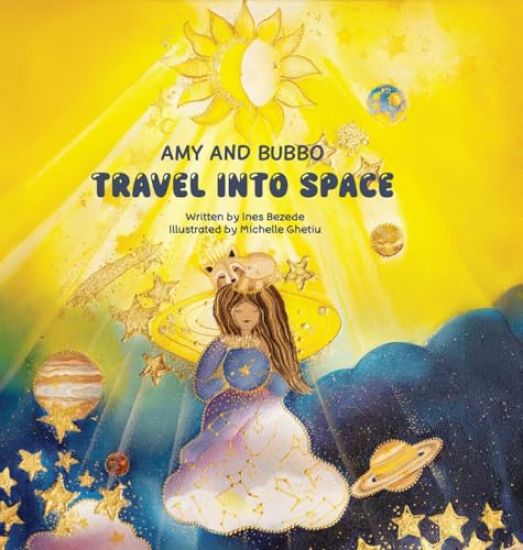
Amy and Bubbo Travel into SpaceA magical book which will take your child on an adventure through the stars. Amy, a brave and optimistic little girl lives her dream-come-true cosmic adventure together with her favorite toy raccoon who comes to life. Together, they explore a distant planet in another galaxy where they learn about a new way of living and a new way of perceiving the whole universe.Written by Ines, this heartwarming story not only inspires and motivates the little ones but also teaches them about the wonders of the universe, the beauty of our planet and how to preserve it. Ines' vision is to show children that the world is a place of endless possibilities, where everything is interconnected in a magical way.Beautifully illustrated by Michelle, who works with the spiritual world, the love-filled artwork will not only captivate your children's imagination, but will also make them feel calm and positive.This book will encourage your children to believe in their dreams, nurture their sense of wonder, and deepen their appreciation for the world they live in.
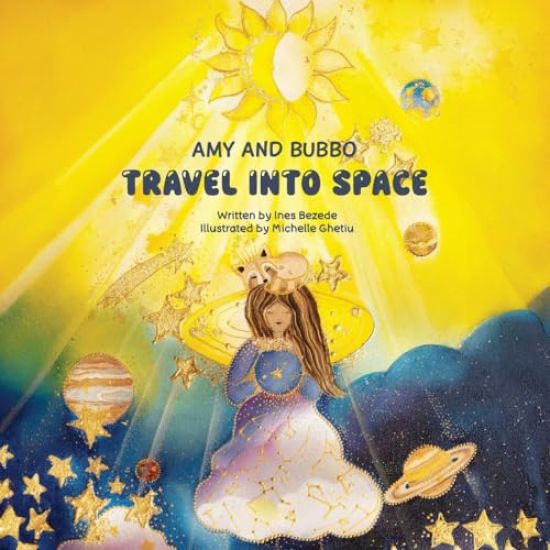
Amy and Bubbo Travel into SpaceA magical book which will take your child on an adventure through the stars. Amy, a brave and optimistic little girl lives her dream-come-true cosmic adventure together with her favorite toy raccoon who comes to life. Together, they explore a distant planet in another galaxy where they learn about a new way of living and a new way of perceiving the whole universe.Written by Ines, this heartwarming story not only inspires and motivates the little ones but also teaches them about the wonders of the universe, the beauty of our planet and how to preserve it. Ines' vision is to show children that the world is a place of endless possibilities, where everything is interconnected in a magical way.Beautifully illustrated by Michelle, who works with the spiritual world, the love-filled artwork will not only captivate your children's imagination, but will also make them feel calm and positive.This book will encourage your children to believe in their dreams, nurture their sense of wonder, and deepen their appreciation for the world they live in.
Simpson ProtocolFrom the InsideCase studies, Insights and Observations from the People who use the Simpson Protocol Process on a daily basis. A look at one of the most advanced and up to date methods for using Hypnosis as Therapy in the world today. Winner of the 'Hypnosis Pioneer Award" 2014
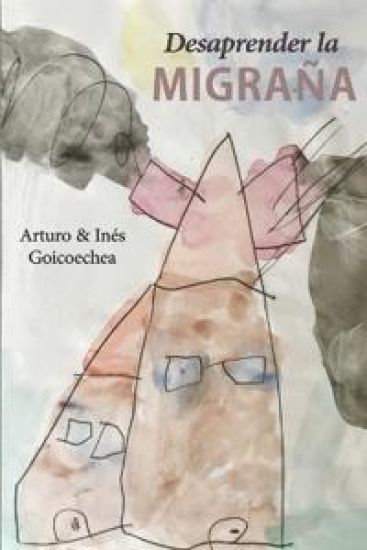
Desaprender la Migra aUn 15% de la poblaci n mundial padece migra a. Los expertos afirman que es una enfermedad cerebral gen tica, irreversible, y de origen no suficientemente aclarado. Para aliviar el sufrimiento y la invalidez, proponen llevar una vida ordenada, identificar y evitar los desencadenantes y ponerse en manos de un neur logo.El neur logo Arturo Goicoechea expone una hip tesis novedosa y contrapuesta, basada en investigaciones en Neurociencia y Biolog a: la migra a no se transmite por los genes, sino que es la consecuencia del aprendizaje del Sistema Neuroinmune.Si se aprende, se puede desaprender.No es una terapia alternativa, sino una alternativa a las terapias. Muchos padecientes de migra a y otros dolores cr nicos se han beneficiado ya de este enfoque. El autor anima a conocer la propuesta de "Know pain, no pain", que es biol gicamente correcta -y pol ticamente incorrecta-: entender el dolor pone en camino de librarse de l.Diez a os m s tarde, tras el xito de Migra a, una pesadilla cerebral, este nuevo libro pretende ser gui n y apoyo pr ctico para el afrontamiento de la migra a, acompa ando al lector en los adelantos y xitos sobre el dolor y el malestar y animando a continuar, en los reveses y complicaciones del camino.Sobre el AutorARTURO GOICOECHEA URIARTE, Neur logo nacido en Mondrag n, Guip zcoa, en 1946. Jefe del Servicio de Neurolog a en el Hospital Santiago de Vitoria ( lava), Espa a, hasta 2011, en la actualidad jubilado. Permanece activo como ense ante y divulgador de la aplicaci n de la Neurociencia al mbito de la Neurolog a (a trav s de su equipo GoiGroup), especialmente referida a la migra a y al dolor cr nico sin da o, impartiendo cursos y charlas y, desde hace una decena larga de a os, a trav s de su blog.
15% of the world's population suffers from migraine. Experts say that it is a genetic brain disease, of unclear origin, and irreversible. To alleviate the suffering and disability, they propose to lead an orderly life, identify and avoid triggers and put oneself in the hands of a neurologist, who will prescribe painkillers and sometimes preventive treatment. Neurologist Arturo Goicoechea puts forward a novel and contrasting hypothesis, based on research in Neuroscience and Biology: migraine is not transmitted by genes, but the consequence of the Neuroimmune System's learning process. And if it can be learned, it can be unlearned. It is not an alternative therapy, but an alternative to therapies. Many sufferers of migraine and other chronic pains have already benefited from this approach. The author encourages you to discover the proposal of Know pain, no pain, which is biologically correct -and politically incorrect-: understanding pain puts you on the path to getting rid of it. It is not necessarily easy to apply, but it is simple: migraine and other chronic pains occur in a completely healthy organism, that the organism itself protects in a disproportionate way. Ten years later, after the success of "Migra a, una pesadilla cerebral" (Migraine, a Brain Nightmare), this new book aims to be a script and practical support for dealing with migraine, accompanying the reader in the advances and successes on pain and discomfort and encouraging the reader to continue, in the setbacks and complications of the journey. It is possible to deconstruct, unlearn migraine, and that is what this book is all about. Reviews from "Migraine, a brain nightmare" on Amazon: "Dr. Goicoechea is a genius. I've had migraines for over 35 years, getting worse and worse, and I found this book by chance. (...) It has changed me completely, now I understand how migraines work. I've been training my brain for days, talking to it and it works. (...) Thank you Doctor, millions of thanks." "(...) what I can say is that the intensity of the attacks has been reduced up to 80% and what is better, I have not taken any triptan or other analgesic for more than a month. The fundamental thing is to believe in what the book explains and that it is possible to control and even eradicate migraine attacks." "Magnificent. This is how chronic pain should be tackled. More education in pain neurobiology and fewer pills. Knowing pain, understanding it, helps to overturn false beliefs about pain and injuries and this in many cases affects the perception of pain. Go Arturo Goicoechea " Arturo Goicoechea UriarteNeurologist. Born in Mondrag n, Guip zcoa, in 1946. Head of the Neurology Service at the Santiago Hospital in Vitoria ( lava), Spain, until 2011, currently retired. He remains active as a teacher and disseminator of the application of Neuroscience to the field of Neurology. He focuses on migraine and chronic pain, giving courses and talks and, for a decade or so, through his blog. All of this can be accessed at: arturogoicoechea.com.Books published: Jaqueca ("Headache"), 2004. Depresi n y dolor ("Depression and pain"), 2006. Cerebro y dolor ("Brain and pain"), 2008. Migra a, una pesadilla cerebral ("Migraine, a brain nightmare"), 2009.
In dem Buch sind kurze Texte und Geschichten ber die portugiesische Kultur enthalten, die im einfachen Portugiesisch verfasst sind. Das Buch eignet sich f r Portugiesisch-Anf nger (A2-B1), die sich schon einige Portugiesisch-Kenntnisse angeeignet haben und mehr ber Portugal erfahren m chten. Kurzgeschichten bieten dabei einen schnellen Lernerfolg, da die Geschichten in sich abgeschlossen sind und das Buch nicht am St ck durchgelesen werden muss. Einige der Kurzgeschichten sind fiktiv und andere wahr. Dieses Buch ist wie eine kurze Reise durch Portugal und Sie werden bestimmt einiges Neues ber die portugiesische Kultur lernen. Vielleicht f hrt Sie ja sogar die n chste Reise nach Portugal und Sie erleben dieses sch ne Land mit ganz anderen Augen. Este livro fala sobre os s tios t picos de Portugal e descreve-os, incluindo os seus monumentos, pessoas e ambiente. Alguns destes contos s o fict cios e outros s o ver dicos. Por exemplo, a hist ria de amor tr gica dos famosos D. Pedro e D. In s faz parte da hist ria portuguesa e todas as crian as aprendem-na desde muito novas. S o basicamente o Romeu e Julieta portugueses Assim, aconselho-o a pesquisar tudo o que lhe chamar a aten o nas hist rias. Talvez aprenda muitos factos novos Este livro ser uma esp cie de pequena viagem por Portugal para conhecer algumas das suas maiores maravilhas e hist rias. Assim, espero que desfrute do livro porque coloquei todo o meu esfor o nele. Espero que aprenda muitas coisas novas e, quem sabe, se interesse por este belo pa s
Ines Simpson, Award Winning Hypnosis Trainer, invites you into her World of Hypnosis. Her world of the Mind, its potentials and pitfalls. Taken from Ines's Podcasts on Hypnosis-Everywhere and a series of Articles originally written to help students of Hypnosis -and the articles are in dialogue form to give the back and forth insights into the different aspects of Hypnosis. She examines the Myths and the Misconceptions, the Power and Resilience of how are Minds function in everyday life. Ines describes hypnosis, in its broadest sense as the Language of the mind.
Una mujer busca ayuda psiqui trica para sobreponerse de su divorcio, pero sin querer entra en la caverna del hombre equivocado. Una pugna amorosa que roza la tica y los l mites del sufrimiento humano.Una mujer de edad madura de origen dominicano, altamente educa-da y refinada, lidiando con una pasi n inesperada a los sesenta y tres a os de edad. El objeto de su atracci n es un hombre de su generaci n, con una personalidad altamente complicada; inteligente, c nico y seductor. "El hombre equivocado", como l mismo veladamente insinu ser, es un peligro para cualquier mujer que se lo encuentre en la arena de lo rom ntico; a n m s arriesgado tal encuentro resulta ser cuando la mujer es su paciente, y el "hombre equivocado", el psiquiatra de tal paciente; su terapeuta.Sentada en la intimidad de la oficina del "hombre equivocado", la paciente es expuesta inmisericordemente a las palabras de doble sentido del psiquiatra, un narcisista patol gico, quien se presenta como cono de hombr a y poder. Paulatinamente el terapeuta sedu-ce a la paciente, motivado por inexplicables razones, por demonios interiores, en un proceso de tortuosa manipulaci n psicol gica que l llama "la terapia".