
Kirjahaku
Etsi kirjoja tekijän nimen, kirjan nimen tai ISBN:n perusteella.
1000 tulosta hakusanalla J -P -R Cuisin


J.S. Bach Cello Suites: Edited by Uzi Wiesel
Arnan Wiesel
2014
nidottu
This edition is for the benefit of cellists and other musicians trying to understand the musical ideas of J.S.Bach. In this edition Uzi Wiesel relies on his vast performance and teaching experience to give his perspective on performing the Cello Suites. It aims to encourage further thinking, not only about the "how" but also about the "why". A special novelty is Uzi Wiesel's adaption of Bach's Lute version of the 5th Suite for Cello.
The Dramatic and Poetical Works of the Late Lieut. Gen. J. Burgoyne; To Which Is Prefixed, Memoirs of the Author. Vol. I
J Burgoyne
Trieste Publishing
2018
nidottu

Supreme Court of the Hawaii Islands. Special Term, May, 1895. in the Matter of J. C. Kalanianaole
J C Kalanianaole
Trieste Publishing
2018
nidottu
Friedlander's book provides an afterlife for the Reveries in modern philosophy. It constitutes an alternative to the analytic tradition's revival of Rousseau, primarily through Rawls' influential vision of the social contract. It also counters the fate of Rousseau's writings in the continental tradition, determined by and large by Derrida's deconstruction.

Preaching the Psalms / J. Clinton Mccann, Jr. & James C. Howell.
J.Clinton McCann
Abingdon Press
2001
pokkari
This book is designed to help preachers find and use the riches of the Psalms for preaching. The authors address the perception that the Psalms often go neglected in preparing for one of the central acts of worship: preaching. McCann and Howell demonstrate that the Psalms offer the preacher broad, rich possibilities for the congregation s engagement with the Scripture. Each chapter concludes with a brief sample."
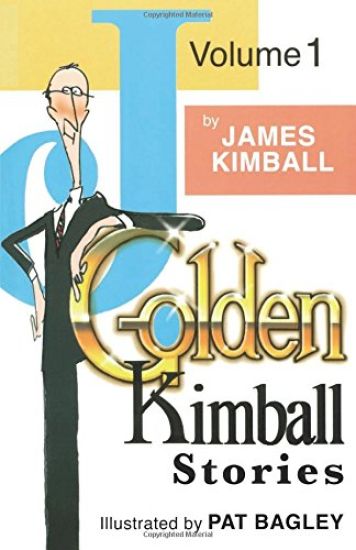
"I may not always walk the straight and narrow, but I cross is as often as I can." -- J. Golden KimballMormonism's Colorful Cowboy Mormon or gentile, everyone loves the tales of this straight-talking cowboy who became a church leader. For almost a hundred years, stories of his quick wit and irreverent humor have been passed around campfires and sacrament meetings. This gold mine of J. Golden Kimball stories, by his nephew James Kimball, is sure to be a winner with anyone who's ever been human.

J is for Justice
Ayo Gathing; Sheila Flemming-Hunter; Alero Afejuku Esq
Good Beginnings Publishing, Inc.
2017
nidottu
"I have an idea," Amina said, pulling out a long piece of pink fabric. "This week, let's ditch being princesses and become superheroes." Amina, Raven, Kiki and Jada are four girls who love books, princess parties and superheroes. Everyone in their community seeks justice. But, what does the word justice really mean? The girls visit people at school, the capitol, the aquarium, the church and even at home to discuss different types of justice and their meaning. Follow the girls on their quest to becoming superheroes for justice Recommended reading ages 7-11. Any profit made from the sale of the book benefits the Black Rose Foundation for Children, Inc., a not-for-profit charitable organization. For more information about the work of Black Rose Foundation for Children, Inc., please visit http: //blackrosefoundation.org.

This is the first book on John Edward Lloyd (1861-1947), widely regarded as the founder of the modern academic study of Welsh history. Published to mark the centenary of Lloyd's most important achievement, "A History of Wales from the Earliest Times to the Edwardian Conquest" (1911), this intellectual biography reassesses Lloyd's significance by setting his work in the context of his life and of the ideas and scholarship of his time. It thus provides a case study of how the past of a small, stateless nation was reconfigured to provide a new narrative of national origins.

A 128-page ruled notepad with 21 beautifully reproduced paintings by the pre-Raphaelite master J.W. Waterhouse (1849-1917).
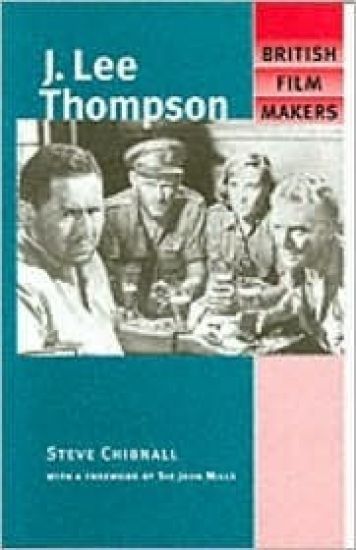
First published on the fiftieth anniversary of his directorial debut, this book was the first to examine the work of a man once hailed as the finest film-maker to emerge from the British studio system after the Second World War. Before being recruited by Hollywood, J. Lee Thompson made a string of classic films including: Yield to the Night (1956), Ice Cold in Alex (1958), Tiger Bay (1959), North West Frontier (1959) and The Guns of Navarone (1961). He worked in the Hollywood industry into his late eighties, making nearly thirty films as a director and producer between 1960 and 1990. He remains best known, however, for his first: the immortal thriller Cape Fear (1962).Drawing on extensive interview material, Steve Chibnall traces Lee Thompson's career in British cinema, and offers an analysis of his films which reveals remarkable, and previously unacknowledged, continuities of style and theme.This is a book for anyone interested in the history of British cinema, and particularly those who enjoy the best of 1950s and 1960s film.
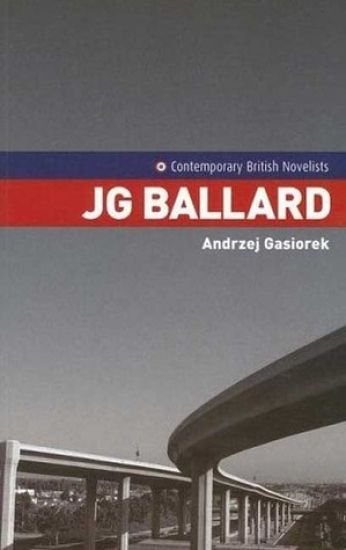
This book offers a comprehensive account of the work of J.G. Ballard, regarded by several critics as one of the most significant fiction writers of recent times. Ballard's early science-fiction writing earned him plaudits as one of the most innovative and individual voices in the field, but his development as a writer has taken him far beyond the confines of any single genre. This book traces Ballard's career from his early science-fiction short stories and novels to his most recent work, particularly his timely reflections on the role of violence in contemporary social life. It argues that Ballard's writing is characterised by a distinctive vision of the post-war world and its possible futures, and suggests that his far-reaching analyses of the present age make him one of the indispensable commentators of our time.
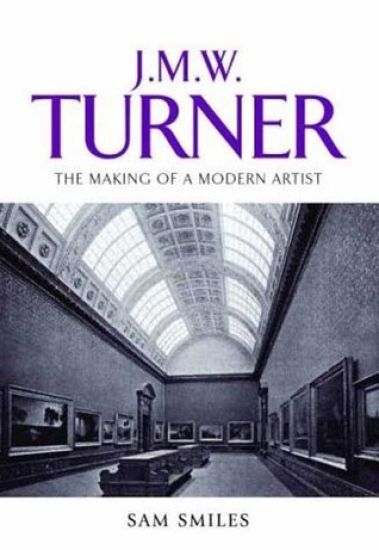
Alone of his contemporaries, J.M.W. Turner is commonly held to have prefigured modern painting, as signalled in the existence of The Turner Prize for contemporary art. Our celebration of his achievement is very different to what Victorian critics made of his art. This book shows how Turner was reinvented to become the artist we recognise today.On Turner's death in 1851 he was already known as an adventurous, even baffling, painter. But when the Court of Chancery decreed that the contents of his studio should be given to the nation, another side of his art was revealed that effected a wholescale change in his reputation. This book acts as a guide to the reactions of art writers and curators from the 1850s to the 1960s as they attempted to come to terms with his work. It documents how Turner was interpreted and how his work was displayed in Britain, in Europe and in North America, concentrating on the ways in which his artistic identity was manipulated by art writers, by curators at the Tate and by designers of exhibitions for the British Council and other bodies.
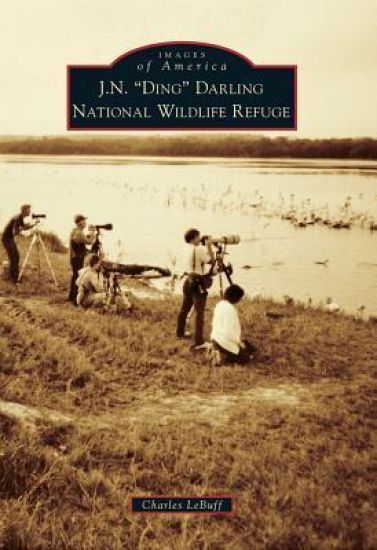
The J.N. Ding Darling National Wildlife Refuge was created as the Sanibel National Wildlife Refuge on December 1, 1945, during the administration of Pres. Harry S. Truman. The refuge was renamed in 1967 to honor J.N. Ding Darling, a syndicated editorial cartoonist. He wintered on Captiva Island and advocated the establishment of the refuge. Situated on a barrier island in Southwest Florida, the refuge is a jewel among the 553 units of the National Wildlife Refuge System. Sanibel, once cherished by the conquistadors, is renowned as one of the best places on the planet to collect seashells and watch birds. Now an island-city, incorporated in 1974, Sanibel is famous for its land development code, which helps make the city a special place. Ding Darling would not completely approve of what has happened to the island he once loved, but he would applaud the human effort that has saved the island's wetlands and nurtured his wildlife refuge.
James Vincent Conran (1899-1970) was the most significant political organizer in the history of rural America. Serving as a rural Missouri prosecutor for 32 years, Conran was the much sought political friend of statewide and national candidates, such as President Harry S. Truman, U.S. Senator Thomas F. Eagleton, and Governor Warren Hearnes. His singular political influence was inextricably linked to the unique demographics of his home region, the Missouri “Bootheel,” which was a part southern, part mid-western, and part frontier community where African Americans enjoyed unusual political power. Though contemporary media depictions portrayed Conran as a traditional, corrupt political boss—like his notorious contemporaries, Tom Pendergast of Kansas City or Ed Crump of Memphis—this view is flawed. In J.V. Conran and Rural Political Power, Will Sarvis aims to paint a more accurate picture of Conran by revealing the true extent and limitations of his power and influence.
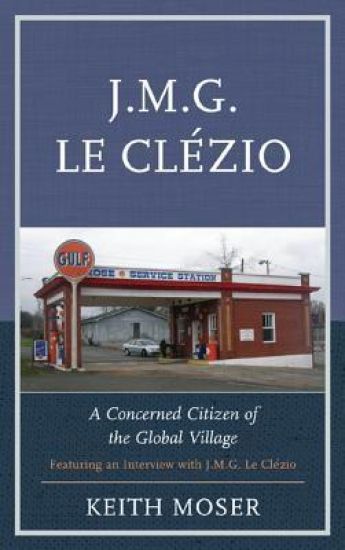
This monograph represents the first comprehensive study of the multifaceted representations of the complex phenomenon of globalization in the diverse repertoire of the 2008 Nobel Laureate in Literature. This interdisciplinary investigation explores the initial euphoria related to the ambivalent concept of the ‘global village’ and how this evaporated dream can perhaps be reappropriated to create a better global society for both the human and Cosmic Other through the lens of Le Clézio’s fiction. Chapter one offers a conceptual framework for understanding the Franco-Mauritian author’s nuanced ideas concerning globalization. It also probes the original ambivalence of McLuhan’s celebrated notion of a global village in addition to its euphoric reception. Chapter two explores the current state of the interconnected, interdependent modern world in which many disenfranchised and marginalized individuals are living a recurring nightmare. Chapter three examines Le Clézio’s deconstruction of the simplistic ideology of consumerism that is indicative of contemporary consumer republics. This section also underscores the intricate systems of hegemonic domination, such as the media, created by the transnational corporations that dominate the global economic landscape to sustain their supremacy. Chapter four delves into Le Clézio’s ecocentric humanism that extends to all other living creatures by debunking Manichean dualities that separate human beings from elemental matter and the rest of the universe. The final chapter examines recent texts, such as Raga, Ourania, and Histoire du pied et autres fantaisies, which encourage the reader to envision what a more just and egalitarian global village might encompass. These works dismiss neoliberal fantasies and consumerist ideology that have justified the systematic exploitation of everyone and everything in the name of progress, but they also urge the modern subject to be resilient in the face of tremendous adversity. Instead of accepting the imposition of a monolithic, socioeconomic model that is riddled with inequality and injustice and which serves the interests of the Happy Few, Le Clézio suggests that the first step is to resist integration into the global village by stoically confronting reality and having the necessary courage to propose another vision which counterpoints McLuhan’s misguided one.