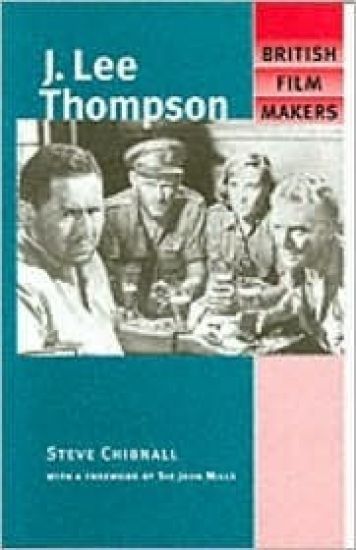
First published on the fiftieth anniversary of his directorial debut, this book was the first to examine the work of a man once hailed as the finest film-maker to emerge from the British studio system after the Second World War. Before being recruited by Hollywood, J. Lee Thompson made a string of classic films including: Yield to the Night (1956), Ice Cold in Alex (1958), Tiger Bay (1959), North West Frontier (1959) and The Guns of Navarone (1961). He worked in the Hollywood industry into his late eighties, making nearly thirty films as a director and producer between 1960 and 1990. He remains best known, however, for his first: the immortal thriller Cape Fear (1962).Drawing on extensive interview material, Steve Chibnall traces Lee Thompson's career in British cinema, and offers an analysis of his films which reveals remarkable, and previously unacknowledged, continuities of style and theme.This is a book for anyone interested in the history of British cinema, and particularly those who enjoy the best of 1950s and 1960s film.
This book offers a comprehensive account of the work of J.G. Ballard, regarded by several critics as one of the most significant fiction writers of recent times. Ballard's early science-fiction writing earned him plaudits as one of the most innovative and individual voices in the field, but his development as a writer has taken him far beyond the confines of any single genre. This book traces Ballard's career from his early science-fiction short stories and novels to his most recent work, particularly his timely reflections on the role of violence in contemporary social life. It argues that Ballard's writing is characterised by a distinctive vision of the post-war world and its possible futures, and suggests that his far-reaching analyses of the present age make him one of the indispensable commentators of our time.
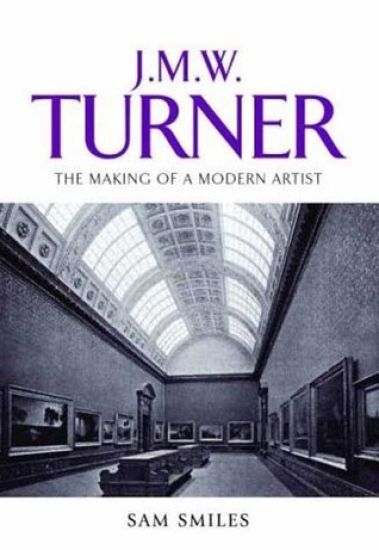
Alone of his contemporaries, J.M.W. Turner is commonly held to have prefigured modern painting, as signalled in the existence of The Turner Prize for contemporary art. Our celebration of his achievement is very different to what Victorian critics made of his art. This book shows how Turner was reinvented to become the artist we recognise today.On Turner's death in 1851 he was already known as an adventurous, even baffling, painter. But when the Court of Chancery decreed that the contents of his studio should be given to the nation, another side of his art was revealed that effected a wholescale change in his reputation. This book acts as a guide to the reactions of art writers and curators from the 1850s to the 1960s as they attempted to come to terms with his work. It documents how Turner was interpreted and how his work was displayed in Britain, in Europe and in North America, concentrating on the ways in which his artistic identity was manipulated by art writers, by curators at the Tate and by designers of exhibitions for the British Council and other bodies.
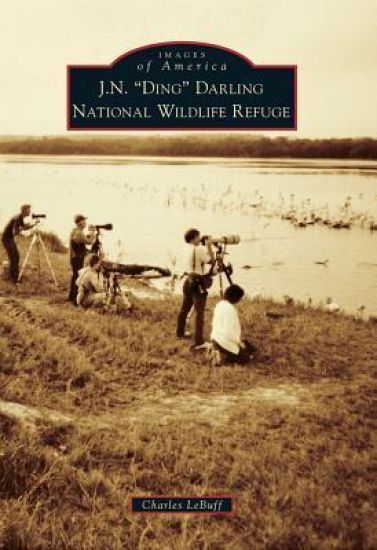
The J.N. Ding Darling National Wildlife Refuge was created as the Sanibel National Wildlife Refuge on December 1, 1945, during the administration of Pres. Harry S. Truman. The refuge was renamed in 1967 to honor J.N. Ding Darling, a syndicated editorial cartoonist. He wintered on Captiva Island and advocated the establishment of the refuge. Situated on a barrier island in Southwest Florida, the refuge is a jewel among the 553 units of the National Wildlife Refuge System. Sanibel, once cherished by the conquistadors, is renowned as one of the best places on the planet to collect seashells and watch birds. Now an island-city, incorporated in 1974, Sanibel is famous for its land development code, which helps make the city a special place. Ding Darling would not completely approve of what has happened to the island he once loved, but he would applaud the human effort that has saved the island's wetlands and nurtured his wildlife refuge.
James Vincent Conran (1899-1970) was the most significant political organizer in the history of rural America. Serving as a rural Missouri prosecutor for 32 years, Conran was the much sought political friend of statewide and national candidates, such as President Harry S. Truman, U.S. Senator Thomas F. Eagleton, and Governor Warren Hearnes. His singular political influence was inextricably linked to the unique demographics of his home region, the Missouri “Bootheel,” which was a part southern, part mid-western, and part frontier community where African Americans enjoyed unusual political power. Though contemporary media depictions portrayed Conran as a traditional, corrupt political boss—like his notorious contemporaries, Tom Pendergast of Kansas City or Ed Crump of Memphis—this view is flawed. In J.V. Conran and Rural Political Power, Will Sarvis aims to paint a more accurate picture of Conran by revealing the true extent and limitations of his power and influence.
This monograph represents the first comprehensive study of the multifaceted representations of the complex phenomenon of globalization in the diverse repertoire of the 2008 Nobel Laureate in Literature. This interdisciplinary investigation explores the initial euphoria related to the ambivalent concept of the ‘global village’ and how this evaporated dream can perhaps be reappropriated to create a better global society for both the human and Cosmic Other through the lens of Le Clézio’s fiction. Chapter one offers a conceptual framework for understanding the Franco-Mauritian author’s nuanced ideas concerning globalization. It also probes the original ambivalence of McLuhan’s celebrated notion of a global village in addition to its euphoric reception. Chapter two explores the current state of the interconnected, interdependent modern world in which many disenfranchised and marginalized individuals are living a recurring nightmare. Chapter three examines Le Clézio’s deconstruction of the simplistic ideology of consumerism that is indicative of contemporary consumer republics. This section also underscores the intricate systems of hegemonic domination, such as the media, created by the transnational corporations that dominate the global economic landscape to sustain their supremacy. Chapter four delves into Le Clézio’s ecocentric humanism that extends to all other living creatures by debunking Manichean dualities that separate human beings from elemental matter and the rest of the universe. The final chapter examines recent texts, such as Raga, Ourania, and Histoire du pied et autres fantaisies, which encourage the reader to envision what a more just and egalitarian global village might encompass. These works dismiss neoliberal fantasies and consumerist ideology that have justified the systematic exploitation of everyone and everything in the name of progress, but they also urge the modern subject to be resilient in the face of tremendous adversity. Instead of accepting the imposition of a monolithic, socioeconomic model that is riddled with inequality and injustice and which serves the interests of the Happy Few, Le Clézio suggests that the first step is to resist integration into the global village by stoically confronting reality and having the necessary courage to propose another vision which counterpoints McLuhan’s misguided one.
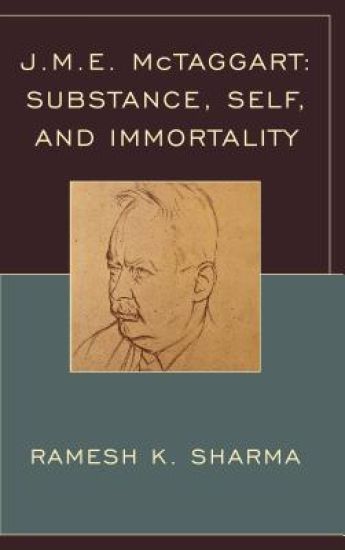
J.M.E. McTaggart seeks to critically expound and appraise the British philosopher’s thought with respect to three principal themes of his philosophy: substance, self, and immortality. Ramesh Kumar Sharma guides the reader through the labyrinths of McTaggart’s intricate arguments and defends many of McTaggart’s highly unorthodox doctrines and conclusions. While doing this, Sharma draws on the works of, among others, Berkeley, Hegel, and Leibniz, and at the same time attacks numerous modern-day physicalist theories that propound mind-brain identity as against the presumed reality of the self and consciousness. This work is thus recommended both for philosophers and researchers interested in: (1) such perennial metaphysical subjects as reality, existence, possibility, the basic ontological categories of substance, qualities, and relations (universals); (2) the question of the reality of the self; (3) McTaggart’s overall vision of the universe or Absolute, and his rejection of the more or less predominant view that the Absolute is God; (4) McTaggart’s unique doctrine, after Plato, of the immortality of the self combined with (the self ’s) pre-existence, post-existence, and plurality of lives; and (5) his extraordinary, but important, views on perception.
This monograph represents the first comprehensive study of the multifaceted representations of the complex phenomenon of globalization in the diverse repertoire of the 2008 Nobel Laureate in Literature. This interdisciplinary investigation explores the initial euphoria related to the ambivalent concept of the ‘global village’ and how this evaporated dream can perhaps be reappropriated to create a better global society for both the human and Cosmic Other through the lens of Le Clézio’s fiction. Chapter one offers a conceptual framework for understanding the Franco-Mauritian author’s nuanced ideas concerning globalization. It also probes the original ambivalence of McLuhan’s celebrated notion of a global village in addition to its euphoric reception. Chapter two explores the current state of the interconnected, interdependent modern world in which many disenfranchised and marginalized individuals are living a recurring nightmare. Chapter three examines Le Clézio’s deconstruction of the simplistic ideology of consumerism that is indicative of contemporary consumer republics. This section also underscores the intricate systems of hegemonic domination, such as the media, created by the transnational corporations that dominate the global economic landscape to sustain their supremacy. Chapter four delves into Le Clézio’s ecocentric humanism that extends to all other living creatures by debunking Manichean dualities that separate human beings from elemental matter and the rest of the universe. The final chapter examines recent texts, such as Raga, Ourania, and Histoire du pied et autres fantaisies, which encourage the reader to envision what a more just and egalitarian global village might encompass. These works dismiss neoliberal fantasies and consumerist ideology that have justified the systematic exploitation of everyone and everything in the name of progress, but they also urge the modern subject to be resilient in the face of tremendous adversity. Instead of accepting the imposition of a monolithic, socioeconomic model that is riddled with inequality and injustice and which serves the interests of the Happy Few, Le Clézio suggests that the first step is to resist integration into the global village by stoically confronting reality and having the necessary courage to propose another vision which counterpoints McLuhan’s misguided one.
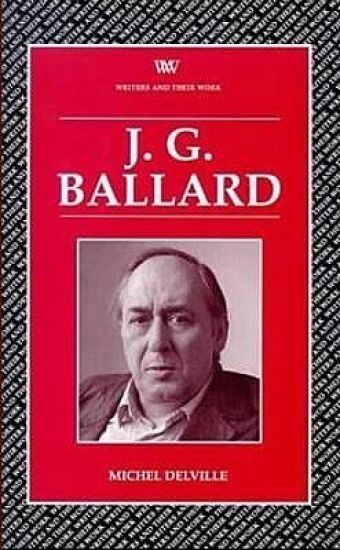
Despite increasing recognition of his unique talents as a novelist and a short story writer, J.G. Ballard (b. 1930) remains one of the most controversial presences in contemporary British fiction. His obsessions with various forms of violence, alienation and sexual perversion have puzzled many readers, critics and publishers. Still, Ballard’s imaginative powers and the originality of his work have also won him the admiration of a broad and international readership. Examining the whole range of Ballard’s writings, from the early science fiction stories to Cocaine Nights (1996), Delville’s study offers a critical and theoretically informed analysis of his achievements as a novelist and a commentator on contemporary culture. It also identifies and clarifies a number of themes which have occupied Ballard throughout his career. These recurrent concerns include the latent and manifest meanings of technological culture, the impact of modern media on the private and collective imagination and the postulate that our personal commitments are necessarily predetermined by our attempts to fictionalize the real.
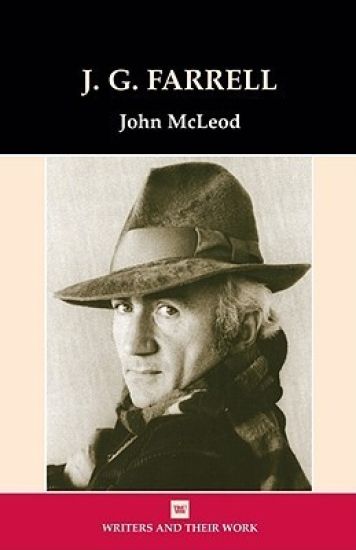
J.G. Farrell’s Empire Trilogy (1970-78) was one of the major achievements of post-war fiction and inspired new generation of writers keen to explore the legacy of the Empire and the emerging postcolonial spaces created in its wake. This new, invigorating and accessible study excitingly explores the substance and significance of the Empire Trilogy and assesses its damning and influential critique of British colonial rule. Rather than positioning him at the end of a tradition of nostalgic Empire writing, John McLeod shows how Farrell’s novels attempt to satirise the perspectives of those who served the Empire and were caught up in its decline. McLeod also explores Farrell’s intriguing early fiction, as well as his unfinished posthumously-published novel, and accounts for his changing critical legacy since his premature death in 1980, aged 44. This insightful study will stimulate both new and established readers of a much beloved and missed novelist.
This is a biography of J.B. Priestley, covering his relationships with his three wives, children and other women and friendships with figures such as H.G. Wells, Clement Attlee, Harold Wilson, Charlie Chaplin and Groucho Marx.
This historical survey of the discovery of the electron has been published to coincide with the centenary of the discovery. The text maps the life and achievements of J.J. Thomson, with particular focus on his ideas and experiments leading to the discovery. It describes Thomson's early years and education. It then considers his career at Cambridge, first as a fellow of Trinity, later as the head of the Cavendish Laboratory and finally as Master of Trinity and national spokesman for science. The core of the book is concerned with the work undertaken at the Cavendish, culminating in the discovery of "corpuscles", later named "electrons".; In the final two chapters, the immediate aftermath and implications of the work are described. These include the creation of the subject of atomic physics as well as the broader long term developments which can be traced from vacuum valves and the transistor through to the microelectronics revolution.
Maintaining appropriate power systems and equipment expertise is necessary for a utility to support the reliability, availability, and quality of service goals demanded by energy consumers now and into the future. However, transformer talent is at a premium today, and all aspects of the power industry are suffering a diminishing of the supply of knowledgeable and experienced engineers. Now in print for over 80 years since initial publication in 1925 by Johnson & Phillips Ltd, the J & P Transformer Book continues to withstand the test of time as a key body of reference material for students, teachers, and all whose careers are involved in the engineering processes associated with power delivery, and particularly with transformer design, manufacture, testing, procurement, application, operation, maintenance, condition assessment and life extension. Current experience and knowledge have been brought into this thirteenth edition with discussions on moisture equilibrium in the insulation system, vegetable based natural ester insulating fluids, industry concerns with corrosive sulphur in oil, geomagnetic induced current (GIC) impacts, transportation issues, new emphasis on measurement of load related noise, and enhanced treatment of dielectric testing (including Frequency Response Analysis), Dissolved Gas analysis (DGA) techniques and tools, vacuum LTCs, shunt and series reactors, and HVDC converter transformers. These changes in the thirteenth edition together with updates of IEC reference Standards documentation and inclusion for the first time of IEEE reference Standards, provide recognition that the transformer industry and market is truly global in scale. -- From the foreword by Donald J. Fallon Martin Heathcote is a consultant specializing in power transformers, primarily working for utilities. In this context he has established working relationships with transformer manufacturers on several continents. His background with Ferranti and the UK’s Central Electricity Generating Board (CEGB) included transformer design and the management and maintenance of transformer-based systems.
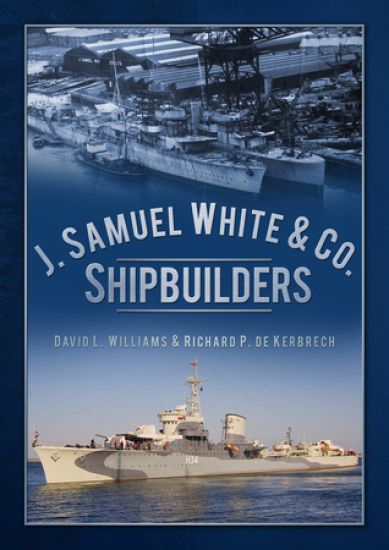
J. Samuel White & Company was the oldest firm on the Admiralty List and built 252 ships for the Royal Navy alone. The yard’s closure in 1966 ended 300 years of shipbuilding during which time the company had gained acclaim from mercantile and naval customers alike. Famed early on for fast Revenue cutters and naval brigs, in its final years Royal Navy destroyers earned it great distinction. Highly innovative, it developed and patented many pioneering products while other innovations included semi-diesel engines, heat exchangers, air conditioners and compressors, besides a range of marine thruster units. Not only did the company build ships and boats but it also constructed a range of marine aircraft. During the First World War, White’s production accounted for 100 ships, including twenty-seven destroyers, and 201 seaplanes. Production during the Second World War added up to 317 ships, among them twenty-six destroyers and a large minelayer. Illustrated with photographs of these and many of the company’s other products, this book tells the story of J. Samuel White and its subsidiary concerns, a business built on a reputation of quality which earned it the slogan: “White’s-built – well-built!”.
The atheism dispute is one of the most important philosophical controversies of late eighteenth and early nineteenth century Germany. Johann Gottlieb Fichte, one of the leading philosophers of the period, was accused of atheism after publishing his essay 'On the Ground of Our Belief in a Divine World-Governance', which he had written in response to Karl Friedrich Forberg's essay 'Development of the Concept of Religion'. Fichte argued that recognition of the moral law includes affirmation of a 'moral world order', which he identified with God. Critics charged both Forberg and Fichte with atheism, thereby prompting Fichte to launch a public campaign of defense that included his threat to resign his position at the University of Jena if he were subjected to any government reprimand. Fichte was forced to make good this threat when his work was censured. The dispute eventually died down but it influenced many other thinkers for years to come. J. G. Fichte: The Atheism Dispute (1798-1800) is the first English commentary devoted solely to the atheism dispute as well as the first English translation of collected writings from the Atheism Dispute. This book brings together many major essays and documents relating to this dispute. These include the anonymous polemic 'A Father's Letter to his Student Son about Fichte's and Forberg's Atheism', Fichte's essays 'Appeal to the Public' and 'Juridical Defense', and numerous documents from the University of Jena and the ducal courts of Dresden, Weimar, and Gotha. Most of the texts are translated from German into English for the first time, and all are accompanied by full commentaries and detailed notes. Bowman and Estes bring to an English speaking audience the full details of this controversy, which ended Fichte's career in Jena and profoundly influenced his approach to communicating philosophical and religious concepts.
In her analysis of the South African novelist J. M. Coetzee's literary and intellectual career, Jane Poyner illuminates the author's abiding preoccupation with what Poyner calls the "paradox of postcolonial authorship". Writers of conscience or conscience-stricken writers of the kind Coetzee portrays, whilst striving symbolically to bring the stories of the marginal and the oppressed to light, always risk reimposing the very authority they seek to challenge. From Dusklands to Diary of a Bad Year, Poyner traces how Coetzee rehearses and revises his understanding of the ethics of intellectualism in parallel with the emergence of the "new South Africa". She contends that Coetzee's modernist aesthetics facilitate a more exacting critique of the problems that encumber postcolonial authorship, including the authority it necessarily engenders. Poyner is attentive to the ways Coetzee's writing addresses the writer's proper role with respect to the changing ethical demands of contemporary political life. Theoretically sophisticated and accessible, her book is a major contribution to our understanding of the Nobel Laureate and to postcolonial studies.
Making the case that J. G. Ballard's fictional and non-fictional writings must be read within the framework of Surrealism, Jeannette Baxter argues for a radical revisioning of Ballard that takes account of the political and ethical dimensions of his work. Ballard's appropriation of diverse Surrealist aesthetic forms and political writings, Baxter suggests, are mobilised to contest official narratives of postwar history and culture and offer a series of counter-historical and counter-cultural critiques. Thus Ballard's work must be understood as an exercise in Surrealist historiography that is politically and ethically engaged. Placing Ballard's illustrated texts within this critical framework permits Baxter to explore the effects of photographs, drawings, and other visual symbols on the reading experience and the production of meaning. Ballard's textual spectacles raise a variety of questions about the shifting role of the reader and the function of the written text within a predominantly visual culture, while acknowledging the visual contexts of Ballard's Surrealist writings allows a very different historical picture of the author and his work to emerge.
Representing a wide range of critical and theoretical perspectives, this volume examines J.M. Coetzee's novels from Dusklands to Diary of a Bad Year. The choice of essays reflects three broad goals: aligning the South African dimension of Coetzee's writing with his "late modernist" aesthetic; exploring the relationship between Coetzee's novels and his essays on linguistics; and paying particular attention to his more recent fictional experiments. These objectives are realized in essays focusing on, among other matters, the function of names and etymology in Coetzee's fiction, the vexed relationship between art and politics in apartheid South Africa, the importance of film in Coetzee's literary sensibility, Coetzee's reworkings of Defoe, the paradoxes inherent in confessional narratives, ethics and the controversial politics of reading Disgrace, intertextuality and the fictional self-consciousness of Slow Man. Through its pronounced emphasis on the novelist's later work, the collection points towards a narrato-political and linguistic reassessment of the Coetzee canon.
J.M.W. Turner and the Subject of History is an in-depth consideration of the artist's complex response to the challenge of creating history paintings in the early nineteenth century. Structured around the linked themes of making and unmaking, of creation and destruction, this book examines how Turner's history paintings reveal changing notions of individual and collective identity at a time when the British Empire was simultaneously developing and fragmenting. Turner similarly emerges as a conflicted subject, one whose artistic modernism emerged out of a desire to both continue and exceed his eighteenth-century aesthetic background by responding to the altered political and historical circumstances of the nineteenth century.