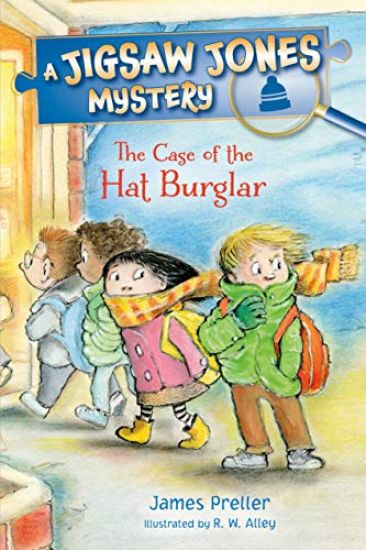
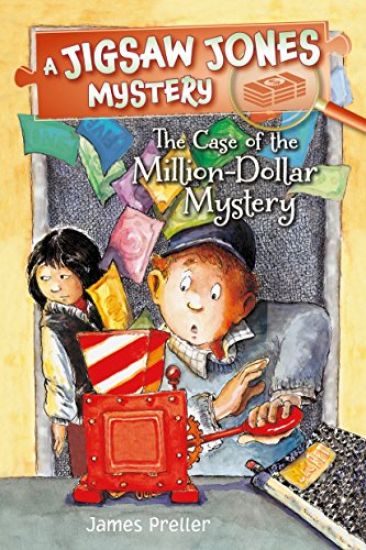
Jigsaw Jones is back A brand new original mystery, The Case of the Hat Burglar is the newest installment of the Jigsaw Jones chapter book series by James Preller. Someone's been stealing from the lost and found. But the strangest part of this mystery is what they've been stealing. Not mittens, or books, or water bottles--only hats Just when Jigsaw comes up with a plan to catch this hat burglar in the act, the mystery thief strikes again right under his nose Will this be the first case Jigsaw and Mila can't solve? Sure to delight and intrigue young minds in equal measure, this never-before-published mystery chapter book is full of charming illustrations and James Preller's signature humor and warmth.
Peabody Jones the young colourful owl stretched, yawned more than he really needed to and then coughed three times to clear his throat and when he was ready he said, '.......' nothing because it was nothing that came out so he tried again and again and still nothing came out. 'Oh my goodness, ' he said, 'now what will I do because all tawny owls are supposed to be able to say to wit to woo first thing in the morning, aren't they' 'Aren't they' he repeated but there wasn't anyone there to answer his question and there should have been so where were they
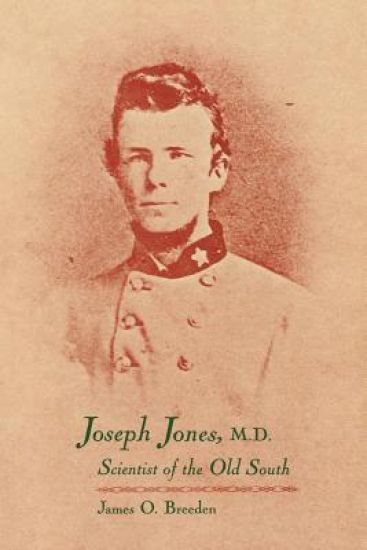
Of the many books written over the past century about the Old South and the American Civil War, a very few explore the scientific history of the South or the medical history of the war itself. In the first volume of this impressive biography of Joseph Jones, Mr. Breeden does much to illuminate the development of scientific thought and of medicine in the nineteenth-century South. Jones was far in advance of most of his fellow physicians. The thoroughness of his research, the tenacity of his effort, and the brilliance of his findings won him respect while he was still a very young scholar. When the war came, he showed himself fiercely patriotic as a soldier but coldly empirical as a scientific investigator of many infectious diseases. In the course of the biography the author illumines the development of modern medicine in this country and the state of the nation's medical schools in the middle of the nineteenth century. The greater part of this volume is devoted to Jones's wartime service, which was mainly behind the battle lines in the hospitals and prison camps. The growth of the problem of gangrene among the wounded -- a horrifying result of overcrowding and lack of sanitation -- is examined in particularly telling detail; the ravaging of the Andersonville prison camp by this and other diseases was the subject of some of Jones's most controversial research, and his written report as a reluctant witness in the trial of the Southerners held responsible. At the outset of the war, Joseph Jones was an energetic and well trained young doctor with considerable experience in teaching and research; by its end he was perhaps the foremost expert on infectious diseases in the South or in the nation.
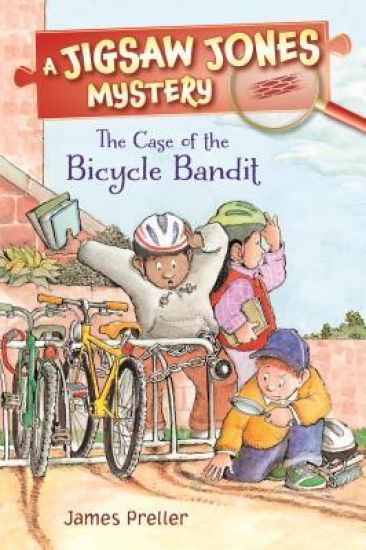
James Preller's wry, witty, Jigsaw Jones chapter book mysteries are once again available to inspire the next generation of young readers, featuring both new titles and classroom classics The Case of the Bicycle Bandit Why would anyone steal an old hunk of junk? Ralphie Jordan loves his beat-up bike, Old Rusty. The tires are bent, spokes are missing, and the chain keeps falling off. But Ralphie wouldn't trade it for any other. Then Old Rusty goes missing just outside the library, and Ralphie is devastated. It's up to Jigsaw and Mila to find out who stole it--and the thief may be closer than anyone would have guessed
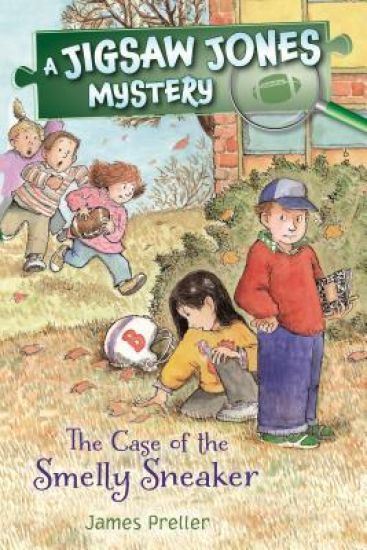
James Preller's wry, witty, Jigsaw Jones chapter book mysteries are once again available to inspire the next generation of young readers, featuring both new titles and classroom classics The Case of the Smelly Sneaker It's girls versus boys in the biggest football game of the year Jigsaw Jones is referee, while his partner, Mila Yeh, is coaching the girls' team. Bobby Solofsky has no doubt the boys will win, but the girls have a secret weapon. Then one of Bigs Maloney's sneakers goes missing, and Bobby wants to call off the whole game. Can Jigsaw and Mila find this sneaker thief in time to save the game?
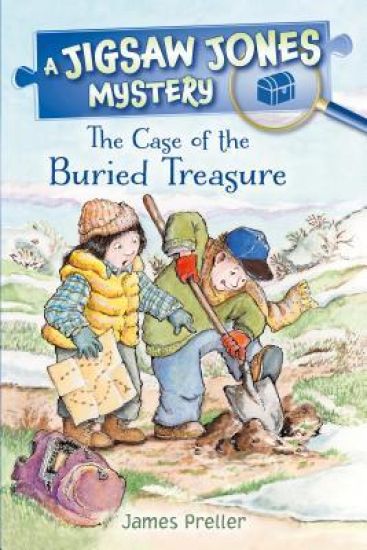
Featuring friendship, school, family, and a diverse community, these early illustrated chapter books from James Preller have it all. Got a mystery to solve? Jigsaw Jones is on the case. When Bigs Maloney finds a cryptic note in room 201 that supposedly leads to buried treasure, only Jigsaw can crack the riddle. Soon, the whole class is counting on him and Mila to strike gold. But one clue leads to another and when Jigsaw finally finds the treasure, it's not exactly what anybody expected. James Preller's wry, witty Jigsaw Jones books are once again available to inspire the next generation of young readers, featuring both new titles and classroom classics This title has Common Core connections.
LeBron James is a six-foot-eight gift from the basketball heavens. He was the undisputed finest high school player in America. He was the one NBA scouts drooled over, corporations dreamed of, event promoters begged for, and now fans clamor after. Never before had a high school basketball player been so highly touted or an eighteen-year-old athlete been the subject of such fascination. Maybe no basketball player in the world has had that level of attention.Now with the Cleveland Cavaliers, LeBron has become a certified NBA all-star. Love him or hate him, there is no denying that LeBron James is a force on the basketball court, and his rags to riches story is the stuff that dreams are made of.Ryan Jones has updated his smash hit book King James to incorporate everything that is LeBron: the controversy, the star power, the shoes, the cars, the hobnobbing with the world's most famous celebrities, and, of course, the game. This is a book for every fan of LeBron James and for anybody interested in reading about an NBA legend in the making.
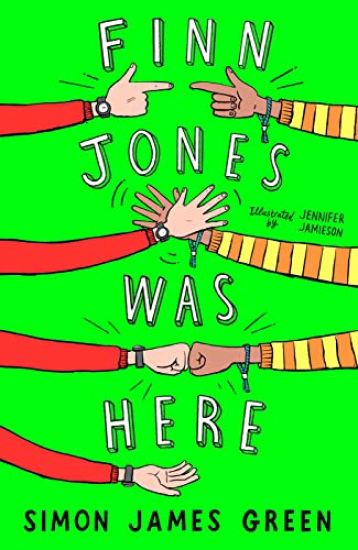
At Finn's funeral, grieving best friend Eric receives a message frombeyond the grave - and it must be because this is Finn's biggestprank ever, faking his own death! As Eric follows Finn's crypticinstructions for various challenges, he goes down memory laneand through a scavenger hunt that will change him for ever.
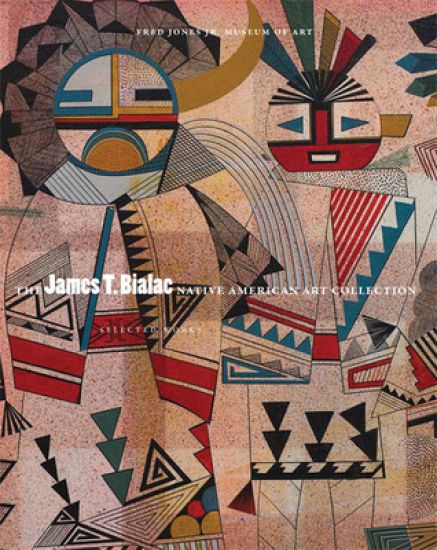
One of the most important collections of modern Native American art assembled by one individual, the James T. Bialac Native American Art Collection is an encyclopedic compilation of easel paintings and three-dimensional works. Showcased in this stunning catalogue, the collection comprises nearly four thousand items, including drawings, sculptures, prints, kachinas, jewelry, ceramics, rattles, baskets, and textiles.James T. Bialac began collecting art in the 1950s, when he was a student at the University of Arizona School of Law. It was then that he purchased the first of what would develop into a collection of more than one thousand kachina dolls. In 1964 he acquired his first painting, Robert Chee's Moccasin Game, and he went on to expand his collection to reflect the diversity of Native American art forms. Inspired by his connections with other collectors, Bialac learned the importance of documenting, cataloging, and preserving his collection. In 2010 he bequeathed the collection to the University of Oklahoma, where the art will be displayed at the Fred Jones Jr. Museum of Art, as well as at other locations, including Bialac's native Arizona.The Bialac Collection represents indigenous cultures across North America, especially the Pueblos of the Southwest, Navajos, Hopis, and many of the tribes of the Great Plains. It encompasses such important and innovative artists as Fred Kabotie, Alfonso Roybal, Fritz Scholder, Joe Hilario Herrera, Allan Houser, Jerome Tiger, Tonita Peña, Helen Hardin, Pablita Velarde, George Morrison, Walter Richard ""Dick"" West, and Patrick DesJarlait, all of whose work is featured in this volume.Along with its rich sampling of works from the Bialac Collection, this catalogue offers informative essays by art historians, who draw on their areas of expertise to explain the significance of the artwork. The volume also features a foreword by David L. Boren, President of the University of Oklahoma, a preface by Ghislain d'Humières, Director of the Fred Jones Jr. Museum of Art, and an introduction by Mary Jo Watson, Director of the School of Art and Art History.Published in cooperation with the Fred Jones Jr. Museum of Art, University of Oklahoma.
One of the most important collections of modern Native American art assembled by one individual, the James T. Bialac Native American Art Collection is an encyclopedic compilation of easel paintings and three-dimensional works. Showcased in this stunning catalogue, the collection comprises nearly four thousand items, including drawings, sculptures, prints, kachinas, jewelry, ceramics, rattles, baskets, and textiles.James T. Bialac began collecting art in the 1950s, when he was a student at the University of Arizona School of Law. It was then that he purchased the first of what would develop into a collection of more than one thousand kachina dolls. In 1964 he acquired his first painting, Robert Chee's Moccasin Game, and he went on to expand his collection to reflect the diversity of Native American art forms. Inspired by his connections with other collectors, Bialac learned the importance of documenting, cataloging, and preserving his collection. In 2010 he bequeathed the collection to the University of Oklahoma, where the art will be displayed at the Fred Jones Jr. Museum of Art, as well as at other locations, including Bialac's native Arizona.The Bialac Collection represents indigenous cultures across North America, especially the Pueblos of the Southwest, Navajos, Hopis, and many of the tribes of the Great Plains. It encompasses such important and innovative artists as Fred Kabotie, Alfonso Roybal, Fritz Scholder, Joe Hilario Herrera, Allan Houser, Jerome Tiger, Tonita Peña, Helen Hardin, Pablita Velarde, George Morrison, Walter Richard ""Dick"" West, and Patrick DesJarlait, all of whose work is featured in this volume.Along with its rich sampling of works from the Bialac Collection, this catalogue offers informative essays by art historians, who draw on their areas of expertise to explain the significance of the artwork. The volume also features a foreword by David L. Boren, President of the University of Oklahoma, a preface by Ghislain d'Humières, Director of the Fred Jones Jr. Museum of Art, and an introduction by Mary Jo Watson, Director of the School of Art and Art History.Published in cooperation with the Fred Jones Jr. Museum of Art, University of Oklahoma.
“The life, work and activism of Rocky Jones are central to African-Canadian history and the civil rights movement in Canada. Canadians lost a great soul, with the recent death of Rocky Jones, but his autobiography – co-written by James Walker, a close friend of Rocky Jones and one of our foremost writers about Black history in Canada – is a wonderful gift to the entire country. Revolutionary will soon be required reading for any person who seeks to understand the civil rights movement in Canada.”– Lawrence Hill“A must read, a manual for all freedom fighters, and a testament to Rocky Jones' and Black power and resilience.”- Afua Cooper“Any telling of human rights and social equity in Canada would be incomplete without reference to "revolutionary" Rocky Jones' truth-telling about his life captured in this compelling exemplary autobiography. This insightful account is not only about life as an African Nova Scotian, but also about the community, law, politics.”- Carl JamesBorn and raised in Truro, Nova Scotia, Burnley "Rocky" Jones is one of Canada's most important figures of social justice. Often referred to as Canada's Stokely Carmichael, Jones was tirelessly dedicated to student movements, peace activism, Black Power, anti-racism, women's liberation and human rights reform. He was a leader in the Student Nonviolent Coordinating Committee, brought the Black Panthers to Canada, taught at Dalhousie and founded his own law firm.This autobiography tells the story of Jones's inimitable life and his accomplishments.But it also does more. It illuminates the Black experience in Nova Scotia, it explains the evolving nature of race relations and human rights in recent Canadian history, and it reveals the origins of the "remedial" approach to racial equality that is now practised by activists and governments.Finally, the story of Rocky Jones is a reminder that human rights are not a gift, but a prize that must be fought for.
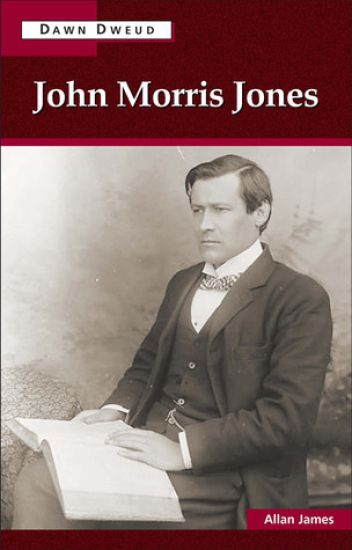
A biography of John Morris-Jones (1864-1929), Welsh grammarian, academic and poet. This book offers a critical analysis of his contribution, as well as a portrait of him as a family man, based on a fascinating series of personal letters to his wife and friends.