Kirjojen hintavertailu. Mukana 11 342 296 kirjaa ja 12 kauppaa.

Kirjahaku

Etsi kirjoja tekijän nimen, kirjan nimen tai ISBN:n perusteella.

1000 tulosta hakusanalla James M. Hutchisson

Blue Water Patriots

Blue Water Patriots

James M. Volo

Praeger Publishers Inc
2006
sidottu
In 1775, it seemed inconceivable that the American colonists could overcome the overwhelming military superiority of Great Britain. Yet the belligerent colonists were certain they could defeat the British army they so despised. On the other hand, their one great fear was that they would not be able to overcome the presence of the Royal Navy. Somehow though, the colonists were able to resist the British at sea, attract capable allies, and successfully conclude their quest for independence. The primary focus of this work is the period prior to 1779 before the French had come to the aid of the fledgling American nation—when the Blue Water Patriots confronted the Royal Navy alone, relying on little more than ingenuity and courage.In 1775, it was inconceivable that the American colonists could have overcome the overwhelming military superiority of Great Britain. Yet the belligerent colonists seemed certain that they could defeat the British army they so despised. On the other hand, the one great fear shared by all colonists was that they would not be able to overcome the presence of the Royal Navy. Yet, somehow, the colonists were able to resist the British at sea, attract capable allies to aid them, and successfully conclude their quest for independence. The American Revolution can safely be viewed as part of a prolonged worldwide naval conflict between France and Britain beginning with the Glorious Revolution in 1688 and ending with the British victory at Trafalgar in 1805 during the Napoleonic Wars. This was a period in which the armed merchantmen of the age of trade were replaced by genuine warships whose task was to control the sea lanes. The American Revolution was a watershed in this regard with improved warship designs, new technologies, improved gunpowder and communications, and innovative tactics. Although French participation in the war for independence was crucial, the primary focus of this work is the period before 1779, when the colonists confronted the Royal Navy alone with only their ingenuity and courage to defend them.Every school child knows that the American Revolution began on Lexington Green in April, 1775, but how many are aware that in 1764 a Royal Navy cutter, St. John, engaged in the suppression of smuggling, was fired upon by Rhode Islanders; that in 1769, the revenue sloop Liberty was seized and burned by the people of Newport; or that in 1772, the navy cutter Gaspee was burned in the night by armed patriots attacking from small boats. These Blue Water Patriots fought the first battles on the road to American independence. This is their story.

Remembering Victoria

Remembering Victoria

James M. Taggart

University of Texas Press
2007
pokkari
On October 15, 1983, a young mother of six was murdered while walking across her village of Huitzilan de Serdán, Mexico, with her infant son and one of her daughters. This woman, Victoria Bonilla, was among more than one hundred villagers who perished in violence that broke out soon after the Mexican army chopped down a cornfield that had been planted on an unused cattle pasture by forty Nahuat villagers. In this anthropological account, based on years of fieldwork in Huitzilan, James M. Taggart turns to Victoria's husband, Nacho Angel Hernández, to try to understand how a community based on respect and cooperation descended into horrific violence and fratricide. When the army chopped down the cornfield at Talcuaco, the war that broke out resulted in the complete breakdown of the social and moral order of the community. At its heart, this is a tragic love story, chronicling Nacho's feelings for Victoria spanning their courtship, marriage, family life, and her death. Nacho delivered his testimonio to the author in Nahuat, making it one of the few autobiographical love stories told in an Amerindian language, and a very rare account of love among the indigenous people of Mesoamerica. There is almost nothing in the literature on how a man develops and changes his feelings for his wife over his lifetime. This study contributes to the anthropology of emotion by focusing on how the Nahuat attempt to express love through language and ritual.
The Art of Professing in Bourbon Mexico

The Art of Professing in Bourbon Mexico

James M. Córdova

University of Texas Press
2014
sidottu
In the eighteenth century, New Spaniards (colonial Mexicans) so lauded their nuns that they developed a local tradition of visually opulent portraits, called monjas coronadas or “crowned nuns,” that picture their subjects in regal trappings at the moment of their religious profession and in death. This study identifies these portraits as markers of a vibrant and changing society that fused together indigenous and Euro-Christian traditions and ritual practices to construct a new and complex religious identity that was unique to New Spain.To discover why crowned-nun portraits, and especially the profession portrait, were in such demand in New Spain, this book offers a pioneering interpretation of these works as significant visual contributions to a local counter-colonial discourse. James M. CÓrdova demonstrates that the portraits were a response to the Spanish crown’s project to modify and modernize colonial society-a series of reforms instituted by the Bourbon monarchs that threatened many nuns’ religious identities in New Spain. His analysis of the portraits’ rhetorical devices, which visually combined Euro-Christian and Mesoamerican notions of the sacred, shows how they promoted local religious and cultural values as well as client-patron relations, all of which were under scrutiny by the colonial Church. Combining visual evidence from images of the “crowned nun” with a discussion of the nuns’ actual roles in society, CÓrdova reveals that nuns found their greatest agency as Christ’s brides, a title through which they could, and did, challenge the Church’s authority when they found it intolerable.
The Bear and His Sons

The Bear and His Sons

James M. Taggart

University of Texas Press
1997
pokkari
All the world over, people tell stories to express their deepest feelings about such things as what makes a "real" man or woman; what true love, courage, or any other virtue is; what the proper relationships are between people. Often groups of people widely separated by space or time will tell the same basic story, but with differences in the details that reveal much about a particular group's worldview.This book looks at differences in the telling of several common Hispanic folktales. James Taggart contrasts how two men-a Spaniard and an Aztec-speaking Mexican-tell such tales as "The Bear's Son." He explores how their stories present different ways of being a man in their respective cultures.Taggart's analysis contributes to a revision of Freud's theory of gender, which was heavily grounded in biological determinism. Taggart focuses instead on how fathers reproduce different forms of masculinity in their sons. In particular, he shows how fathers who care for their infant sons teach them a relational masculinity based on a connected view of human relationships. Thus, The Bear and His Sons will be important reading not only in anthropology and folklore, but also in the growing field of men's studies.
Nahuat Myth and Social Structure

Nahuat Myth and Social Structure

James M. Taggart

University of Texas Press
1997
pokkari
First published in 1983, Nahuat Myth and Social Structure brings together an important collection of modern-day Aztec Indian folktales and vividly demonstrates how these tales have been shaped by the social structure of the communities in which they are told.
Art in Seattle's Public Spaces

Art in Seattle's Public Spaces

James M. Rupp

University of Washington Press
2018
pokkari
From cedar totem poles to high-tech video installations, downtown Seattle sparkles with hundreds of artworks adorning plazas, lobbies, parks, and waterfront piers and paths. This impressive collection, comprising works by artists with regional or international reputations (and often both), has expanded rapidly as Seattle's urban core has grown.The explosive development of South Lake Union in recent years has brought major works by Jaume Plensa, Julie Speidel, Annie Han and Daniel Mihalyo, Buster Simpson, Jenny Heishman, and more. The Seattle Art Museum's ten-year-old Olympic Sculpture Park provides a breathtaking setting for Richard Serra's monumental Wake and Beverly Pepper's ever-changing Perre's Ventaglio III, and links the downtown waterfront to Myrtle Edwards Park, which features Michael Heizer's once-maligned and now beloved Adjacent, Against, Upon.To tell the lively stories of those who commissioned and created these artworks, James Rupp interviewed and corresponded with more than ninety artists, also drawing from newspaper reviews, books, catalogs, and artist statements. Photographs by Miguel Edwards, all new to this book, showcase the pieces' street-level presentation and help the reader understand the larger impact of each work in its neighborhood context. This comprehensive guide offers detailed information about the individual works of art, organized by downtown neighborhood, and featuring:More than 350 artworksOver 300 color photographs9 detailed area maps for self-guided toursUnique descriptions of each artworkBiographies of all the artistsPerfect for art and architecture lovers, as well as visitors and newcomers to the city, Art in Seattle's Public Spaces showcases the wealth of urban art to be freely enjoyed by all.A Michael J. Repass Book
Jade Mountains and Cinnabar Pools

Jade Mountains and Cinnabar Pools

James M. Hargett

University of Washington Press
2018
sidottu
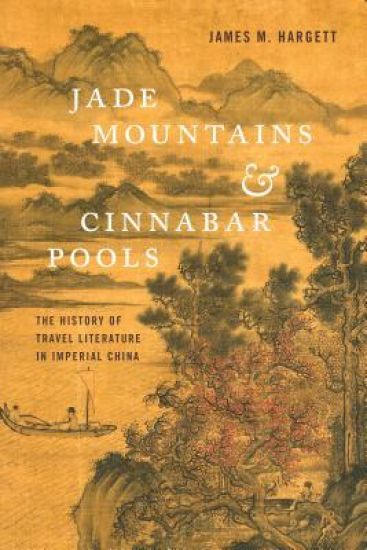
First-hand accounts of travel provide windows into places unknown to the reader, or new ways of seeing familiar places. In Jade Mountains and Cinnabar Pools, the first book-length treatment in English of Chinese travel literature (youji), James M. Hargett identifies and examines core works in the genre, from the Six Dynasties period (220–581), when its essential characteristics emerged, to its florescence in the late Ming dynasty (1368–1644). He traces the dynamic process through which the genre, most of which was written by scholars and officials, developed, and shows that key features include a journey toward an identifiable place; essay or diary format; description of places, phenomena, and conditions, accompanied by authorial observations, comments, and even personal feelings; inclusion of sensory details; and narration of movement through space and time.Travel literature's inclusion of a variety of writing styles and purposes has made it hard to delineate. Hargett finds, however, that classic pieces of Chinese travel literature reveal much about the author, his values, and his view of the world, which in turn tells us about the author's society, making travel literature a rich source of historical information.
Jade Mountains and Cinnabar Pools

Jade Mountains and Cinnabar Pools

James M. Hargett

University of Washington Press
2018
pokkari
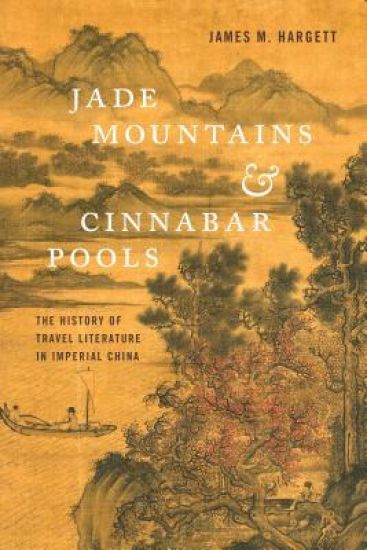
First-hand accounts of travel provide windows into places unknown to the reader, or new ways of seeing familiar places. In Jade Mountains and Cinnabar Pools, the first book-length treatment in English of Chinese travel literature (youji), James M. Hargett identifies and examines core works in the genre, from the Six Dynasties period (220–581), when its essential characteristics emerged, to its florescence in the late Ming dynasty (1368–1644). He traces the dynamic process through which the genre, most of which was written by scholars and officials, developed, and shows that key features include a journey toward an identifiable place; essay or diary format; description of places, phenomena, and conditions, accompanied by authorial observations, comments, and even personal feelings; inclusion of sensory details; and narration of movement through space and time.Travel literature's inclusion of a variety of writing styles and purposes has made it hard to delineate. Hargett finds, however, that classic pieces of Chinese travel literature reveal much about the author, his values, and his view of the world, which in turn tells us about the author's society, making travel literature a rich source of historical information.
Immigrants in Courts

Immigrants in Courts

James M. Dolliver

University of Washington Press
1999
pokkari
Hundreds of thousands of immigrants enter the United States each year, and the number appearing in U.S. courts is rising in many states. Immigrants in Courts addresses their access to justice in the United States and the procedural obstacles they face. Immigrants' cultural and linguistic dilemmas in court are explored through their words and the reports of judges, attorneys, and court interpreters. Techniques for responding to the problem are examined in this readable and informative text.Immigrants in Courts provides judges, court staff, and advocates with ready information about the legal and cultural systems under which many immigrants grew up. Legal experts discuss the legal systems of four countries--China, Mexico, Russia, and Vietnam--and of the Muslim world. They explore not only how the law appears on the books but how the general population of a country perceives its legal system and how perceptions affect expectations in the new country.
Voices from the Camps

Voices from the Camps

James M. Freeman; Nguyen Dinh Huu

University of Washington Press
2003
sidottu
Wave after wave of political and economic refugees poured out of Vietnam beginning in the late 1970s, overwhelming the resources available to receive them. Squalid conditions prevailed in detention centers and camps in Hong Kong and throughout Southeast Asia, where many refugees spent years languishing in poverty, neglect, and abuse while supposedly being protected by an international consortium of caregivers. Voices from the Camps tells the story of the most vulnerable of these refugees: children alone, either orphaned or separated from their families.Combining anthropology and social work with advocacy for unaccompanied children everywhere, James M. Freeman and Nguyen Dinh Huu present the voices and experiences of Vietnamese refugee children neglected and abused by the system intended to help them. Authorities in countries of first asylum, faced with thousands upon thousands of increasingly frightened, despairing, and angry people, needed to determine on a case-by-case basis whether they should be sent back to Vietnam or be certified as legitimate refugees and allowed to proceed to countries of resettlement. The international community, led by UNHCR, devised a well-intentioned screening system. Unfortunately, as Freeman and Nguyen demonstrate, it failed unaccompanied children.The hardships these children endured are disturbing, but more disturbing is the story of how the governments and agencies that set out to care for them eventually became the children's tormenters. When Vietnam, after years of refusing to readmit illegal emigrants, reversed its policy, the international community began doing everything it could to force them back to Vietnam. Cutting rations, closing schools, separating children from older relations and other caregivers, relocating them in order to destroy any sense of stability--the authorities employed coercion and effective abuse with distressing ease, all in the name of the "best interests" of the children.While some children eventually managed to construct a decent life in Vietnam or elsewhere, including the United States, all have been scarred by their refugee experience and most are still struggling with the legacy. Freeman and Nguyen's presentation and analysis of this sobering chapter in recent history is a cautionary tale and a call to action.
Voices from the Camps

Voices from the Camps

James M. Freeman; Nguyen Dinh Huu

University of Washington Press
2003
pokkari
Wave after wave of political and economic refugees poured out of Vietnam beginning in the late 1970s, overwhelming the resources available to receive them. Squalid conditions prevailed in detention centers and camps in Hong Kong and throughout Southeast Asia, where many refugees spent years languishing in poverty, neglect, and abuse while supposedly being protected by an international consortium of caregivers. Voices from the Camps tells the story of the most vulnerable of these refugees: children alone, either orphaned or separated from their families.Combining anthropology and social work with advocacy for unaccompanied children everywhere, James M. Freeman and Nguyen Dinh Huu present the voices and experiences of Vietnamese refugee children neglected and abused by the system intended to help them. Authorities in countries of first asylum, faced with thousands upon thousands of increasingly frightened, despairing, and angry people, needed to determine on a case-by-case basis whether they should be sent back to Vietnam or be certified as legitimate refugees and allowed to proceed to countries of resettlement. The international community, led by UNHCR, devised a well-intentioned screening system. Unfortunately, as Freeman and Nguyen demonstrate, it failed unaccompanied children.The hardships these children endured are disturbing, but more disturbing is the story of how the governments and agencies that set out to care for them eventually became the children's tormenters. When Vietnam, after years of refusing to readmit illegal emigrants, reversed its policy, the international community began doing everything it could to force them back to Vietnam. Cutting rations, closing schools, separating children from older relations and other caregivers, relocating them in order to destroy any sense of stability--the authorities employed coercion and effective abuse with distressing ease, all in the name of the "best interests" of the children.While some children eventually managed to construct a decent life in Vietnam or elsewhere, including the United States, all have been scarred by their refugee experience and most are still struggling with the legacy. Freeman and Nguyen's presentation and analysis of this sobering chapter in recent history is a cautionary tale and a call to action.
Robert Koehler's 'the Strike'

Robert Koehler's 'the Strike'

James M. Dennis

University of Wisconsin Press
2011
nidottu
Every work of art has a story behind it. In 1886 the German American artist Robert Koehler painted a dramatic wide-angle depiction of an imagined confrontation between factory workers and their employer. He called this oil painting The Strike. It has had a long and tumultuous international history as a symbol of class struggle and the cause of workers’ rights. First exhibited just days before the tragic Chicago Haymarket riot, The Strike became an inspiration for the labor movement. In the midst of the campaign for an eight-hour workday, it gained international attention at expositions in Paris, Munich, and the 1893 Chicago World’s Fair. Though the painting fell into obscurity for decades in the early twentieth century, The Strike lived on in wood-engraved reproductions in labor publications. Its purchase, restoration, and exhibition by New Left activist Lee Baxandall in the early 1970s launched it to international fame once more, and collectors and galleries around the world scrambled to acquire it. It is now housed in the Deutsches Historisches Museum in Berlin, Germany. Art historian James M. Dennis has crafted a compelling “biography” of Koehler’s painting: its exhibitions, acclaim, neglect, and rediscovery. He introduces its German-born creator and politically diverse audiences and traces the painting’s acceptance and rejection through the years, exploring how class and sociopolitical movements affected its reception. Dennis considers the significance of key figures in the painting, such as the woman asserting her presence in the center of action. He compellingly explains why The Strike has earned its identity as the iconic painting of the industrial labor movement.
The Music of Alexander Scriabin

The Music of Alexander Scriabin

James M. Baker

Yale University Press
1986
sidottu
Alexander Scriabin was one of a few major composers who revolutionized musical style in the first decade of the twentieth century by eliminating key as a structural principle and by establishing a new use of dissonant harmonies. This book by James M. Baker is a study of Scriabin’s twentieth-century music, the first thorough analysis of the composer’s evolution from conventional tonality to his later atonal structure. Baker demonstrates that in Scriabin’s transitional music, tonal and atonal procedures—generally considered mutually exclusive—work together to create unified compositions. Baker places Scriabin’s harmony in the perspective of voice leading, applying Schenkerian techniques of analysis to his music for the first time. He explains the great variety of sonorities and their complex relations within the framework of set-complex theory and introduces an original method of statistical analysis to survey Scriabin’s harmonic practice from 1903 to 1914. Offering comprehensive analyses of a considerable number of complete compositions, including such important works as the Fifth Piano Sonata and the Poem of Ecstasy, Baker concludes with a penetrating examination of Prometheus, Scriabin’s largest and most complex composition. The literature thus far on Scriabin has emphasized aspects of his often eccentric personality and has focused narrowly on his use of certain characteristic harmonies, especially the famous “mystic chord.” This thought-provoking theoretical treatise takes an important step toward a deeper understanding of the composer’s accomplishments.
The Poetry of Michelangelo

The Poetry of Michelangelo

James M. Saslow

Yale University Press
1993
pokkari
This is the only available bilingual edition of the more than three hundred sonnets, madrigals, and other poems produced by Michelangelo over his long career. The poems are invaluable for what they reveal of the artist's innermost feelings about such universal themes as love, death, and redemption. "A superb introduction to Michelangelo's life, a masterful bilingual presentation of his written work, commentaries, and an annotated bibliography. . . . A handsome volume of pure scholarship that will find a permanent place in one's library, to be dipped into from time to time as a source of deep enjoyment."—Virginia Quarterly Review "For educated readers who want to know what Michelangelo's poetry manages to do, who want a guide through the Italian and even more through the conventions that enabled Michelangelo to write at all, this is an indispensable book."—Richard Howard"The exceptionally difficult task of translating Michelangelo's poetry has been accomplished with aplomb: equally successful is the no less difficult task of placing the poems within their biographical, social, intellectual, and artistic context. Saslow's annotated translation will be the standard critical edition of Michelangelo's poetry."—William E. Wallace
The Elements of Learning

The Elements of Learning

James M. Banner; Harold C. Cannon

Yale University Press
2001
pokkari
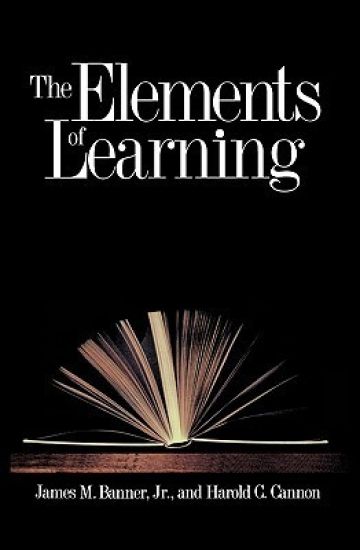
This engaging and helpful book is both a thoughtful celebration of the learning process and a practical guide to becoming a better student. Written by the authors of the acclaimed Elements of Teaching, it is designed to help students of all ages—particularly high school and college students—attain their full potential for success in any area of study.James M. Banner, Jr., and Harold C. Cannon explore the qualities needed to get the most out of education: industry, enthusiasm, pleasure, curiosity, aspiration, imagination, self-discipline, civility, cooperation, honesty, and initiative. For each of these elements they offer general reflections, useful suggestions, and a description of a fictional student who either embodies or lacks these qualities. The second part of the book helps students understand the environment in which they learn, by focusing on such topics as teachers, the curriculum, ways of learning, and the transition from school to college. The core points of the text are reinforced by answers to questions that haunt students, as well as tips on what to do to become the best student possible. Throughout, the authors encourage students to consider learning as part of their lives and to be active participants in their own education.
A Smart Energy Policy

A Smart Energy Policy

James M. Griffin

Yale University Press
2009
sidottu
While everyone wants energy that is clean, cheap, and secure, these goals often conflict: traditional fossil fuels tend to be cheaper than alternative fuels, but they are hardly clean or (in the case of oil) secure. This timely book provides an easy-to-understand explanation of the issues as well as sensible proposals for a truly sustainable energy policy. Economist James Griffin points out that current energy policies are fatally flawed and that government policies should focus on “getting the prices right” so that the prices of fossil fuels reflect their true costs to society—including greenhouse gas and security costs. By using carbon and security taxes, alternative energy forms will be able to compete on a more even playing field against fossil fuels. This will unleash advances in alternative energy and conservation technologies enabling the marketplace and consumers to find the right balance among energy sources that are cheap, clean, and secure.
The Hand of the Past in Contemporary Southern Politics

The Hand of the Past in Contemporary Southern Politics

James M. Glaser

Yale University Press
2013
pokkari
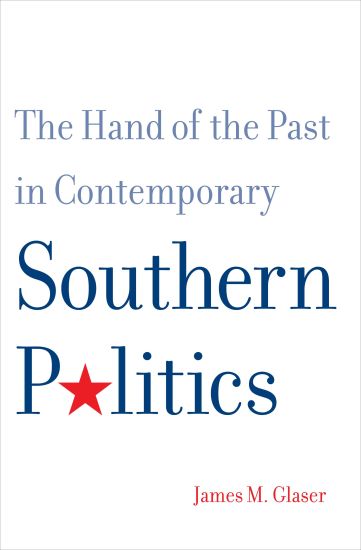
A central story of contemporary southern politics is the emergence of Republican majorities in the region’s congressional delegation. Acknowledging the significance and scope of the political change, James M. Glaser argues that, nevertheless, strands of continuity affect the practice of campaign politics in important ways. Strong southern tradition underlies the strategies pursued by the candidates, their presentational styles, and the psychology of their campaigns. The author offers eyewitness accounts of recent congressional campaigns in Texas, Mississippi, Virginia, North Carolina, and South Carolina. In the tradition of his award-winning book Race, Campaign Politics, and the Realignment in the South, Glaser captures the “stuff” of politics—the characters, the images, the rhetoric, and the scenery. Painting a full and fascinating picture of what it is like on the campaign trail, Glaser provides wide-ranging insights into the ways that the “hand of the past” reaches into the southern present.
The Politics of Empire at the Accession of George III

The Politics of Empire at the Accession of George III

James M. Vaughn

Yale University Press
2019
sidottu
An important revisionist history that casts eighteenth-century British politics and imperial expansion in a new light “An important book . . . . Vaughn has greatly added to our understanding of Britain’s empire and politics.”—Journal of Modern HIstory In this bold debut work, historian James M. Vaughn challenges the scholarly consensus that British India and the Second Empire were founded in “a fit of absence of mind.” He instead argues that the origins of the Raj and the largest empire of the modern world were rooted in political conflicts and movements in Britain. It was British conservatives who shaped the Second Empire into one of conquest and dominion, emphasizing the extraction of resources and the subjugation of colonial populations. Drawing on a wide array of sources, Vaughn shows how the East India Company was transformed from a corporation into an imperial power in the service of British political forces opposed to the rising radicalism of the period. The Company’s dominion in Bengal, where it raised territorial revenue and maintained a large army, was an autocratic bulwark of Britain’s established order. A major work of political and imperial history, this volume offers an important new understanding of the era and its global ramifications.
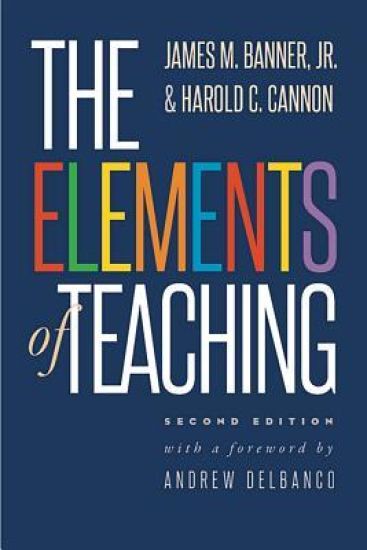
The Elements of Teaching

The Elements of Teaching

James M. Banner; Harold C. Cannon; Andrew Delbanco

Yale University Press
2017
pokkari
A newly revised edition of this classic work, exploring the diverse qualities essential for teaching in today’s educational environment."A true classic. Every teacher and parent should read this book."—Diane Ravitch According to Banner and Cannon, to be an effective teacher requires much more than technical skill. Great teaching is an art that combines a wide range of intellectual, moral, and emotional components. This classic work explores the qualities of mind and spirit that are essential for those seeking to help others acquire knowledge and understanding. It analyzes the specific qualities of successful teachers: learning, authority, ethics, order, imagination, tenacity, compassion, patience, character, and pleasure. Written in a clear and engaging style and applicable to all levels of teaching—be it in schools and universities or on athletic fields and in the home—the book encourages teachers to consider how they might enlarge their understanding of the great art of teaching.
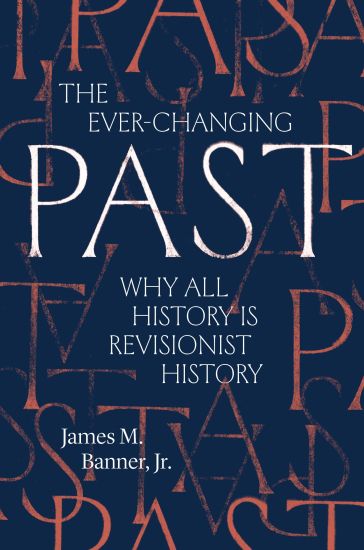
The Ever-Changing Past

The Ever-Changing Past

James M. Banner

Yale University Press
2021
sidottu
An experienced, multi-faceted historian shows how revisionist history is at the heart of creating historical knowledge “A rallying cry in favor of historians who, revisiting past subjects, change their minds. . . . Rewarding reading.”—Kirkus Reviews “A wise, erudite, and, perhaps most important, a clearly written examination of the ways historians go about their craft of interpreting and reinterpreting the past.”—Gordon S. Wood, Brown University History is not, and has never been, inert, certain, merely factual, and beyond reinterpretation. Taking readers from Thucydides to the origin of the French Revolution to the Civil War and beyond, James M. Banner, Jr., explores what historians do and why they do it. Banner shows why historical knowledge is unlikely ever to be unchanging, why history as a branch of knowledge is always a search for meaning and a constant source of argument, and why history is so essential to individuals’ awareness of their location in the world and to every group and nation’s sense of identity and destiny. He explains why all historians are revisionists while they seek to more fully understand the past, and how they always bring their distinct minds, dispositions, perspectives, and purposes to bear on the subjects they study.