Kirjojen hintavertailu. Mukana 11 627 220 kirjaa ja 12 kauppaa.

Kirjahaku

Etsi kirjoja tekijän nimen, kirjan nimen tai ISBN:n perusteella.

1000 tulosta hakusanalla James T. Cook

Brutes or Angels

Brutes or Angels

James T. Bradley

The University of Alabama Press
2013
sidottu
A guide to the rapidly progressing Age of Biotechnology, Brutes or Angels provides basic information on a wide array of new technologies in the life sciences, along with the ethical issues raised by each. With stem cell research, Dolly the cloned sheep, in vitro fertilization, age retardation, and pharmaceutical mind enhancement, humankind is now faced with decisions that it has never before had to consider. The thoughtfulness, or lack of it, that we bring to those decisions will largely determine the future character of the living world. Brutes or Angels will facilitate informed choice making about the personal use of biotechnologies and the formulation of public policies governing their development and use. Ten biotechnologies that impact humans are considered: stem cell research, embryo selection, human genomics, gene therapies, human reproductive cloning, age retardation, cognition enhancement, the engineering of nonhuman organisms, nanobiology, and synthetic biology. With deft and assured use of metaphors, analogies, diagrams, and photographs, James T. Bradley introduces important biological principles and the basic procedures used in biotechnology. Various ethical issues--personhood, personal identity, privacy, ethnic discrimination, distributive justice, authenticity and human nature, and the significance of mortality in the human life cycle--are presented in a clear and unbiased manner. Personal reflection and group dialogue are encouraged by questions at the end of each chapter, making this book not only a general guide to better informed and nuanced thinking on these complex and challenging topics but also an appropriate text for bioethics courses in university science departments and for adult education classes. Standing at the beginning of the twenty-first century, with burgeoning abilities to enhance and even create life in ways unimaginable just a few decades ago, humans have an awesome responsibility to themselves and other species. Brutes or Angels invites us to engage each other in meaningful dialogue by listening, gathering information, formulating thoughtful views, and remaining open to new knowledge and ethical argumentation.
Re-Creating Nature

Re-Creating Nature

James T. Bradley

The University of Alabama Press
2019
sidottu
An exploration of the moral and ethical implications of new biotechnologies. Many of the ethical issues raised by new technologies have not been widely examined, discussed, or indeed settled. For example, robotics technology challenges the notion of personhood. Should a robot, capable of making what humans would call ethical decisions, be held responsible for those decisions and the resultant actions? Should society reward and punish robots in the same way that it does humans? Likewise, issues of safety, environmental concerns, and distributive justice arise with the increasing acceptance of genetically modified organisms (GMOs) in food production nanotechnology in engineering and medicine, and human gene therapy and enhancement. The problem of dual-use—when a technology can be used both to benefit and to harm—exists with virtually all new technologies but is central in the context of emerging 21st century technologies ranging from artificial intelligence and robotics to human gene-editing and brain-computer interfacing. In Re-Creating Nature: Science, Technology, and Human Values in the Twenty-First Century, James T. Bradley addresses emerging biotechnologies with prodigious potential to benefit humankind but that are also fraught with ethical consequences. Some actually possess the power to directly alter the evolution of life on earth including human. Specifically, these topics include stem cells, synthetic biology, GMOs in agriculture, nanotechnology, bioterrorism, CRISPR gene-editing technology, three-parent babies, robotics and roboethics, artificial intelligence, and human brain research and neurotechnologies. Offering clear explanations of these various technologies, a pragmatic presentation of the conundrums involved, and questions that illuminate hypothetical situations, Bradley guides discussions of these and other thorny issues resulting from the development of new biotechnologies. He also highlights the responsibilities of scientists to conduct research in an ethical manner and the responsibilities of nonscientists to become ""science literate"" in the twenty-first century.
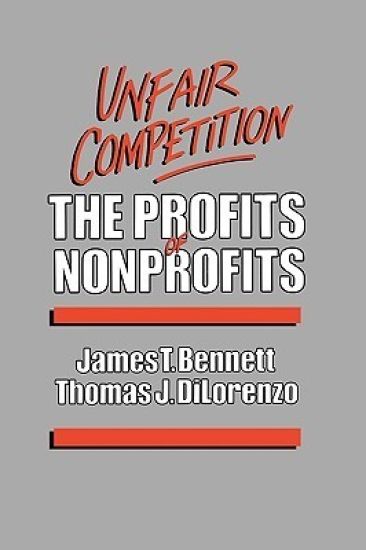
Unfair Competition

Unfair Competition

James T. Bennett; Thomas J. Dilorenzo

University Press of America
1989
sidottu
Unfair Competition is an in-depth investigation of the commercial activities of nonprofit organizations. Nonprofits have been granted many special privileges by the government, including exemption from taxation and subsidized postal rates. These privileges lower operating costs so nonprofits may carry out their public service mission more efficiently. The authors argue that the special privileges nonprofits enjoy give them an unfair advantage over for-profit firms, and they propose a solution to this escalating problem which has serious economic implications.
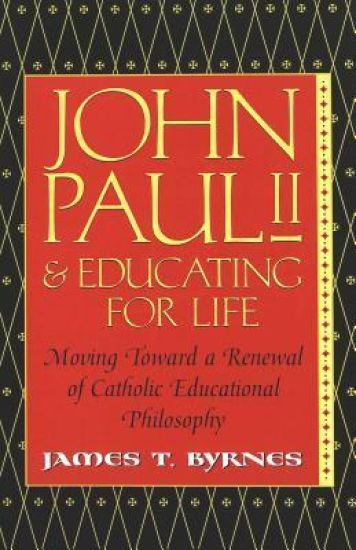
John Paul II and Educating for Life

John Paul II and Educating for Life

James T. Byrnes

Peter Lang Publishing Inc
2002
sidottu
Until the close of the Second Vatican Council, there was much scholarly discussion concerning a distinctively Catholic philosophy of education. For various reasons, the past forty years have seen a demise of this type of scholarly discussion. This dearth of discussion comes at a time when Catholic education (especially with 'atrisk' students) is being lauded by many. This book, which examines the philosophy and writings of Pope John Paul II (Karol Wojtyla) as they relate to education, is intended to provide readers with one way of understanding why Catholic schools do what they do every day. It is hoped that the thoughts of this philosopher-pope will spur a renewal of Catholic educational philosophy in the twenty-first century.
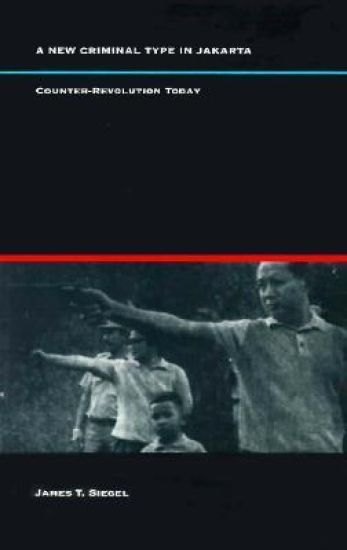
A New Criminal Type in Jakarta

A New Criminal Type in Jakarta

James T. Siegel

Duke University Press
1998
sidottu
In A New Criminal Type in Jakarta, James T. Siegel studies the dependence of Indonesia’s post-1965 government on the ubiquitous presence of what he calls criminality, an ensemble of imagined forces within its society that is poised to tear it apart. Siegel, a foremost authority on Indonesia, interprets Suharto’s New Order-in powerful contrast to Sukarno’s Old Order-and shows a cultural and political life in Jakarta controlled by a repressive regime that has created new ideas among its population about crime, ghosts, fear, and national identity.Examining the links between the concept of criminality and scandal, rumor, fear, and the state, Siegel analyzes daily life in Jakarta through the seemingly disparate but strongly connected elements of family life, gossip, and sensationalist journalism. He offers close analysis of the preoccupation with crime in Pos Kota (a newspaper directed toward the lower classes) and the middle-class magazine Tempo. Because criminal activity has been a sensationalized preoccupation in Jakarta’s news venues and among its people, criminality, according to Siegel, has pervaded the identities of its ordinary citizens. Siegel examines how and why the government, fearing revolution and in an attempt to assert power, has made criminality itself a disturbing rationalization for the spectacular massacre of the people it calls criminals-many of whom were never accused of particular crimes. A New Criminal Type in Jakarta reveals that Indonesians-once united by Sukarno’s revolutionary proclamations in the name of “the people”-are now, lacking any other unifying element, united through their identification with the criminal and through a “nationalization of death” that has emerged with Suharto’s strong counter-revolutionary measures.A provocative introduction to contemporary Indonesia, this book will engage those interested in Southeast Asian studies, anthropology, history, political science, postcolonial studies, public culture, and cultural studies generally.
A New Criminal Type in Jakarta

A New Criminal Type in Jakarta

James T. Siegel

Duke University Press
1998
pokkari
In A New Criminal Type in Jakarta, James T. Siegel studies the dependence of Indonesia’s post-1965 government on the ubiquitous presence of what he calls criminality, an ensemble of imagined forces within its society that is poised to tear it apart. Siegel, a foremost authority on Indonesia, interprets Suharto’s New Order-in powerful contrast to Sukarno’s Old Order-and shows a cultural and political life in Jakarta controlled by a repressive regime that has created new ideas among its population about crime, ghosts, fear, and national identity.Examining the links between the concept of criminality and scandal, rumor, fear, and the state, Siegel analyzes daily life in Jakarta through the seemingly disparate but strongly connected elements of family life, gossip, and sensationalist journalism. He offers close analysis of the preoccupation with crime in Pos Kota (a newspaper directed toward the lower classes) and the middle-class magazine Tempo. Because criminal activity has been a sensationalized preoccupation in Jakarta’s news venues and among its people, criminality, according to Siegel, has pervaded the identities of its ordinary citizens. Siegel examines how and why the government, fearing revolution and in an attempt to assert power, has made criminality itself a disturbing rationalization for the spectacular massacre of the people it calls criminals-many of whom were never accused of particular crimes. A New Criminal Type in Jakarta reveals that Indonesians-once united by Sukarno’s revolutionary proclamations in the name of “the people”-are now, lacking any other unifying element, united through their identification with the criminal and through a “nationalization of death” that has emerged with Suharto’s strong counter-revolutionary measures.A provocative introduction to contemporary Indonesia, this book will engage those interested in Southeast Asian studies, anthropology, history, political science, postcolonial studies, public culture, and cultural studies generally.
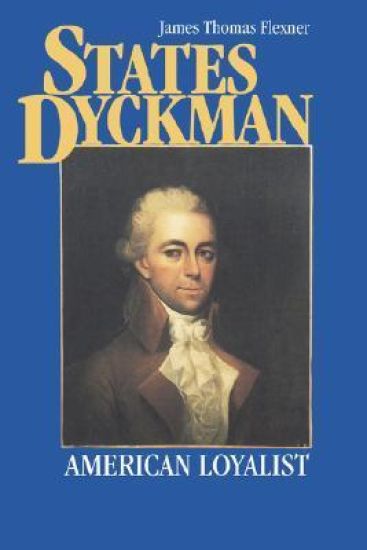
States Dyckman

States Dyckman

James T. Flexner

Fordham University Press
1992
pokkari
James Thomas Flexner has been a professional writer most of his adult life. After several year spent at the City desk at the New York Herald Tribune after graduating from Harvard University , Flexner went on to become one of America's foremost historians. He has written with great distinction in a unique style accessible to and enjoyed by the scholar and general reader, twenty-six books in the fields of American history and art. Although he is principally known for his historical books, notably his four -volume biography of George Washington, Flexner has written in many forms and for many outlets. He has written for print and television; he has been a lecturer, columnist, reviewer, and even a fiction writer.
Steamboats Come True

Steamboats Come True

James T. Flexner

Fordham University Press
1993
pokkari
James Thomas Flexner has been a professional writer most of his adult life. After several year spent at the City desk at the New York Herald Tribune after graduating from Harvard University , Flexner went on to become one of America's foremost historians. He has written with great distinction in a unique style accessible to and enjoyed by the scholar and general reader, twenty-six books in the fields of American history and art. Although he is principally known for his historical books, notably his four -volume biography of George Washington, Flexner has written in many forms and for many outlets. He has written for print and television; he has been a lecturer, columnist, reviewer, and even a fiction writer.
Doctors on Horseback

Doctors on Horseback

James T. Flexner

Fordham University Press
1993
pokkari
The man in the street would not, perhaps, recognize all the names of the brilliant scientists whose careers and personalities animate this book, but doctors know them. Morgan, who founded the first medical school in American and, fighting beside Washington, was ruined b the petty politics of the Revolution; McDowell, who, although on the fringe of the wilderness, dared the operation that prepared the way for all abdominal surgery; Rush, the equivocal personality who, for better or worse, dominated American medicine for more than fifty years; Beaumont, who, saving a life, won a living laboratory; Drake, who brought modern medicine to the New West; Long and Morton, who banished pain from surgery and earned it for themselves – these men are honored in their profession today.
An American Saga

An American Saga

James T. Flexner

Fordham University Press
1993
pokkari
This tale of two families is set on a grand scale, as James Thomas Flexner brings his talents to bear on his own noteworthy heritage. An American Saga is an historical narrative, grounded on documentary sources, which ends with the marriage of Helen Thomas and Simon Flexner. The account deals equally with the lives and the backgrounds of husband and wife, the author's parents. Simon Flexner was the famous medical investigator, discoverer of the "Flexner vacillus" and the "Flexner serum," who became the creating director of the Rockefeller Institute for Medical Research (now Rockefeller University) and eventually acknowledged leader of American medical science. The Kentucky-born son of impoverished German Jewish immigrants, he grew up in penury. As he never completed the eighth grade, he was almost completely self-educated when he appeared at the Johns Hopkins University before its celebrated medical school had been founded. Almost instantly he began making the discoveries that soon made him the leading younger medical scientist in the United States.
On Desperate Seas

On Desperate Seas

James T. Flexner

Fordham University Press
1995
sidottu
This is Flexner's portrait of Gilbert Stuart, painter of George Washington, and other founding fathers, who once shied away from a self-portrait he had begun to please his bride. Flexner presents us with a portrait constructed as the artist would have constructed it, frank, without flattery, profound, and soul-stirring. A man once regarded as the probable successor of Sir Joshua Reynolds, Stuart was born in poverty in Rhode Island. He became through his art the intimate of the great of two continents. Yet, he never abandoned his disdain for worldly rank, or his fascination with character. He made huge sums in England but spent even more in dissipation. Prison yawned for him, and he fled his creditors. During his thirty-five American years, he painted with brilliance, creating a unique portrait manner. His rank as an artist was never questioned, but his nerves would not quiet. He drank, fought with his wife, and tortured his children. Stuart died as he lived: famous and bankrupt.
Maverick's Progress

Maverick's Progress

James T. Flexner

Fordham University Press
1996
sidottu
National book Award laureate; recipient of Special Pulitzer Prize citation; winner of the Life in America Prize the Archives of American Art Award; among many others, James Thomas Flexner has written with distinction about American history and art. He has penetrated many of the charactrers who have shaped history exposing the intricacies of not only the historical figure, but the man beneath the marble image. The range of Flexner's subjects is wide: painters, inventors, doctors, loyalists, traitors, and spies, such luminaries as George Washington, Benedict Arnold, Alexander Hamilton, and John Singleton Copley, are among those Flexner has taken as subjects. After over fifty years of writnig, Flexner, one of America's greatest chroniclers has turned his probing eye back on to the pages of his own life with the same honesty, frankness, wit which have come to signify his form. James Thomas Flexner was born in 1908 on Lexington Avenue, New York City to parents Helen Thomas and Simon Flexner (scientist and first director of the Rockefeller Institute for Medical research.) Published in the literary magazine at the Lincoln High School, Flexner's passion for writing was spawned at a young age. This passion would become a source of life long struggle as well as success for Flexner. Journalist for the Herald Tribune, and foremost biographer (as well as making numerous appearances on radio and television,) Flexner's career allowed him access into the quick of the political, social, and artistic movements and developments that shaped the twentieth century. An un-traditional student, Flexner, although graduating magna com laude from Harvard University, often pursued what was to be considered by academics, unorthodox methods of research for his work. Following the passion of his own interests and plotting his own course of research and study, Flexner created of himself a sort of maverick, chartign a course for biography that countered that written in the guide books of academe. While he probed and uncovered the lives of the great men who shaped the past, noteworthy publishers, writers, artists, and politicians of the twentieth century fill the pages of Maverick's Progress. Flexner writes of how influences, acquantances, and friends such as Bernard Berenson, Conrad Aiken, Ivy Lee, Harry Hopkins, Allan Nevins, Logan Pearsall Smith, and Edward Hopper figured in his life, and in his development as a writer. James Flexner has authored more than twenty books, several of them have been recently re-published by Fordham University Press. He was awarded the Gold Medal for Eminence in Biography, by the American Academy and Institute of Arts and Letters in 1988. He is perhaps most well known for his four-volume biography of George Washington which was eventually condensed into one: An Indispensable Man from which two television mini-series have been produced and for which he was awared the Peabody Award and Emmy Nomination. Maverick's Progress offers us a candid an sparkling look into the life of a writer who has indeed been a maverick in the canon of American historians - an individual who himself has been an Indispensable Man.
Maverick's Progress

Maverick's Progress

James T. Flexner

Fordham University Press
1996
pokkari
National book Award laureate; recipient of Special Pulitzer Prize citation; winner of the Life in America Prize the Archives of American Art Award; among many others, James Thomas Flexner has written with distinction about American history and art. He has penetrated many of the charactrers who have shaped history exposing the intricacies of not only the historical figure, but the man beneath the marble image. The range of Flexner's subjects is wide: painters, inventors, doctors, loyalists, traitors, and spies, such luminaries as George Washington, Benedict Arnold, Alexander Hamilton, and John Singleton Copley, are among those Flexner has taken as subjects. After over fifty years of writnig, Flexner, one of America's greatest chroniclers has turned his probing eye back on to the pages of his own life with the same honesty, frankness, wit which have come to signify his form. James Thomas Flexner was born in 1908 on Lexington Avenue, New York City to parents Helen Thomas and Simon Flexner (scientist and first director of the Rockefeller Institute for Medical research.) Published in the literary magazine at the Lincoln High School, Flexner's passion for writing was spawned at a young age. This passion would become a source of life long struggle as well as success for Flexner. Journalist for the Herald Tribune, and foremost biographer (as well as making numerous appearances on radio and television,) Flexner's career allowed him access into the quick of the political, social, and artistic movements and developments that shaped the twentieth century. An un-traditional student, Flexner, although graduating magna com laude from Harvard University, often pursued what was to be considered by academics, unorthodox methods of research for his work. Following the passion of his own interests and plotting his own course of research and study, Flexner created of himself a sort of maverick, chartign a course for biography that countered that written in the guide books of academe. While he probed and uncovered the lives of the great men who shaped the past, noteworthy publishers, writers, artists, and politicians of the twentieth century fill the pages of Maverick's Progress. Flexner writes of how influences, acquantances, and friends such as Bernard Berenson, Conrad Aiken, Ivy Lee, Harry Hopkins, Allan Nevins, Logan Pearsall Smith, and Edward Hopper figured in his life, and in his development as a writer. James Flexner has authored more than twenty books, several of them have been recently re-published by Fordham University Press. He was awarded the Gold Medal for Eminence in Biography, by the American Academy and Institute of Arts and Letters in 1988. He is perhaps most well known for his four-volume biography of George Washington which was eventually condensed into one: An Indispensable Man from which two television mini-series have been produced and for which he was awared the Peabody Award and Emmy Nomination. Maverick's Progress offers us a candid an sparkling look into the life of a writer who has indeed been a maverick in the canon of American historians - an individual who himself has been an Indispensable Man.
Random Harvest

Random Harvest

James T. Flexner

Fordham University Press
1998
sidottu
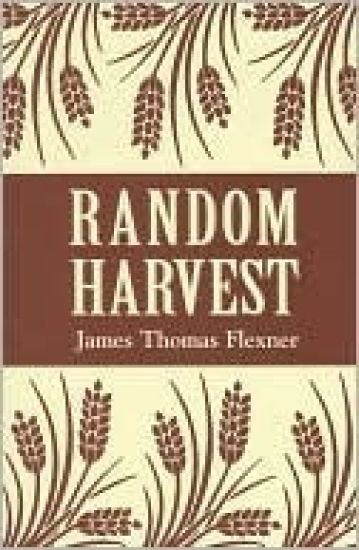
James Thomas Flexner has been a professional writer for most of his adult life. After several years spent at the City desk at the New York Herald Tribune after graduating from Harvard University, Flexner went on to become one of America's foremost historians. He has written with great distinction in a unique style accessible to and enjoyed by the scholar and general reader, twenty-six books in the fields of American history and art. Although he is principally known for his kistorical books, notably his four-volume biography of George Washington, Flexner has written in many forms and for many outlets. He has written for print and television; he has been a lecturer, columnist, reviewer, andeven a fiction writer. Collected here are samplings of Flexner's literary accomplishments throughout his long career (spanning over 60 years). In Random Harvest you will find pieces that appeared in Esquire Magaine, Time, The New York Times, Travel and Leisure, and even TV Guide. Included is an essay on George Washington and Watergate, on the art of biography, and many more. For the fan of Flexner, American history, and the art of a writer, in Random Harvest there is something to be enjoyed for everyone.
Random Harvest

Random Harvest

James T. Flexner

Fordham University Press
1998
pokkari
James Thomas Flexner has been a professional writer for most of his adult life. After several years spent at the City desk at the New York Herald Tribune after graduating from Harvard University, Flexner went on to become one of America's foremost historians. He has written with great distinction in a unique style accessible to and enjoyed by the scholar and general reader, twenty-six books in the fields of American history and art. Although he is principally known for his kistorical books, notably his four-volume biography of George Washington, Flexner has written in many forms and for many outlets. He has written for print and television; he has been a lecturer, columnist, reviewer, andeven a fiction writer. Collected here are samplings of Flexner's literary accomplishments throughout his long career (spanning over 60 years). In Random Harvest you will find pieces that appeared in Esquire Magaine, Time, The New York Times, Travel and Leisure, and even TV Guide. Included is an essay on George Washington and Watergate, on the art of biography, and many more. For the fan of Flexner, American history, and the art of a writer, in Random Harvest there is something to be enjoyed for everyone.
Young Hamilton

Young Hamilton

James T. Flexner

Fordham University Press
1997
sidottu
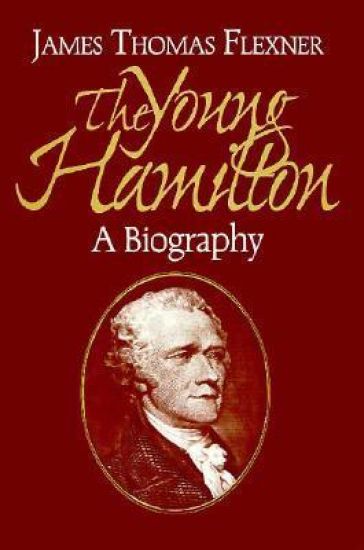
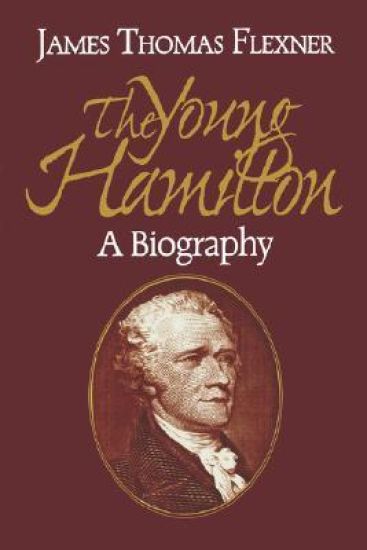
Written as a character study, Young Hamilton, explores the first twenty-six years of Alexander Hamilton's life and is designed to reveal how Hamilton's early years shaped him into the statesman he became.
Young Hamilton

Young Hamilton

James T. Flexner

Fordham University Press
1997
pokkari
Written as a character study, Young Hamilton, explores the first twenty-six years of Alexander Hamilton's life and is designed to reveal how Hamilton's early years shaped him into the statesman he became.
Objects and Objections of Ethnography

Objects and Objections of Ethnography

James T. Siegel

Fordham University Press
2011
sidottu
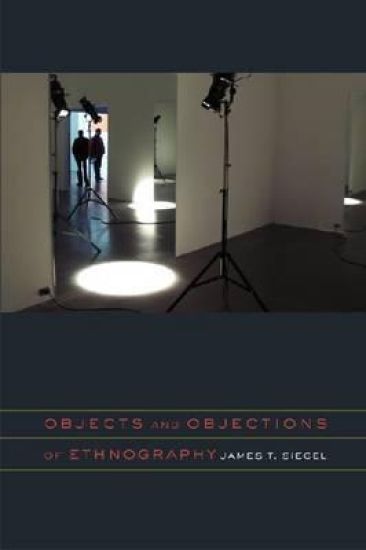
The essays in this volume, in all their astonishing richness and diversity, focus on the question of the "other." Brimming with whole flotillas of new ideas, they delineate subtle and various ways in which that question can be made the basis of an ethnographic project. In them, the author responds to the invitations extended by a specific location rather than pursuing a codified method. And they examine many different socialities in many different locations—among them the Cornell University campus in the late seventies, the former Musée de l'Homme and the Quai Branly Museum in Paris, the Indonesian province of Aceh in the wake of the tsunami of 2004, and contemporary Indonesia, in the liminal figures of the Jew and the Chinese. The author meticulously traces how the social and cultural responses in each location are astonishingly different—in the form, say, of gorges, faces, garbage, and fetishes. Regrettably, these days anthropologists have a tendency to look for similarities rather than differences, to show how one phenomenon is "just like" another. This book stands determinedly against this trend, both in its ethnographic examinations and in how it takes up such figures as Kant, Derrida, Bataille, Simmel, and Leiris so as to illuminate not only the objects of ethnography but also differences among the perspectives these thinkers represent. This book will put the methods and objects of anthropology in an entirely new light. In addition, it will speak to the concerns of historians, political scientists, and scholars of area studies, literature, and art.
Objects and Objections of Ethnography

Objects and Objections of Ethnography

James T. Siegel

Fordham University Press
2011
pokkari
The essays in this volume, in all their astonishing richness and diversity, focus on the question of the "other." Brimming with whole flotillas of new ideas, they delineate subtle and various ways in which that question can be made the basis of an ethnographic project. In them, the author responds to the invitations extended by a specific location rather than pursuing a codified method. And they examine many different socialities in many different locations—among them the Cornell University campus in the late seventies, the former Musée de l'Homme and the Quai Branly Museum in Paris, the Indonesian province of Aceh in the wake of the tsunami of 2004, and contemporary Indonesia, in the liminal figures of the Jew and the Chinese. The author meticulously traces how the social and cultural responses in each location are astonishingly different—in the form, say, of gorges, faces, garbage, and fetishes. Regrettably, these days anthropologists have a tendency to look for similarities rather than differences, to show how one phenomenon is "just like" another. This book stands determinedly against this trend, both in its ethnographic examinations and in how it takes up such figures as Kant, Derrida, Bataille, Simmel, and Leiris so as to illuminate not only the objects of ethnography but also differences among the perspectives these thinkers represent. This book will put the methods and objects of anthropology in an entirely new light. In addition, it will speak to the concerns of historians, political scientists, and scholars of area studies, literature, and art.