Kirjojen hintavertailu. Mukana 12 595 353 kirjaa ja 12 kauppaa.

Kirjahaku

Etsi kirjoja tekijän nimen, kirjan nimen tai ISBN:n perusteella.

1000 tulosta hakusanalla Jean Kerr

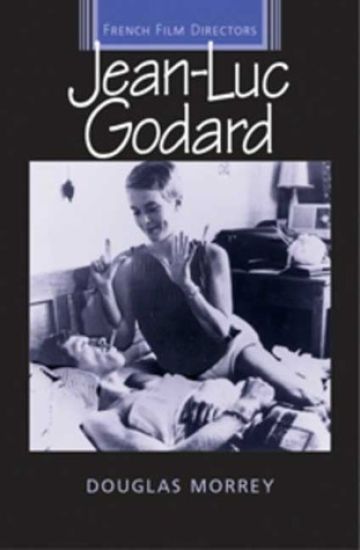
Jean-Luc Godard

Jean-Luc Godard

Douglas Morrey

Manchester University Press
2005
nidottu
This volume offers a new interpretation of one of the most innovative directors in the history of cinema. It is the first book to cover the whole of Godard's career, from the French New Wave to the recent triumphs of Histoire(s) du cinéma and Eloge de l’amour. Drawing on a wide range of literary, filmic and philiosophical texts, the book places Godard's work within its intellectual context, examining how developments in French culture and thought since 1950 have been mirrored in - and sometimes anticipated by - Godard's films.Numerous sequences from Godard's films are singled out for close analysis, demonstrating how the director's radical approaches to narrative, editing, sound and shot composition have made the cinema into an analytical tool in its own right.The book will be essential to all students of Godard's films, and of interest to scholars of modern and contemporary French cinema, culture and thought.
Jean François de la Harpe, 'Letters to the Shuvalovs'

Jean François de la Harpe, 'Letters to the Shuvalovs'

Jean-Francois De La Harpe

Voltaire Foundation
1973
nidottu
The Oxford University Studies in the Enlightenment series, previously known as SVEC (Studies on Voltaire and the Eighteenth Century), has published over 500 peer-reviewed scholarly volumes since 1955 as part of the Voltaire Foundation at the University of Oxford. International in focus, Oxford University Studies in the Enlightenment volumes cover wide-ranging aspects of the eighteenth century and the Enlightenment, from gender studies to political theory, and from economics to visual arts and music, and are published in English or French.
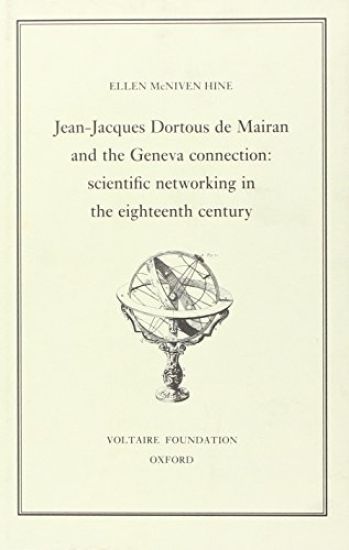
Jean-Jacques Dortour de Mairan and the Geneva Connection

Jean-Jacques Dortour de Mairan and the Geneva Connection

Ellen McNiven Hine

Voltaire Foundation
1996
sidottu
This study illustrates the significance of Jean-Jacques Dortous de Mairan’s networking in the spread of Enlightenment thought. It focuses primarily on the unpublished correspondence between Mairan and the Geneva scientists, Firmin Abauzit, Gabriel Cramer, Jean Jallabert and Charles Bonnet. Mairan was an assiduous correspondent whose letters reveal the progress of scientific thought in the first three quarters of the eighteenth century. Despite the high regard in which of his contemporaries, he has been, until recently, relatively neglected by Enlightenment scholars. This is the first full-length study devoted to Mairan’s relations with scientists in other countries, to the process of cross-fertilisation in the production of scientific knowledge, and to his considerable influence on the development of scientific thought on key issues. The topics covered in the letters range from the Shape of the Earth and vis vivacontroversies and the medical powers of electricity, to the nature of the Seichesin the Lac du Léman and the origin of monsters. One of the major interests of the correspondence is Mairan’s obvious fascination with Newton. Neglect of his contribution to the history of ideas can be partly explained by the fact that he was unfairly considered a ‘last-ditch’ Cartesian in a triumphantly Newtonian world. The detailed analysis of the letters in this study amply shows a constant preoccupation with both the Opticks and the Principiaand a fairly sophisticated understanding of scientific method. The letters abound in references to other scientists, such as the Bernoullis, Nollet, Dufay and Maupertuis. They provide an exciting, unguarded and ‘behind-the-scenes’ view of scientific developments before they were finalised and appeared in published works. It is particularly revealing, therefore, to compare the letters to Mairan’s contributions to the Mémoires de l’Académie royale des sciences, his early dissertations, and his mature works. Mairan’s unpublished correspondence with Geneva scientists is a treasure-house of information on personalities, ideas and controversies of crucial importance to the international scientific community from 1717 to 1769.
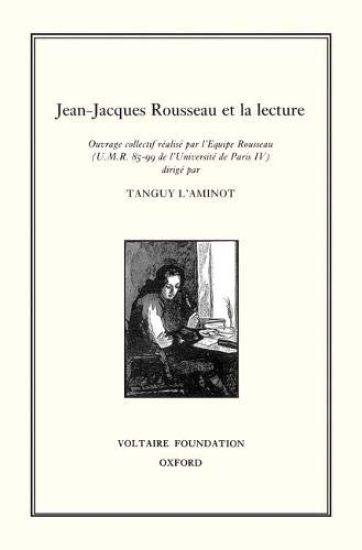
Jean-Jacques Rousseau et la Lecture
Rousseau et la lecture est un livre collectif, fruit d’un séminaire de l’Equipe J.-J. Rousseau anime par Tanguy L’Aminot à l’Université de Paris IV-Sorbonne. Compose d’une vingtaine d’articles, il se propose d’examiner le rapport que Jean-Jacques Rousseau a entretenu avec les livres, la littérature, la philosophie, la science et l’esthétique de son temps.Plus que les sources de son œuvre ce qui est analyse ici, c’est le dialogue qui s’établit dans les écrits de Jean-Jacques avec un ou plusieurs auteurs ou avec un sujet particulier, Celui qui dans l’Emile déclarait haïr tous les livres, s’est révélé un lecteur étonnant, au fait de la pensée et de l’art sous leurs aspects les plus divers. Les auteurs de ce recueil se sont donc demande non seulement quels étaient les ouvrages qui avaient marqué Rousseau et quelle valeur ou quel intérêt présentait telle ou telle lecture pour lui, mais aussi comment Rousseau souhaitait être lu lui-meme.Lire apparaît comme un véritable révélateur de tout l’être et peut avoir des conséquences funestes ou perverses dont il convient de se prémunir. En aucun cas, chez Rousseau, la lecture n’est un rite innocent ou gratuit.Quatre études présentent d’ailleurs quelques-unes des lectures qui ont été faites de Rousseau depuis sa mort. De Sade à Jean Starobinski, Pierre Burgelin, Jacques Derrida, Paul de Man et au lecteur ordinaire des années 1980, on peut apprécier les multiples portraits qui ont été faits d’un auteur qui tenait à ce qu’on le voit, le lise et le comprenne à sa façon. Rousseau qui avait lu Leibniz, Spinoza ou Helvétius selon son cœur et son système, n’etait-il pas a son tour victime de la trahison de ses lecteurs? Mais lire, ne serait-ce pas avant tout trahir, traduire et contredire celui qui est lu? Le conduire au-delà de lui dans l’univers d’autrui?
Jean-Louis Wagnière, secrétaire de Voltaire

Jean-Louis Wagnière, secrétaire de Voltaire

Christophe Paillard

Voltaire Foundation
2008
nidottu
Jean-Louis Wagnière servit Voltaire en qualité de secrétaire de 1755 à 1778 avant de défendre sa mémoire jusqu’à sa mort. Ses lettres assurent une importante médiation dans notre connaissance de la vie et de l’œuvre du grand philosophe.Dans cette étude Christophe Paillard rassemble d’importants documents inédits qui apportent des éclaircissements sur les œuvres de Voltaire et ses stratégies épistolaires, ses rapports avec les éditeurs, l’installation de sa bibliothèque à Pétersbourg et l’histoire de l’édition de Kehl. Or, C. Paillard montre aussi que le témoignage de Wagnière doit être interprété avec plus de précaution que la critique n’a eu tendance à le faire auparavant. Il fait voir que l’attribution de certaines œuvres ou les remarques sur l’édition de Kehl doivent être replacées dans le contexte d’une mise en scène; on découvre à quel point le ‘petit scribe’ a assimilé et mis en œuvre les stratégies littéraires de son maître.Dans Jean-Louis Wagnière, secrétaire de Voltaire: lettres et documents Christophe Paillard renouvelle l’étude de l’épistolaire et des méthodes d’écriture de Voltaire. Il procure aux spécialistes de Voltaire une mine de documents inédits, et, de plus, il nous offre un moyen de les lire.
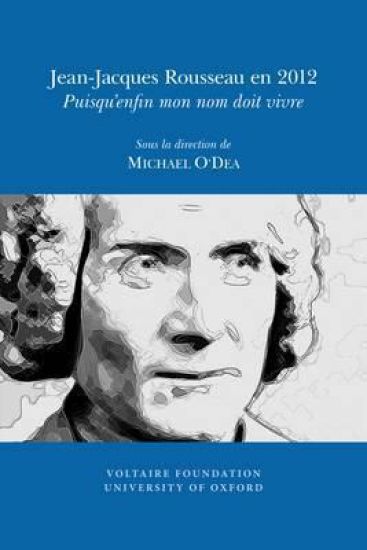
Jean-Jacques Rousseau en 2012
Né en 1712, Jean-Jacques Rousseau ne cesse de nous interpeller: depuis cinquante ans, l’étude de son œuvre s’est diversifiée et renouvelée de façon remarquable.Dans ce recueil, treize spécialistes de Rousseau, venus d’horizons disciplinaires divers, présentent leur réflexion la plus récente, tantôt en revenant sur un écrit fondamental de l’auteur, tantôt en éclairant des aspects peu connus de son œuvre, tantôt en proposant une interprétation d’ensemble de son parcours exceptionnel. Rousseau et l’amitié, Rousseau copiste de musique, Rousseau et l’opinion publique, la difficile appropriation du premier tome des Confessions par les partisans du philosophe: les sujets abordés sont d’une grande richesse.Le volume offre au lecteur une série de nouvelles perspectives sur un auteur et un œuvre inépuisables. A l’orée de l’année Rousseau 2012, il intéressera tous ceux qui veulent connaître les dernières évolutions de la critique, qu’ils soient littéraires, philosophes ou musicologues. Le nom de Jean-Jacques Rousseau vit encore.
Jean-Jacques Rousseau and Botany

Jean-Jacques Rousseau and Botany

Alexandra Cook

Voltaire Foundation
2012
nidottu
The Oxford University Studies in the Enlightenment series, previously known as SVEC (Studies on Voltaire and the Eighteenth Century), has published over 500 peer-reviewed scholarly volumes since 1955 as part of the Voltaire Foundation at the University of Oxford. International in focus, Oxford University Studies in the Enlightenment volumes cover wide-ranging aspects of the eighteenth century and the Enlightenment, from gender studies to political theory, and from economics to visual arts and music, and are published in English or French.
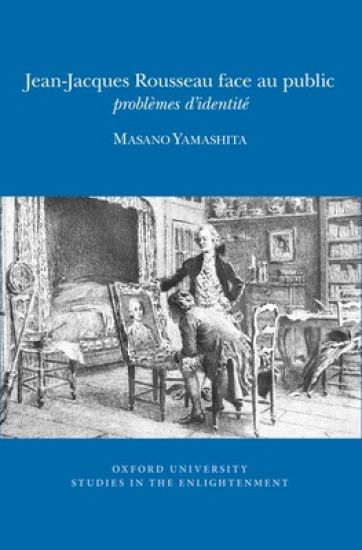
Jean-Jacques Rousseau face au public

Jean-Jacques Rousseau face au public

Masano Yamashita

Voltaire Foundation
2017
nidottu
Rousseau a bien compris, mieux que ses contemporains peut-être, le paradoxe de la communication propre aux Lumières, prises entre le développement du savoir et la constitution d’une opinion publique. Avec l’accélération de la circulation des discours et des écrits, comment parler et agir philosophiquement sans se perdre? Comment concilier la culture du secret, issue de la tradition littéraire du libertinage érudit, et la publicité, qui ouvre de plus en plus grands les horizons de la sphère publique?Masano Yamashita examine ici l’articulation entre les stratégies rhétoriques de l’adresse au lecteur chez Rousseau et sa conception proprement philosophique de la communication. Elle met en lumière l’originalité et la lucidité de Rousseau face aux difficultés liées à cette société de l’information d’Ancien Régime. Rousseau cherche les conditions de possibilité d’une parole émancipée et pleinement publique. Au moyen d’une philosophie incarnée mettant en scène une figure de lecteur, il met à l’épreuve l’idée d’un sujet universel, la constitution d’un espace public, le sens de l’exercice de la philosophie, les enjeux politiques et éthiques des actes de discours. La réception des textes et le rapport au public constituent ainsi pour Rousseau un enjeu philosophique. Entre exigence de transparence et désir d’expérimenter les diverses facettes du moi public, se dessine la conception originale que Rousseau se fait de l’homme des Lumières. Masano Yamashita montre que la réflexion de Rousseau sur les manières de vivre dans un espace public, social comme littéraire, débouche sur une véritable vie philosophique.
Jean-Jacques Rousseau

Jean-Jacques Rousseau

Tracy B. Strong

Rowman Littlefield Publishers
2002
nidottu
Rousseau is most often read either as a theorist of individual authenticity or as a communitarian. In this book, he is neither. Instead, Rousseau is understood as a theorist of the common person. In Strong's understanding, Rousseau's use of 'common' always refers both to that which is common and to that which is ordinary, vulgar, everyday. For Strong, Rousseau resonates with Kant, Hegel, and Marx, but he is more modern like Emerson, Nietzsche, Eittegenstein, and Heidegger. Rousseau's democratic individual is an ordinary self, paradoxically multiple and not singular. In the course of exploring this contention, Strong examines Rousseau's fear of authorship (though not of authority), his understanding of the human, his attempt to overcome the scandal that relativism posed for politics, and the political importance of sexuality.
Jean Baudrillard

Jean Baudrillard

Mike Gane

Pluto Press
2000
pokkari
Mike Gane provides an introduction to recent developments in French theorist Jean Baudrillard's thinking. This volume reflects Baudrillard's new concern with radical uncertainty and the way in which he has reconfigured his earlier thinking in the light of more recent ideas and theories. The author disputes the notion that Baudrillard has now become an increasingly extreme theorist, remote from the realities of the world - and argues instead that new developments in Baudrillard's work are a more appropriate reflection on a world of extremes. This book explicitly challenges the conservative response to Baudrillard's work, and underlines the significance of what Baudrillard himself terms the 'fourth order of simulation', in a major contribution to new debates on the significance of recent developments in Western culture and society.
Jean Baudrillard: In Radical Uncertainty
Mike Gane provides an introduction to recent developments in French theorist Jean Baudrillard's thinking. This volume reflects Baudrillard's new concern with radical uncertainty and the way in which he has reconfigured his earlier thinking in the light of more recent ideas and theories.The author disputes the notion that Baudrillard has now become an increasingly extreme theorist, remote from the realities of the world - and argues instead that new developments in Baudrillard's work are a more appropriate reflection on a world of extremes. This book explicitly challenges the conservative response to Baudrillard's work, and underlines the significance of what Baudrillard himself terms the 'fourth order of simulation', in a major contribution to new debates on the significance of recent developments in Western culture and society.
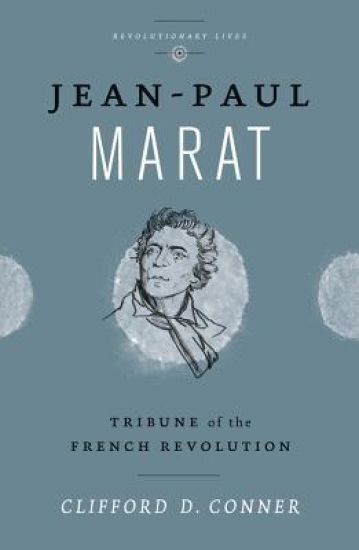
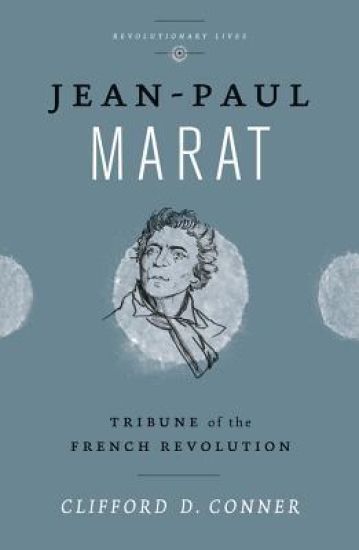
Jean Paul Marat

Jean Paul Marat

Clifford D. Conner

Pluto Press
2012
pokkari
Jean-Paul Marat’s role in the French Revolution has long been a matter of controversy among historians. Often he is portrayed as a violent, sociopathic demagogue. This biography challenges that interpretation and argues that without Marat’s contributions as an agitator, tactician, and strategist, the pivotal social transformation that the revolution accomplished would not have occurred. Clifford D. Conner argues that what was unique about Marat - setting him apart from all other major figures of the revolution, including Danton and Robespierre - was his total identification with the struggle of the propertyless classes for social equality. Fresh ideas surrounding the Champs de Mars Massacre, his assassination, the cult of Marat and the Légende Noire are all explored.
Jean Paul Marat

Jean Paul Marat

Pluto Press
2012
sidottu
Jean-Paul Marat’s role in the French Revolution has long been a matter of controversy among historians. Often he is portrayed as a violent, sociopathic demagogue. This biography challenges that interpretation and argues that without Marat’s contributions as an agitator, tactician, and strategist, the pivotal social transformation that the revolution accomplished would not have occurred. Clifford D. Conner argues that what was unique about Marat - setting him apart from all other major figures of the revolution, including Danton and Robespierre - was his total identification with the struggle of the propertyless classes for social equality. Fresh ideas surrounding the Champs de Mars Massacre, his assassination, the cult of Marat and the Légende Noire are all explored.
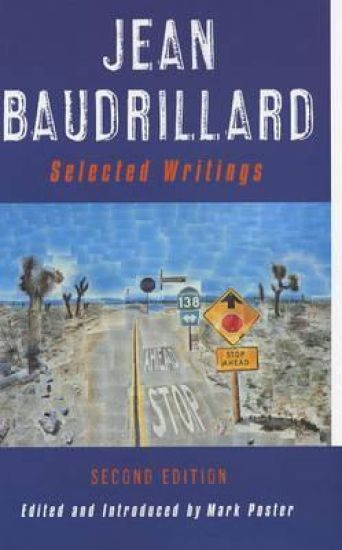
Jean Baudrillard

Jean Baudrillard

Polity Press
2001
sidottu
Jean Baudrillard, alternately provocative and astonishing, is one of the leading theorists of media and culture. Regarded by many as the chief prophet of postmodernism, his writings raise important issues about the changing nature of social and political life in our contemporary, media-saturated age. This book makes his most important writings available in a single volume. It includes selections from the entire range of his work, from his early writings on consumer culture and the political economy of the sign to his more recent work on desire, simulation and the 'hyperreal'. This new edition includes five new extracts from Baudrillard's writings in the 1990s, including his writings on the Gulf War, on the internet and his autobiographical reflections. It also includes an updated introduction by Mark Poster which provides an extremely lucid overview of Baudrillard's work. Jean Baudrillard: Selected Writings is an excellent introduction to the thought of one of the most important and influential thinkers of our day.
Jean Baudrillard

Jean Baudrillard

M Poster

Blackwell Publishers
2001
pokkari
Jean Baudrillard, alternately provocative and astonishing, is one of the leading theorists of media and culture. Regarded by many as the chief prophet of postmodernism, his writings raise important issues about the changing nature of social and political life in our contemporary, media--saturated age.
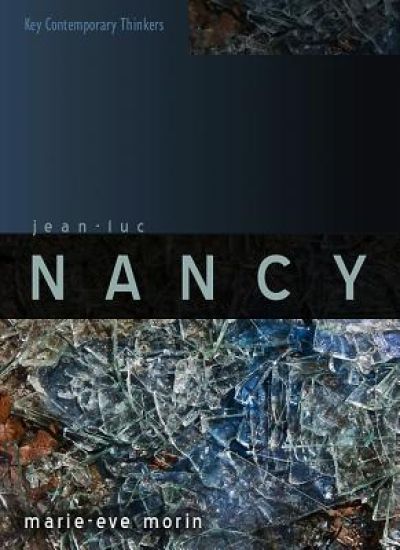
Jean-Luc Nancy

Jean-Luc Nancy

Marie-Eve Morin

Polity Press
2012
sidottu
Jean-Luc Nancy is one of the leading contemporary thinkers in France today. Through an inventive reappropriation of the major figures in the continental tradition, Nancy has developed an original ontology that impacts the way we think about religion, politics, community, embodiment, and art. Drawing from a wide range of his writing, Marie-Eve Morin provides the first comprehensive and systematic account of Nancy’s thinking, all the way up to his most recent work on the deconstruction of Christianity. Without losing sight of the heterogeneity of Nancy’s work, Morin presents a concise articulation of the organizing concepts, which structure Nancy’s body of work. The guiding thread is that of an essential rift at the heart of any “self” by which this self is exposed and relates to itself and other selves. Nancy’s ontology undercuts dichotomies between individual and community, interior and exterior, matter and spirit, thing and thought, not in the name of mere deconstruction, but in seeking to open a thinking of the “limit” or the “edge” as the locus of sense. While Nancy’s work has often been presented in relation to Heidegger or Derrida, Morin demonstrates the originality of Nancy’s work and argues that, despite the variety of its preoccupations and topics, it possesses its own rigorous internal logic. This book will be of interest to students and scholars of philosophy and related fields who seek a systematic and critical understanding of one of the most original contemporary thinkers.