Kirjojen hintavertailu. Mukana 11 717 486 kirjaa ja 12 kauppaa.

Kirjahaku

Etsi kirjoja tekijän nimen, kirjan nimen tai ISBN:n perusteella.

1000 tulosta hakusanalla Jean MacColl

Jean-Jacques Rousseau face au public

Jean-Jacques Rousseau face au public

Masano Yamashita

Voltaire Foundation
2017
nidottu
Rousseau a bien compris, mieux que ses contemporains peut-être, le paradoxe de la communication propre aux Lumières, prises entre le développement du savoir et la constitution d’une opinion publique. Avec l’accélération de la circulation des discours et des écrits, comment parler et agir philosophiquement sans se perdre? Comment concilier la culture du secret, issue de la tradition littéraire du libertinage érudit, et la publicité, qui ouvre de plus en plus grands les horizons de la sphère publique?Masano Yamashita examine ici l’articulation entre les stratégies rhétoriques de l’adresse au lecteur chez Rousseau et sa conception proprement philosophique de la communication. Elle met en lumière l’originalité et la lucidité de Rousseau face aux difficultés liées à cette société de l’information d’Ancien Régime. Rousseau cherche les conditions de possibilité d’une parole émancipée et pleinement publique. Au moyen d’une philosophie incarnée mettant en scène une figure de lecteur, il met à l’épreuve l’idée d’un sujet universel, la constitution d’un espace public, le sens de l’exercice de la philosophie, les enjeux politiques et éthiques des actes de discours. La réception des textes et le rapport au public constituent ainsi pour Rousseau un enjeu philosophique. Entre exigence de transparence et désir d’expérimenter les diverses facettes du moi public, se dessine la conception originale que Rousseau se fait de l’homme des Lumières. Masano Yamashita montre que la réflexion de Rousseau sur les manières de vivre dans un espace public, social comme littéraire, débouche sur une véritable vie philosophique.
Jean-Jacques Rousseau

Jean-Jacques Rousseau

Tracy B. Strong

Rowman Littlefield Publishers
2002
nidottu
Rousseau is most often read either as a theorist of individual authenticity or as a communitarian. In this book, he is neither. Instead, Rousseau is understood as a theorist of the common person. In Strong's understanding, Rousseau's use of 'common' always refers both to that which is common and to that which is ordinary, vulgar, everyday. For Strong, Rousseau resonates with Kant, Hegel, and Marx, but he is more modern like Emerson, Nietzsche, Eittegenstein, and Heidegger. Rousseau's democratic individual is an ordinary self, paradoxically multiple and not singular. In the course of exploring this contention, Strong examines Rousseau's fear of authorship (though not of authority), his understanding of the human, his attempt to overcome the scandal that relativism posed for politics, and the political importance of sexuality.
Jean Baudrillard

Jean Baudrillard

Mike Gane

Pluto Press
2000
pokkari
Mike Gane provides an introduction to recent developments in French theorist Jean Baudrillard's thinking. This volume reflects Baudrillard's new concern with radical uncertainty and the way in which he has reconfigured his earlier thinking in the light of more recent ideas and theories. The author disputes the notion that Baudrillard has now become an increasingly extreme theorist, remote from the realities of the world - and argues instead that new developments in Baudrillard's work are a more appropriate reflection on a world of extremes. This book explicitly challenges the conservative response to Baudrillard's work, and underlines the significance of what Baudrillard himself terms the 'fourth order of simulation', in a major contribution to new debates on the significance of recent developments in Western culture and society.
Jean Baudrillard: In Radical Uncertainty
Mike Gane provides an introduction to recent developments in French theorist Jean Baudrillard's thinking. This volume reflects Baudrillard's new concern with radical uncertainty and the way in which he has reconfigured his earlier thinking in the light of more recent ideas and theories.The author disputes the notion that Baudrillard has now become an increasingly extreme theorist, remote from the realities of the world - and argues instead that new developments in Baudrillard's work are a more appropriate reflection on a world of extremes. This book explicitly challenges the conservative response to Baudrillard's work, and underlines the significance of what Baudrillard himself terms the 'fourth order of simulation', in a major contribution to new debates on the significance of recent developments in Western culture and society.
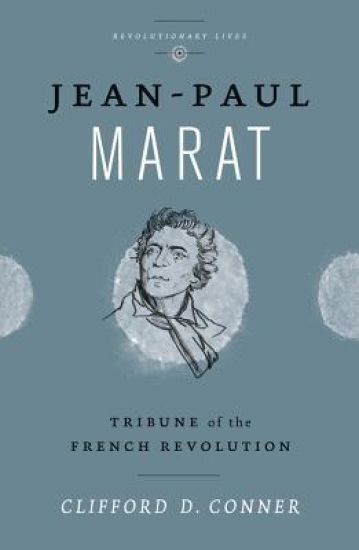
Jean Paul Marat

Jean Paul Marat

Clifford D. Conner

Pluto Press
2012
pokkari
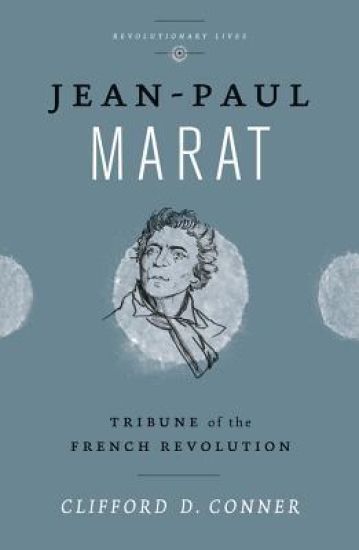
Jean-Paul Marat’s role in the French Revolution has long been a matter of controversy among historians. Often he is portrayed as a violent, sociopathic demagogue. This biography challenges that interpretation and argues that without Marat’s contributions as an agitator, tactician, and strategist, the pivotal social transformation that the revolution accomplished would not have occurred. Clifford D. Conner argues that what was unique about Marat - setting him apart from all other major figures of the revolution, including Danton and Robespierre - was his total identification with the struggle of the propertyless classes for social equality. Fresh ideas surrounding the Champs de Mars Massacre, his assassination, the cult of Marat and the Légende Noire are all explored.
Jean Paul Marat

Jean Paul Marat

Pluto Press
2012
sidottu
Jean-Paul Marat’s role in the French Revolution has long been a matter of controversy among historians. Often he is portrayed as a violent, sociopathic demagogue. This biography challenges that interpretation and argues that without Marat’s contributions as an agitator, tactician, and strategist, the pivotal social transformation that the revolution accomplished would not have occurred. Clifford D. Conner argues that what was unique about Marat - setting him apart from all other major figures of the revolution, including Danton and Robespierre - was his total identification with the struggle of the propertyless classes for social equality. Fresh ideas surrounding the Champs de Mars Massacre, his assassination, the cult of Marat and the Légende Noire are all explored.
Jean Baudrillard

Jean Baudrillard

Polity Press
2001
sidottu
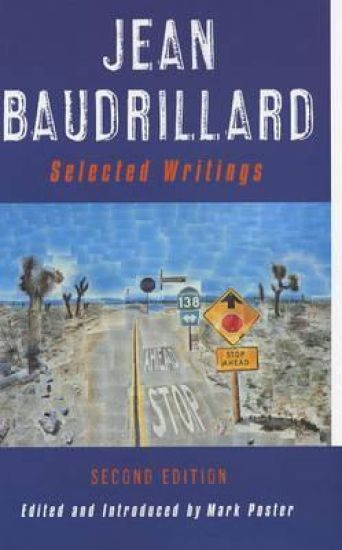
Jean Baudrillard, alternately provocative and astonishing, is one of the leading theorists of media and culture. Regarded by many as the chief prophet of postmodernism, his writings raise important issues about the changing nature of social and political life in our contemporary, media-saturated age. This book makes his most important writings available in a single volume. It includes selections from the entire range of his work, from his early writings on consumer culture and the political economy of the sign to his more recent work on desire, simulation and the 'hyperreal'. This new edition includes five new extracts from Baudrillard's writings in the 1990s, including his writings on the Gulf War, on the internet and his autobiographical reflections. It also includes an updated introduction by Mark Poster which provides an extremely lucid overview of Baudrillard's work. Jean Baudrillard: Selected Writings is an excellent introduction to the thought of one of the most important and influential thinkers of our day.
Jean Baudrillard

Jean Baudrillard

M Poster

Blackwell Publishers
2001
pokkari
Jean Baudrillard, alternately provocative and astonishing, is one of the leading theorists of media and culture. Regarded by many as the chief prophet of postmodernism, his writings raise important issues about the changing nature of social and political life in our contemporary, media--saturated age.
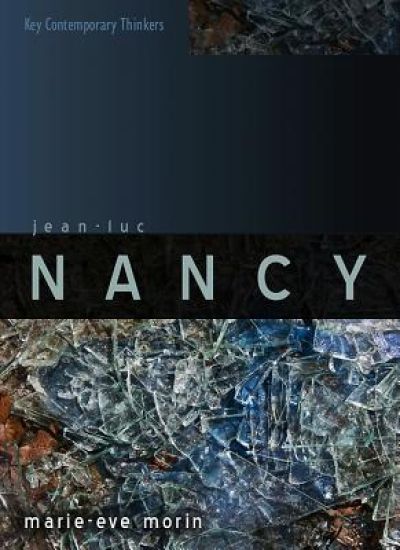
Jean-Luc Nancy

Jean-Luc Nancy

Marie-Eve Morin

Polity Press
2012
sidottu
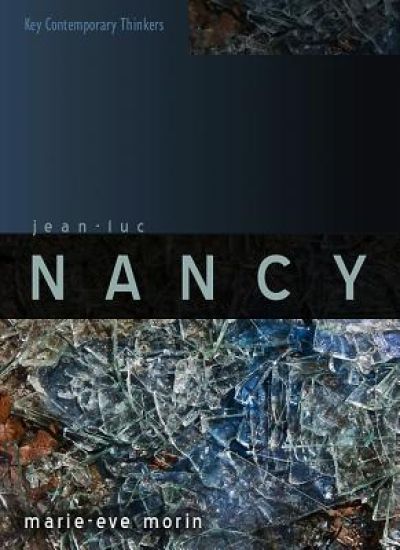
Jean-Luc Nancy is one of the leading contemporary thinkers in France today. Through an inventive reappropriation of the major figures in the continental tradition, Nancy has developed an original ontology that impacts the way we think about religion, politics, community, embodiment, and art. Drawing from a wide range of his writing, Marie-Eve Morin provides the first comprehensive and systematic account of Nancy’s thinking, all the way up to his most recent work on the deconstruction of Christianity. Without losing sight of the heterogeneity of Nancy’s work, Morin presents a concise articulation of the organizing concepts, which structure Nancy’s body of work. The guiding thread is that of an essential rift at the heart of any “self” by which this self is exposed and relates to itself and other selves. Nancy’s ontology undercuts dichotomies between individual and community, interior and exterior, matter and spirit, thing and thought, not in the name of mere deconstruction, but in seeking to open a thinking of the “limit” or the “edge” as the locus of sense. While Nancy’s work has often been presented in relation to Heidegger or Derrida, Morin demonstrates the originality of Nancy’s work and argues that, despite the variety of its preoccupations and topics, it possesses its own rigorous internal logic. This book will be of interest to students and scholars of philosophy and related fields who seek a systematic and critical understanding of one of the most original contemporary thinkers.
Jean-Luc Nancy

Jean-Luc Nancy

Marie-Eve Morin

Polity Press
2012
nidottu
Jean-Luc Nancy is one of the leading contemporary thinkers in France today. Through an inventive reappropriation of the major figures in the continental tradition, Nancy has developed an original ontology that impacts the way we think about religion, politics, community, embodiment, and art. Drawing from a wide range of his writing, Marie-Eve Morin provides the first comprehensive and systematic account of Nancy’s thinking, all the way up to his most recent work on the deconstruction of Christianity. Without losing sight of the heterogeneity of Nancy’s work, Morin presents a concise articulation of the organizing concepts, which structure Nancy’s body of work. The guiding thread is that of an essential rift at the heart of any “self” by which this self is exposed and relates to itself and other selves. Nancy’s ontology undercuts dichotomies between individual and community, interior and exterior, matter and spirit, thing and thought, not in the name of mere deconstruction, but in seeking to open a thinking of the “limit” or the “edge” as the locus of sense. While Nancy’s work has often been presented in relation to Heidegger or Derrida, Morin demonstrates the originality of Nancy’s work and argues that, despite the variety of its preoccupations and topics, it possesses its own rigorous internal logic. This book will be of interest to students and scholars of philosophy and related fields who seek a systematic and critical understanding of one of the most original contemporary thinkers.
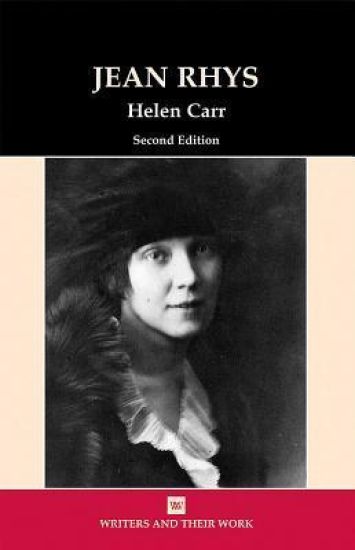
Jean Rhys

Jean Rhys

Helen Carr

Northcote House Publishers Ltd
2012
nidottu
Neglected and forgotten for many years, the arresting, elliptical novels written by Dominican-born Jean Rhys are now widely acclaimed. Her last and most famous novel, Wide Sargasso Sea, her retelling of Jane Eyre, is a central text for the imaginative re-examination of gender and colonial power relations. Helen Carr’s account draws on both recent feminism and postcolonial theory, and places Rhys’s work in relation to modernist and postmodernist writing. First published in 1996, Helen Carr’s revised edition takes full cognizance of the wide critical attention paid to Rhys since that date.
Jean Harlow: An Intimate Biography
Jean Harlow's stunning blonde looks and shockingly blatant sexuality made her Hollywood's first and most sensational sex goddess. In all the wild, free-wheeling history of Hollywood since her death in 1937, no star has made such an impression. Despite her dubious talents as an actress, Harlow won the hearts of the movie-going public. But, like many of the stars that followed her, she found no happiness in her private life. Her husband committed suicide within a month of their wedding, creating endless material for gossip. This book reveals the truth behind this, as well as many other rumours, which surrounded Harlow, including the circumstances behind her premature and needless death at the age of twenty-six.
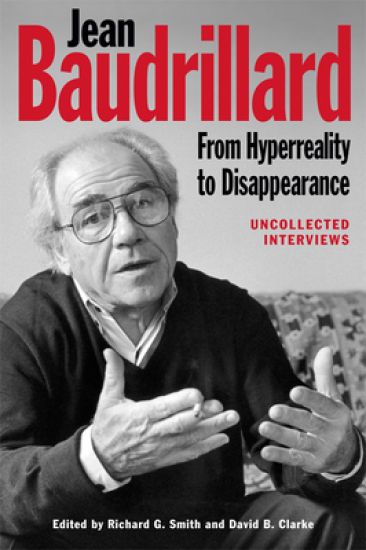
Jean Baudrillard: From Hyperreality to Disappearance
This new collection gathers 23 highly insightful yet previously difficult-to-find interviews with Baudrillard, ranging over topics as diverse as art, war, technology, globalisation, terrorism and the fate of humanity. From familiar themes to the less well understood aspects of his thought, these interviews give you an overview of Baudrillard's ideas without the jargon typical of written texts. Read as Baudrillard himself discusses, explains and elaborates on his ideas, making this collection essential for understanding many of his other works.
Jean Baudrillard: From Hyperreality to Disappearance
This new collection gathers 23 highly insightful yet previously difficult-to-find interviews with Baudrillard, ranging over topics as diverse as art, war, technology, globalisation, terrorism and the fate of humanity. From familiar themes to the less well understood aspects of his thought, these interviews give you an overview of Baudrillard's ideas - without the jargon typical of written texts. Read as Baudrillard himself discusses, explains and elaborates on his ideas, making this collection essential for understanding many of his other works.
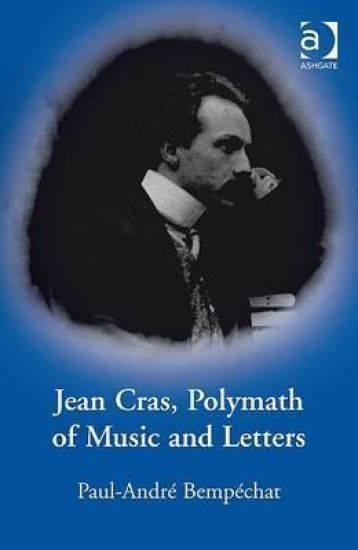
Jean Cras, Polymath of Music and Letters

Jean Cras, Polymath of Music and Letters

Paul-André Bempéchat

Ashgate Publishing Limited
2009
sidottu
Jean Cras (1879-1932) was a remarkable man by anyone's measure. Twice a decorated hero of the Great War, this Rear-Admiral of the French navy, scientist, inventor and moral philosopher, was also a highly esteemed composer during his lifetime, enjoying the same stature and celebrity as Fauré, Debussy and Ravel. Since his death, however, both Cras and his music have been almost completely overlooked. In this, the first critical biography of Cras, Paul-Andre Bempechat situates Henri Duparc's protegé as a missing link between the French post-Romantic generation of composers and the Impressionists. The book explores, both historically and analytically, the methodology by which Cras evolved his eclectic brand of Impressionism, striking the delicate balance between Celtic folk idioms and exoticisms inspired by his travels. Cras' creative legacy extends beyond the world of music to the world of science. His five patented inventions include the navigational gyrocompass, which bears his name, still in use to this day by the French navy, coast guard and boating afficionados. Bempechat draws special attention to the humanist Jean Cras and his distinguished military career - he is credited with saving the Serbian army from extinction - drawing on primary source material such as family correspondence and wartime diaries to reaffirm this composer as a true Renaissance man of the twentieth century.
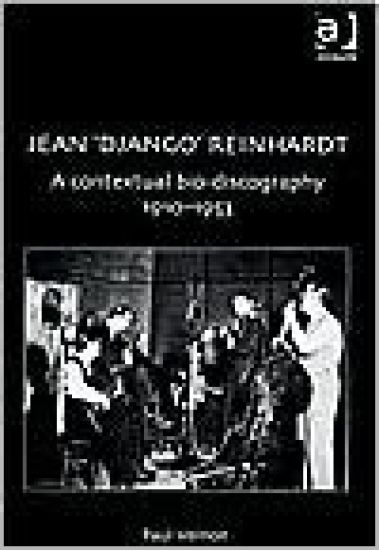
Jean 'Django' Reinhardt

Jean 'Django' Reinhardt

Paul Vernon

Ashgate Publishing Limited
2003
sidottu
This volume gathers together and organizes in an easily accessible format all known information relevant to the life and work of the French jazz musician Django Reinhardt. Together with fellow musician, Stéphane Grappelli, Reinhardt became one of the twentieth century's most celebrated jazz artists with performances he gave as part of the Quintet of the Hot Club of France. Essentially discographical in format, this book updates the original work compiled by Charles Delauney in 1960, and draws on later work by Gould, Nevers, Royal and Rust, to detail all known recordings by Reinhardt, together with known film, radio and television appearances. For each entry Paul Vernon provides, where known, the location of the recording, the date, the artist credit as it appears on the label of the original issue, the performers and the instruments played by them, the matrix number, the exact timing of the recording and details of 78, LP, EP and CD issues. Interspersed at the appropriate chronological points are biographical details about Reinhardt and the political, social and cultural climate of his time. This is augmented with excerpts from reviews, letters and other documents to provide a vivid context for his recording work.