Kirjojen hintavertailu. Mukana 11 342 296 kirjaa ja 12 kauppaa.

Kirjahaku

Etsi kirjoja tekijän nimen, kirjan nimen tai ISBN:n perusteella.

1000 tulosta hakusanalla John Cheever

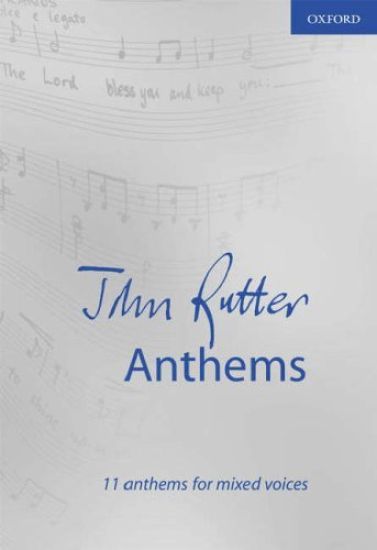
John Rutter Anthems

John Rutter Anthems

Oxford University Press
2003
muu
A collection of 11 of John Rutter's finest and most popular pieces. With the inclusion of so many 'classics' covering a dazzling variety of texts, styles, and scoring, this anthology will prove a treasured addition to any choir library.
John Wesley

John Wesley

John Wesley

Oxford University Press Inc
1980
nidottu
A major figure in eighteenth-century Christianity, John Wesley sought to combine the essential elements of the Catholic and Evangelical traditions and to restore to the laity a vital role in church life. He began one of the most dynamic movements in the history of modern Protestantism, a movement which eventually produced the Methodist churches. This volume offers a representative selection of theological writings by Wesley and includes historically oriented introductions and footnotes which indicate Wesley's Anglican, patristic, and biblical sources.
John Calvin

John Calvin

William J. Bouwsma

Oxford University Press Inc
1989
nidottu
Professor Bouwsma studies the theologian John Calvin as a way to bring into focus the cultural, psychological, and intellectual problems of the sixteenth century. He argues that Calvin represents an historical moment of transition from traditional modes of philosophical and religious thought to modern ones. Beginning with a description of the traditional culture of Calvin's time, and of the moralism which exerted such a powerful hold over medieval thought, he goes on to identify the crucial issue in this transition as the ability of a culture to manage the anxiety of existence. Medieval society, by creating simplified polarities such as Good and Evil, he argues, was conspicuously successful in performing this task. Finally Bouwsma provides a critical analysis of this medieval philosophy, and explains the significance of Calvin's concept of a "New Order" in providing an ethical system which no longer relied upon these established views of the world.
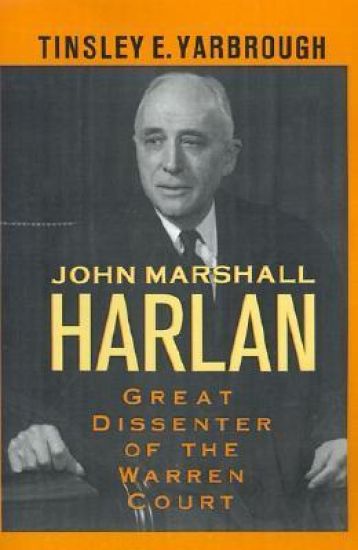
John Marshall Harlan

John Marshall Harlan

Tinsley E. Yarbrough

Oxford University Press Inc
1992
sidottu
Describes the life and times of the Republican judge who opposed the liberal expansion of civil liberties advocated by the Warren Court, from his privileged childhood to his days at Princeton and Oxford, to his stormy legal career
John Nelson, Merchant Adventurer

John Nelson, Merchant Adventurer

Richard R. Johnson

Oxford University Press Inc
1993
sidottu
John Nelson was an entrepreneur born in the mid 17th century, a man, in Johnson's words, `operating ahead of the government and settled society from which he came', one who `responded to conventions and conditions derived from several different and often competing cultures'. In the case of Nelson, this meant operating in England and France in Europe and in French Canada and New England in America. In several major transactions, he acted as middleman between French Canada and New England. He led an uprising that forced out the Royal Governor of Massachusetts in 1689 and later led an expedition against the French at Port Royal, where he was captured and ultimately landed in the Bastille in Paris. When he was finally released in 1698, he returned to Boston and remained in international trade but no longer had a political role. John Nelson's career exemplifies ways in which the expansion of European empires overwhelmed the local and proprietary rules in effect in colonial America. Johnson's book also provides a way of looking at the continued strong conflict between New England and Acadia about fishing rights in the North Atlantic. In Johnson's words, `Nelson's career directs attention beyond social life on the one hand and court politics on the other to individuals whose lives precipitated policy even if they themselves never put it into execution. [Figures like Nelson] were at once the unsung creators and among the numerous victims of Europe's American empires'.
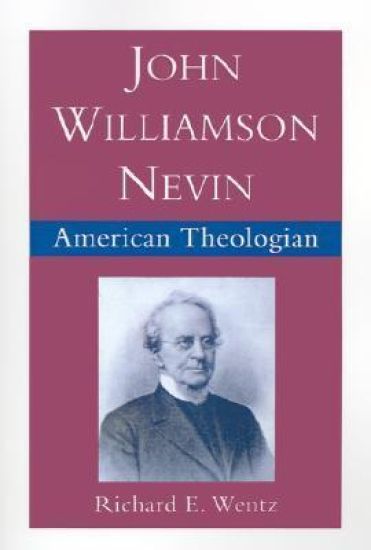
John Williamson Nevin, American Theologian

John Williamson Nevin, American Theologian

Richard E. Wentz

Oxford University Press Inc
1997
sidottu
This study of the life and thought of John Williamson Nevin (1803-1886) offers a revised interpretation of an important nineteenth-century religious thinker. Along with the historian, Phillip Schaff, Nevin was a leading exponent of what became known as the Mercersburg Movement, named for the college and theological seminary of the German Reformed Church located in Mercersburg, Pennsylvania. The story is a neglected aspect of American studies. Wentz provides a kind of post-modern perspective on Nevin, presenting him as a distinctively American thinker, rather than as a reactionary romantic. Although influenced by German philosophy, historical studies, and theology, Nevin's thought was a profound response to the American public context of his day. He was, in many respects, a public theologian, judging the prevailing development of American Christianity as a new religion that was fashioning its own disintegration and that of American culture at large. Nevin's reinterpretation of catholicity in the American context opened the way for a radical understanding of religion and of American public life.
John Scottus Eriugena

John Scottus Eriugena

Dierdre Carabine

Oxford University Press Inc
2000
sidottu
This volume provides a brief and accessible introduction to the 9th-century philosopher and theologian John Scottus Eriugena, who was perhaps the most important philosophical thinker to appear in Latin Christendom in the period between Augustine and Anselm. Eriugena was known as the interpreter of Greek thought to the Latin West, particularly as teacher to Frankish emperor Charles the Bald, and this book emphasizes the relation of Eriugena's thought to his Greek and Latin sources, while also looking at his speculative philosophy.
John Scottus Eriugena

John Scottus Eriugena

Dierdre Carabine

Oxford University Press Inc
2000
nidottu
This volume provides a brief and accessible introduction to the 9th-century philosopher and theologian John Scottus Eriugena, who was perhaps the most important philosophical thinker to appear in Latin Christendom in the period between Augustine and Anselm. Eriugena was known as the interpreter of Greek thought to the Latin West, particularly as teacher to Frankish emperor Charles the Bald, and this book emphasizes the relation of Eriugena's thought to his Greek and Latin sources, while also looking at his speculative philosophy.
John Hughlings Jackson

John Hughlings Jackson

Macdonald Critchley; Eileen A. Critchley

Oxford University Press Inc
1998
sidottu
An account of the life and work of Dr John Hughlings Jackson (1835-1911), the English physician who, during the reign of Queen Victoria, pioneered the development of the specialty of neurology within medical science in the United Kingdom. Much of his work is still the basis of contemporary understanding of the dissolution of language caused by disease. Jackson was one of the founding editors of the journal, Brain. This book will be of interest to neurologists and medical historians.
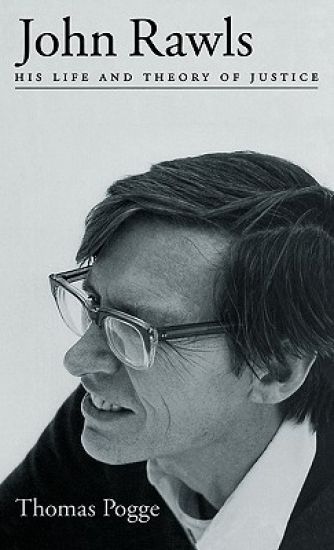
John Rawls

John Rawls

Thomas Pogge

Oxford University Press Inc
2007
sidottu
John Rawls was one of the most important political philosophers of our time, and promises to be an enduring figure over the coming decades. His Theory of Justice (1971) has had a profound impact across philosophy, politics, law, and economics. Nonetheless Rawlsian theory is not easy to understand, particularly for beginners, and his writing can be dense and forbidding. Thomas Pogge's short introduction (originally published in German) gives a thorough and concise presentation of the main outlines of Rawls's theory, introduces biographical information when necessary, and draws links between the Rawlsian enterprise and other important positions in moral and political philosophy.
John Rawls

John Rawls

Thomas Pogge

Oxford University Press Inc
2007
nidottu
John Rawls was one of the most important political philosophers of our time, and promises to be an enduring figure over the coming decades. His Theory of Justice (1971) has had a profound impact across philosophy, politics, law, and economics. Nonetheless Rawlsian theory is not easy to understand, particularly for beginners, and his writing can be dense and forbidding. Thomas Pogge's short introduction (originally published in German) gives a thorough and concise presentation of the main outlines of Rawls's theory, introduces biographical information when necessary, and draws links between the Rawlsian enterprise and other important positions in moral and political philosophy.
John Buridan

John Buridan

Gyula Klima

Oxford University Press Inc
2008
sidottu
This is a brief, accessible introduction to the thought of the philosopher John Buridan (ca. 1295-1361). Little is known about Buridan's life, most of which was spent studying and then teaching at the University of Paris. Buridan's works are mostly by-products of his teaching. They consist mainly of commentaries on Aristotle, covering the whole extent of Aristotelian philosophy, ranging from logic to metaphysics, to natural science, to ethics and politics. Aside from these running commentaries on Aristotle's texts, Buridan wrote influential question-commentaries. These were a typical genre of the medieval scholastic output, in which the authors systematically and thoroughly discussed the most problematic issues raised by the text they were lecturing on. The question-format allowed Buridan to work out in detail his characteristically nominalist take on practically all aspects of Aristotelian philosophy, using the conceptual tools he developed in his works on logic. Buridan's influence in the late Middle Ages can hardly be overestimated. His ideas quickly spread not only through his own works, but to an even larger extent through the work of his students and younger colleagues, such as Nicholas Oresme, Marisilius of Inghen, and Albert of Saxony, who in turn became very influential themselves, and turned Buridan's ideas into standard textbook material in the curricula of many late medieval European universities. With the waning of scholasticism Buridan's fame quickly faded. Gyula Klima argues, however, that many of Buridan's academic concerns are strikingly similar to those of modern philosophy and his work sometimes quite directly addresses modern philosophical questions.
John Buridan

John Buridan

Gyula Klima

Oxford University Press Inc
2008
nidottu
This is a brief, accessible introduction to the thought of the philosopher John Buridan (ca. 1295-1361). Little is known about Buridan's life, most of which was spent studying and then teaching at the University of Paris. Buridan's works are mostly by-products of his teaching. They consist mainly of commentaries on Aristotle, covering the whole extent of Aristotelian philosophy, ranging from logic to metaphysics, to natural science, to ethics and politics. Aside from these running commentaries on Aristotle's texts, Buridan wrote influential question-commentaries. These were a typical genre of the medieval scholastic output, in which the authors systematically and thoroughly discussed the most problematic issues raised by the text they were lecturing on. The question-format allowed Buridan to work out in detail his characteristically nominalist take on practically all aspects of Aristotelian philosophy, using the conceptual tools he developed in his works on logic. Buridan's influence in the late Middle Ages can hardly be overestimated. His ideas quickly spread not only through his own works, but to an even larger extent through the work of his students and younger colleagues, such as Nicholas Oresme, Marisilius of Inghen, and Albert of Saxony, who in turn became very influential themselves, and turned Buridan's ideas into standard textbook material in the curricula of many late medieval European universities. With the waning of scholasticism Buridan's fame quickly faded. Gyula Klima argues, however, that many of Buridan's academic concerns are strikingly similar to those of modern philosophy and his work sometimes quite directly addresses modern philosophical questions.
John Winthrop

John Winthrop

Bremer

Oxford University Press Inc
2005
nidottu
The preeminent figure of early New England, John Winthrop was the first governor of the Massachusetts Bay Colony. More than anyone else, he shaped the culture of New England and his effort to create a Puritan "City on a Hill" has had a lasting effect on American values. In John Winthrop, Francis J. Bremer draws on over a decade of research in England, Ireland, and the United States to offer a superb biography of Winthrop, one rooted in a detailed understanding of his first forty years in England. Indeed, Bremer provides an extensive, path-breaking treatment of Winthrop's family background, youthful development, and English career. His dissatisfaction with the decline of the "godly kingdom of the Stour Valley" in which he had been raised led him on his errand to rebuild such a society in a New England. In America, Winthrop would use the skills he had developed in England as he struggled with challenges from Roger Williams and Anne Hutchinson, among others, and defended the colony from English interference. We also see the personal side of Winthrop--the doubts and concerns of the spiritual pilgrim, his everyday labors and pleasures, his feelings for family and friends. And Bremer also sheds much light on important historical moments in England and America, such as the Reformation and the rise of Puritanism, the rise of the middling class, the colonization movement, and colonial relations with Native Americans. Incorporating previously unexplored archival materials from both sides of the Atlantic, here is the definitive portrait of one of the giants of our history.
John Wyclif

John Wyclif

Stephen Edmund Lahey

Oxford University Press Inc
2009
sidottu
John Wyclif (d. 1384) has too frequently been described as "Morning Star of the Reformation" and only recently begun to be studied as a fourteenth-century English philosopher and theologian. This work draws on recent scholarship situating Wyclif in his fourteenth-century milieu to present a survey of his thought and writings as a coherent theological position arising from Oxford's "Golden Age" of theology. Lahey argues that many of Wyclif's best known critiques of the fourteenth-century Church arise from his philosophical commitment to an Augustinian realism evocative of the thought of Robert Grosseteste and Anselm of Canterbury. This realism is comprehensible in terms of Wyclif's sustained focus on semantics and the properties of terms and propositions, a "linguistic turn" characterizing post-Ockham philosophical theology. Arising from this propositional realism is a strong emphasis on the place of Scripture in both formal and applied theology, which was the starting point for many of Wyclif's quarrels with the ecclesiastical status quo in late fourteenth-century England. This survey takes into account both Wyclif's earlier, philosophical works and his later works, including sermons and Scripture commentary. Wyclif's belief that Scripture is the eternal and perfect divine word, the paradigm of human discourse and the definitive embodiment of truth in creation is central to an understanding of the ties he believes relate theoretical and practical philosophy to theology. This connection links Wyclif's interest in the propositional structure of reality to his realism, his hermeneutic program, and to his agenda for reform of the Church. Lahey's survey also highlights Wyclif's rejection of Bradwardine's determinism in favor of a model of human freedom in light of God's perfect foreknowledge, and also explores the relation of Wyclif's spatiotemporal atomism to his rejection of transubstantiation. This is the first book-length, comprehensive survey of Wyclif's thought, and will be of interest to students of later medieval theology, philosophy, history, and literature.
John Wyclif

John Wyclif

Stephen Edmund Lahey

Oxford University Press Inc
2008
nidottu
John Wyclif (d.1384) has too frequently been described as "Morning Star of the Reformation" and only recently begun to be studied as a fourteenth-century English philosopher and theologian. This work draws on recent scholarship situating Wyclif in his fourteenth-century milieu to present a survey of his thought and writings as a coherent theological position arising from Oxford's "Golden Age" of theology. Lahey argues that many of Wyclif's best known critiques of the fourteenth-century Church arise from his philosophical commitment to an Augustinian realism evocative of the thought of Robert Grosseteste and Anselm of Canterbury. This realism is comprehensible in terms of Wyclif's sustained focus on semantics and the properties of terms and propositions, a "linguistic turn" characterizing post-Ockham philosophical theology. Arising from this propositional realism is a strong emphasis on the place of Scripture in both formal and applied theology, which was the starting point for many of Wyclif's quarrels with the ecclesiastical status quo in late fourteenth-century England. This survey takes into account both Wyclif's earlier, philosophical works and his later works, including sermons and Scripture commentary. Wyclif's belief that Scripture is the eternal and perfect divine word, the paradigm of human discourse and the definitive embodiment of truth in creation is central to an understanding of the ties he believes relate theoretical and practical philosophy to theology. This connection links Wyclif's interest in the propositional structure of reality to his realism, his hermeneutic program, and to his agenda for reform of the Church. Lahey's survey also highlights Wyclif's rejection of Bradwardine's determinism in favor of a model of human freedom in light of God's perfect foreknowledge, and also explores the relation of Wyclif's spatiotemporal atomism to his rejection of transubstantiation. This is the first book-length, comprehensive survey of Wyclif's thought, and will be of interest to students of later medieval theology, philosophy, history, and literature.
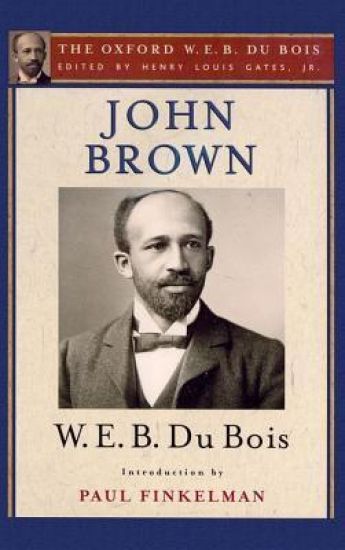
John Brown

John Brown

Oxford University Press Inc
2016
sidottu
W. E. B. Du Bois was a public intellectual, sociologist, and activist on behalf of the African American community. He profoundly shaped black political culture in the United States through his founding role in the NAACP, as well as internationally through the Pan-African movement. Du Bois's sociological and historical research on African-American communities and culture broke ground in many areas, including the history of the post-Civil War Reconstruction period. Du Bois was also a prolific author of novels, autobiographical accounts, innumerable editorials and journalistic pieces, and several works of history. John Brown is W. E. B. Du Bois's groundbreaking political biography that paved the way for his transition from academia to a lifelong career in social activism. This biography is unlike Du Bois's earlier work; it is intended as a work of consciousness-raising on the politics of race. Less important are the historical events of John Brown's life than the political revelations found within the pages of this biography. At the time that he wrote it in 1909, Du Bois had begun his transformation into the most influential civil rights leader of his time. With a series introduction by editor Henry Louis Gates, Jr., and an introduction by Paul Finkelman, this edition is essential for anyone interested in African American history.
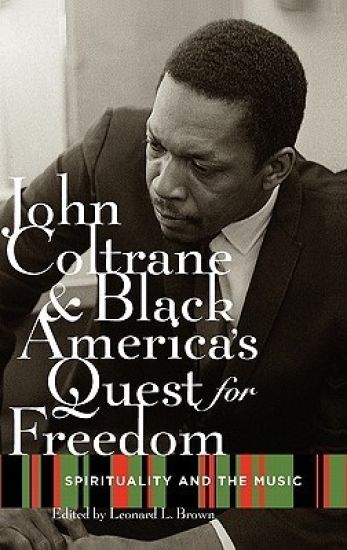
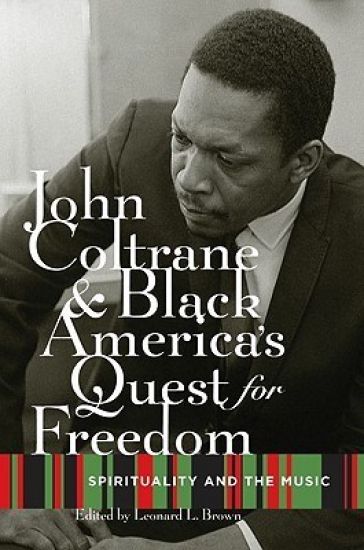
John Coltrane and Black America's Quest for Freedom
John Coltrane's unique and powerful saxophonic sound is commonly recognized among jazz scholars and fans alike as having a "spiritual" nature, imbued with the perfomer's soul, which deeply touches musicians and listeners worldwide. This revered and respected musician created new standards, linked tradition with innovation, challenged common assumptions, and relentlessly pursued spiritual goals in his music, which he aimed openly to use as a means to help listeners see the beauty of life. More than four decades after Coltrane's death, it is this spiritual nature of the music that has kept his sound alive - and thriving - on the contemporary jazz scene. Edited by prominent jazz musician and scholar Leonard Brown, John Coltrane and Black America's Quest for Freedom is a timely exploration of Coltrane's sound and its spiritual qualities as they relate to Black American music culture and aspirations for freedom. A wide-ranging collection of essays and interviews featuring many of the most eminent figures in jazz studies and performance-Tommy Lee Lott, Anthony Brown, Herman Gray, Emmett G. Price III, Dwight Andrews, Tammy Kernodle, Salim Washington, Eric Jackson, and TJ Anderson (foreword)-the book examines the full spectrum of Coltrane's legacy. Each essay approaches this theme from a different angle, in both historical and contemporary contexts, focusing on how Coltrane became a quintessential example of the universal and enduring qualities of Black American culture. The contributors address Coltrane as the Black intellectual, the visionary master of musical syntax, the man and the media icon, and ultimately the symbol of the spiritual core of Black American music.
John Coltrane and Black America's Quest for Freedom
John Coltrane's unique and powerful saxophonic sound is commonly recognized among jazz scholars and fans alike as having a "spiritual" nature, imbued with the perfomer's soul, which deeply touches musicians and listeners worldwide. This revered and respected musician created new standards, linked tradition with innovation, challenged common assumptions, and relentlessly pursued spiritual goals in his music, which he aimed openly to use as a means to help listeners see the beauty of life. More than four decades after Coltrane's death, it is this spiritual nature of the music that has kept his sound alive - and thriving - on the contemporary jazz scene. Edited by prominent jazz musician and scholar Leonard Brown, John Coltrane and Black America's Quest for Freedom is a timely exploration of Coltrane's sound and its spiritual qualities as they relate to Black American music culture and aspirations for freedom. A wide-ranging collection of essays and interviews featuring many of the most eminent figures in jazz studies and performance-Tommy Lee Lott, Anthony Brown, Herman Gray, Emmett G. Price III, Dwight Andrews, Tammy Kernodle, Salim Washington, Eric Jackson, and TJ Anderson (foreword)- the book examines the full spectrum of Coltrane's legacy. Each essay approaches this theme from a different angle, in both historical and contemporary contexts, focusing on how Coltrane became a quintessential example of the universal and enduring qualities of Black American culture. The contributors address Coltrane as the Black intellectual, the visionary master of musical syntax, the man and the media icon, and ultimately the symbol of the spiritual core of Black American music.
John Henry

John Henry

Oxford University Press Inc
2009
sidottu
Roark Bradford's 1931 novel and 1939 play dealing with the legendary folk-hero John Henry (both titled John Henry) were extremely influential in their own time but have long been unavailable or extremely hard to find. In this unique collection, Steven C.Tracy has joined Bradford's seminal works in a new critical edition to help contextualize both the novel and play, making these vital texts widely available again for scholars of folklore and African American literature. This new volume includes an expansive introduction that explores Bradford's life and work, critical responses to the novel and play, and a survey of John Henry's pervasive influence in folk, literary, and popular culture. It also features a wide array of supplementary materials, including a selected bibliography and discography related to Bradford and John Henry; transcriptions of a number of folksong texts and recordings available during the 1930s; and a chronology of the lives of both Bradford and Henry. As Tracy's introduction makes clear, such a consideration of Bradford—set in the context of writers, both black and white, drawing upon African American folklore and using dialects along with stereotypical and non-stereotypical portrayals—is long overdue. In pairing Bradford's two treatments of the quintessentially American story of John Henry, Tracy has provided the definitive edition of two classic American texts, and in so doing, he provides a welcome opportunity to reflect on the various paths by which African American traditions have infiltrated the cultural mainstream.