Kirjahaku
Etsi kirjoja tekijän nimen, kirjan nimen tai ISBN:n perusteella.
1000 tulosta hakusanalla John Class


Bible Class Manual; or, a System of Theology in the Order of the Westminster Shorter Catechism, Adapted to Bible Classes
John Mcdowell
Antigonos Verlag
2025
nidottu
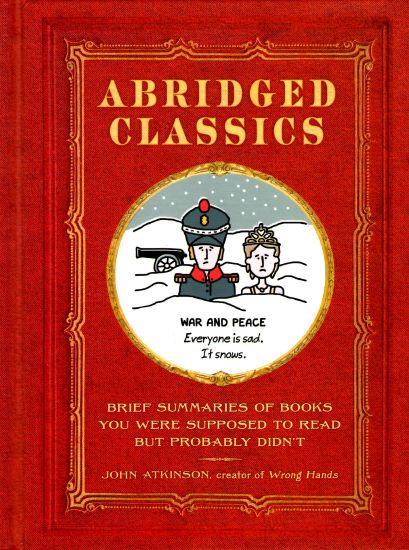
A collection of irreverent summations of more than 100 well-known works of literature, from Anna Karenina to Wuthering Heights, cleverly described in the fewest words possible and accompanied with funny color illustrations.Abridged Classics: Brief Summaries of Books You Were Supposed to Read but Probably Didn’t is packed with dozens of humorous super-condensed summations of some of the most famous works of literature from many of the world’s most revered authors, including William Shakespeare, Charles Dickens, Emily Brontë, Leo Tolstoy, Jane Austen, Mark Twain, J.R.R. Tolkien, Margaret Atwood, James Joyce, Plato, Ernest Hemingway, Dan Brown, Ayn Rand, and Herman Melville.From "Old ladies convince a guy to ruin Scotland" (Macbeth) to "Everyone is sad. It snows." (War and Peace), these clever, humorous synopses are sure to make book lovers smile.

This work offers plans and instructions to build 47 functional wooden boats for oar, motor, or sail. It covers flatirons, dories, semi-dories, peapods, St Lawrence River skiffs, Merrymeeting Bay duckboats, Whitehall rowing boats, Rangeley boats, herries, and Sea Bright skiffs.
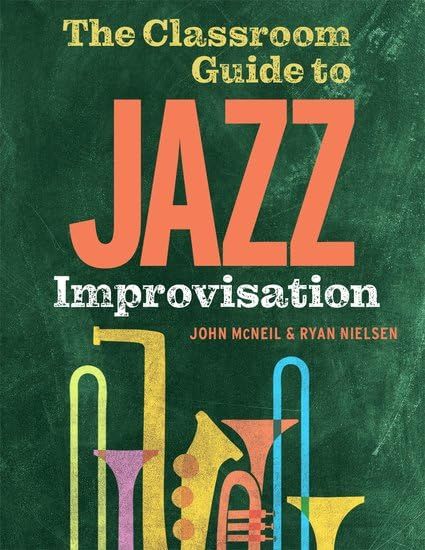
The Classroom Guide to Jazz Improvisation
John McNeil; Ryan Nielsen
OXFORD UNIVERSITY PRESS INC
2024
nidottu
You don't have to be a jazz expert to give your students a great introduction to improvisation. The Classroom Guide to Jazz Improvisation provides what music educators have sought for decades: an easy, step-by-step guide to teaching jazz improvisation in the music classroom. Offering classroom-tested lesson plans, authors John McNeil and Ryan Nielsen draw on their combined 54 years of teaching experience and extensive work as professional jazz musicians to remove the guesswork and mystique from the teaching process. Each lesson is founded in the authors' realization that the brain responds differently to improvisation than it does rote memory. The resulting lesson plans are flexible, easy to use, and equip students with a quick understanding of the simple choices they can make to create effective jazz lines. Lessons are designed for a range of settings, from ensemble rehearsal to private instruction. Music educators may find relief in the concrete, straightforward materials on rhythm section instruments like bass, drums, piano, and guitar. Beyond the nuts and bolts of improvisation, this book contains carefully curated listening lists, honest discussions about the meaning of the music, and talking points to advocate for jazz programs to administrators and parents. With an inviting and conversational approach, The Classroom Guide to Jazz Improvisation is an essential resource for all music educators, from early career teachers to seasoned instructors.
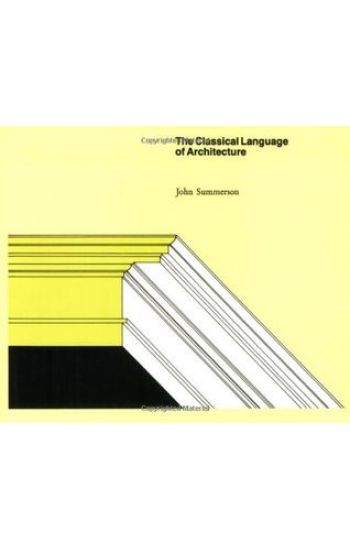
The author's purpose is to set out as simply and vividly as possible the exact grammatical workings of an architectural language.Classical architecture is a visual "language" and like any other language has its own grammatical rules. Classical buildings as widely spaced in time as a Roman temple, an Italian Renaissance palace and a Regency house all show an awareness of these rules even if they vary them, break them or poetically contradict them. Sir Christopher Wren described them as the "Latin" of architecture and the analogy is almost exact. There is the difference, however, that whereas the learning of Latin is a slow and difficult business, the language of classical architecture is relatively simple. It is still, to a great extent, the mode of expression of our urban surroundings, since classical architecture was the common language of the western world till comparatively recent times. Anybody to whom architecture makes a strong appeal has probably already discovered something of its grammar for himself. In this book, the author's purpose is to set out as simply and vividly as possible the exact grammatical workings of this architectural language. He is less concerned with its development in Greece and Rome than with its expansion and use in the centuries since the Renaissance. He explains the vigorous discipline of "the orders" and the scope of "rustication"; the dramatic deviations of the Baroque and, in the last chapter, the relationship between the classical tradition and the "modern" architecture of today. The book is intended for anybody who cares for architecture but more specifically for students beginning a course in the history of architecture, to whom a guide to the classical rules will be an essential companion.
A Classical Dictionary of Hindu Mythology and Religion, Geography, History and Literature
John Dowson
Routledge
2000
sidottu
This is Volume VIII in a series of ten on India: Religion and Philosophy. Originally published in 1879, work an endeavour has been made to supply the long-felt want of a Hindu Classical Dictionary. The main portion of this work consists of mythology, but religion is bound up with mythology, and in many points the two are quite inseparable.
The Classroom X-Factor: The Power of Body Language and Non-verbal Communication in Teaching
John White; John Gardner
Routledge
2011
sidottu
Why is it that some teachers have a kind of magical charisma and charm which sets them apart from their peers? This book gives us a fresh and exciting answer – They have the classroom X-Factor! White and Gardner’s gripping text, The Classroom X Factor, examines the notion of having what the public has come to call the ‘X-Factor’ from the perspective of the teacher, offering fascinating insights into the use of non verbal communication in the classroom. Using classroom and curricular examples, this book sets out to show how both trainee and practising teachers can identify their own ‘X-Factor’ in order to help transform their perspectives and perceptions of themselves during the ‘live act’ of teaching. The book demonstrates how teachers can transform the way in which they connect with their students, whilst also creating meaningful and potent learning experiences for them. White and Gardner show that by following simple methods borrowed from psychology and cognitive science teachers can develop their own ‘X-Factor’ and in so doing increase their enjoyment and efficacy as professionals. The techniques described include some of the following: Facial and vocal expression Gesture and body language Eye contact and smiling Teacher attire, colour and the use of space Nonverbal communication and pedagogical approachesIn addition, the book provides a section containing fictional stories that aim to contextualise the findings detailed throughout the text. The inclusion of chapter summaries, questions aimed at identifying the readers’ own ‘X-Factor’, lesson exemplars and a user-friendly self-evaluation framework all work together to make the book a stimulating and easy read where reflective learning and the practical application of classroom techniques are the order of the day. This comprehensive guide to developing the classroom X-Factor within you will be of value to teaching and learning and is of immense use to both practising and student teachers and to schools seeking to develop models of reflective practice. It will also be of interest to curriculum and assessment agencies, policy makers, academics and others whose roles involve the design, provision, support and evaluation of teachers’ efficacy in the classroom.
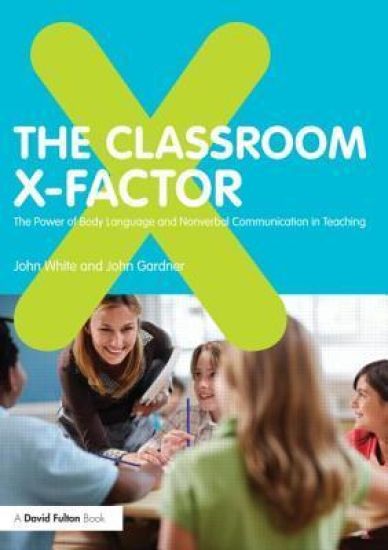
The Classroom X-Factor: The Power of Body Language and Non-verbal Communication in Teaching
John White; John Gardner
Routledge
2011
nidottu
Why is it that some teachers have a kind of magical charisma and charm which sets them apart from their peers? This book gives us a fresh and exciting answer – They have the classroom X-Factor! White and Gardner’s gripping text, The Classroom X Factor, examines the notion of having what the public has come to call the ‘X-Factor’ from the perspective of the teacher, offering fascinating insights into the use of non verbal communication in the classroom. Using classroom and curricular examples, this book sets out to show how both trainee and practising teachers can identify their own ‘X-Factor’ in order to help transform their perspectives and perceptions of themselves during the ‘live act’ of teaching. The book demonstrates how teachers can transform the way in which they connect with their students, whilst also creating meaningful and potent learning experiences for them. White and Gardner show that by following simple methods borrowed from psychology and cognitive science teachers can develop their own ‘X-Factor’ and in so doing increase their enjoyment and efficacy as professionals. The techniques described include some of the following: Facial and vocal expression Gesture and body language Eye contact and smiling Teacher attire, colour and the use of space Nonverbal communication and pedagogical approachesIn addition, the book provides a section containing fictional stories that aim to contextualise the findings detailed throughout the text. The inclusion of chapter summaries, questions aimed at identifying the readers’ own ‘X-Factor’, lesson exemplars and a user-friendly self-evaluation framework all work together to make the book a stimulating and easy read where reflective learning and the practical application of classroom techniques are the order of the day. This comprehensive guide to developing the classroom X-Factor within you will be of value to teaching and learning and is of immense use to both practising and student teachers and to schools seeking to develop models of reflective practice. It will also be of interest to curriculum and assessment agencies, policy makers, academics and others whose roles involve the design, provision, support and evaluation of teachers’ efficacy in the classroom.
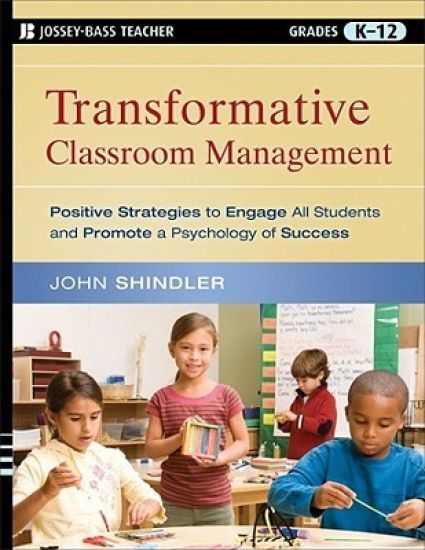
Transformative Classroom Management The natural condition of any classroom is harmonious, satisfying, and productive, so why do so many teachers struggle with problems of apathy, hostility, anxiety, inefficiency, and resistance? In this groundbreaking book, education expert John Shindler presents a powerful model, Transformative Classroom Management (TCM), that can be implemented by any teacher to restore the natural positive feelings in his or her classroom—the love of learning, collaboration, inspiration, and giving—and create a productive learning environment in which all students can achieve. Unlike other classroom management systems that view problems as something to be “handled,” TCM offers suggestions for creating optimal conditions for learning, performance, motivation, and growth. This practical book shows teachers how to abandon ineffective short-term gimmicks, bribes, and punishments and adopt the proven management practices and new habits of mind that will transform their classrooms. Praise for Transformative Classroom Management “Transformative Classroom Management is a practical resource that explains the how and why of classroom management for novice and veteran teachers. Dr. Shindler recognizes the importance of preserving the teacher’s sanity while ensuring the student’s development of a personal sense of responsibility and a positive self-esteem.” —Eileen Matus, principal, South Toms River Elementary School, New Jersey “I have read many other management books by other authors, but Transformative Classroom Management has been the best so far at demystifying the invisible forces in the classroom.” —WILL McELROY, 4th grade teacher, Los Angeles United School District “This book was an invaluable tool for me during my student teaching. It served as a reference book that I found myself continually drawn to while struggling to find ways to effectively manage 29 first graders. The ideas, concepts and suggestions in the book were so innovative and helpful that even my Master Teacher found herself implementing some of the ideas! A must have for all student teachers!” —Carol Gillon, student teacher, Seattle University “Insightful and thoroughly researched, Transformative Classroom Management is an invaluable tool to help teachers, newbies and veterans alike, develop fully functional and engaged learning communities.” —LISA GAMACHE RODRIGUEZ, teacher, Los Angeles Unified School District
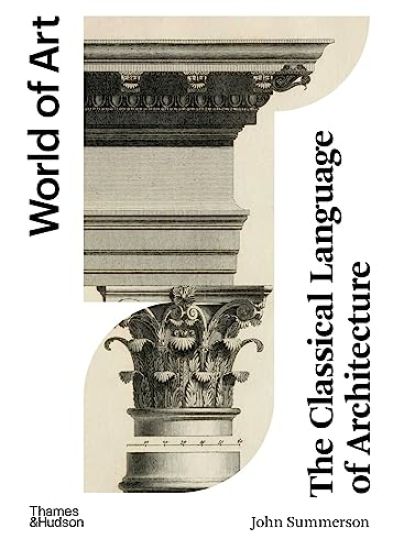
A revised and updated edition of Sir John Summerson's classic book. Derived from the principles of Greek and Roman architecture in antiquity, the classical style has long dominated the history of western architecture from the Renaissance to the present. Sir John Summerson’s timeless text, as relevant today as it was when first published, distils the visual language of architecture into its core classical elements, and illustrates that building throughout the ages express an awareness of the ‘grammar’ of style and its rules even if they vary, break or poetically contradict them. From the original edifices of Greece and Rome to the recapitulations and innovations of the Renaissance; the explosive rhetoric of the Baroque to the grave statements of Neo-classicism; and finally, the exuberant eclecticism of the Victorians and Edwardians to the 'stripped Neo-classicism' of some of the moderns; Summerson explains how every period has employed classical language to make their statement. With a new introduction by academic and architectural historian Alan Powers, this introduction continues to be one of the defining texts on the subject and is essential reading for all students of architecture.