Kirjojen hintavertailu. Mukana 12 481 244 kirjaa ja 12 kauppaa.

Kirjahaku

Etsi kirjoja tekijän nimen, kirjan nimen tai ISBN:n perusteella.

1000 tulosta hakusanalla John Gilbert

Dombey and son By: Charles Dickens, illustrated By: Darley, F[elix]. O[ctavius]. C[arr. 1822 - 1888]; Gilbert, John [1817 - 1897] -: Four
Dickens, Charles 1812 - 1870]. Darley, F elix]. O ctavius]. C arr. 1822 - 1888]; Gilbert, John 1817 - 1897] - Illustrators. Dombey and Son is a novel by Charles Dickens, published in monthly parts from 1 October 1846 to 1 April 1848 and in one volume in 1848. Its full title is Dealings with the Firm of Dombey and Son: Wholesale, Retail and for Exportation. Dickens started writing the book in Lausanne, Switzerland, before returning to England, via Paris, to complete it. Illustrations were provided by Hablot Knight Browne ('Phiz'). PLOT: The story concerns Paul Dombey, the wealthy owner of the shipping company of the book's title, whose dream is to have a son to continue his business. The book begins when his son is born, and Dombey's wife dies shortly after giving birth. Following the advice of Mrs Louisa Chick, his sister, Dombey employs a wet nurse named Mrs Richards (Toodle). Dombey already has a six-year-old daughter Florence but, bitter at her not having been the desired boy, he neglects her continually. One day, Mrs Richards, Florence, and her maid, Susan Nipper, secretly pay a visit to Mrs Richard's house in Staggs's Gardens so that Mrs Richards can see her children. During this trip, Florence becomes separated from them and is kidnapped for a short time by Good Mrs Brown, before being returned to the streets. She makes her way to Dombey and Son's offices in the City and there is found and brought home by Walter Gay, an employee of Mr Dombey, who first introduces her to his uncle, the navigation instrument maker Solomon Gills, at his shop the Wooden Midshipman. The child, named Paul after his father, is a weak and sickly child, who does not socialise normally with others; adults call him "old fashioned". He is intensely fond of his sister Florence, who is deliberately neglected by her father as irrelevant and a distraction. He is sent to the seaside at Brighton for his health, where he and Florence lodge with the ancient and acidic Mrs Pipchin. Finding his health beginning to improve there, Mr Dombey keeps him at Brighton and has him educated there at Dr and Mrs Blimber's school, where he and the other boys undergo both an intense and arduous education under the tutelage of Mr Feeder, B.A. and Cornelia Blimber. It is here that Paul is befriended by a fellow pupil, the amiable but weak-minded Mr Toots.Here, Paul's health declines even further in this 'great hothouse' and he finally dies, still only six years old. Dombey pushes his daughter away from him after the death of his son, while she futilely tries to earn his love. In the meantime, young Walter sent off to fill a junior position in the firm's counting house at Barbados through the manipulations of Mr Dombey's confidential manager, Mr James Carker, 'with his white teeth', who sees him as a potential rival, through his association with Florence. His boat is reported lost and he is presumed drowned. Walter's uncle leaves to go in search of Walter, leaving his great friend Captain Edward Cuttle in charge of the Midshipman. Meanwhile, Florence is now left alone with few friends to keep her company...................
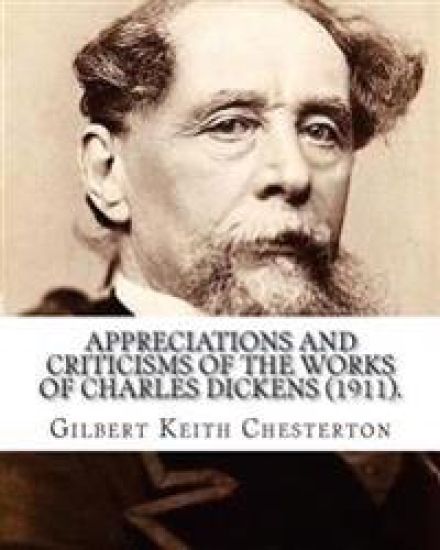
Appreciations and Criticisms of the Works of Charles Dickens (1911). By: Gilbert Keith Chesterton: Charles John Huffam Dickens ( 7 February 1812 - 9 J
Gilbert Keith Chesterton, KC*SG (29 May 1874 - 14 June 1936), better known as G. K. Chesterton, was an English writer, poet, philosopher, dramatist, journalist, orator, lay theologian, biographer, and literary and art critic. Chesterton is often referred to as the "prince of paradox". Time magazine has observed of his writing style: "Whenever possible Chesterton made his points with popular sayings, proverbs, allegories-first carefully turning them inside out." Chesterton is well known for his fictional priest-detective Father Brown, and for his reasoned apologetics. Even some of those who disagree with him have recognised the wide appeal of such works as Orthodoxy and The Everlasting Man.Chesterton, as a political thinker, cast aspersions on both Progressivism and Conservatism, saying, "The whole modern world has divided itself into Conservatives and Progressives. The business of Progressives is to go on making mistakes. The business of the Conservatives is to prevent the mistakes from being corrected."Chesterton routinely referred to himself as an "orthodox" Christian, and came to identify this position more and more with Catholicism, eventually converting to Catholicism from High Church Anglicanism. George Bernard Shaw, Chesterton's "friendly enemy" according to Time, said of him, "He was a man of colossal genius."Biographers have identified him as a successor to such Victorian authors as Matthew Arnold, Thomas Carlyle, Cardinal John Henry Newman, and John Ruskin.. Charles John Huffam Dickens ( 7 February 1812 - 9 June 1870) was an English writer and social critic. He created some of the world's best-known fictional characters and is regarded by many as the greatest novelist of the Victorian era.His works enjoyed unprecedented popularity during his lifetime, and by the twentieth century critics and scholars had recognised him as a literary genius. Born in Portsmouth, Dickens left school to work in a factory when his father was incarcerated in a debtors' prison. Despite his lack of formal education, he edited a weekly journal for 20 years, wrote 15 novels, five novellas, hundreds of short stories and non-fiction articles, lectured and performed extensively, was an indefatigable letter writer, and campaigned vigorously for children's rights, education, and other social reforms. Dickens's literary success began with the 1836 serial publication of The Pickwick Papers. Within a few years he had become an international literary celebrity, famous for his humour, satire, and keen observation of character and society. His novels, most published in monthly or weekly instalments, pioneered the serial publication of narrative fiction, which became the dominant Victorian mode for novel publication.The instalment format allowed Dickens to evaluate his audience's reaction, and he often modified his plot and character development based on such feedback. For example, when his wife's chiropodist expressed distress at the way Miss Mowcher in David Copperfield seemed to reflect her disabilities, Dickens improved the character with positive features. His plots were carefully constructed, and he often wove elements from topical events into his narratives.Masses of the illiterate poor chipped in ha'pennies to have each new monthly episode read to them, opening up and inspiring a new class of readers.
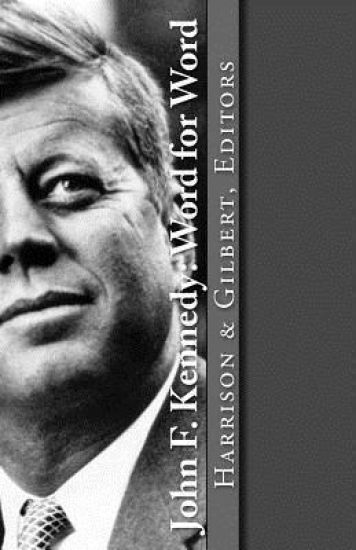
John F. Kennedy: Word for Word

John F. Kennedy: Word for Word

Steve Gilbert; Maureen Harrison

EXCELLENT BOOKS
2013
nidottu
A representative selection of thirty speeches by President John F. Kennedy, looking back on his life and times, not in the words of others, but in his own. In John F. Kennedy: Word for Word you will find the Acceptance Speech, the Presidential Debates, the Inaugural Address, the Berlin Wall, the Space Race, the Cuban Missile Crisis. In addition, read Kennedy's words on the State of the Union, the United Nations, Berlin, Cuba, Vietnam, civil rights, and nuclear war. Finally, read the Ungiven Speech scheduled in Dallas on November 22, 1963.
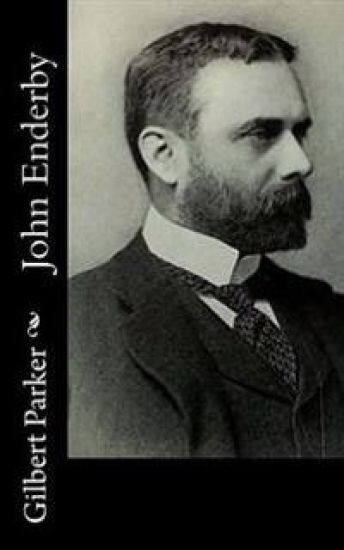
John Enderby

John Enderby

Gilbert Parker

Anson Street Press
2025
pokkari
Venture into 17th century Great Britain with Gilbert Parker's "John Enderby," a compelling work of historical and literary fiction. This biographical novel offers a glimpse into a pivotal era in British history. Parker masterfully weaves a narrative that captures the essence of the time, immersing readers in the social and political landscape of the period. "John Enderby" provides a unique lens through which to explore the past, blending historical accuracy with engaging storytelling. A meticulously prepared republication, this edition allows readers to experience the enduring appeal of this classic work. Perfect for those interested in historical fiction and the rich tapestry of Great Britain's past.This work has been selected by scholars as being culturally important, and is part of the knowledge base of civilization as we know it.This work is in the public domain in the United States of America, and possibly other nations. Within the United States, you may freely copy and distribute this work, as no entity (individual or corporate) has a copyright on the body of the work.Scholars believe, and we concur, that this work is important enough to be preserved, reproduced, and made generally available to the public. We appreciate your support of the preservation process, and thank you for being an important part of keeping this knowledge alive and relevant.
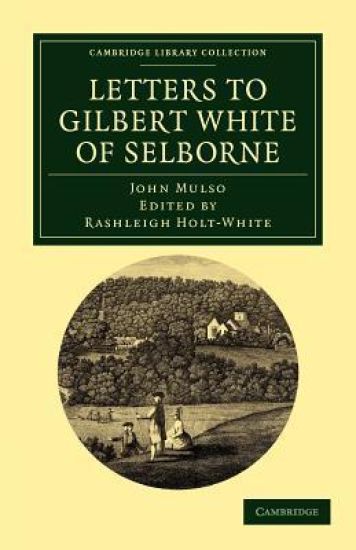
Letters to Gilbert White of Selborne

Letters to Gilbert White of Selborne

John Mulso

Cambridge University Press
2011
pokkari
These letters to Gilbert White (1720–93), the author of The Natural History and Antiquities of Selborne (1789; also reissued in this series) were published in 1907. They were written between 1744 and 1790 by John Mulso (1721–91); brother of the bluestocking Mrs Chapone, to White, whom he had met when both were undergraduates at Oxford. White's letters to Mulso were unfortunately destroyed, frustrating plans to publish a 'most interesting and amusing series of letters' between intimate friends, but the remaining half of the correspondence, 'containing almost the only contemporary illustration of Gilbert White's character and career', and then in the possession of the earl of Stamford, was edited by Rashleigh Holt-White, a great-great-nephew and enthusiast of his ancestor's life. These fascinating letters give insights into not only White's character but also the lives of the gentry of the period, and the intellectual milieu in which both men moved.
John Enderby

John Enderby

Gilbert Parker

Createspace Independent Publishing Platform
2015
nidottu
The book has no illustrations or index. Purchasers are entitled to a free trial membership in the General Books Club where they can select from more than a million books without charge. Subjects: Fiction / Short Stories; Fiction / Short Stories;
John Enderby

John Enderby

Gilbert Parker

Megali Verlag
2023
pokkari
Reproduction of the original. The publishing house Megali specialises in reproducing historical works in large print to make reading easier for people with impaired vision.
John Enderby

John Enderby

Gilbert Parker

Megali Verlag
2023
sidottu
Reproduction of the original. The publishing house Megali specialises in reproducing historical works in large print to make reading easier for people with impaired vision.