Kirjojen hintavertailu. Mukana 12 016 292 kirjaa ja 12 kauppaa.

Kirjahaku

Etsi kirjoja tekijän nimen, kirjan nimen tai ISBN:n perusteella.

1000 tulosta hakusanalla John L Cook

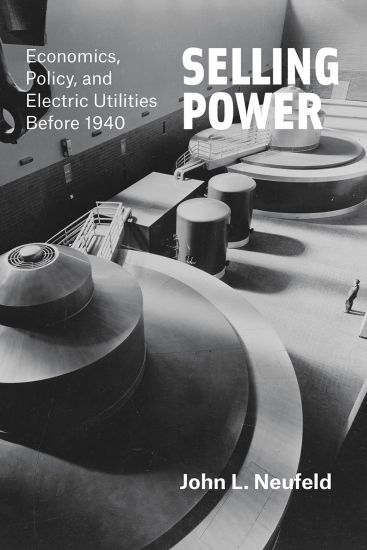
Selling Power

Selling Power

John L. Neufeld

University of Chicago Press
2016
sidottu
We remember Thomas Edison as the inventor of the incandescent light bulb, but he deserves credit for something much larger, an even more singular invention that profoundly changed the way the world works: the modern electric utility industry. Edison's light bulb was the first to work within a system where a utility generated electricity and distributed it to customers for lighting. The story of how electric utilities went within one generation from prototype to an indispensable part of most Americans' lives is a story about the relationships between political and technological change. John L. Neufeld offers a comprehensive historical treatment of the economics that shaped electric utilities. Compared with most industries, the organization of the electric utility industry is not and cannot be economically efficient. Most industries are kept by law in a state of fair competition, but the capital necessary to start an electric company generators, transmission and distribution systems, and land and buildings is so substantial that few companies can enter the market and compete. Therefore, the natural state of the electric utility industry since its inception has been a monopoly subject to government oversight. These characteristics of electric utilities and electricity's importance have created over time sharp political controversies, and changing public policies have dramatically changed the industry's structure to an extent matched by few other industries. Neufeld outlines the struggles that shaped the industry's development, and shows how the experience of electric utilities provides insight into the design of economic institutions, including today's new large-scale markets.
Political Tolerance and American Democracy

Political Tolerance and American Democracy

John L. Sullivan; James Piereson; George E. Marcus

University of Chicago Press
1993
nidottu
This path-breaking book reconceptualizes our understanding of political tolerance as well as of its foundations. Previous studies, the authors contend, overemphasized the role of education in explaining the presence of tolerance, while giving insufficient weight to personality and ideological factors. With an innovative methodology for measuring levels of tolerance more accurately, the authors are able to explain why particular groups are targeted and why tolerance is an inherently political concept. Far from abating, the degree of intolerance in America today is probably as great as it ever was; it is the targets of intolerance that have changed.
Forty Narratives in the Wyandot Language

Forty Narratives in the Wyandot Language

John L. Steckley

McGill-Queen's University Press
2020
sidottu
In 1911-1912, French-Canadian anthropologist Marius Barbeau spent a year recording forty texts in the Wyandot language as spoken by native speakers in Oklahoma. Though he intended to return and complete his linguistic study, he never did. More than a century later Forty Narratives in the Wyandot Language continues Barbeau's work. John Steckley provides an engaging analysis and fresh translation of the texts in order to preserve the traditional language and cultural heritage of the Wyandot or Wendat people. Leveraging four decades of studying the dialects of Wyandot and Wendat and his role as tribal linguist for the Wyandotte Nation, the author corrects errors in Barbeau's earlier text while adding personal anecdotes to provide readers with a unique comparative work. The stories in this collection, largely drawn from the traditional folklore of the Wyandot people and told in a language that has been dormant for decades, act as a time capsule for traditional tales, Indigenous history, humour, and Elder knowledge. Steckley's new translation not only aids Wyandot peoples of Oklahoma, Kansas, and Michigan in reclaiming their language but also gives researchers worldwide a rich, up-to-date reference for linguistic study. A significant literary record of a people and a language, Forty Narratives in the Wyandot Language is a major contribution to the preservation and revitalization of an Indigenous language in North America.
Forty Narratives in the Wyandot Language

Forty Narratives in the Wyandot Language

John L. Steckley

McGill-Queen's University Press
2020
nidottu
In 1911-1912, French-Canadian anthropologist Marius Barbeau spent a year recording forty texts in the Wyandot language as spoken by native speakers in Oklahoma. Though he intended to return and complete his linguistic study, he never did. More than a century later Forty Narratives in the Wyandot Language continues Barbeau's work. John Steckley provides an engaging analysis and fresh translation of the texts in order to preserve the traditional language and cultural heritage of the Wyandot or Wendat people. Leveraging four decades of studying the dialects of Wyandot and Wendat and his role as tribal linguist for the Wyandotte Nation, the author corrects errors in Barbeau's earlier text while adding personal anecdotes to provide readers with a unique comparative work. The stories in this collection, largely drawn from the traditional folklore of the Wyandot people and told in a language that has been dormant for decades, act as a time capsule for traditional tales, Indigenous history, humour, and Elder knowledge. Steckley's new translation not only aids Wyandot peoples of Oklahoma, Kansas, and Michigan in reclaiming their language but also gives researchers worldwide a rich, up-to-date reference for linguistic study. A significant literary record of a people and a language, Forty Narratives in the Wyandot Language is a major contribution to the preservation and revitalization of an Indigenous language in North America.
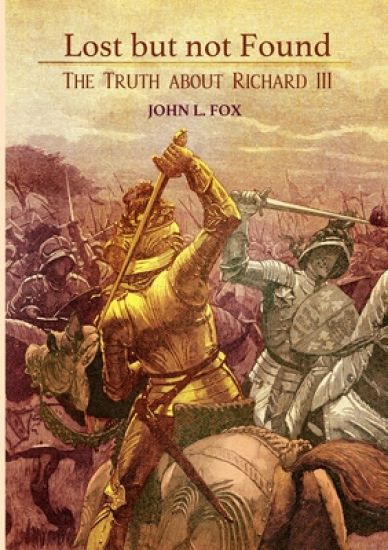
Lost but not Found: The Truth about Richard III
Everyone knows that Richard III was buried in Leicester; everyone knows that he had a deformed body; everyone knows he had a twisted spine; everyone knows that one of his shoulders was higher than the other; because that was what Rous said. Before ever they carried out any of their "tests", before another "expert" had examined the remains, those pseudo-scientists had had all their previous "knowledge" about Richard confirmed. From that first glance, it was a foregone conclusion that they would have the "results" to confirm their initial judgment. The truth is that there is not one scintilla of credible evidence that Richard III had any anatomical abnormality. So any one claiming to have found his remains, because those bones show the person suffered from a twisted spine, is mistaken. The Leicester grave-diggers have not the bones of the King, because the King did not have a twisted spine. There is no reliable evidence of any kind of deformity in King Richard III. The body in the car park is not his.
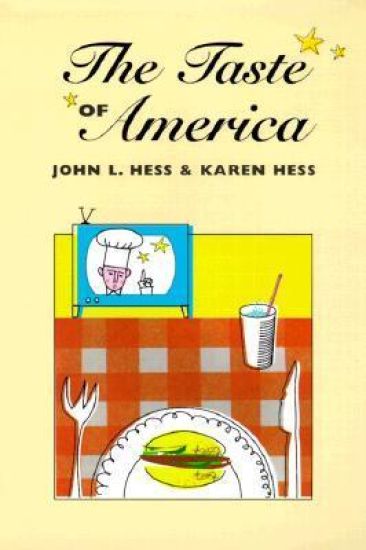
The Taste of America

The Taste of America

JOHN L HESS; Karen Hess

University of Illinois Press
2000
nidottu
This classic barbeque of our foodways is as valid and as savory today as when it first tickled ribs a generation ago. Based on the superlative authority of John L. Hess, onetime food critic of the New York Times, and Karen Hess, the pioneering historian of cookery, The Taste of America is both a history of American cooking and a history of the advice smiling celebrity cooks have asked Americans to swallow.The Taste of America provoked the cooking experts of the 1970s into spitting rage by pointing out in embarrassing detail that most of them lacked an essential ingredient: expertise. Now "Kool-Aid like Mother used to make" has become "Kool-Aid like Grandmother used to make," and a new generation has been weaned on synthetic food, pathetic snobbery, neurotic health advice, and reconstituted history. This much-needed new edition chars Julia Child ("She's not a cook, but she plays one on TV"), chides food maven Ruth Reichl, and marvels at a convention of food technologists (whose program bore the slogan "Eat your heart out, Mother Nature"). Delectable reading for consumers, reformers, and scholars, this twenty-fifth anniversary reissue of The Taste of America will serve well into the new millennium.
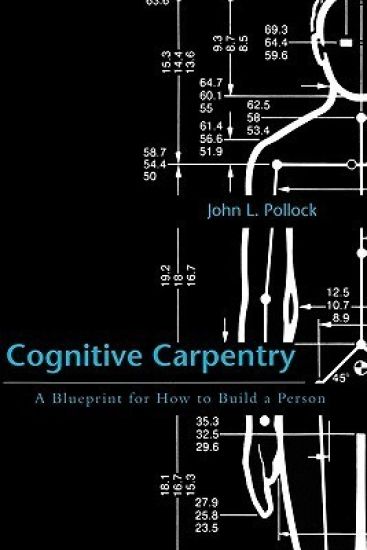
Cognitive Carpentry

Cognitive Carpentry

John L. Pollock

Bradford Books
2003
pokkari
A sequel to Pollock's How to Build a Person, this volume builds upon that theoretical groundwork for the implementation of rationality through artificial intelligence. Pollock argues that progress in AI has stalled because of its creators' reliance upon unformulated intuitions about rationality. Instead, he bases the OSCAR architecture upon an explicit philosophical theory of rationality, encompassing principles of practical cognition, epistemic cognition, and defeasible reasoning.In his groundbreaking new book, John Pollock establishes an outpost at the crossroads where artificial intelligence meets philosophy. Specifically, he proposes a general theory of rationality and then describes its implementation in OSCAR, an architecture for an autonomous rational agent he claims is the first AI system capable of performing reasoning that philosophers would regard as epistemically sophisticated.A sequel to Pollock's How to Build a Person, this volume builds upon that theoretical groundwork for the implementation of rationality through artificial intelligence. Pollock argues that progress in AI has stalled because of its creators' reliance upon unformulated intuitions about rationality. Instead, he bases the OSCAR architecture upon an explicit philosophical theory of rationality, encompassing principles of practical cognition, epistemic cognition, and defeasible reasoning. One of the results is the world's first automated defeasible reasoner capable of reasoning in a rich, logical environment.Underlying Pollock's thesis is a conviction that the tenets of artifical intelligence and those of philosophy can be complementary and mutually beneficial. And, while members of both camps have in recent years grown skeptical of the very possibility of "symbol processing" AI, Cognitive Carpentry establishes that such an approach to AI can be successful.A Bradford Book
The Medical Offset Effect and Public Health Policy

The Medical Offset Effect and Public Health Policy

John L. Fiedler; Johathan B. Wight

Praeger Publishers Inc
1989
sidottu
Does the timely treatment of mental illness result in a drop in the cost of health care, and if so, what is the cost effectiveness? This study provides an overview, synthesis, and analysis of the medical offset effect. It demonstrates that a medical offset effect does exist and the size of the effect is significant. A behavioral model provides a precise method for ascertaining the dimensions of medical offset and an explanation of the underlying causal relationships. The offset effect for an important population group is analyzed through the use of Medicaid patient data from Georgia and Michigan. This clear, concise book will provide students, researchers, mental health professionals, insurance companies, and government agencies with an understanding of the current and potential future relationships between general medical care and mental health care services.The Medical Offset Effect begins with the historical and structural evolution of the mental health industry since World War II. The book then reviews medical offset literature. The behavioral model is followed by an empirical analysis and the book concludes with a general analytical framework for the development of a national mental health policy in light off the medical offset effect.
Sports Economics

Sports Economics

John L. Fizel; Elizabeth Gustafson; Lawrence Hadley

Praeger Publishers Inc
1999
sidottu
The sports industry presents many unusual and interesting opportunities for the application of economic theory and econometrics. In 15 professional papers, this book addresses current economic issues in the industry, including the problem of competitive balance, the location of professional sports teams and their impact on local communities, managerial decision making, and issues related to labor markets. Extending the previous research in sports economics, the papers reflect the most recent applications of economic theory in this area. The book will be a valuable resource for professional economists working on sports economics topics.In two opening chapters on competitive balance, the contributors develop a model for college football and examine the impact of balance on attendance in major league baseball. In a section on the location of professional sports teams, the chapters then develop a model to predict the location of expansion teams, make econometric estimates of the impact of Super Bowls on the host city, and analyze the ownership of stadiums and arenas. Managerial decision making is discussed in chapters that examine alternative econometric models of production in baseball, use a production function model to analyze technological change in Major League Baseball, examine the management of team streaks, consider the competitive balance between American and National Leagues, analyze the efficiency of player trades in the National Basketball Association, and estimate the impact of participation in inter-collegiate sports on academic performance. In the final section on labor markets, the contributors estimate the impact of owner collusion on baseball players' salaries, consider the impact of the new collective bargaining agreement in Major League Baseball, analyze the impact of being a union representative, and examine the impact of the National Football League's salary cap on player's salaries.
Economics of College Sports

Economics of College Sports

John L. Fizel

Praeger Publishers Inc
2004
sidottu
Operating behind a veil of amateurism, the NCAA and collegiate athletic departments oversee big business sports programs. These entities generate revenues comparable to professional sports, practice and play in facilities that rival those found in professional sports, and pay their top coaches salaries comparable to the salaries paid to coaches of professional sports teams. Athletes are courted with lavish stadiums, training facilities, and locker rooms. Customers are wooed with branded apparel, videos, logos, and advertisements. Business interests are captured with stadium billboards, electronic ads on scoreboards, sponsorship of bowl games, logos on uniforms, and exclusive apparel and equipment contracts. Where do, or should, these lucrative athletic ventures fit in the mission of higher education? To what extent is the central mission of creating an environment for learning and extending the frontiers of knowledge enhanced or limited by college sports? Are declarations by the NCAA to promote amateurism and competitive balance supportive of the university mission? Does the NCAA even follow its purported objectives?The Economics of College Sports contains both empirical and theoretical research to address these and related issues. Perhaps the most unique contributions focus on the interactions between legal and institutional aspects of the NCAA and their impact on the objectives and goals of university education; all of the contributions provide insights that will generate significant discussion about the policies necessary to sustain the vitality and integrity of the university education-sports coalition.
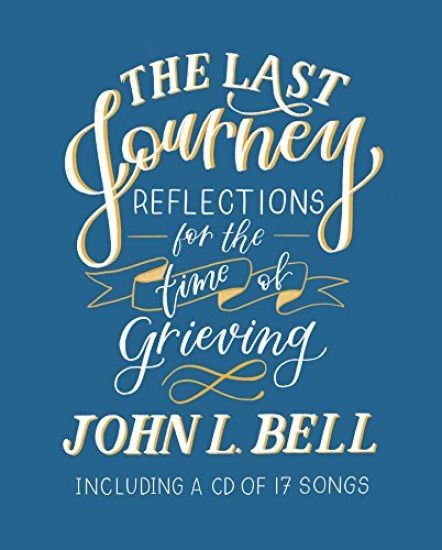
The Last Journey

The Last Journey

John L. Bell

SPCK Publishing
2018
nidottu
The need to express grief, to sing our sorrow, is as old as humanity. The book of Psalms, side by side with expressions of deepest praise, contains cries of unfathomable despair. Both are not only acceptable to God, but essential for our mental and spiritual health. In The Last Journey, John Bell explores the myriad emotions that accompany loss, offering us a way to grieve, to search through the struggle before us – and perhaps enabling us to find the courage to face the world with a renewed sense of hope.
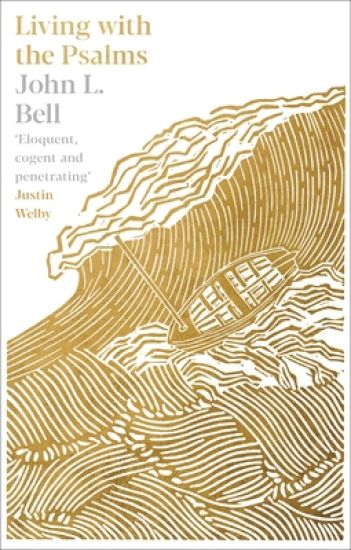
Living with the Psalms

Living with the Psalms

John L. Bell

SPCK Publishing
2020
pokkari
Developed during his teaching ministry around the world, this book is the fruit of a lifetime's engagement with the Psalms. As a broadcaster and writer, John is loved for being entirely genuine and, in the words of Archbishop Justin Welby, 'his cogent and penetrating contributions reach an audience well beyond the churches'. Here John explores the psalms as they impinge on daily life, drawing on stories and personal testimonies in order to help readers grieve, or rejoice, or draw encouragement from this most extraordinary and fascinating collection of sacred poems and songs. 'John Bell of the Iona Community has been for many years one of the most recognized voices on BBC Radio 4's Thought for the Day, where his cogent and penetrating topical contributions reach an audience well beyond the churches.' - Justin Welby, Archbishop of Canterbury
Wildflowers of Houston and Southeast Texas

Wildflowers of Houston and Southeast Texas

John L. Tveten; Gloria Tveten

University of Texas Press
1997
pokkari
You'll find them throughout the year in Houston-lyre-leaf sage, Drummond skullcap, silver-leaf nightshade, snow-on-the-prairie, lemon beebalm, scarlet pimpernel, plains wild indigo, spring ladies'-tresses, deer pea vetch.These wildflowers and hundreds of other species flourish in this part of Texas, but until this book was published in 1993 no guide had focused exclusively on the Houston area. John and Gloria Tveten spent years seeking out both the common and the rare flowers. They describe here more than 200 plants. A color photograph of each one will make identification easy.The guide is arranged by color, with each entry tracing the history and lore of a species. Many plants-for example, prairie Indian plantain and self-heal-were used by Native Americans for medicinal purposes. Others, like poke-weed and wapato, are edible. Southern dewberry and giant ragweed are used as natural dyes. And some, like rattlebush and milkweed, are poisonous.At the end of each species account is a list of key identifying characteristics for quick reference in the field. Summaries of plant families are also included, as well as tips on where and when to look for wildflowers.
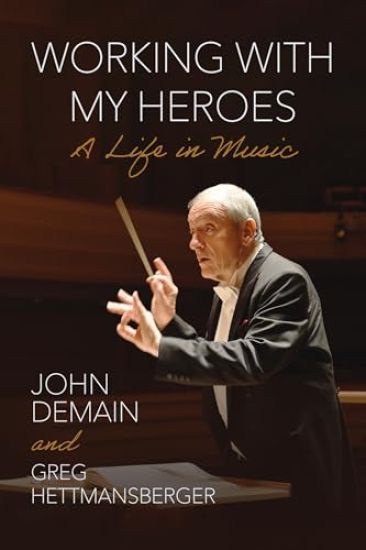
Working with My Heroes

Working with My Heroes

John L. DeMain; Greg Hettmansberger

UNIVERSITY OF WISCONSIN PRESS
2026
sidottu
An internationally acclaimed Grammy and Tony Award–winning conductor, John DeMain has been a fixture of Madison, Wisconsin, for more than three decades, serving as music director of the Madison Symphony Orchestra and artistic director of the Madison Opera. In Working with My Heroes, written with the late Greg Hettmansberger, DeMain recounts incredible experiences—from his days studying piano in Youngstown, Ohio, to his years as an undergraduate and graduate student at Julliard, to his early jobs in summer stock productions, to his internationally acclaimed productions—without ever losing sight of the wonder and awe he felt as a young musician first learning his way in the world. With warmth and humor, he provides valuable insight into the business of music making, while also sharing behind-the-scenes stories of entertaining situations he found himself in throughout the years—from playing piano at a gangster’s wedding to conducting an opera with circus elephants. DeMain has had many career-defining moments behind the podium, conducting world premieres of Leonard Bernstein’s A Quiet Place, John Adams’s Nixon in China, and Jeanine Tesori’s Blue, as well as the U.S. premiere of Philip Glass’s Akhnaten, among others. He has guest-conducted symphonies and operas in New York, Chicago, Los Angeles, and elsewhere, and cemented his reputation with the 1976 Houston Grand Opera performances of George and Ira Gershwin's Porgy and Bess, establishing its stature as a quintessentially American opera. The singers, musicians, and composers DeMain has worked with over the past six decades are a veritable Who’s Who of American classical music. This memoir places readers by his side, allowing them to experience all the wonders and joy of a life spent making music.
Principles of General Management

Principles of General Management

John L. Colley; Jacqueline L. Doyle; Robert D. Hardie; George W. Logan; Wallace Stettinius

Yale University Press
2007
sidottu
An up-to-date and comprehensive guide to the responsibilities of the general manager and the capabilities and tactics for meeting them Stop! If you have been looking for the one resource for managing a business of any size, this is it. Based on the extensive business experience of five experts, this authoritative guide provides an in-depth look at what every leader must know about managing across departments, functions, divisions, or companies. Drawing on decades of combined experience, John Colley and colleagues detail the wide range of skills, tools, and conceptual understanding as well as the qualities of leadership that a successful general manager must acquire. In an era of specialization and specialists, the authors return due focus to the generalist. No other book so passionately and thoroughly examines the roles and responsibilities of the general manager and the full scope of this distinct, pressure-filled occupation. The authors explore the quantitative and qualitative aspects of the job and discuss how the skilled manager moves an organization from abstract goals to definitive action. For every profit center or plant manager, function head, division president, or CEO, this book is indispensable reading.Published in association with The Darden Graduate School of Business Administration
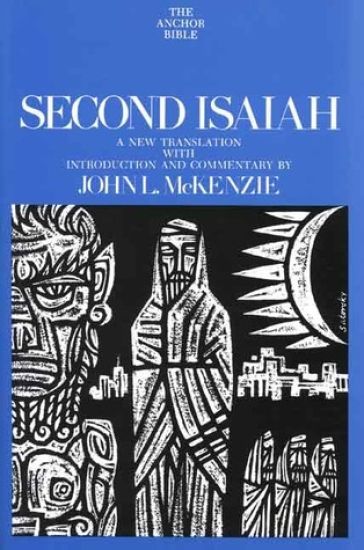
Second Isaiah

Second Isaiah

John L. McKenzie

Yale University Press
1969
sidottu
This is Volume 20 of The Anchor Bible, a new translation in fifty-six volumes, each with an introduction and notes. John L. McKenzie, S.J., Professor of Old Testament Theology at DePaul University, Chicago, has prepared The Anchor Bible translation of Second Isiah, including Chapters 34-35, and 40-66 of the Book of Isaiah. With its focus on the events surrounding the fall of Babylon to the forces of Cyrus of Persia, Second Isiah is a prophetic book of immense and exultant belief in the renascence of Israel, as the prophet foresees a new age after the long exile. Father McKenzie does justice to the literary sophistication of this book in his translation and he discusses the questions of authorship, dating, purpose, and the audience of Second Isiah in an extensive introduction. In accordance with the aims of The Anchor Bible, Father McKenzie's translation applies new material from the Dead Sea Scrolls, and reflects as closely as possible the mood, sense and style of the Hebrew poetry.
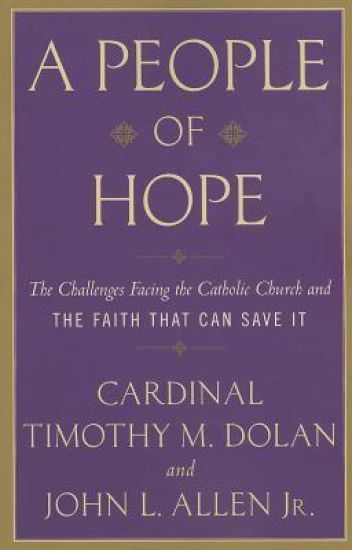
A People of Hope

A People of Hope

John L. Allen; Timothy M. Dolan

Three Rivers Press
2013
pokkari
One of the world's most respected religion journalists profiles New York's Archbishop Timothy Dolan, one of the country's--and possibly the world's--most important Catholic leaders through lengthy exclusive interviews. Unique among the current leadership of the Catholic Church, Archbishop Dolan shares his insightful perspective in this series of conversations on the present and future of Catholicism. In these pages Dolan shares a perspective which is typically not part of the information an average person would know through today's media. This omission often leaves outsiders with a terribly flawed grasp of what's actually happening in the Church. Legitimate stories on, for example, abuse and Church authority can't be dissolved by reactive conspiracy theories about how the media is out to get the Catholic Church. That said, if these scandals are all there is to the Catholic Church, why would anyone bother being Catholic? It may not be surprising that there are an estimated 22 million ex-Catholics out there, yet it is revealing that even more people have chosen to remain with the Church. Tens of millions of Americans, and hundreds of millions more around the world, still turn to the Church for inspiration, for its sacramental life, for its experience of community and service. In every diocese in America you can find parishes that are flourishing. The faith represented there is not an exaggerated religious frenzy that feeds an uncritical view of the Church. Catholics are nothing if not sober realists about the humanity of their institutions and leaders. They see the Church not as a debating society or a multinational enterprise, but a family--with all the flaws and dysfunction, but also all the joy and life, of families everywhere. This is why Archbishop Dolan is such an important part of the Church's emerging landscape. In A People of Hope Dolan is seen at his best, capturing an upbeat, hopeful, affirming Catholicism that's the untold story about the Church today. As readers spend time with Dolan here, they may find that his love for people and zest for friendship is what's truly fundamental about the man, not a PR device calculated to conceal some other agenda. Dolan can and does draw lines in the sand when he believes that core matters of Catholic identity are at stake. He's well aware that we live in a deeply secular world in the West, in which powerful pressures, both subtle and overt, seek to blur the counter-cultural message of Catholicism on many fronts. One key to Dolan's character, however, is that changing hearts, not knocking heads, is always his first instinct. John Allen draws out a picture of future trends by exploring where Dolan wants to lead, and how will a Church that increasingly bears his imprint look and feel? To understand this, what's really necessary is to get inside his head and then let him speak for himself. To that end Allen frames questions in a way that allows Dolan to expand on the topic himself as much as possible. The result is a book more "with" Dolan than a book "about" him, which is indeed the best way to understand the man. At the end, one can agree or disagree with Dolan's outlook, but one may at least be better equipped to understand why thoughtful modern women and men might still believe there's something worth considering in the Catholic message. Whatever the future may have in store for Dolan--staying in New York until he dies, being called to Rome to work in a senior Vatican post, or something else entirely--he will be a force in the Catholic Church both nationally and internationally for some time to come, and it's well worth trying to discern what that might mean.
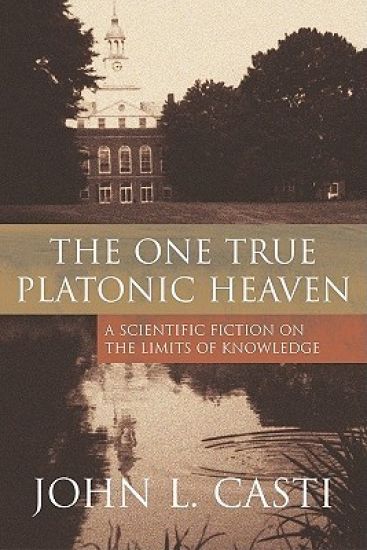
The One True Platonic Heaven

The One True Platonic Heaven

John L. Casti

Henry (Joseph) Press
2003
sidottu
By the author of The Cambridge Quintet, John L. Casti's new book continues the tradition of combining science fact with just the right dose of fiction. Part novel, part science — wholly informative and entertaining. In the fall of 1933 the newly founded Institute for Advanced Study in Princeton, New Jersey, welcomed its first faculty member, Albert Einstein. With this superstar on the roster, the Institute was able to attract many more of the greatest scholars, scientists, and poets from around the world. It was to be an intellectual haven, a place where the most brilliant minds on the planet, sheltered from the outside world's cares and calamities, could study and collaborate and devote their time to the pure and exclusive pursuit of knowledge. For many of them, it was the "one, true, platonic heaven." Over the years, key figures at the Institute began to question the limits to what science could tell us about the world, pondering the universal secrets it might unlock. Could science be the ultimate source of truth; or are there intrinsic limits, built into the very fabric of the universe, to what we can learn? In the late 1940's and early 1950's, this important question was being asked and pondered upon by some of the Institute's deepest thinkers. Enter the dramatis personae to illuminate the science and the philosophy of the time. Mathematical logician Kurt Godel was the unacknowledged Grant Exalted Ruler of this platonic estate — but he was a ruler without a scepter as he awaited the inexplicably indefinite postponement of his promotion to full, tenured professor. Also in residence was his colleague, the Hungarian-American polymath, John van Neumann, developer of game theory, the axiomatic foundations of quantum mechanics, and the digital computer — stymied by the Institute's refusal to sanction his bold proposal to actually build a computer. One of Godel's closest friends figures large in this story: Albert Einstein, by common consensus the greatest physicist the 20th century had ever known. And, of course, the director the Institute, J. Robert Oppenheimer, the father of the atomic bomb, must by necessity be key to any story that focuses in on this time and place. Author Casti elegantly sets the stage and then masterfully directs this impressive cast of characters—with able assists by many "minor-character" icons like T. S. Eliot, Wolfgang Pauli, Freeman Dyson, and David Bohm, to tell a story of science, history, and ideas. As we watch events unfold (some of which are documented fact while others are creatively imagined fiction), we are witness to the discussions and deliberations of this august group… privy to wide-ranging conversations on thinking machines, quantum logic, biology as physics, weather forecasting, the structure of economic systems, the distinction between mathematics and natural science, the structure of the universe, and the powers of the human mind — all centered around the question of the limits to scientific knowledge. Imaginatively conceived and artfully executed, The One True Platonic Heaven is an accessible and intriguing presentation of some of the deepest scientific and philosophical ideas of the 20th century.Table of ContentsFront MatterPrologueChapter One: A Walk Down Mercer StreetChapter Two: Teatime at the IASChapter Three: Goodtime JohnnyChapter Four: Gödel at the BlackboardChapter Five: The BoardroomChapter Six: Late-Night Thoughts of the Greatest PhysicistChapter Seven: An Evening at Olden ManorChapter Eight: The VerdictsEpilogue
The One True Platonic Heaven

The One True Platonic Heaven

John L. Casti

Henry (Joseph) Press
2003
nidottu
By the author of The Cambridge Quintet, John L. Casti's new book continues the tradition of combining science fact with just the right dose of fiction. Part novel, part science — wholly informative and entertaining. In the fall of 1933 the newly founded Institute for Advanced Study in Princeton, New Jersey, welcomed its first faculty member, Albert Einstein. With this superstar on the roster, the Institute was able to attract many more of the greatest scholars, scientists, and poets from around the world. It was to be an intellectual haven, a place where the most brilliant minds on the planet, sheltered from the outside world's cares and calamities, could study and collaborate and devote their time to the pure and exclusive pursuit of knowledge. For many of them, it was the "one, true, platonic heaven." Over the years, key figures at the Institute began to question the limits to what science could tell us about the world, pondering the universal secrets it might unlock. Could science be the ultimate source of truth; or are there intrinsic limits, built into the very fabric of the universe, to what we can learn? In the late 1940's and early 1950's, this important question was being asked and pondered upon by some of the Institute's deepest thinkers. Enter the dramatis personae to illuminate the science and the philosophy of the time. Mathematical logician Kurt Godel was the unacknowledged Grant Exalted Ruler of this platonic estate — but he was a ruler without a scepter as he awaited the inexplicably indefinite postponement of his promotion to full, tenured professor. Also in residence was his colleague, the Hungarian-American polymath, John van Neumann, developer of game theory, the axiomatic foundations of quantum mechanics, and the digital computer — stymied by the Institute's refusal to sanction his bold proposal to actually build a computer. One of Godel's closest friends figures large in this story: Albert Einstein, by common consensus the greatest physicist the 20th century had ever known. And, of course, the director the Institute, J. Robert Oppenheimer, the father of the atomic bomb, must by necessity be key to any story that focuses in on this time and place. Author Casti elegantly sets the stage and then masterfully directs this impressive cast of characters—with able assists by many "minor-character" icons like T. S. Eliot, Wolfgang Pauli, Freeman Dyson, and David Bohm, to tell a story of science, history, and ideas. As we watch events unfold (some of which are documented fact while others are creatively imagined fiction), we are witness to the discussions and deliberations of this august group… privy to wide-ranging conversations on thinking machines, quantum logic, biology as physics, weather forecasting, the structure of economic systems, the distinction between mathematics and natural science, the structure of the universe, and the powers of the human mind — all centered around the question of the limits to scientific knowledge. Imaginatively conceived and artfully executed, The One True Platonic Heaven is an accessible and intriguing presentation of some of the deepest scientific and philosophical ideas of the 20th century.Table of ContentsFront MatterPrologueChapter One: A Walk Down Mercer StreetChapter Two: Teatime at the IASChapter Three: Goodtime JohnnyChapter Four: Gödel at the BlackboardChapter Five: The BoardroomChapter Six: Late-Night Thoughts of the Greatest PhysicistChapter Seven: An Evening at Olden ManorChapter Eight: The VerdictsEpilogue