Kirjojen hintavertailu. Mukana 12 390 323 kirjaa ja 12 kauppaa.

Kirjahaku

Etsi kirjoja tekijän nimen, kirjan nimen tai ISBN:n perusteella.

1000 tulosta hakusanalla John Locke

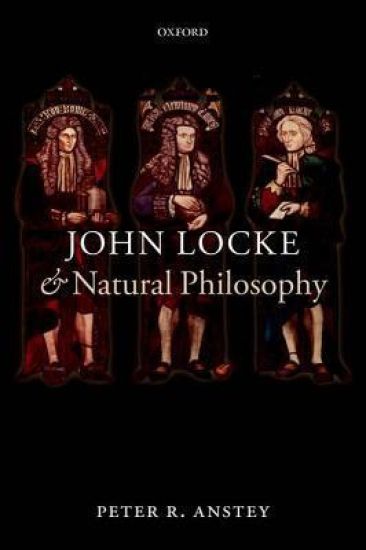
John Locke and Natural Philosophy

John Locke and Natural Philosophy

Peter R. Anstey

Oxford University Press
2011
sidottu
Peter Anstey presents a thorough and innovative study of John Locke's views on the method and content of natural philosophy. Focusing on Locke's Essay concerning Human Understanding, but also drawing extensively from his other writings and manuscript remains, Anstey argues that Locke was an advocate of the Experimental Philosophy: the new approach to natural philosophy championed by Robert Boyle and the early Royal Society who were opposed to speculative philosophy. On the question of method, Anstey shows how Locke's pessimism about the prospects for a demonstrative science of nature led him, in the Essay, to promote Francis Bacon's method of natural history, and to downplay the value of hypotheses and analogical reasoning in science. But, according to Anstey, Locke never abandoned the ideal of a demonstrative natural philosophy, for he believed that if we could discover the primary qualities of the tiny corpuscles that constitute material bodies, we could then establish a kind of corpuscular metric that would allow us a genuine science of nature. It was only after the publication of the Essay, however, that Locke came to realize that Newton's Principia provided a model for the role of demonstrative reasoning in science based on principles established upon observation, and this led him to make significant revisions to his views in the 1690s. On the content of Locke's natural philosophy, it is argued that even though Locke adhered to the Experimental Philosophy, he was not averse to speculation about the corpuscular nature of matter. Anstey takes us into new terrain and new interpretations of Locke's thought in his explorations of his mercurialist transmutational chymistry, his theory of generation by seminal principles, and his conventionalism about species.
John Locke and Natural Philosophy

John Locke and Natural Philosophy

Peter R. Anstey

Oxford University Press
2013
nidottu
Peter Anstey presents a thorough and innovative study of John Locke's views on the method and content of natural philosophy. Focusing on Locke's Essay concerning Human Understanding, but also drawing extensively from his other writings and manuscript remains, Anstey argues that Locke was an advocate of the Experimental Philosophy: the new approach to natural philosophy championed by Robert Boyle and the early Royal Society who were opposed to speculative philosophy. On the question of method, Anstey shows how Locke's pessimism about the prospects for a demonstrative science of nature led him, in the Essay, to promote Francis Bacon's method of natural history, and to downplay the value of hypotheses and analogical reasoning in science. But, according to Anstey, Locke never abandoned the ideal of a demonstrative natural philosophy, for he believed that if we could discover the primary qualities of the tiny corpuscles that constitute material bodies, we could then establish a kind of corpuscular metric that would allow us a genuine science of nature. It was only after the publication of the Essay, however, that Locke came to realize that Newton's Principia provided a model for the role of demonstrative reasoning in science based on principles established upon observation, and this led him to make significant revisions to his views in the 1690s. On the content of Locke's natural philosophy, it is argued that even though Locke adhered to the Experimental Philosophy, he was not averse to speculation about the corpuscular nature of matter. Anstey takes us into new terrain and new interpretations of Locke's thought in his explorations of his mercurialist transmutational chymistry, his theory of generation by seminal principles, and his conventionalism about species.
John Locke's Liberalism

John Locke's Liberalism

Ruth W. Grant

University of Chicago Press
1991
nidottu
In this work, Ruth W. Grant presents a new approach to John Locke's familiar works. Taking the unusual step of relating Locke's Two Treatises to his Essay Concerning Human Understanding, Grant establishes the unity and coherence of Locke's political arguments. She analyzes the Two Treatises as a systematic demonstration of liberal principles of right and power and grounds it in the epistemology set forth in the Essay.
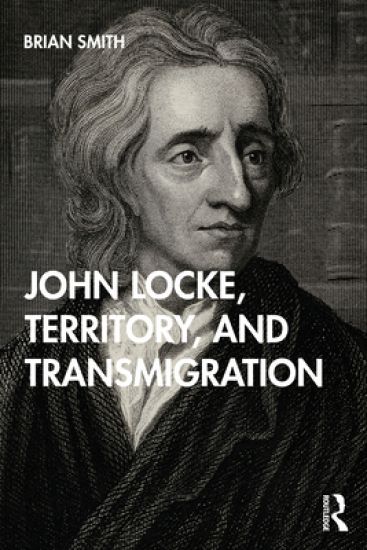
John Locke, Territory, and Transmigration
This book examines John Locke as a theorist of migration, immigration, and the movement of peoples. It outlines the contours of the public discourse surrounding migration in the seventeenth century and situates Locke’s in-depth involvement in these debates. The volume presents a variety of undercurrents in Locke’s writing — his ideas on populationism, naturalization, colonization and the right to withdrawal, the plight of refugees, and territorial rights — which have great import in present-day debates about migration. Departing from the popular extant literature that sees Locke advocating for a strong right to exclude foreigners, the author proposes a Lockean theory of immigration that recognizes the fundamental right to emigrate, thus catering to an age wrought with terrorism, xenophobia and economic inequality.A unique and compelling contribution, the volume will be of great interest to scholars and researchers of political theory, political philosophy, history of international politics, international relations, international political economy, public policy, seventeenth century English history, migration and citizenship studies, and moral philosophy.
John Locke, Territory, and Transmigration
This book examines John Locke as a theorist of migration, immigration, and the movement of peoples. It outlines the contours of the public discourse surrounding migration in the seventeenth century and situates Locke’s in-depth involvement in these debates. The volume presents a variety of undercurrents in Locke’s writing — his ideas on populationism, naturalization, colonization and the right to withdrawal, the plight of refugees, and territorial rights — which have great import in present-day debates about migration. Departing from the popular extant literature that sees Locke advocating for a strong right to exclude foreigners, the author proposes a Lockean theory of immigration that recognizes the fundamental right to emigrate, thus catering to an age wrought with terrorism, xenophobia and economic inequality.A unique and compelling contribution, the volume will be of great interest to scholars and researchers of political theory, political philosophy, history of international politics, international relations, international political economy, public policy, seventeenth century English history, migration and citizenship studies, and moral philosophy.
John Locke and the Bank of England

John Locke and the Bank of England

Claude Roche

TAYLOR FRANCIS LTD
2023
nidottu
John Locke was one of the first shareholders of the Bank of England and participated in parliamentary debates surrounding its creation. He had a key role in the monetary reform of 1696. This book examines Locke’s thought in relation to credit, banking regulation, the monetary and financial system, the gold standard and the principles of Natural Right. It also establishes a link between Locke’s economic and financial ideas and his political philosophy.John Locke and the Bank of England will be of interest to advanced students and researchers of central banking, financial history, the history of economic thought and political economy.
John Locke and the Bank of England
John Locke was one of the first shareholders of the Bank of England and participated in parliamentary debates surrounding its creation. He had a key role in the monetary reform of 1696. This book examines Locke’s thought in relation to credit, banking regulation, the monetary and financial system, the gold standard and the principles of Natural Right. It also establishes a link between Locke’s economic and financial ideas and his political philosophy.John Locke and the Bank of England will be of interest to advanced students and researchers of central banking, financial history, the history of economic thought and political economy.
John Locke's Letter on Toleration in Focus
Though several editions of Locke's Letter of Toleration art available, the unique value of this volume lies in the fact that it conbines both the text of the Letter and interpretative, critical essays. Several essays are reprints of the most important articles on the Letter, but there is also new material , specially commissioned for the volume and published here for the first time. Given the importance of Locke's Letter on Toleration, this volume will be welcomed by both students and teachers of political philosophy, the history of political thought, as well as philosophy and politics generally.
John Locke Collection I

John Locke Collection I

John Wynne; William Carroll; Thomas E. Webb; T. Foster; Issac Watts; Emanuel Scharer; Henri Marion; Dionysius Lardner

Routledge
2013
muu
Locke had a profound influence on the 18th century and beyond. The early reception and interpretation of Locke is illustrated here in original texts, not only important in their own right but providing useful research material for studies on Locke.
John Locke Collection II
The two major biographical studies on Locke on which many modern sources depend are brought together as well as three early, and often overlooked, critical works relating to Locke. Locke's translations of Nicole has not been available since its original publication in 1828.
John Locke and Agrarian Capitalism

John Locke and Agrarian Capitalism

Neal Wood

University of California Press
2021
pokkari
This title is part of UC Press's Voices Revived program, which commemorates University of California Press’s mission to seek out and cultivate the brightest minds and give them voice, reach, and impact. Drawing on a backlist dating to 1893, Voices Revived makes high-quality, peer-reviewed scholarship accessible once again using print-on-demand technology. This title was originally published in 1984.
John Locke and Agrarian Capitalism

John Locke and Agrarian Capitalism

Neal Wood

University of California Press
2021
sidottu
This title is part of UC Press's Voices Revived program, which commemorates University of California Press’s mission to seek out and cultivate the brightest minds and give them voice, reach, and impact. Drawing on a backlist dating to 1893, Voices Revived makes high-quality, peer-reviewed scholarship accessible once again using print-on-demand technology. This title was originally published in 1984.
John Locke, Toleration and Early Enlightenment Culture

John Locke, Toleration and Early Enlightenment Culture

John Marshall

Cambridge University Press
2010
pokkari
This book is a major intellectual and cultural history of intolerance and toleration in early modern and early Enlightenment Europe. John Marshall offers an extensive study of late seventeenth-century practices of religious intolerance and toleration in England, Ireland, France, Piedmont and the Netherlands and the arguments that John Locke and his associates made in defence of 'universal religious toleration'. He analyses early modern and early Enlightenment discussions of toleration, debates over toleration for Jews and Muslims as well as for Christians, the limits of toleration for the intolerant, atheists, 'libertines' and 'sodomites', and the complex relationships between intolerance and resistance theories including Locke's own Treatises. This study is a significant contribution to the history of the 'republic of letters' of the 1680s and the development of early Enlightenment culture and is essential reading for scholars of early modern European history, religion, political science and philosophy.
John Locke: Problems and Perspectives

John Locke: Problems and Perspectives

Cambridge University Press
2011
pokkari
Originally published in 1969, the impetus for this collection came from a conference on the Thought of John Locke held at York University, Toronto in 1966. Written in the co-operative spirit of the conference, the essays collected here were intended to reflect Locke's position as a polymath and recontextualise his ideas through the juxtaposition of various academic approaches. In doing so, they provide a challenging perspective on Locke which perhaps comes closer to the original character of his thought than more traditional approaches. This book will be of value to anyone with an interest in Locke's ideas on philosophy, politics, science or religion.
John Locke's Politics of Moral Consensus

John Locke's Politics of Moral Consensus

Greg Forster

Cambridge University Press
2010
pokkari
The aim of this book is twofold: to explain the reconciliation of religion and politics in the work of John Locke, and to explore the relevance of that reconciliation for politics in our own time. Confronted with deep social divisions over ultimate beliefs, Locke sought to unite society in a single liberal community. Reason could identify divine moral laws that would be acceptable to members of all cultural groups, thereby justifying the authority of government. Greg Forster demonstrates that Locke's theory is liberal and rational but also moral and religious, providing an alternative to the two extremes of religious fanaticism and moral relativism. This account of Locke's thought will appeal to specialists and advanced students across philosophy, political science and religious studies.
John Locke and Modern Life

John Locke and Modern Life

Lee Ward

Cambridge University Press
2010
sidottu
Recovers a sense of John Locke's central role in the making of the modern world. It demonstrates that his vision of modern life was constructed on a philosophy of human freedom that is the intellectual nerve connecting the various strands of his thought. By revealing the depth and originality of Locke's critique of the metaphysical assumptions and authoritative institutions of pre-modern life, this book rejects the notion of Locke as an intellectual anachronism. Indeed, the radical core of Locke's modern project was the 'democratization of mind', according to which he challenged practically every previous mode of philosophical analysis by making the autonomous individual the sole determinant of truth. It was on the basis of this new philosophical dispensation that Locke crafted a modern vision not only of government but also of the churches, the family, education, and the conduct of international relations.
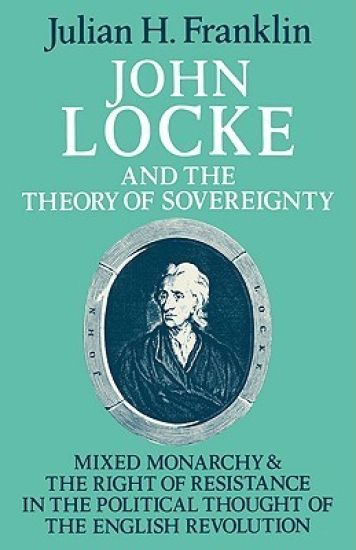
John Locke and the Theory of Sovereignty

John Locke and the Theory of Sovereignty

Julian H. Franklin

Cambridge University Press
1981
pokkari
This volume is a sequel to the author's earlier work on the development of European theories of sovereignity and constitutionalism. Professor Franklin here explains a major innovation associated with the English Civil Wars. It was only now, he shows, that there finally emerged a theory of sovereignity and resistance that was fully compatible with a mixed constitution. The new conception of resistance in a mixed constitution was to enter the main tradition via Locke, who stood alone among major writers of the 1680s in holding that the effect of tyranny by any constituted power, even by the King alone, was entire dissolution of the government and the reversion of power to the general community. When this familiar position is read against the background of preceding constitutionalist theory, the Second Treatise reveals a new dimension of novelty and historical significance.
John Locke and the Origins of Private Property

John Locke and the Origins of Private Property

Matthew H. Kramer

Cambridge University Press
2004
pokkari
John Locke’s labor theory of property is one of the seminal ideas of political philosophy and served to establish its author’s reputation as one of the leading social and political thinkers of all time. Through it Locke addressed many of his most pressing concerns, and earned a reputation as an outstanding spokesman for political individualism - a reputation that lingers widely despite some partial challenges that have been raised in recent years. In this major new study Matthew Kramer offers an extensive critique of the labor theory and investigates the consequences of its downfall. With incisive analyses of the merits and failings of many aspects of Locke’s political thought, Kramer advances a powerful challenge to Locke’s image as an individualist. Employing a rigorously philosophical methodology, but remaining aware of the insights generated by historical approaches to Locke, Kramer concludes that Locke’s political vision was in fact profoundly communitarian.
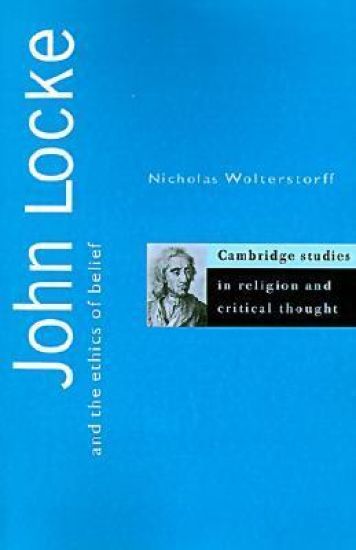
John Locke and the Ethics of Belief

John Locke and the Ethics of Belief

Nicholas Wolterstorff

Cambridge University Press
1996
pokkari
Nicholas Wolterstorff discusses the ethics of belief which Locke developed in Book IV of his Essay Concerning Human Understanding, where Locke finally argued his overarching aim: how we ought to govern our belief, especially on matters of religion and morality. Wolterstorff shows that this concern was instigated by the collapse, in Locke’s day, of a once-unified moral and religious tradition in Europe into warring factions. His was thus a culturally and socially engaged epistemology. This view of Locke invites a new interpretation of the origins of modern philosophy. He maintained that instead of following tradition we ought to let ‘reason be our guide.’ Accordingly, after discussing Hume’s powerful attack on Locke’s recommended practice, Wolterstorff argues for Locke’s originality and emphasizes his contribution to the ‘modernity’ of post-sixteenth-century philosophy.
John Locke and the Origins of Private Property

John Locke and the Origins of Private Property

Matthew H. Kramer

Cambridge University Press
1997
sidottu
John Locke’s labor theory of property is one of the seminal ideas of political philosophy and served to establish its author’s reputation as one of the leading social and political thinkers of all time. Through it Locke addressed many of his most pressing concerns, and earned a reputation as an outstanding spokesman for political individualism - a reputation that lingers widely despite some partial challenges that have been raised in recent years. In this major new study Matthew Kramer offers an extensive critique of the labor theory and investigates the consequences of its downfall. With incisive analyses of the merits and failings of many aspects of Locke’s political thought, Kramer advances a powerful challenge to Locke’s image as an individualist. Employing a rigorously philosophical methodology, but remaining aware of the insights generated by historical approaches to Locke, Kramer concludes that Locke’s political vision was in fact profoundly communitarian.