Kirjojen hintavertailu. Mukana 12 016 292 kirjaa ja 12 kauppaa.

Kirjahaku

Etsi kirjoja tekijän nimen, kirjan nimen tai ISBN:n perusteella.

1000 tulosta hakusanalla Jonathan Edwards

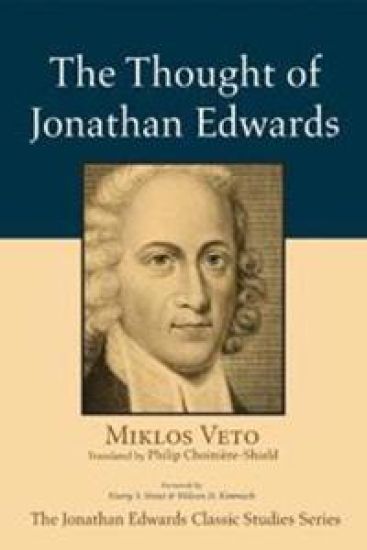
The Thought of Jonathan Edwards

The Thought of Jonathan Edwards

Miklos Veto; Harry S Stout; Wilson H Kimnach

Wipf Stock Publishers
2021
pokkari
Jonathan Edwards is the greatest theologian of colonial America as well as its first important philosopher. As a theologian, he represents without any concession Calvinistic Orthodoxy, re-thought and re-lived through the experience of the Great Awakening. The large majority of his writings are of a theological character, yet this theology is articulated and expressed through a systematic philosophical reflection. Edwardsian thought covers three major areas: First, being, grace, and glory; then, the doctrine of the will extending to the study of the original sin and evil; finally, an entirely original theory of knowledge synthesizing spirituality, aesthetics, and epistemology. The present book, the first edition of which appeared in French almost thirty years ago, is a uniquely comprehensive study of the work of Jonathan Edwards. It discusses all the aspects of his thought over against the background of classical Protestant theology and of seventeenth- and eighteenth-century Western philosophy. Our time witnesses a significant renewal of interest in Jonathan Edwards. Professor Veto's book should prove to be a major contribution to assist and to guide the readers of "America's Theologian."
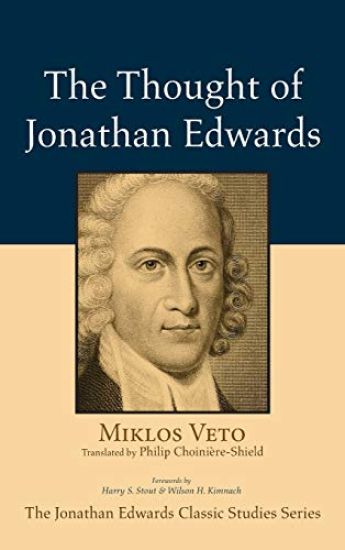
The Thought of Jonathan Edwards

The Thought of Jonathan Edwards

Miklos Veto; Harry S Stout

Wipf Stock Publishers
2021
sidottu
Jonathan Edwards is the greatest theologian of colonial America as well as its first important philosopher. As a theologian, he represents without any concession Calvinistic Orthodoxy, re-thought and re-lived through the experience of the Great Awakening. The large majority of his writings are of a theological character, yet this theology is articulated and expressed through a systematic philosophical reflection. Edwardsian thought covers three major areas: First, being, grace, and glory; then, the doctrine of the will extending to the study of the original sin and evil; finally, an entirely original theory of knowledge synthesizing spirituality, aesthetics, and epistemology. The present book, the first edition of which appeared in French almost thirty years ago, is a uniquely comprehensive study of the work of Jonathan Edwards. It discusses all the aspects of his thought over against the background of classical Protestant theology and of seventeenth- and eighteenth-century Western philosophy. Our time witnesses a significant renewal of interest in Jonathan Edwards. Professor Veto's book should prove to be a major contribution to assist and to guide the readers of "America's Theologian."
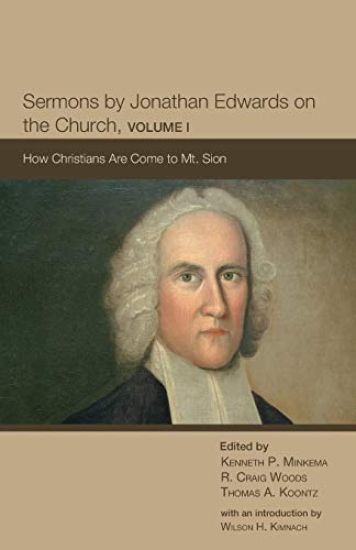
Sermons by Jonathan Edwards on the Church, Volume 1
In April 1740, Jonathan Edwards, minister of Northampton, Massachusetts, preached a discourse on Hebrews 12:22-24 comprising eight sermons. At this point, he had been the senior pastor of that town for just over a decade, and had seen his congregation through the historic Connecticut Valley Awakening of the mid-1730s, when several hundred souls were reportedly savingly converted. This first volume of Sermons by Jonathan Edwards on the Church contains the previously unpublished Hebrews discourse, "Christians Coming to Mt. Zion," preached on the very cusp of the transatlantic religious movement that would become known as "The Great Awakening," the New England phase of which began later that year. In addition to the complete and original text of Edwards' discourse, the volume includes two introductions that describe his preaching style and method and provide an historical context.
Sermons by Jonathan Edwards on the Church, Volume 1
In April 1740, Jonathan Edwards, minister of Northampton, Massachusetts, preached a discourse on Hebrews 12:22-24 comprising eight sermons. At this point, he had been the senior pastor of that town for just over a decade, and had seen his congregation through the historic Connecticut Valley Awakening of the mid-1730s, when several hundred souls were reportedly savingly converted. This first volume of Sermons by Jonathan Edwards on the Church contains the previously unpublished Hebrews discourse, "Christians Coming to Mt. Zion," preached on the very cusp of the transatlantic religious movement that would become known as "The Great Awakening," the New England phase of which began later that year. In addition to the complete and original text of Edwards' discourse, the volume includes two introductions that describe his preaching style and method and provide an historical context.
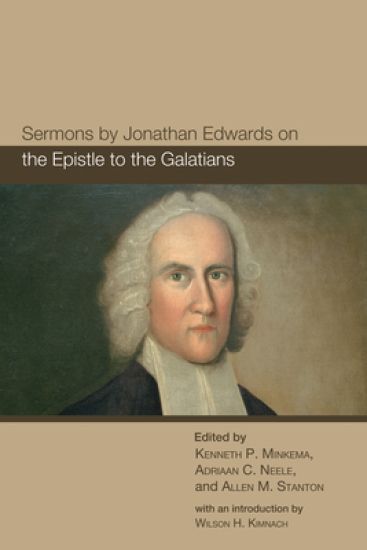
Sermons by Jonathan Edwards on the Epistle to the Galatians
This volume contains previously unpublished sermons by Jonathan Edwards on St Paul's Epistle to the Galatians. Edwards preached these sermons during his Northampton pastorate, and repreached some of them between 1728 and 1751. The importance of the Epistle to the Galatians has been recognized throughout the Christian practice of preaching. As such, these sermons have significance for its place in the Protestant tradition since the Reformation, but they also highlight Edwards's thought on the nature of faith and works, flesh and spirit, and Christ and the Holy Spirit. To assist the reader, preceding the sermons are two introductions that describe Edwards's preaching style and method, and provide an historical context for the sermons themselves.
Sermons by Jonathan Edwards on the Epistle to the Galatians
This volume contains previously unpublished sermons by Jonathan Edwards on St Paul's Epistle to the Galatians. Edwards preached these sermons during his Northampton pastorate, and repreached some of them between 1728 and 1751. The importance of the Epistle to the Galatians has been recognized throughout the Christian practice of preaching. As such, these sermons have significance for its place in the Protestant tradition since the Reformation, but they also highlight Edwards's thought on the nature of faith and works, flesh and spirit, and Christ and the Holy Spirit. To assist the reader, preceding the sermons are two introductions that describe Edwards's preaching style and method, and provide an historical context for the sermons themselves.
The Writings of Jonathan Edwards

The Writings of Jonathan Edwards

William J. Scheick

Texas A M University Press
2000
nidottu
Puritan culture in many respects militated against artistic expression. Yet, like nature, art persisted, managing to gain a foothold in whatever crevices Puritan culture provided. Jonathan Edwards's artistry, evident in his deliberate experiments in the management of language, grew out of his duty as a minister to communicate his sermons effectively. Emphasizing recurrent theological and artistic implications, The Writings of Jonathan Edwards focuses on the progressive interiorization of Edwards's primary concerns. Underlying this development was Edwards's desire to resolve the question of whether he was one of God's elect, and his search for genuine selfhood or identity resulted in autobiographical dimensions in many of his public writings. In his quest for true identity, Edwards aligned himself with Puritan orthodoxy, and his regard for tradition is a consistent theme in his work from his earliest notes to his last treatises. Within Puritan tradition Edwards perceived a collective self, a divinely ordained continuity and integrity immune to the vicissitudes of time. Scheick's study will appeal to scholars and students of American literature, history, and culture as well as to those with a special interest in the relation between art and theology. As an explication of Edwards's writings and of the development of his thought, the study will make Edwards more easily accessible to students of American literature.
The Young Jonathan Edwards

The Young Jonathan Edwards

William S. Morris

Wipf Stock Publishers
2005
nidottu
In his 1955 examination of Jonathan Edwards' formative years, Morris undertook a corrective of the prevailing view of Edwards' relation to John Locke. The result is an analysis of the intellectual milieu inhabited by Edwards during the years in which his philosophical vocabulary and his seminal theological concepts evolved. Long an unpublished dissertation, this massive work reflects that most unusual combination of being a pioneering exploration and, most likely, a definitive evaluation. Dr. Kenneth Minkema, Executive Director of the Jonathan Edwards Center, Yale University Other scholars have filled in our picture of Jonathan Edwards' mental world, adding new shades, hues and detail to our view of the young theologian. But no one matches William Morris's Young Jonathan Edwards for comprehension and virtuosity. His study is as rewarding as it is challenging. The Jonathan Edwards Center at Yale University deserves our thanks for bringing this masterpiece back to us. Douglas A. Sweeney, Trinity Evangelical Divinity School Written at the onset of the academic recovery of Jonathan Edwards, William Morris's Chicago dissertation remains the best record of the young Edwards from his years at home and at Yale to his months at the Scots Presbyterian Church in New York, altogether an extensive reconstruction of how he came to think the way he did. That it will be widely available now is a welcome recovery in itself. - M.X. Lesser, Emeritus, Northeastern University William Sparkes Morris wrote The Young Jonathan Edwards as a dissertation at the University of Chicago and completed it in 1955. His dissertation was originally published in 1991 as part of the Chicago Studies in the History of American Religion, edited by Martin Mary and Jerald C. Brauer. Morris died in 1983 at the age of 67.
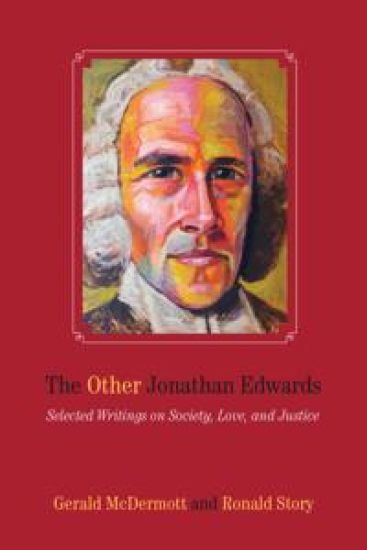
The Other Jonathan Edwards

The Other Jonathan Edwards

University of Massachusetts Press
2015
sidottu
Widely regarded as perhaps America's greatest theologian, Jonathan Edwards still suffers the stereotype of hellfire preacher obsessed with God's wrath. In this anthology, Gerald McDermott and Ronald Story seek to correct that common view by showing that Edwards was also a compassionate, socially conscious minister of the first order. Through a selection of sermons and primary writings, McDermott and Story reveal an Edwards who preached love toward all humanity regardless of belief or appearance; who demanded private and public charity to the poor; who criticized hard-hearted business dealings as impious and socially destructive; and who condemned envy and status-seeking as anti-Christian and anti-community. This “other” Jonathan Edwards preached about grace and the love of God but also about responsive constitutional government, the iniquities of hypocrisy and corruption, and the nature of wise leadership. He acknowledged the need for national defence but left room for popular revolt from tyranny. He anticipated a millennial age of peace and prosperity and believed that people should live in the world as they would live through grace in heaven. Jonathan Edwards was, in sum, a worldly as well as spiritual reformer who resisted the materialistic, acquisitive, and individualistic currents of American culture. For these reasons, McDermott and Story think he may have lessons to teach us today.
The Other Jonathan Edwards

The Other Jonathan Edwards

University of Massachusetts Press
2015
nidottu
Widely regarded as perhaps America's greatest theologian, Jonathan Edwards still suffers the stereotype of hellfire preacher obsessed with God's wrath. In this anthology, Gerald McDermott and Ronald Story seek to correct that common view by showing that Edwards was also a compassionate, socially conscious minister of the first order. Through a selection of sermons and primary writings, McDermott and Story reveal an Edwards who preached love toward all humanity regardless of belief or appearance; who demanded private and public charity to the poor; who criticized hard-hearted business dealings as impious and socially destructive; and who condemned envy and status-seeking as anti-Christian and anti-community. This “other” Jonathan Edwards preached about grace and the love of God but also about responsive constitutional government, the iniquities of hypocrisy and corruption, and the nature of wise leadership. He acknowledged the need for national defence but left room for popular revolt from tyranny. He anticipated a millennial age of peace and prosperity and believed that people should live in the world as they would live through grace in heaven. Jonathan Edwards was, in sum, a worldly as well as spiritual reformer who resisted the materialistic, acquisitive, and individualistic currents of American culture. For these reasons, McDermott and Story think he may have lessons to teach us today.
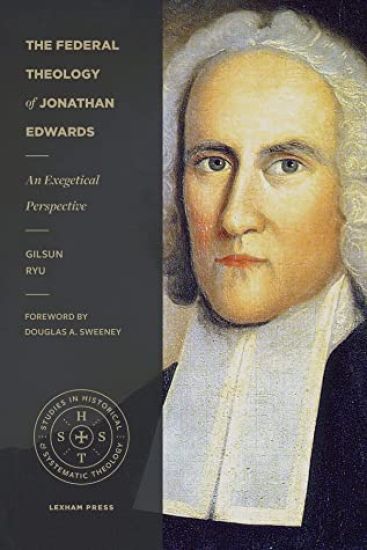
The Federal Theology of Jonathan Edwards

The Federal Theology of Jonathan Edwards

Gilsun Ryu

Faithlife Corporation
2021
nidottu
The Christ-centered exegesis of Jonathan Edwards Jonathan Edwards is remembered for his sermons and works of theology and philosophy--but he has been overlooked as an exegete. Gilsun Ryu's The Federal Theology of Jonathan Edwards explores how exegesis drove Edwards's focus on the headship of Christ as second Adam--and likewise formed a foundation for his broader theological reasoning and writing, especially on Christ and the covenants. Edwards's distinctive emphases on exegesis, redemptive history, and the harmony of Scripture distinguish him from his Reformed forebears. Ryu's study will help readers appreciate Edwards's contribution as an exegetically informed Reformed theologian.
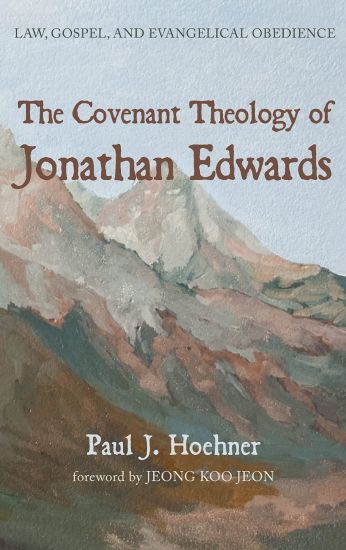
The Covenant Theology of Jonathan Edwards

The Covenant Theology of Jonathan Edwards

Paul J Hoehner; Jeong Koo Jeon

Pickwick Publications
2021
pokkari
As a theologian in the Reformed tradition, covenant theology was for Jonathan Edwards the internal scaffolding that gave shape to the biblical story of redemption. The establishment of the eternal rule of righteousness as the basis of the believer's communion with God and eternal happiness is a central theme beginning with the Covenant of Works, grounded in the eternal Covenant of Redemption, and culminating in the Covenant of Grace. It is the basis for the law-gospel distinction in Edwards and the early architects of federal theology. For the ""God intoxicated"" New England Puritan preacher, this was no dry academic exercise. Rather, it was a joyous and affectionate discovery and embrace of what God had ordained in eternity, what Christ accomplished in history on the cross, and what the Holy Spirit is doing and will complete in the church. This study grew out of current discussions in Reformed scholarship questioning aspects of traditional covenant theology. As a key transitional figure in the history of Reformed theology, Edwards's thinking is still relevant. The richness and depth of Edwards's vision of redemptive history provides a clear and comprehensive understanding of his Reformed soteriology and the role of evangelical obedience in justification.