Kirjojen hintavertailu. Mukana 11 342 296 kirjaa ja 12 kauppaa.

Kirjahaku

Etsi kirjoja tekijän nimen, kirjan nimen tai ISBN:n perusteella.

1000 tulosta hakusanalla Joseph Atkinson

Joseph A. Schumpeter: Historian of Economics
Joseph A. Schumpeter was one of the great economists of the twentieth century. His History of Economic Analsyis is perhaps the greatest contribution to the history of economics, providing a magisterial account of the development of the subject from Ancient Greece to the mid-twentieth century. Schumpeter's views on his predecessors have proved to be a constant source of controversy. Here individual chapters examine such disparate questions as Schumpeter's apparent disregard for the American Institutionalists, his grudging respect for Adam Smith, the perspicacity of his views of Quesnay and his preference for Walras over Pareto. Four chapters are devoted to the early Medieval schools, neglected in all of his writings. Schumpeter's magnum opus is related to the rest of his economic output, especially his views on money and on methodology. With contributions by leading historians of economics from six countries, this volume analyses Schumpeter's contribution to the history of economics, considers its lasting significance, and uses it as a benchmark to assess the current state of the field.
Joseph Addison and Richard Steele
The Critical Heritage gathers together a large body of critical sources on major figures in literature. Each volume presents contemporary responses to a writer's work, enabling students and researchers to read for themselves, for example, comments on early performances of Shakespeare's plays, or reactions to the first publication of Jane Austen's novels. The carefully selected sources range from landmark essays in the history of criticism to journalism and contemporary opinion, and little published documentary material such as letters and diaries. Significant pieces of criticism from later periods are also included, in order to demonstrate the fluctuations in an author's reputation. Each volume contains an introduction to the writer's published works, a selected bibliography, and an index of works, authors and subjects. The Collected Critical Heritage set will be available as a set of 68 volumes and the series will also be available in mini sets selected by period (in slipcase boxes) and as individual volumes.
Joseph Banks' Florilegium

Joseph Banks' Florilegium

Joe Studholme

Thames Hudson Ltd
2019
sidottu
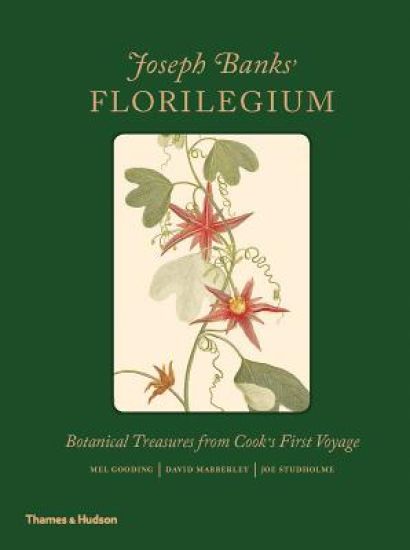
Joseph Banks accompanied Captain Cook on his first voyage round the world from 1768 to 1771. A gifted and wealthy young naturalist, Banks collected exotic flora from Madeira, Brazil, Tierra del Fuego, the Society Islands, New Zealand, Australia and Java, bringing back over 1,300 species that had never been seen or studied by Europeans. On his return, Banks commissioned over 700 superlative engravings between 1772 and 1784. Known collectively as Banks’ Florilegium, they are some of the most precise and exquisite examples of botanical illustration ever created. The Florilegium was never published in Banks’ lifetime, and it was not until 1990 that a complete set in colour was issued in a boxed edition (limited to 100 copies) under the direction of the British Museum (Natural History). It is from these prints that the present selection is made, directed by David Mabberley, who has provided expert botanical commentaries, with additional texts by art historian Mel Gooding, setting the works in context as a perfect conjunction of nature, science and art. An afterword by Joseph Studholme describes the history of the modern printing.
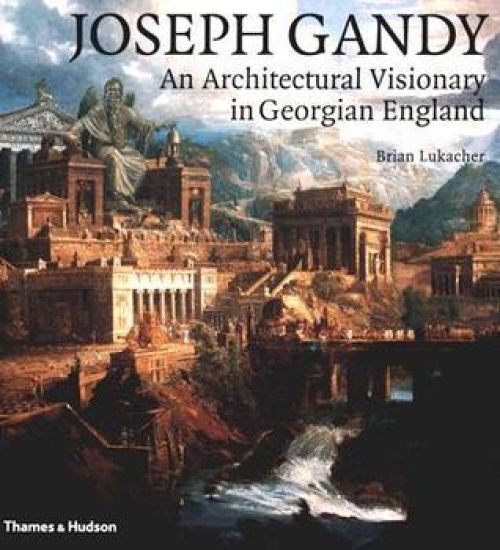
Joseph Gandy

Joseph Gandy

Brian Lukacher

Thames Hudson Ltd
2006
sidottu
Joseph Gandy (1771–1843) is a classic case of unrecognized genius. His dreams of being a great architect were frustrated, and his fame today rests on the imaginative power of his unrealized projects, on his superbly imagined reconstruction of Greek and Roman buildings and on the drawings in which he brought Sir John Soane’s most extravagant ideas to vivid life. Professor Lukacher’s book, the first biography of this remarkable man, draws together the threads of his life and art, forcing us to re-assess one of the most original minds between Neoclassicism and Romanticism.
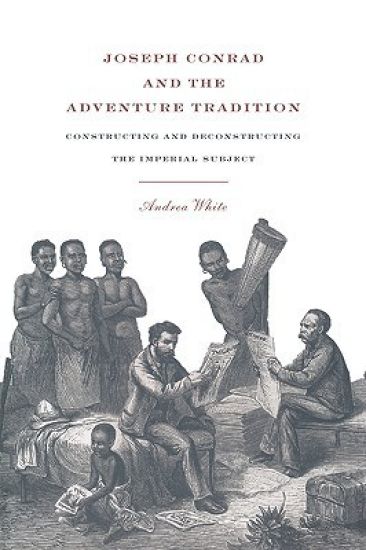
Joseph Conrad and the Adventure Tradition

Joseph Conrad and the Adventure Tradition

Andrea White

Cambridge University Press
2008
pokkari
Nineteenth-century adventure fiction relating to the British empire usually served to promote, celebrate and justify the imperial project, asserting the essential and privileging difference between 'us' and 'them', colonizing and colonized. Andrea White's study opens with an examination of popular exploration literature in relation to later adventure stories, showing how a shared view of the white man in the tropics authorized the European intrusion into other lands. She then sets the fiction of Joseph Conrad in this context, showing how Conrad in fact demythologized and disrupted the imperial subject constructed in earlier writing, by simultaneously - with the modernist's double vision - admiring man's capacity to dream but applauding the desire to condemn many of its consequences. She argues that the very complexity of Conrad's work provided an alternative, and more critical, means of evaluating the experience of empire.
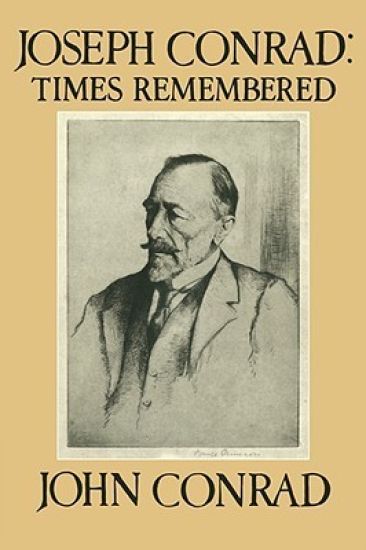
Joseph Conrad: Times Remembered

Joseph Conrad: Times Remembered

John Conrad

Cambridge University Press
2008
pokkari
Though others have published reminiscences of Joseph Conrad, these accounts have frequently contained inaccuracies, sometimes even simple fabrications. It is partly in an attempt to set the record straight that John Conrad, the novelist's only surviving son, has committed these memoirs to print. Mr Conrad has not tried to import into the book the biographical interpretations or speculations of others, but rather to recall and set down as honestly and directly as possible what he remembers from around 1909 to the point of his father's death in 1924. Through his vivid and detailed account of the day-to-day existence in the various houses the family inhabited during this period, Mr Conrad is able both to throw light on many aspects of his father's life and to invoke the sense of an era of English social life which has now disappeared. His memoirs are informal, often anecdotal, recording what amused, irritated or moved his father.
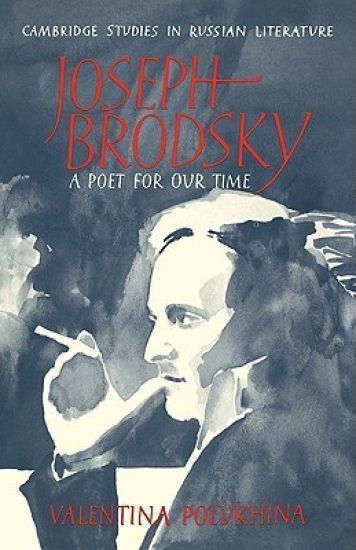
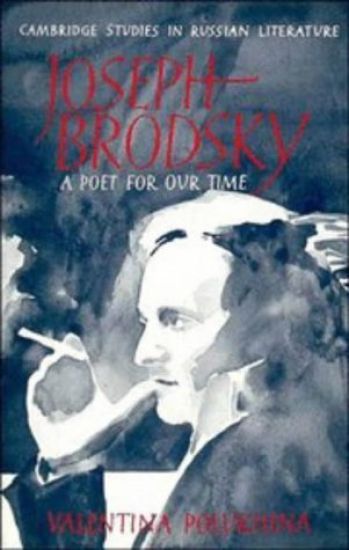
Joseph Brodsky

Joseph Brodsky

Polukhina Valentina

Cambridge University Press
2009
pokkari
The Russian poet Joseph Brodsky has in recent years commanded increasing attention among both Russian specialists and a wider audience interested in modern culture. In 1987 he received the Nobel Prize for Literature. This book, the first in English to be devoted entirely to him, presents a sustained and comprehensive analysis of his work to date, and offers an interpretation of his major themes: love, faith, creation, time, exile and empire. Individual poems are closely scrutinised to show the complexity and sophistication of Brodsky's ideas about perennial human problems, and the ways in which his language conveys his perception of certain values. Valentina Polukhina locates Brodsky in relation to other Russian writers from Derzhavin to Akhmatova, as well as drawing comparisons between his work and poetry in English. She also provides a comprehensive bibliography. Her book constitutes a timely study of the poetry and poetics, style and ideas of one of the most important poets of the twentieth century.
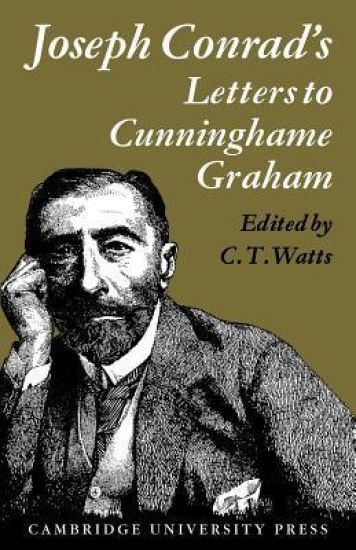
Joseph Conrad's Letters to R. B. Cunninghame Graham

Joseph Conrad's Letters to R. B. Cunninghame Graham

Joseph Conrad

Cambridge University Press
2011
pokkari
Joseph Conrad's friendship with R. B. Cunninghame Graham was stimulating, and in many ways paradoxical. These letters to Cunninghame Graham are the most illuminating sequence of letters from Conrad to any of his correspondents. He struggles to define his philosophical and political beliefs in relation to Graham's radical and provocative opinions. The majority of the letters were written between 1897 and 1904, during which time Conrad reached full maturity as a novelist. The letters also provide comments on Conrad's work, and show how Graham helped to sustain him in some of his most strenuous literary struggles. Of the eighty-one letters in Dr Watts' edition, which was originally published in 1969, twenty-five had never been published before, and some of the remainder had appeared in incomplete or inaccurate versions. Conrad's spelling and punctuation are retained and his own alterations indicated. There is a biographical and critical introduction, and explanatory footnotes.
The Selected Letters of Joseph Conrad

The Selected Letters of Joseph Conrad

Joseph Conrad

Cambridge University Press
2015
sidottu
Since the publication of the Cambridge edition of The Collected Letters of Joseph Conrad, the numerous letters in the nine volumes, many of them published for the first time and many more taken from hard-to-find books and journals, have had a profound influence on writing about Conrad. This selection makes the highlights available in one volume. The letters have been re-edited with shorter footnotes and an emphasis on the latest scholarship. Letters originally written in French or Polish appear only in revised English translations. Among the topics that stand out are Conrad's memories of growing up in Poland and Ukraine, his ideas about fiction, often expressed in precise but sympathetic comments on the work of his friends, the anxieties of war and revolution, his struggle to keep his integrity as a writer, and his lives as a sailor and a family man.
Joseph Conrad

Joseph Conrad

Jacques Berthoud

Cambridge University Press
1978
pokkari
Focuses on the novels written in the first decade of the twentieth century, illuminating Conrad's exploration of the contradictions inherent in human relations.
The Collected Letters of Joseph Conrad

The Collected Letters of Joseph Conrad

Joseph Conrad

Cambridge University Press
1988
sidottu
This is the third of the projected eight-volume edition comprising all the surviving letters of Joseph Conrad under the general editorship of Professor Frederick R. Karl. When completed, it will have assembled about 4,000 letters, over a third of them published before only in defective versions. As with previous volumes in the series, this volume contains an editorial introduction, illustrations, and extensive annotation. The period covered by the third volume is 1903 to 1907 when Conrad stood at the height of his powers. It was during these years that he completed Nostromo and The Secret Agent. Yet this was not a happy time for him: his plans for leisurely, contemplative work were constantly interrupted by dangerous illnesses in the family, his own bad health, financial worries, and the pleas of editors desperate for copy. Conrad maintained his correspondence with old friends such as Galsworthy, Wells, and Ford Madox Ford, and developed a number of new friendships. This is also the period in which Conrad became absorbed in political fiction, and this is reflected in an intriguing sequence of America, and censorship. As always, the letters to his literary agent J. B. Pinker provide a detailed (and largely unpublished) account of Conrad's plans and literary commitments, week by week, month by month.
The Collected Letters of Joseph Conrad

The Collected Letters of Joseph Conrad

Joseph Conrad

Cambridge University Press
1991
sidottu
This is the fourth of eight volumes comprising all the surviving letters of Joseph Conrad. Conrad spent half the period of Volume Four writing Under Western Eyes and the other half recovering from the ensuing mental and physical breakdown. During the early months of 1908, the short story 'Razumov' began growing into a novel that embodied Conrad's appalled fascination with Russian politics, his misgivings about language, and his acute sense of loneliness. After the completion of the novel in 1910 and a vehement quarrel with J. B. Pinker, his agent, Conrad suffered a breakdown whose effects lingered for many months. By the spring of 1911, however, he was able to resume the long-delayed Chance. The tale of these years emerges vividly from the correspondence. Of special interest are frank critiques of John Galsworthy's work, manoeuvrings around the new and distinguished English Review, an indignant falling out with Ford Madox Ford, mercurial transactions with Pinker, enlightening accounts of writing in progress (The Secret Sharer and A Personal Record as well as the two novels), reactions to the tumultuous politics of the day, anecdotes about John and Borys Conrad, and evidence of new friendships with American and French writers, among them André Gide.
Joseph II: Volume 2, Against the World, 1780–1790

Joseph II: Volume 2, Against the World, 1780–1790

Derek Beales

Cambridge University Press
2009
sidottu
This second and final volume of Derek Beales's magisterial biography of the emperor Joseph II describes the period when he was sole ruler of the Austrian Monarchy. Influenced partly by Enlightenment ideals, Joseph relaxed censorship, introduced wide-ranging religious toleration and fostered a 'new Catholicism' whilst Mozart's music, the greatest cultural achievement of his reign, owed much to Joseph's patronage. He also abolished personal serfdom and diminished the nobles' power, seeking to achieve full personal control over all his provinces. Opposition became serious when his hyperactive foreign policy landed him in war against the Turks, and he died with his Belgian provinces in rebel hands and Hungary threatened by revolt and invasion. Though these pressures forced Joseph to withdraw some of his measures, Derek Beales argues that he left an indelible mark on the history of all his lands, which now form part of fifteen modern states.
Joseph Brodsky

Joseph Brodsky

Polukhina Valentina

Cambridge University Press
1989
sidottu
The Russian poet Joseph Brodsky has in recent years commanded increasing attention among both Russian specialists and a wider audience interested in modern culture. In 1987 he received the Nobel Prize for Literature. This book, the first in English to be devoted entirely to him, presents a sustained and comprehensive analysis of his work to date, and offers an interpretation of his major themes: love, faith, creation, time, exile and empire. Individual poems are closely scrutinised to show the complexity and sophistication of Brodsky's ideas about perennial human problems, and the ways in which his language conveys his perception of certain values. Valentina Polukhina locates Brodsky in relation to other Russian writers from Derzhavin to Akhmatova, as well as drawing comparisons between his work and poetry in English. She also provides a comprehensive bibliography. Her book constitutes a timely study of the poetry and poetics, style and ideas of one of the most important poets of the twentieth century.
Joseph Conrad and the Adventure Tradition

Joseph Conrad and the Adventure Tradition

Andrea White

Cambridge University Press
1993
sidottu
Nineteenth-century adventure fiction relating to the British empire usually served to promote, celebrate, and justify the imperial project, asserting the essential and privileging difference between ‘us’ and ‘them’, colonising and colonised. Andrea White’s study opens with an examination of popular exploration literature in relation to later adventure stories, showing how a shared view of the white man in the tropics authorised the European intrusion into other lands. She then sets the fiction of Joseph Conrad in this context, showing how Conrad in fact demythologised and disrupted the imperial subject constructed in earlier writing, by simultaneously - with the modernist’s double vision - admiring man’s capacity to dream but applauding the desire to condemn many of its consequences. She argues that the very complexity of Conrad’s work provided an alternative, and more critical, means of evaluating the experience of empire.
Joseph II: Volume 1, In the Shadow of Maria Theresa, 1741–1780
The emperor Joseph II (1741–90) tried to carry through something like a 'revolution from above' in the vast, varied, and mainly backward provinces of the Austrian Monarchy. This volume carries the story down to 1780. It describes the claustrophobic atmosphere, in which Joseph was trained to rule, his tragic marriages, and his attempts after 1765 as co-regent with his formidable mother, empress Maria Theresa, to dictate the domestic and foreign policy of the monarchy. The author shows that previous historians have been deceived by false sources and that the picture they have given of the emperor, his strange character, his tempestuous relationship with his mother, and his political aims, needs drastic revision.
Joseph Banks and the English Enlightenment

Joseph Banks and the English Enlightenment

John Gascoigne

Cambridge University Press
2003
pokkari
Joseph Banks’s name is attached to various plant species around the world; he was President of the Royal Society, a Privy Councillor and adviser to the English government on a range of scientific and imperial issues. He was a driving force in the establishment of a penal colony at Botany Bay. Yet there are few monuments to him, and while he has been the subject of a number of biographies, these have been focused on his personal career rather than his relations to some of the movements of the period. This book places the work of Joseph Banks in the context of the Enlightenment. Banks's relation to major scientific and cultural currents in late eighteenth and early nineteenth-century British society is explored through a number of thematic chapters. These deal with the cultural ideal of the ‘virtuoso’ and the pursuit of natural history and anthropology, the practice of ‘improvement’ and the forces which contributed to the waning of the Enlightenment in England.