This book puts forward a novel interpretation of Judith Shklar’s liberalism of fear. Shklar’s work is usually seen as an important influence for those who take a sceptical approach to political thought and are concerned first and foremost with the avoidance of great evils. In fact, as this book shows, the most important factor shaping her mature work is not her scepticism but rather a value monist approach to both moral conflict and freedom, which represents a radical departure from the value pluralism (and scepticism) of her early work. The book also advances a clear line of argument in defence of value pluralism in political theory, one that builds on but moves beyond Shklar’s own early work.
What would a Butlerian Marxism look like? Marxist criticisms of Butler range from careful comparisons of forms to the total dismissal of an unpolitical, merely cultural anarchy. None of these criticisms, however, focuses on what seems to most closely unite these two projects: the universal abolition of the universal. While Marxist communism is focused on the abolition of value and property, Butler is consistently concerned throughout their corpus with the abolition of the subject as the universal form of social relations, an abolition staged by way of a relational ontology and ethics. Their methodologies for achieving abolition, however, vary hugely. Butler’s sees the performativity of subjects and power as an opportunity for differential assembly, Marxists are primarily concerned with the working class as a revolutionary vanguard that withdraws its labor from production.Judith Butler and Marxism explores the possibility of a Butlerian Marxism, understood as abolitionist performativity, differential vulnerability, and generalized practices of care. The essays in this volume attempt to actualize the antagonistic persistence of social particulars, pursuing the abolition of the domination and violence that pervade society with increasing brutality. The three sections of this volumeare structured according to three pivotal political concepts in Butler’s corpus: performativity, vulnerability, and care. Each essay contributes to a possible mutual development of Butler’s and Marxism’s concern with assembly, interdependence, and refusal, forming a revolutionary politics of care.This is the first book to fully study the contentious link between the vastly influential projects of Judith Butler and Marxism.
La novela "Judith" es una interpretaci n, libre pero fiel, del libro hom nimo de la Biblia. El autor ha mantenido el hilo de la argumentaci n b blica dentro de una descripci n m s amplia de la leyenda. La ha hecho hist rica y, por lo mismo, humana. Judith es una mujer, con todas las limitaciones hist ricas, culturales y religiosas que tiene cualquier mujer, y desde su femineidad vive el momento hist rico que le corresponde.
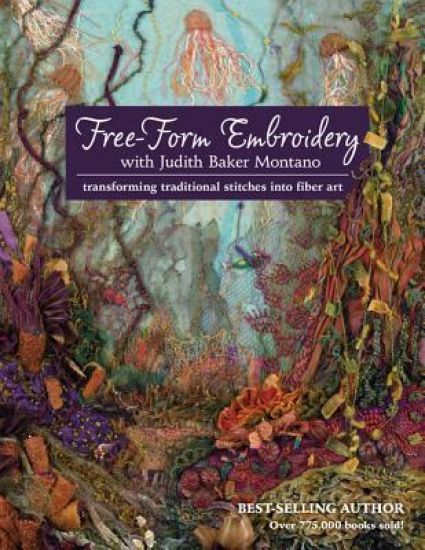
Fiber artist Judith Baker Montano is back with this handy little reference guide that belongs in every needleworker's sewing basket. You can always find the perfect stitch for your project, with dozens of flat, linked, cross, looped, composite, floral, and silk ribbon stitches to choose from.
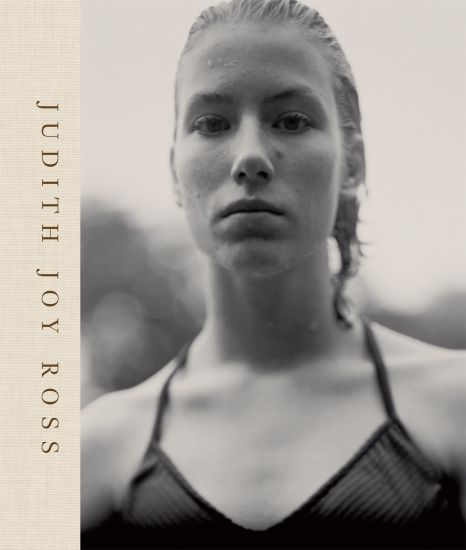
Judith Joy Ross: Photographs 1978–2015 is an illuminating retrospective that explores the life and career of a revered American photographer, illustrated by two hundred of her images, many never before seen or published. The work of Judith Joy Ross marks a watershed in the lineage of the photographic portrait. Her pictures—unpretentious, quietly penetrating, startling in their transparency—consistently achieve the capacity to glimpse the past, present, and perhaps even the future of the individuals who stand before her lens. Adolescents swim at a local municipal park, ordinary people are at work and play. From immigrants and refugees, to tech workers and students, military reservists and civilians—all are incisively rendered with equal tenderness in Ross’s black-and-white, large-format portraits. Published alongside the largest exhibition to feature Ross’s work to date, and drawn from her extensive archive of photographs made over the span of more than thirty-five years, Judith Joy Ross: Photographs 1978–2015 encompasses the best work of this influential photographer.
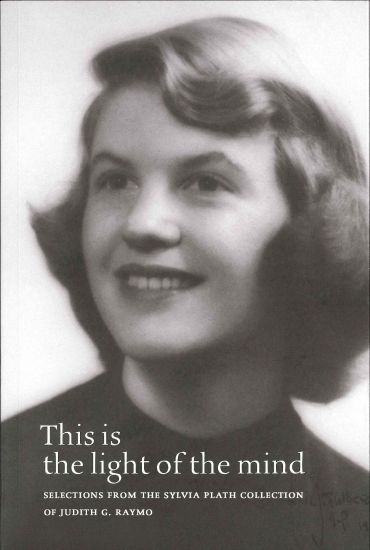
With meticulous care, Judith G. Raymo presents an impressive array of Sylvia Plath’s published and personal writings. As Raymo notes in her insightful introduction, Plath’s journals, when read in tandem with her correspondence to her mother, friends, and family “provide us with an abundant record of a writer’s interior and private life and its many turning points.” Expanding on an exhibition held at the Grolier Club, this catalogue includes an essay by Plath’s award-winning biographer Heather Clark.
Bestselling author Judith Baker Montano is back with a new comprehensive stitch guide that will take you beyond traditional embroidery. She'll show you how to create stunning landscapes and seascapes by applying fine art principles to your fabrics, threads, and fibres. Learn how to use these materials with other embellishments to convey anything from seaweed to shells, pine trees to pond lilies. Create lifelike trees, flowers, ocean corals, and more with 60 stitches and 67 stitch combinationsLearn artistic embroidery techniques for building layers, creating dimension and perspective, and blending shapesTranslate your favourite snapshot of any landscape or seascape into fibre art
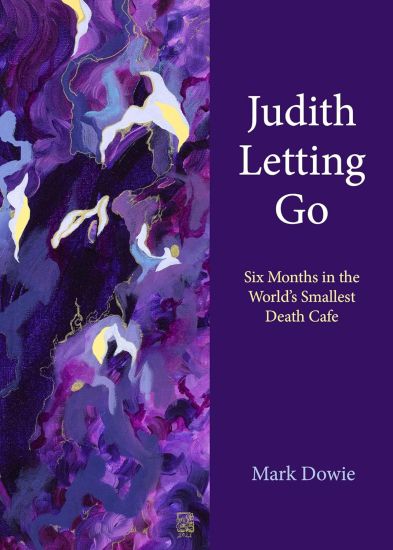
An old man learns how to die from a poet facing death For the entire six months that Mark Dowie became friends with Judith Tannenbaum, they both knew she was going to die. In fact, for most of that time they knew the exact hour she would go: sometime between 11:00 AM and noon, December 5, 2019, which she did. Judith was a poet, writer, activist, and artist who worked for decades teaching and collaborating with imprisoned lifers. Beloved by her community, Judith told almost no one when she was diagnosed with an incurable disease that would cause her immeasurable pain. Instead she chose to end life on her own terms. When they met, Mark Dowie had already been working for years to advocate for physician assistance in dying for terminally ill people in his home state of California. He helped many friends along this path, but it wasn't until he was introduced to Judith through a mutual friend that he came to a profound new understanding of death. Mark and Judith created a two-person "death café," a group devoted to discussions of death. They talked about many things during Judith's final months, but the rapidly approaching moment of her death came to inform and shape their entire conversation. Death was, as she said, "the undercurrent and the overstory of our relationship." Judith Letting Go supports the right to plan one's death, but it is ultimately about the lost human art of releasing everything that matters to the living in preparation for the inevitable.
An old man learns how to die from a poet facing death For the entire six months that Mark Dowie became friends with Judith Tannenbaum, they both knew she was going to die. In fact, for most of that time they knew the exact hour she would go: sometime between 11:00 AM and noon, December 5, 2019, which she did. Judith was a poet, writer, activist, and artist who worked for decades teaching and collaborating with imprisoned lifers. Beloved by her community, Judith told almost no one when she was diagnosed with an incurable disease that would cause her immeasurable pain. Instead she chose to end life on her own terms. When they met, Mark Dowie had already been working for years to advocate for physician assistance in dying for terminally ill people in his home state of California. He helped many friends along this path, but it wasn't until he was introduced to Judith through a mutual friend that he came to a profound new understanding of death. Mark and Judith created a two-person "death café," a group devoted to discussions of death. They talked about many things during Judith's final months, but the rapidly approaching moment of her death came to inform and shape their entire conversation. Death was, as she said, "the undercurrent and the overstory of our relationship." Judith Letting Go supports the right to plan one's death, but it is ultimately about the lost human art of releasing everything that matters to the living in preparation for the inevitable.