Kirjojen hintavertailu. Mukana 11 711 479 kirjaa ja 12 kauppaa.

Kirjahaku

Etsi kirjoja tekijän nimen, kirjan nimen tai ISBN:n perusteella.

1000 tulosta hakusanalla Justus Scheibert

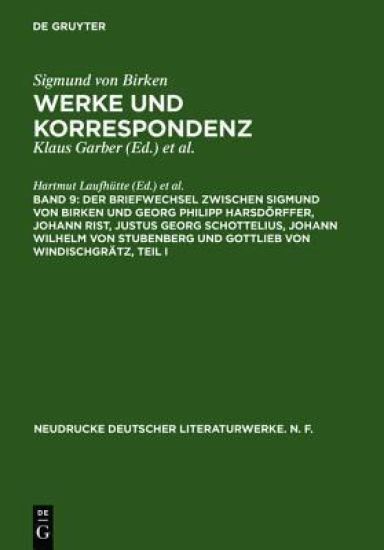
Der Briefwechsel zwischen Sigmund von Birken und Georg Philipp Harsdoerffer, Johann Rist, Justus Georg Schottelius, Johann Wilhelm von Stubenberg und Gottlieb von Windischgratz
The volume contains the first publication of the five most important of the early epistolary relationships between Sigmund von Birken and various literary figures and patrons. They are instructive sources for the biographies, works, and print careers of all those involved, as well as for a finer perception of the role played by literature and literary figures in 17th century German-speaking society.
Velikie ljudi. Gemfri Devi. Julius Robert Majer. Majkl Faradej. Justus Libikh. Sharl Zherar. German Gelmgolts
Kak uznat buduschego velikogo cheloveka s detstva i junosti - otvet na etot vopros pytaetsja najti avtor nastojaschej knigi, laureat Nobelevskoj premii po khimii Vilgelm Ostvald. V knige izlozheny biografii velikikh uchenykh, khimikov i fizikov, okazavshikh ogromnoe vlijanie na razvitie progressa nauki i tsivilizatsii. Avtor zatragivaet samye razlichnye storony dejatelnosti krupnejshikh issledovatelej, v chisle kotorykh - osnovatel elektrokhimii Gemfri Devi, osnovopolozhnik uchenija ob elektromagnitnom pole Majkl Faradej, odin iz velichajshikh uchenykh XIX veka German Gelmgolts. Izuchajutsja uslovija zhizni, vospitanija i obrazovanija, pri kotorykh chelovek, potentsialno obladajuschij vydajuschimsja darovaniem, mozhet raskryt svoj potentsial.Kniga rekomenduetsja uchenym i prepodavateljam estestvenno-nauchnykh i gumanitarnykh spetsialnostej, v tom chisle fizikam, khimikam, istorikam i metodologam nauki, pedagogam i psikhologam, a takzhe shirokomu krugu chitatelej, interesujuschikhsja zhiznju i nauchnym tvorchestvom velikikh uchenykh.
Harriman Alaska series (Volume VIII) Insects Part I by William H. Ashmead, Nathan Banks, A. N. Caudell, O. F. Cook, Rolla P. Currie, Harrison G. Dyar, Justus Watson Folsom, O. Heidemann, Trevor Kincaid, Theo. Pergande and E. A. Schwarz
This book has been considered by academicians and scholars of great significance and value to literature. This forms a part of the knowledge base for future generations. We have represented this book in the same form as it was first published. Hence any marks seen are left intentionally to preserve its true nature.
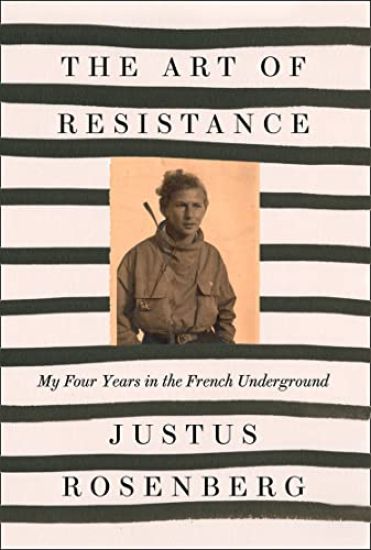
The Art of Resistance

The Art of Resistance

Justus Rosenberg

William Collins
2021
nidottu
A gripping memoir written by a 96-year-old Jewish Holocaust survivor about his escape from Nazi-occupied Poland in the 1930's and his adventures with the French Resistance during World War II In 1937, as the Nazi Party tightened its grip on the city of Danzig (now Gdansk, Poland), Justus Rosenberg’s parents made the wrenching decision to send their son to Paris, where he would have the hope of finishing high school and going on to university in safety. He was sixteen years old, and he would not see his family again for sixteen years more. Even after war broke out in 1939, life in France was peaceful for a time—but when the Nazis pushed toward Paris in the spring of 1940, Justus was forced to flee south to Toulouse. There, a chance meeting put Justus in contact with Varian Fry, the American journalist who ran a refugee network that aided several thousand Jews in escaping Nazi Germany and the Holocaust. With his German background, understanding of French cultural, and fluency in several languages, including English, Justus was ideally positioned to thrive in Fry’s network, coming to master an underworld of counterfeit documents, whispered passwords, black market currency, opportunistic gangsters, and clandestine mountain passes. Justus would spend the rest of the war working for Fry and later the French Resistance, helping to provide safe passage for many intellectuals and artists on the run from the Nazis, among them Hannah Arendt, Marc Chagall, Andre Breton, and Max Ernst. Along the way, he would have a number of close scrapes of his own: on one occasion, he was rounded up to be sent to a labor camp in Poland, and had to make a daring escape to save his life; on another, he narrowly survived after his jeep hits a landmine. An epic saga of survival, with the soul of a spy thriller, The Art of Resistance is also an uplifting story of personal triumph. (Several years after the war, Justus was finally able to track down his family, who he feared had died at the Nazis’ hands.) As Justus writes, “I survived the war through a rare combination of good fortune, resourcefulness, optimism, and, most important, the kindness of many good people.”
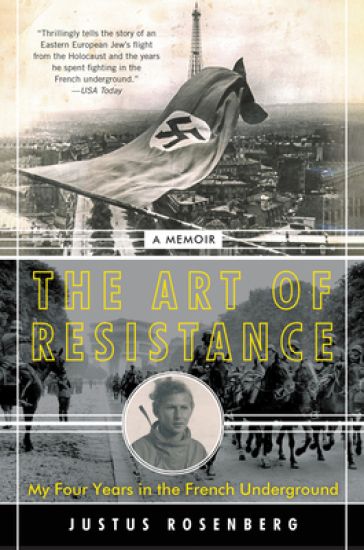
The Art of Resistance: My Four Years in the French Underground: A Memoir
"Thrillingly tells the story of an Eastern European Jew's flight from the Holocaust and the years he spent fighting in the French underground." --USA TodayAn American Library in Paris Book Award "Coups de Coeur" SelectionThe Art of Resistance is unlike any World War II memoir before it. Its author, Justus Rosenberg, has spent the past seventy years teaching the classics of literature to American college students. Hidden within him, however, was a remarkable true story of wartime courage and romance worthy of a great novel. Here is Professor Rosenberg's elegant and gripping chronicle of his youth in Nazi-occupied Europe, when he risked everything to stand against evil. In 1937, after witnessing a violent Nazi mob in his hometown of Danzig, a majority German city on the Baltic Sea, sixteen-year-old Justus Rosenberg was sent by his Jewish parents to Paris to finish his education in safety. Three years later, the Nazis came again, as France fell to the Germans. Alone and in danger, Justus fled Paris, heading south. A chance meeting led him to Varian Fry, an American journalist in Marseille who led a clandestine network helping thousands of men and women--including many legendary artists and intellectuals, among them Hannah Arendt, Marc Chagall, Andre Breton, and Max Ernst--escape the Nazis. With his intimate understanding of French and German culture, and fluency in several languages, including English, Justus became an invaluable member of Fry's operation as a spy and scout. After the Vichy government expelled Fry from France, Justus worked in Grenoble, recruiting young men and women for the Underground Army. For the next four years, he would be an essential component of the Resistance, relying on his wits and skills to survive several close calls with death. Once, he found himself in a Nazi internment camp, with his next stop Auschwitz--and yet Justus found an ingenious way to escape. He two years during the war gathering intelligence, surveying German installations and troop movements on the Mediterranean. Then, after the allied invasion at Normandy in 1944, Justus became a guerrilla fighter, participating in and leading commando raids to disrupt the German retreat across France. At the end of the Second World War, Justus emigrated to America, and built a new life. For the past fifty years, he has taught literature at Bard College, shaping the inner lives of generations of students. Now he adds his own story to the library of great coming-of-age memoirs: The Art of Resistance is a powerful saga of bravery and defiance, a true-life spy thriller touched throughout by a professor's wisdom.
The Art of Resistance: My Four Years in the French Underground: A Memoir
"Thrillingly tells the story of an Eastern European Jew's flight from the Holocaust and the years he spent fighting in the French underground." --USA TodayAn American Library in Paris Book Award "Coups de Coeur" SelectionThe Art of Resistance is unlike any World War II memoir before it. Its author, Justus Rosenberg, has spent the past seventy years teaching the classics of literature to American college students. Hidden within him, however, was a remarkable true story of wartime courage and romance worthy of a great novel. Here is Professor Rosenberg's elegant and gripping chronicle of his youth in Nazi-occupied Europe, when he risked everything to stand against evil. In 1937, after witnessing a violent Nazi mob in his hometown of Danzig, a majority German city on the Baltic Sea, sixteen-year-old Justus Rosenberg was sent by his Jewish parents to Paris to finish his education in safety. Three years later, the Nazis came again, as France fell to the Germans. Alone and in danger, Justus fled Paris, heading south. A chance meeting led him to Varian Fry, an American journalist in Marseille who led a clandestine network helping thousands of men and women--including many legendary artists and intellectuals, among them Hannah Arendt, Marc Chagall, Andre Breton, and Max Ernst--escape the Nazis. With his intimate understanding of French and German culture, and fluency in several languages, including English, Justus became an invaluable member of Fry's operation as a spy and scout. After the Vichy government expelled Fry from France, Justus worked in Grenoble, recruiting young men and women for the Underground Army. For the next four years, he would be an essential component of the Resistance, relying on his wits and skills to survive several close calls with death. Once, he found himself in a Nazi internment camp, with his next stop Auschwitz--and yet Justus found an ingenious way to escape. He two years during the war gathering intelligence, surveying German installations and troop movements on the Mediterranean. Then, after the allied invasion at Normandy in 1944, Justus became a guerrilla fighter, participating in and leading commando raids to disrupt the German retreat across France. At the end of the Second World War, Justus emigrated to America, and built a new life. For the past fifty years, he has taught literature at Bard College, shaping the inner lives of generations of students. Now he adds his own story to the library of great coming-of-age memoirs: The Art of Resistance is a powerful saga of bravery and defiance, a true-life spy thriller touched throughout by a professor's wisdom.
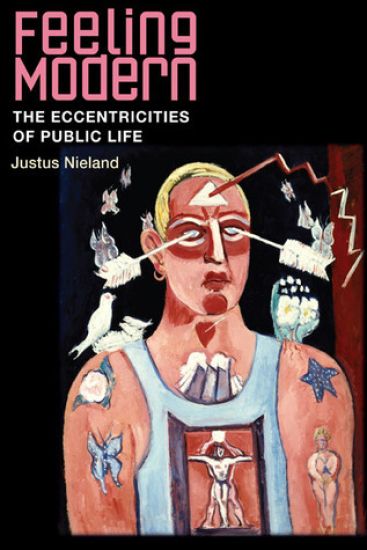
Feeling Modern

Feeling Modern

Justus Nieland

University of Illinois Press
2008
nidottu
This rigorous and original study combines theories of the public sphere, cinema, and visual culture with a growing body of critical work on affect. While modernist feeling is often described either as a reservoir of romantic inwardness or as an inhuman hostility to sentiment, Justus Nieland challenges these notions by approaching emotion through a poetics of modernist publicity. He argues that modernists championed feelings as primarily public products of modernity rather than as the private property of the self. Nieland's fresh account of the moderns' revolutionary designs on feeling also offers a new understanding of modernist publicness that includes self-presentation in popular theatrical spaces and public feelings enabled by performance, film, and other public amusements. Positing Charlie Chaplin as the embodiment of the modern "eccentric," Nieland explores the wildness of feeling in the work of many other key modernists, including Wyndham Lewis, Sergei Eisenstein, Marsden Hartley, E. E. Cummings, Joseph Cornell, Nathanael West, and Djuna Barnes. Ranging widely across modernist literature, avant-garde film, popular performance, and the visual arts of the modernist period, this study demonstrates that eccentric feeling is the emotional climate of modern alienation. Nieland finds, at the eccentric heart of modernism, a critique of the role of emotional propriety in collective life and an ethos of public comportment. Feeling Modern recovers the affective and poetic dimensions of public life that make it ever worth living.
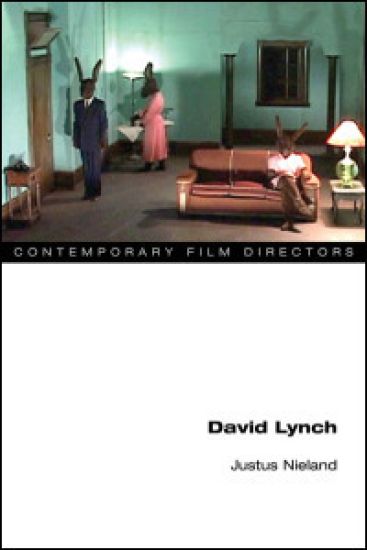
David Lynch

David Lynch

Justus Nieland

University of Illinois Press
2012
nidottu
A key figure in the ongoing legacy of modern cinema, David Lynch designs environments for spectators, transporting them to inner worlds built by mood, texture, and uneasy artifice. We enter these famously cinematic interiors to be wrapped in plastic, the fundamental substance of Lynch’s work. This volume revels in the weird dynamism of Lynch’s plastic worlds. Exploring the range of modern design idioms that inform Lynch’s films and signature mise-en-scÈne, Justus Nieland argues that plastic is at once a key architectural and interior design dynamic in Lynch’s films, an uncertain way of feeling essential to Lynch’s art, and the prime matter of Lynch’s strange picture of the human organism. Nieland’s study offers striking new readings of Lynch’s major works (Eraserhead, Blue Velvet, Wild at Heart, Mulholland Dr., Inland Empire) and his early experimental films, placing Lynch’s experimentalism within the aesthetic traditions of modernism and the avant-garde; the genres of melodrama, film noir, and art cinema; architecture and design history; and contemporary debates about cinematic ontology in the wake of the digital. This inventive study argues that Lynch’s plastic concept of life -supplemented by technology, media, and sensuous networks of an electric world--is more alive today than ever.
Wittgenstein and Modern Philosophy

Wittgenstein and Modern Philosophy

Justus Hartnack

University of Notre Dame Press
1986
nidottu
Justus Hartnack offers a concise and clear introduction to Wittgenstein and traces the influence of these works in the schools of logical positivism and analytical philosophy. A philosopher as great and at the same time as difficult as Wittgenstein has been the subject of innumerable studies, and universal agreement on how to interpret him cannot be expected. This is true of almost all great thinkers, past and present. That is why we still benefit from studies of Plato, Aristotle, Descartes, Spinoza, Kant, or Hegel, to mention just a few. New studies and scholarly works on Wittgesntein will continue to appear. [A] reliable brief orientation to his thought is, if not essential, then at least a very useful way to begin a study of his philosophy. — From the Preface to the Second Edition
More Precious Than Peace

More Precious Than Peace

Justus D. Doenecke

UNIVERSITY OF NOTRE DAME PRESS
2022
sidottu
Justus D. Doenecke's monumental study covers diplomatic, military, and ideological aspects of U.S. involvement as a full-scale participant in World War I. The entry of America into the "war to end all wars" in April 1917 marks one of the major turning points in the nation's history. In the span of just nineteen months, the United States sent nearly two million troops overseas, established a robust propaganda apparatus, and created an unparalleled war machine that played a major role in securing Allied victory in the fall of 1918. At the helm of the nation, Woodrow Wilson and his administration battled against political dissidence, domestic and international controversies, and their own lack of experience leading a massive war effort. In More Precious than Peace, the long-awaited successor to his critically acclaimed work Nothing Less than War, Justus D. Doenecke examines the entirety of the American experience as a full-scale belligerent in World War I. This book covers American combat on the western front, the conscription controversy, and scandals in military training and production. Doenecke explores the Wilson administration's quest for national unity, the Creel Committee, and "patriotic" crusades. Weaving together these topics and many others, including the U.S. reaction to the Russian revolutions, Doenecke creates a lively and comprehensive narrative.