Kirjahaku
Etsi kirjoja tekijän nimen, kirjan nimen tai ISBN:n perusteella.
1000 tulosta hakusanalla Kenneth C Springirth; David L Weber
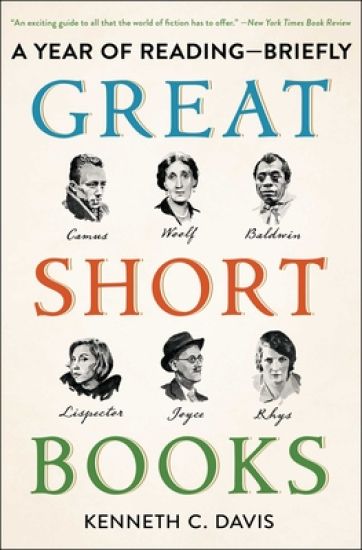
This entertaining guide to some of the best short novels of all time, from a bestselling historian, is the "perfect gift for busy bibliophiles" (BookPage). Experience the joys of literature with this this "exciting guide to all that the world of fiction has to offer" (The New York Times Book Review): a compulsively readable, deeply engaging discussion of great short novels. A journey into fiction designed with our contemporary attention spans in mind, Great Short Books suggests fifty-eight excellent short novels, all under 200 pages--easily readable in a week or less--a fresh approach to a fun, fascinating year of reading. From hard-boiled fiction to magical realism, the 18th century to the present day, Great Short Books spans genres, cultures, countries, and time to present an enchanting and diverse selection of acclaimed and canonical novels. From works in translation like Yu Miri's Tokyo Ueno Station and Marguerite Duras's The Lover to popular, acclaimed authors like Toni Morrison and James Baldwin, this compilation is a celebration of classics from the historic to contemporary--plus a few bestsellers, including Stephen King and Colson Whitehead. Each entry includes the novel's opening lines, a spoiler-free plot summary, a "why you should read it" section, and suggestions for what to read next. "An entertaining journey with a fun, knowledgeable guide" (Booklist), this eclectic collection is a fun and practical book for any passionate reader hoping to broaden their literary IQ--or anyone who wants to find an effortless reentry into reading.

The Casting Powders Book
Kenneth C. Mills; Carl-Åke Däcker
Springer Nature Switzerland AG
2018
nidottu
This book deals with casting powders and explains how they work and how they are best used to minimise defects in the ninety per cent of world steel production that is continuously cast. It also includes a chapter on mould powders for ingot-casting. The factors affecting various aspects of powder performance are described and different defects, their causes, and means of avoiding them are considered.Providing the first comprehensive coverage of mould powder properties and uses, the text treats theoretical and practical matters and gives direct advice on problem-solving. Drawing on a wealth of scientific and technological research, represented by its extensive references, The Casting Powders Book shows readers how they can design and create mould powders optimised to fulfil the necessary functions of:lubrication of steel shells and reduction of shell–mould friction;absorption of inclusions floating up from the steel;chemical insulation of steel from carbon-rich mould powder; andprotection of the steel meniscus from oxidation and thermal insulation to prevent surface-freezing.Thermophysical properties and heat-transfer processes are also given detailed attention and case studies illustrate the methods and materials described.The Casting Powders Book is designed to be a periodic reference that can be dipped into as the need arises. Readers from different backgrounds are well-served by the depth and variety of content:engineers trouble-shooting a continuous-casting process interested in how mould fluxes can minimise defects and process problems and how their performance is in turn affected by casting parameters;academic scientists interested in the theoretical aspects and properties of mould fluxes and slag films;engineers working with ingot-casting processes;and many others will find this book an invaluable resource.
The Casting Powders Book
Kenneth C. Mills; Carl-Åke Däcker
Springer International Publishing AG
2018
sidottu
This book deals with casting powders and explains how they work and how they are best used to minimise defects in the ninety per cent of world steel production that is continuously cast. It also includes a chapter on mould powders for ingot-casting. The factors affecting various aspects of powder performance are described and different defects, their causes, and means of avoiding them are considered.Providing the first comprehensive coverage of mould powder properties and uses, the text treats theoretical and practical matters and gives direct advice on problem-solving. Drawing on a wealth of scientific and technological research, represented by its extensive references, The Casting Powders Book shows readers how they can design and create mould powders optimised to fulfil the necessary functions of:lubrication of steel shells and reduction of shell–mould friction;absorption of inclusions floating up from the steel;chemical insulation of steel from carbon-rich mould powder; andprotection of the steel meniscus from oxidation and thermal insulation to prevent surface-freezing.Thermophysical properties and heat-transfer processes are also given detailed attention and case studies illustrate the methods and materials described.The Casting Powders Book is designed to be a periodic reference that can be dipped into as the need arises. Readers from different backgrounds are well-served by the depth and variety of content:engineers trouble-shooting a continuous-casting process interested in how mould fluxes can minimise defects and process problems and how their performance is in turn affected by casting parameters;academic scientists interested in the theoretical aspects and properties of mould fluxes and slag films;engineers working with ingot-casting processes;and many others will find this book an invaluable resource.
Wirtschaftsinformatik
Kenneth C. Laudon; Jane P. Laudon; Detlef Schoder
Pearson Studium
2015
sidottu
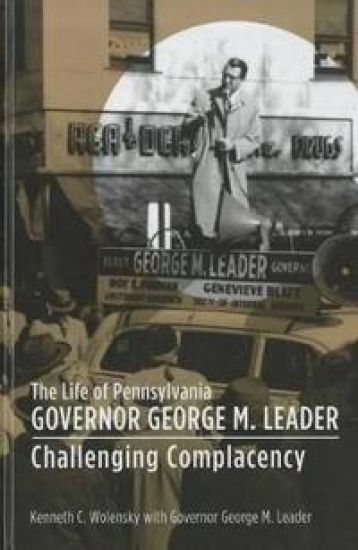
The Life of Pennsylvania Governor George M. Leader
Kenneth C. Wolensky
Lehigh University Press
2011
sidottu
The Life of Pennsylvania Governor George M. Leader tells the story of George Michael Leader who, at 36 years old, was the second youngest governor ever elected to the office, and served from 1955 to 1959. His chances at being elected were tenuous at best: Democrats never fared well in pursuit of the Governor's Office in the Keystone State. His election was an upset. Republican Party stalwarts were stunned at the tally in Leader's favor. And, his election ushered in an era when the Commonwealth's electorate shifted its allegiance from majority Republican to majority Democrat, a trend that continues in the 21st century. Leader's administration achieved landmark legislation for economic development, civil rights, education for disabled children, mental health care reform, the environment, expansion of civil service, professionalization of government and in many other areas. Some referred to Leader as a refreshing change to politics-as-usual in the State Capitol. His opposition referred to him as "that stubborn young governor." Leader was proud of both monikers. George Leader dates to an era when politics were quite different. Handshakes secured votes, campaign budgets were small, modern mass media was in its infancy, personal attacks were few and political patronage was rampant at all levels of government. Challenging Complacency stands as the only oral history-based account of a Pennsylvania governor. Written by a leading Pennsylvania historian while the former governor was in his 9th decade of life, here Governor Leader tells his remarkable story.
Que Se Yo del Universo / Don't Know Much About the Universe
Kenneth C. Davis; Rosario (TRN) Martinez; Kenneth C. Davis
Rayo
2006
pokkari
Desde las antiguas civilizaciones que hicieron mapas de los cielos a Star Trek, X-Files y Apolo 13, el espacio sideral ha intrigado a la gente por mucho tiempo. Sin embargo, la mayoria de nosotros miramos el cielo nocturno y sentimos que no sabemos nada en cuanto a los hechos principales del universo. Kenneth C. Davis nos ofrece una animada e interesante guia a los descubrimientos, las teorias y las verdaderas personas que arrojaron luz sobre los misterios y las maravillas de los cosmos. Descubre por que Einstein era tan genio, la verdad tras una o dos lunas azules, los increibles secretos tras Stonehenge y como un gran astronomo perdio la nariz. Con el divertido formato de preguntas y respuestas que tanto atrae a los millones de lectores de su popular serie Que Se Yo, disfrutaras de una exploracion del sistema solar, la Via Lactea y el mas alla.
Nazism, Liberalism, and Christianity
Kenneth C. Barnes
The University Press of Kentucky
1991
sidottu
The Great Depression devastated the economies of both Germany and Great Britain. Yet the middle classes in the two countries responded in vastly different ways. German Protestants, perceiving a choice among a Bolshevik-style revolution, the chaos and decadence of Weimar liberalism, and Nazi authoritarianism, voted Hitler into power and then acquiesced in the resulting dictatorship. In Britain, Labour and Tory politicians moved gingerly together to form a National Government that muddled through the Depression with piecemeal reform. In this troubling book about troubled times, Kenneth Barnes looks into the question of how theologians and church leaders contributed to a cultural matrix that predisposed Protestants in these two countries to very different political alternatives. Holding fast to the liberal social gospel, British churchmen diagnosed the problems of the 1920s and the Depression ao solvable and called for genuine reforms, many of which foreshadowed the coming welfare state. German leaders, in contrast, were terrified by the socioeconomic and political problems of the Weimar era and offered no social message or solution. Despairingly, they referred the problems to secular politicians and after 1933 beat the drum for obedience to the Nazi state. Based on extensive research in European archives, especially the rich papers of the interwar ecumenical movement housed at the World Council of Churches in Geneva, this book examines key intellectual figures such as Karl Barth, Paul Tillich, Dietrich Bonhoeffer, and Archbishop William Temple, as well as many lesser known church officials and theologians. Barnes brings to life the intellectual struggles and dilemmas of the interwar period to help explain why good people could, for moral and religious reasons, choose opposing courses of political action.
With wit, wisdom, and an extraordinary talent for turning dry, difficult reading into colorful and realistic accounts, the creator of the bestselling Don't Know Much About(R), series now brings the world of the Old and New testaments to life as no one else can in the bestseller Don't Know Much About(R) The Bible. Relying on new research and improved translations, Davis uncovers some amazing questions and contradictions about what the Bible really says. Jericho's walls may have tumbled down because the city lies on a fault line. Moses never parted the Red Sea. There was a Jesus, but he wasn't born on Christmas and he probably wasn't an only child. Davis brings readers up-to-date on findings gleaned from the Dead Sea Scrolls and Gnostic Gospels that prompt serious scholars to ask such serious questions as: Who wrote the Bible? Did Jesus say everything we were taught he did? Did he say more? By examining the Bible historically, Davis entertains and amazes, provides a much better understanding of the subject, and offers much more fun learning about it.
Fighting for the Union Label
Wolensky Kenneth C.; Nicole H. Wolensky; Robert P. Wolensky
Pennsylvania State University Press
2002
sidottu
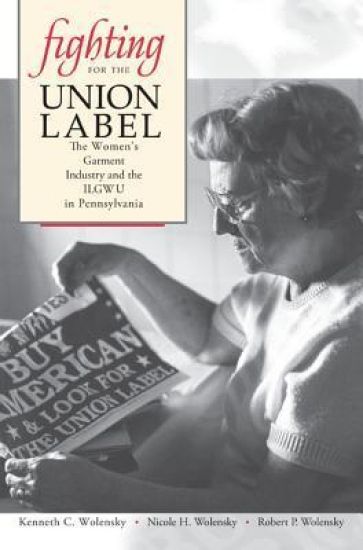
It is no coincidence that the garment industry gained a foothold in Pennsylvania’s hard-coal region as mines were closing or reducing operations. "Runaway" factories, especially ones from Manhattan, set up shop in mining towns where labor was plentiful and unions scarce. By the 1930s, garment factories employed thousands of wives and daughters of unemployed or underemployed coal miners in the Wyoming Valley. Organizing workers would prove difficult for the International Ladies’ Garment Workers’ Union (ILGWU). Fighting for the Union Label tells the story of how workers in the Wyoming Valley, led by Min Lurye Matheson and her husband, Bill, banded together and built one of the largest and most activist movements of garment workers in the ILGWU’s vast network. Workers’ education, political activism, a health care center, and a widely recognized chorus were among the union’s trademarks. Despite the union’s influence, however, the apparel industry migrated to the American South and then overseas in the 1970s and 1980s. Tens of thousands of workers throughout the state and nation would loose their jobs, and sweatshops would become part of the economic landscape in countries like Guatemala. The first major work on the garment industry and its workers in Pennsylvania, Fighting for the Union Label draws extensively upon the Wyoming Valley Oral History Project (co-directed by Ken and Robert Wolensky) which has collected the reminiscences of more than 325 workers, factory owners, public officials, and others. The story of the dynamic Min Matheson and the rise and fall of the garment industry provides key insights into the deindustrialization of northeastern Pennsylvania.
Democratization Without Representation
Shadlen Kenneth C.
Pennsylvania State University Press
2004
sidottu
When countries become more democratic, new opportunities arise for individuals and groups to participate in politics and influence the making of policy. But democratization does not ensure better representation for everyone, and indeed some sectors of society are ill-equipped to take advantage of these new opportunities. Small industry in Mexico, Kenneth Shadlen shows, is an excellent example of a sector whose representation decreased during democratization. Shadlen’s analysis focuses on the basic characteristics of small firms that complicate the process of securing representation in both authoritarian and democratic environments. He then shows how increased pluralism and electoral competition served to exacerbate the political problems facing the sector during the course of democratization in Mexico. These characteristics created problems for small firms both in acting collectively through interest associations and civil society organizations and in wielding power within political parties. The changes that democratization effected in the structure of corporatism put small industry at a significant disadvantage in the policy-making arena even while there was general agreement on the crucial importance of this sector in the new neoliberal economy, especially for generating employment. The final chapter extends the analysis by making comparisons with the experience of small industry representation in Argentina and Brazil.Shadlen uses extensive interviews and archival research to provide new evidence and insights on the difficult challenges of interest aggregation and representation for small industry. He conducted interviews with a wide range of owners and managers of small firms, state and party officials, and leaders of business associations and civil society organizations. He also did research at the National Archives in Mexico City and in the archives of the most important business organizations for small industry in the post-World War II period.
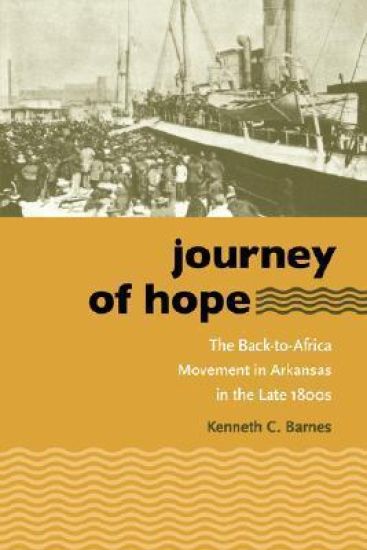
Liberia was founded by the American Colonization Society (ACS) in the 1820s as an African refuge for free blacks and liberated American slaves. While interest in African migration waned after the Civil War, it roared back in the late nineteenth century with the rise of Jim Crow segregation and disfranchisement throughout the South. The back-to-Africa movement held great new appeal to the South's most marginalized citizens, rural African Americans. Nowhere was this interest in Liberia emigration greater than in Arkansas. More emigrants to Liberia left from Arkansas than any other state in the 1880s and 1890s. In Journey of Hope, Kenneth C. Barnes explains why so many black Arkansas sharecroppers dreamed of Africa and how their dreams of Liberia differed from the reality. This rich narrative also examines the role of poor black farmers in the creation of a black nationalist identity and the importance of the symbolism of an ancestral continent. Based on letters to the ACS and interviews of descendants of the emigrants in war-torn Liberia, this study captures the life of black sharecroppers in the late 1800s and their dreams of escaping to Africa.
A valuable source of firsthand step-by-step information ...the first book to give specific information on training retrievers for upland work. --Sports Afield
Laudon, K: Management Information Systems: Managing
Kenneth Laudon; Kenneth C. Laudon; Jane P. Laudon
PEARSON
nidottu
Explore our solar system and Earth's place in it as readers flip through the pages of this nonfiction title. Featuring vibrant images in conjunction with accessible charts and diagrams, readers will be fascinated from cover to cover!
Experimental Political Science and the Study of Causality
Morton Rebecca B.; Williams Kenneth C.
Cambridge University Press
2010
pokkari
Increasingly, political scientists use the term 'experiment' or 'experimental' to describe their empirical research. One of the primary reasons for doing so is the advantage of experiments in establishing causal inferences. In this book, Rebecca B. Morton and Kenneth C. Williams discuss in detail how experiments and experimental reasoning with observational data can help researchers determine causality. They explore how control and random assignment mechanisms work, examining both the Rubin causal model and the formal theory approaches to causality. They also cover general topics in experimentation such as the history of experimentation in political science; internal and external validity of experimental research; types of experiments - field, laboratory, virtual, and survey - and how to choose, recruit, and motivate subjects in experiments. They investigate ethical issues in experimentation, the process of securing approval from institutional review boards for human subject research, and the use of deception in experimentation.
Experimental Political Science and the Study of Causality
Morton Rebecca B.; Williams Kenneth C.
Cambridge University Press
2010
sidottu
Increasingly, political scientists use the term 'experiment' or 'experimental' to describe their empirical research. One of the primary reasons for doing so is the advantage of experiments in establishing causal inferences. In this book, Rebecca B. Morton and Kenneth C. Williams discuss in detail how experiments and experimental reasoning with observational data can help researchers determine causality. They explore how control and random assignment mechanisms work, examining both the Rubin causal model and the formal theory approaches to causality. They also cover general topics in experimentation such as the history of experimentation in political science; internal and external validity of experimental research; types of experiments - field, laboratory, virtual, and survey - and how to choose, recruit, and motivate subjects in experiments. They investigate ethical issues in experimentation, the process of securing approval from institutional review boards for human subject research, and the use of deception in experimentation.
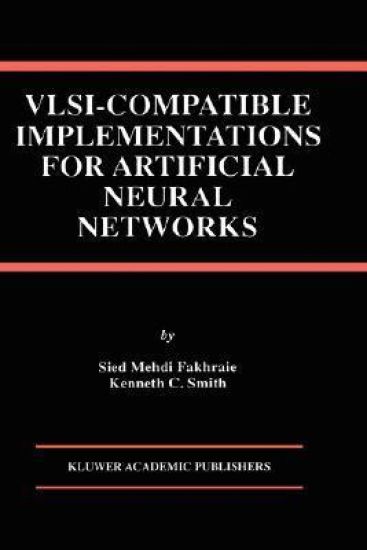
VLSI — Compatible Implementations for Artificial Neural Networks
Sied Mehdi Fakhraie; Kenneth C. Smith
Springer
1996
sidottu
This book introduces several state-of-the-art VLSI implementations of artificial neural networks (ANNs). It reviews various hardware approaches to ANN implementations: analog, digital and pulse-coded. The analog approach is emphasized as the main one taken in the later chapters of the book. The area of VLSI implementation of ANNs has been progressing for the last 15 years, but not at the fast pace originally predicted. Several reasons have contributed to the slow progress, with the main one being that VLSI implementation of ANNs is an interdisciplinaly area where only a few researchers, academics and graduate students are willing to venture. The work of Professors Fakhraie and Smith, presented in this book, is a welcome addition to the state-of-the-art and will greatly benefit researchers and students working in this area. Of particular value is the use of experimental results to backup extensive simulations and in-depth modeling. The introduction of a synapse-MOS device is novel. The book applies the concept to a number of applications and guides the reader through more possible applications for future work. I am confident that the book will benefit a potentially wide readership. M. I. Elmasry University of Waterloo Waterloo, Ontario Canada Preface Neural Networks (NNs), generally defined as parallel networks that employ a large number of simple processing elements to perform computation in a distributed fashion, have attracted a lot of attention in the past fifty years. As the result. many new discoveries have been made.